
Deciding between an indoor bike trainer and a treadmill for your home gym comes down to balancing your physical space, joint health, fitness goals, and budget. While a treadmill offers a natural, weight-bearing running experience that builds bone density, an indoor bike trainer provides a highly compact, low-impact alternative that leverages your existing bicycle. There is no single option that suits every household; the right choice is the one that fits your living environment, accommodates your physical limits, and keeps you motivated to train consistently. By evaluating your home’s structural capacity, your body’s needs, and the total cost of ownership, you can select the equipment that will serve your fitness journey for years to come.
Evaluating Space and Setup Requirements for Your Home
Evaluating your available floor plan and structural limits is the first step in determining which machine physically fits your living space. Treadmills require a permanent, substantial footprint. A typical motorized treadmill needs a dedicated floor area of about 1.5 to 2 meters in length and nearly a meter in width, plus at least 1 to 2 meters of clear space behind the belt for safety in case of falls. In contrast, an indoor bike trainer is highly compact. The trainer unit itself often occupies less than a square meter, though you must account for the total length of your bicycle when mounted.
Storage options also differ significantly between the two setups. Many home treadmills feature folding decks that lift upward when not in use, reducing the horizontal footprint. However, they remain heavy, bulky objects that are difficult to move frequently, even with transport wheels. An indoor bike trainer offers superior portability. Many wheel-on and direct-drive trainers feature folding legs, allowing you to slide the unit under a bed or into a closet when your workout is complete, returning your living space to its original state.
Products mentioned in this guide
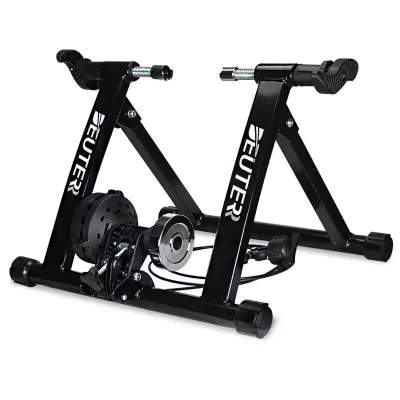
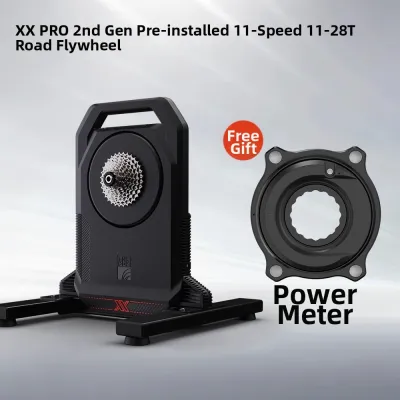
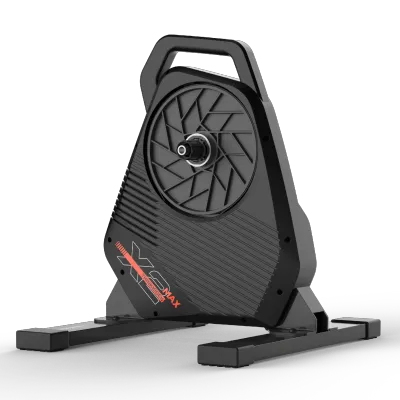
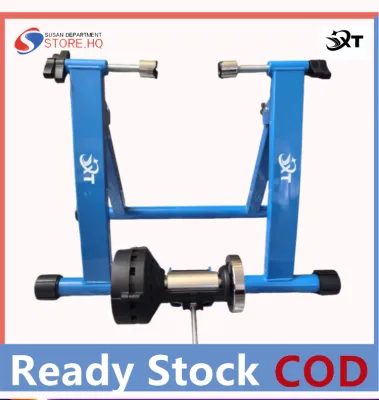
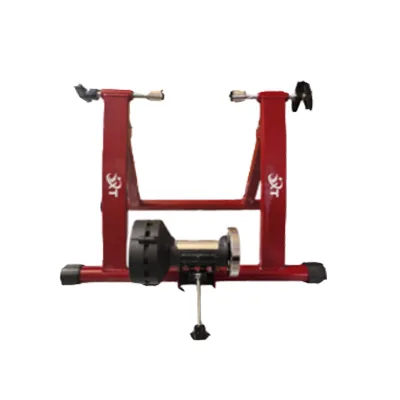
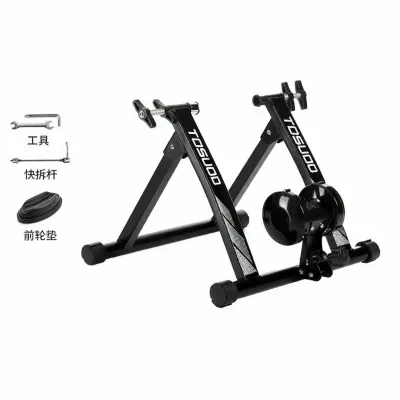
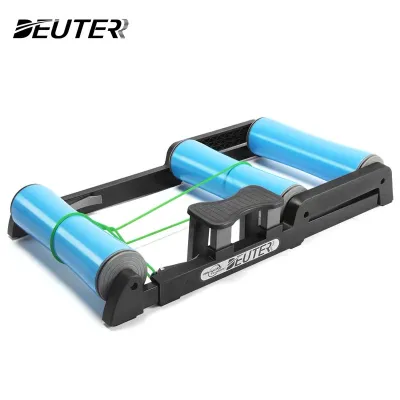
Prices are valid at publication and may change. Please refer to the product page for the latest price.
Environmental factors like ceiling height and noise are critical, often overlooked constraints. For treadmill runners, you must calculate your height plus the deck height of the treadmill (often 20 to 30 centimeters) and add extra clearance for the vertical bounce of running. For bike trainers, ceiling height is rarely an issue since you remain seated. However, noise and vibration are major considerations, especially in multi-story homes or apartments. Treadmill footfalls create low-frequency vibrations that travel easily through concrete and wooden floors. Bike trainers, particularly modern direct-drive magnetic models, operate much more quietly, though the bicycle drivetrain still produces a high-frequency hum. In tropical climates with high humidity, sweat accumulation is intense; both setups require adequate floor protection and fan placement to prevent moisture damage to your floors and the equipment’s electronic components.
Matching Joint Impact and Workout Intensity to Your Goals
The biomechanics of running and cycling differ fundamentally, making it essential to match the equipment to your physical condition and injury history. Running on a treadmill is a high-impact, weight-bearing activity. Every foot strike sends forces equal to several times your body weight through your ankles, knees, hips, and lower back. While this impact is beneficial for stimulating bone remodeling and maintaining bone density, it can exacerbate existing joint issues or old injuries. Cycling on an indoor bike trainer is a low-impact, non-weight-bearing exercise. Your body weight is supported by the saddle, handlebars, and pedals, allowing you to elevate your heart rate and build cardiovascular endurance with minimal stress on your joints.

Caloric expenditure variables depend entirely on workout intensity, duration, and individual effort rather than relying on fixed machine estimates. Running generally recruits more muscle mass simultaneously, leading to a higher rate of caloric burn at moderate effort levels. However, a high-intensity interval training (HIIT) session on an indoor bike trainer with high resistance can match or exceed the energy output of a steady-state run. To accurately track your progress, look at your heart rate and power output rather than relying on the generalized, often inflated calorie estimators displayed on machine consoles.
If your primary goal is rehabilitation, recovering from joint injuries, or managing chronic conditions like osteoarthritis, the low-impact nature of an indoor bike trainer makes it a safer starting point. It allows for controlled, smooth circular motion that promotes joint mobility without sudden shocks. Conversely, if you are training for outdoor running events, trail runs, or wish to focus on bone-density preservation as you age, the treadmill is the logical choice. It prepares your tendons, muscles, and bones for the specific demands of ground-impact forces in a controlled, weather-protected environment.
Calculating Upfront Costs and Long-Term Maintenance
Budget considerations must account for both the initial purchase and the long-term cost of ownership. Entry-level treadmills in the local market can start around ₱15,000, but these often feature smaller motors and lighter frames that may feel unstable during fast runs. Mid-range, durable home treadmills typically range from ₱40,000 to ₱90,000, while premium commercial-grade models can exceed ₱150,000. For indoor cycling, if you already own a bicycle, an entry-level wheel-on trainer can be found for ₱8,000 to ₱15,000. Mid-range smart trainers, which offer automatic resistance control, generally cost between ₱30,000 and ₱60,000, while premium direct-drive smart trainers can range from ₱70,000 to over ₱100,000.
Maintenance routines are another factor that influences the total cost and effort required. Treadmills are complex mechanical systems with motors, belts, and rollers that require regular upkeep. You must periodically check and adjust the belt alignment to prevent fraying, lubricate the deck with specialized silicone oil every few months, and vacuum the motor shroud to prevent dust buildup from causing electrical shorts. Bike trainers have fewer moving parts but still require attention. For wheel-on trainers, you must monitor tire wear and maintain correct tire pressure. Direct-drive trainers require you to clean and lubricate the bicycle chain, monitor cassette wear, and occasionally perform spin-down calibrations to ensure power accuracy. In humid tropical environments, salt from your sweat can quickly corrode metal components on both machines; wiping down the equipment after every session is mandatory.
Modern fitness often relies on interactive training apps to maintain engagement. Many smart bike trainers and high-end treadmills connect to platforms like Zwift, TrainerRoad, or proprietary brand networks. While some basic features are free, full access to virtual routes, structured training plans, and live community rides typically requires a monthly subscription, which can range from ₱800 to ₱1,200 per month. Factor these ongoing digital costs into your long-term fitness budget.
Verifying Key Specifications Before You Buy
Before making a purchase, verify the manufacturer’s specified weight limits and frame stability. A stable machine prevents dangerous wobbling during high-intensity efforts. For treadmills, look for a heavy steel frame; a machine weight of over 80 kilograms generally indicates better stability. For bike trainers, check the width of the support legs and ensure they have adjustable leveling feet to compensate for uneven floors.
When evaluating treadmills, focus on the motor’s Continuous Horsepower (CHP) rating rather than the peak horsepower. A motor with at least 2.5 to 3.0 CHP is recommended for running, while 2.0 CHP may suffice for walking. Ensure the running belt is at least 50 centimeters wide and 140 centimeters long to accommodate a natural running stride. For indoor bike trainers, check the maximum wattage capacity (typically ranging from 1,500 to 2,200 watts) and the maximum simulated gradient (ranging from 10% to 25%). A heavier flywheel on a bike trainer provides a more realistic road feel by maintaining kinetic momentum.
To get the most out of modern training programs, verify that the equipment supports dual-band connectivity, including both Bluetooth and ANT+. This ensures your machine can simultaneously transmit speed, cadence, power, or heart rate data to your smartphone, tablet, sports watch, or bike computer.
| Specification | Indoor Bike Trainer | Home Treadmill |
|---|---|---|
| Average Floor Space | ~1.5 m x 0.8 m (including bicycle) | ~1.8 m x 0.9 m (plus clearance) |
| Portability | High (foldable, lightweight units) | Low (heavy, folding decks only) |
| Impact Level | Low (non-weight-bearing) | High (weight-bearing) |
| Key Metric to Check | Flywheel weight & maximum wattage | Motor CHP & belt dimensions |
| Primary Maintenance | Drivetrain cleaning & calibration | Belt lubrication & alignment |
| Connectivity | Bluetooth & ANT+ (standard on smart models) | Bluetooth (model-dependent) |
Making Your Final Decision: Which Machine Fits Your Lifestyle?
Choose an indoor bike trainer if:
- Your living space is highly constrained, or you need to store the equipment out of sight between workouts.
- You already own a compatible road, gravel, or mountain bike that you enjoy riding.
- You need a low-impact exercise option to protect your joints, recover from an injury, or manage lower-body discomfort.
Choose a treadmill if:
- You prefer natural, weight-bearing movement like walking, jogging, or running.
- You are actively training for running events, marathons, or outdoor hiking.
- You have a dedicated room with high ceilings and a solid floor that can absorb vibration and noise.
Verify first if:
- You live in an apartment or shared housing with strict noise regulations; test the noise levels of your chosen model or invest in high-density acoustic mats.
- Multiple family members of significantly different heights and fitness levels will share the machine; a treadmill easily adjusts to different users, whereas a bike trainer requires adjusting the bicycle's saddle and handlebar height for each rider.
- You have specific cardiovascular or orthopedic conditions; always consult a qualified medical professional to determine which movement pattern is safe for your body.
Frequently Asked Questions (FAQ)
Can I use an indoor bike trainer with my existing outdoor bike?
Yes, most indoor bike trainers are designed to work with standard outdoor bicycles, but you must verify compatibility before purchasing. For wheel-on trainers, ensure your rear tire has a smooth tread, as knobby mountain bike tires create extreme noise and vibration. For direct-drive trainers, you must match the trainer’s cassette freehub body to your bike’s drivetrain speed (such as 9, 10, 11, or 12-speed) and brand. Additionally, check your bike’s rear axle standard; modern disc-brake bikes often use thru-axles (typically 12x142mm), which require specific adapters, while older rim-brake bikes use standard quick-release skewers.
Do treadmills require special floor mats?
Using a high-density equipment mat under your treadmill is highly recommended for several reasons. First, it protects your flooring from scratches, indentations, and the inevitable accumulation of sweat and mechanical grease. Second, a thick rubber mat helps dampen the low-frequency vibrations and impact noise generated by your running strides, which is essential for keeping peace with neighbors or family members. Finally, the mat acts as a barrier against dust, carpet fibers, and pet hair, preventing these particles from being sucked into the treadmill’s motor compartment, which can overheat the electronics and shorten the machine’s lifespan.

Community discussion
Share your experience or ask a question. Comments are reviewed before publication.