
Choosing the right basketball depends entirely on where you play. A ball designed for smooth indoor hardwood will quickly degrade, lose its grip, and warp if used on rough outdoor concrete. Conversely, a rugged outdoor ball will feel too stiff, heavy, and slippery on a polished indoor court. To get the best performance and make your investment last, you must match the ball’s material to the specific friction, dust, and moisture levels of your primary playing surface.
Understanding Court Surfaces and Ball Materials
The surface of the court dictates how a basketball behaves and how long it survives. Indoor courts, typically made of polished hardwood or specialized synthetic materials, offer a smooth, low-abrasion environment. These surfaces are designed to maximize player traction while minimizing wear on equipment. Because indoor courts are shielded from the elements, they remain free of abrasive dirt, though they can accumulate fine dust and sweat that require a ball with high moisture-wicking capabilities.
Outdoor courts, such as neighborhood barangay courts in the Philippines, are usually constructed from rough concrete or asphalt. These surfaces act like sandpaper on a basketball. Every bounce, pass, and rim contact scrapes the outer layer of the ball. Additionally, outdoor courts are exposed to intense tropical heat, high humidity, sudden rain showers, and constant dust. These environmental factors accelerate the breakdown of adhesives and materials, making durability the absolute priority for outdoor gear.
Products mentioned in this guide
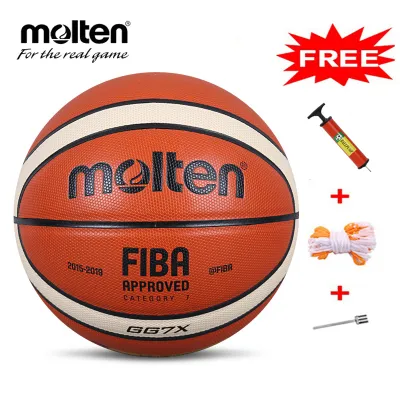
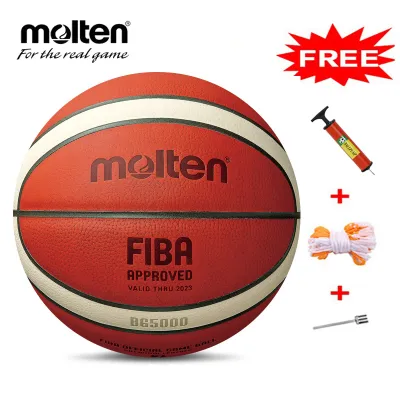
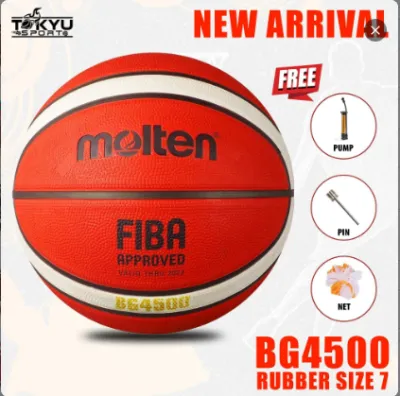
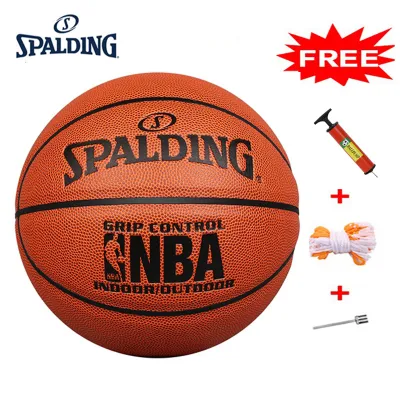
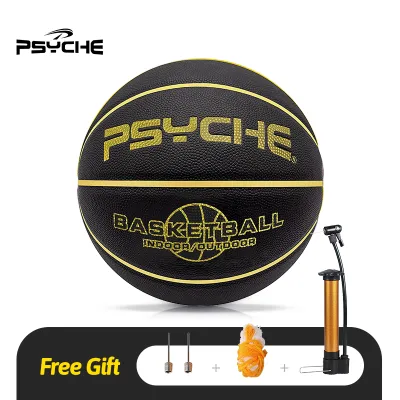
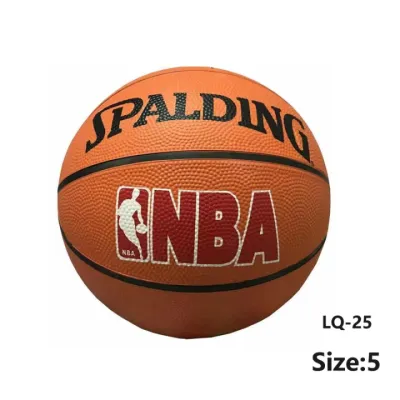
Prices are valid at publication and may change. Please refer to the product page for the latest price.
To withstand these different environments, manufacturers construct basketballs from three primary materials: genuine leather, composite (synthetic) leather, and rubber. Genuine leather is the standard for indoor professional play, offering unmatched feel and grip once broken in, but it is highly sensitive to moisture and rough surfaces. Composite leather mimics the feel of real leather while offering improved moisture resistance and durability, making it highly versatile. Rubber is the most rugged option, designed specifically to endure the harsh friction of concrete and asphalt without peeling or tearing.
Choosing the wrong material for your court surface directly impacts both your game and your wallet. An indoor leather ball exposed to concrete will lose its outer grip pattern within a few sessions, leaving you with a slick, unusable sphere. On the other hand, using a basic rubber ball indoors can result in unpredictable bounces and a lack of tactile control on a polished floor. Understanding these material properties allows you to select a ball that maintains its shape, grip, and bounce over hundreds of games.
Selecting a Basketball for Indoor Courts
For indoor play, the priority is achieving a consistent, high-friction grip that allows for precise ball handling and shooting control. Genuine leather and premium composite leather are the standards for indoor courts. Genuine leather balls require a “break-in” period, during which the natural oils from players’ hands soften the material, making it grippier and more responsive over time. Premium composite leather offers a similar soft feel right out of the box without requiring a break-in period, and it handles sweat exceptionally well.

The physical design of an indoor ball is engineered to maximize hand contact. Indoor basketballs feature deep channel designs—the black recessed lines running across the ball—and a dense pebble pattern across the panels. These pebbles create microscopic points of friction against your fingers, while the deep channels give your fingertips leverage when releasing a shot or making a quick pass. This level of detail is crucial on indoor courts where sweat can make both the floor and the ball slippery.
However, these high-performance materials are incredibly delicate. You must never use an indoor-specific leather or premium composite ball on outdoor concrete. The abrasive ground will grind down the delicate pebble texture in a matter of hours, turning a premium ball into a smooth, bald object. Furthermore, concrete dust fills the pores of genuine leather, permanently ruining its ability to absorb moisture and maintain grip, rendering an expensive ball useless for indoor play.
Selecting a Basketball for Outdoor Concrete Surfaces
When playing on outdoor concrete or asphalt, durability and dust resistance are the most critical factors. Rubber basketballs are the traditional choice for outdoor courts because they are highly resistant to abrasion. A rubber casing can scrape against rough concrete, metal chains, and iron rims repeatedly without tearing or losing its structural integrity. Rubber balls are also highly water-resistant, meaning they will not absorb water or become waterlogged during sudden tropical downpours or high-humidity days.
For players who want a softer feel than rubber but still need outdoor durability, heavy-duty composite leather balls designed specifically for outdoor use are an excellent alternative. These outdoor composites feature a thicker, reinforced outer layer that resists scuffing while maintaining a closer approximation of indoor ball handling. They are engineered to withstand the high-friction environment of concrete while offering a more comfortable grip than standard rubber.
The tread and channel design of outdoor balls also differ from their indoor counterparts. Outdoor basketballs often feature wider, shallower channels. This design prevents fine concrete dust and dirt from packing into the grooves, which would otherwise make the ball incredibly slick. While outdoor balls provide excellent durability, they do require a trade-off: they have a much firmer, stiffer feel, and they do not absorb moisture, meaning sweat will sit on the surface of the ball rather than being wicked away.
Can You Use One Basketball for Both Indoor and Outdoor Courts?
If you regularly split your time between indoor wooden floors and outdoor concrete courts, buying two separate balls is highly recommended, but a crossover ball is a viable budget-friendly alternative. Crossover or indoor/outdoor basketballs are almost always made of mid-grade composite leather. These balls are engineered with a balanced polyurethane cover that is tough enough to survive concrete abrasion while remaining soft enough to provide a decent grip on indoor hardwood.
However, using a single ball for both environments comes with significant compromises. The moment you take a crossover ball onto an outdoor concrete court, its lifespan for indoor play drops dramatically. The concrete will inevitably scuff the surface and coat the ball in fine dust. When you transition back to an indoor court, that accumulated dust and minor surface wear will make the ball feel slippery on the polished wood, compromising your grip and control.
To decide whether a crossover ball is right for you, evaluate your primary playing environment. If you play outdoors most of the time and only occasionally step onto an indoor court, a durable outdoor composite or rubber ball is your best option. If you play indoors regularly but want the flexibility to play outside once in a while, a crossover ball works well, provided you wipe it down thoroughly after every outdoor session. For serious players who demand consistent performance, keeping a dedicated indoor composite ball and a separate outdoor rubber ball is the most cost-effective strategy in the long run.
Key Checks Before Buying Your Basketball
Before purchasing your basketball from an online marketplace or local sporting goods store, you must verify its specifications to ensure it matches your needs. First, check the official size and weight standards. Size 7 (with a circumference of approximately 29.5 inches) is the standard size for men’s high school, collegiate, and professional play. Size 6 (approximately 28.5 inches) is the standard for women’s leagues and youth players aged 9 to 12, while Size 5 is designed for younger children. Choosing the correct size is essential for developing proper shooting mechanics and ball-handling habits.
Next, perform a physical inspection of the ball’s construction. Examine the seams where the panels meet; they should be flat, uniform, and free of any peeling edges or excess adhesive. If you are buying in person, perform a basic bounce test: drop the ball from shoulder height; it should bounce back up to about chest height. A ball that bounces too low may be underinflated or have a faulty bladder, while one that bounces too high or erratically may have structural defects.
Finally, always read the manufacturer’s label, packaging, or product description carefully. Manufacturers explicitly label their products as “Indoor,” “Outdoor,” or “Indoor/Outdoor” (Crossover). Do not rely solely on the look or price of the ball to determine its suitability. Verifying these designations ensures you do not accidentally ruin a premium indoor ball on concrete or end up with a stiff outdoor ball that slips on a polished hardwood court.
Frequently Asked Questions (FAQ)
How do I know when it is time to replace my basketball?
You can identify a worn-out basketball through several clear visual and performance cues. Visually, look for balding spots where the pebble texture has completely worn smooth, faded colors, or deep cracks along the seams. Performance-wise, a ball needs replacement if it no longer holds air pressure consistently, requiring you to pump it up before every game. If the ball develops lumps, loses its symmetrical round shape, or bounces erratically even when properly inflated, its internal bladder or nylon windings have failed, and it is time for a new one.
Does the color of the basketball affect its visibility on outdoor courts?
Yes, the color of a basketball can significantly affect its visibility, especially on outdoor courts during late afternoon or evening games under low-light conditions. While traditional orange or deep brown balls are easy to see on bright, sunny days, they can blend into the dark background of asphalt or concrete as the sun sets. High-visibility colors, such as bright yellow, neon green, or multi-colored patterns, make the ball much easier to track in flight and locate against dark outdoor backdrops. However, keep in mind that non-traditional colors are purely cosmetic and do not improve the ball’s material durability, grip, or bounce performance.
Community discussion
Share your experience or ask a question. Comments are reviewed before publication.