
Choosing the right inflatable rubber boat requires looking past the surface and understanding the technical specifications on the manufacturer’s label. In tropical environments like the Philippines, where high humidity, intense sunlight, and varied coastal or freshwater conditions are common, these specifications dictate how well your boat performs, how many passengers it can safely carry, and how long it will last. By decoding material types, dimensions, and weight capacities, you can select a vessel that matches your planned activities and safety requirements.
Decoding Hull Materials: PVC, Hypalon, and Fabric Layers
Inflatable boats are primarily constructed from either Polyvinyl Chloride (PVC) or Chlorosulfonated Polyethylene (commonly known by the brand name Hypalon or CSM). PVC is lightweight, highly packable, and generally more budget-friendly, making it a popular choice for recreational use. However, standard PVC is more susceptible to UV degradation and high heat over time, which can weaken the material in tropical climates.
Hypalon offers superior resistance to UV rays, chemical exposure, and extreme temperatures, making it the preferred choice for professional, commercial, or long-term coastal use. While Hypalon is more durable and easier to patch with cold-cure adhesives, it is heavier, less compact when deflated, and carries a higher price tag. When evaluating either material, check the manufacturer’s denier rating, which measures the density of the internal polyester support fabric; a higher denier (such as 1,000 or more) indicates greater puncture and abrasion resistance.
Products mentioned in this guide
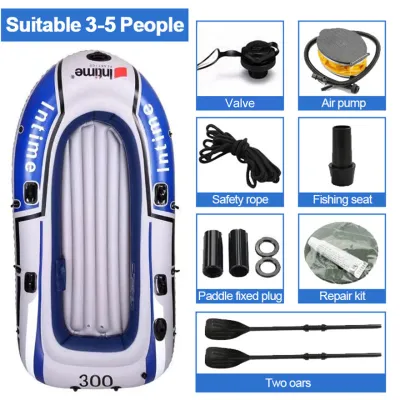
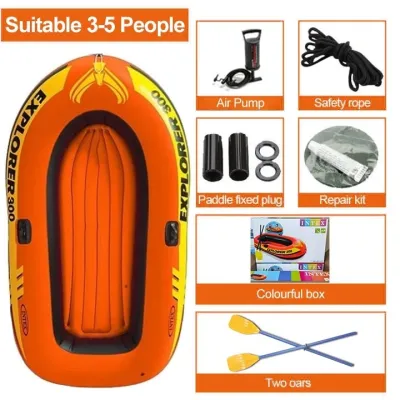
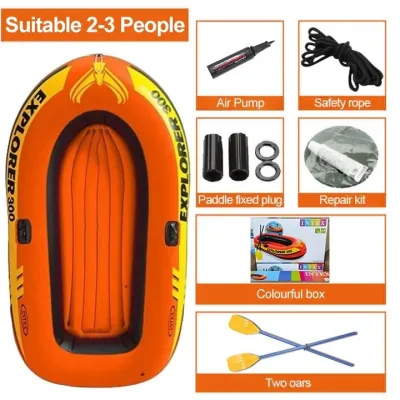
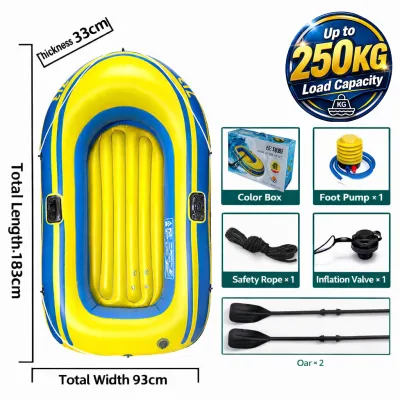
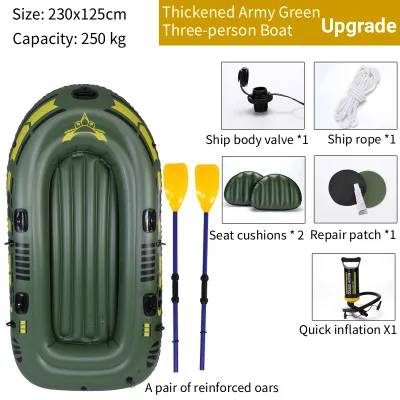
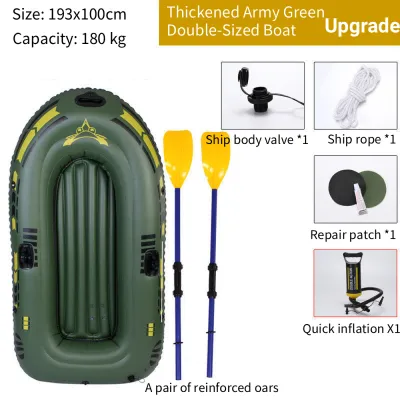
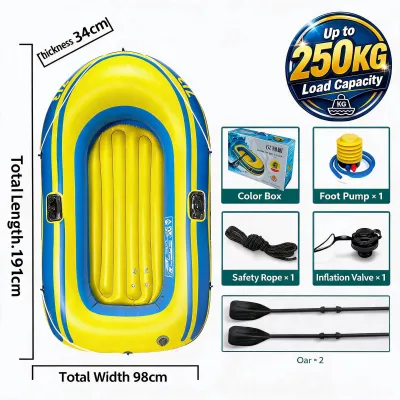
Prices are valid at publication and may change. Please refer to the product page for the latest price.
Beyond the outer tubes, the floor construction significantly impacts structural rigidity. Drop-stitch floors use thousands of tiny polyester threads to connect the top and bottom layers, allowing the floor to be inflated to high pressures so you can stand stably. For seam construction, welded seams generally offer a stronger, more heat-resistant bond than glued seams, which can soften under prolonged exposure to direct tropical sunlight. Always verify the manufacturer’s warranty terms regarding seam separation, as this is a key indicator of construction quality.
Understanding Dimensions and Passenger Capacity
When reading an inflatable boat’s specification sheet, it is crucial to distinguish between the overall external dimensions and the usable interior cockpit space. The large inflatable tubes that provide buoyancy also consume a significant portion of the boat’s width and length. A boat that measures three meters externally may only offer two meters of usable length inside, which directly limits where you can place gear, fuel tanks, or coolers.

Passenger capacity ratings on manufacturer plates represent the maximum number of people the boat can carry under ideal, calm conditions without compromising basic flotation. These ratings do not represent a comfortable seating arrangement for long trips. For recreational outings, a practical rule of thumb is to subtract at least one or two people from the maximum rated capacity to ensure everyone has enough legroom and space to move safely.
Before purchasing, you must also evaluate the deflated dimensions and packed weight of the boat. A larger boat requires more storage space in your home and may require a vehicle with a spacious trunk or a dedicated trailer. Ensure you can physically lift and transport the packed bag, especially if you plan to launch in remote areas without paved boat ramps.
Interpreting Weight Capacity and Payload Limits
Every certified inflatable boat features a capacity plate that lists its maximum weight capacity. Exceeding this limit reduces the boat’s freeboard—the distance between the water line and the top of the tubes—which increases the risk of taking on water in choppy conditions. Overloading also severely degrades handling, making the boat sluggish and difficult to steer.
To calculate your safe payload, you must account for every item placed on board, not just the passengers. Start with the combined weight of all passengers, then add the weight of your gear, safety equipment, anchor, fuel, and any outboard motor. If your total calculated weight approaches the maximum capacity, you should opt for a larger boat model to maintain a safe margin of buoyancy.
The capacity plate also specifies the maximum recommended motor horsepower and shaft length. Installing a motor that exceeds the recommended horsepower can damage the transom, cause the bow to rise dangerously, or even flip the boat during sudden acceleration. Always match the outboard motor’s shaft length to the transom height to ensure the propeller sits at the correct depth for efficient propulsion.
Matching Specs to Your Intended Water Conditions
The shape of the boat’s hull determines how it interacts with waves and currents. Flat-bottom inflatable boats are highly stable at rest and perform well in calm, shallow waters like lakes, slow-moving rivers, or sheltered coves. However, they tend to ride rough and splash in choppy water because they cannot cut through waves.
For open coastal waters or choppy bays, a V-hull design is more suitable. A rigid inflatable keel or a molded fiberglass V-hull cuts through waves, providing a smoother ride and better tracking at higher speeds. Additionally, larger tube diameters offer greater buoyancy and act as a barrier against spray, keeping the cockpit drier in rougher conditions.
Before launching your boat, perform basic safety checks to ensure the vessel is seaworthy. Inspect the valves for dirt or sand, and use a pressure gauge to verify that the tubes are inflated to the manufacturer’s recommended pressure. Remember that equipment specifications and high-quality materials are secondary to proper boating safety training, personal flotation devices, and adherence to local maritime regulations.
Frequently Asked Questions (FAQ)
How do I check for leaks before launching?
To locate micro-leaks in your inflatable boat, mix mild dish soap with water in a spray bottle and apply it generously over the inflated tubes, focusing on the seams and valves. If there is a leak, escaping air will create distinct, growing bubbles in the soapy solution. Additionally, inspect the valve cores and rubber O-rings for trapped sand, salt crystals, or debris, which are common causes of slow air loss and can be resolved with a simple cleaning.
Can I leave my inflatable boat inflated in the sun?
Leaving an inflatable boat in direct sunlight causes the air inside the tubes to expand rapidly as the temperature rises, which can over-pressurize the chambers and rupture the seams. If you must leave the boat inflated in the sun, slightly reduce the air pressure to allow room for expansion, and monitor the tubes periodically. Whenever the boat is not in use, store it in a shaded, well-ventilated area or deflate it completely, and apply a manufacturer-approved UV protectant to shield the material from sun damage.
Community discussion
Share your experience or ask a question. Comments are reviewed before publication.