
Choosing the right shelter is one of the most critical decisions you will make before heading out into the wild. Whether you are planning a weekend getaway to the cool ridges of Tanay or preparing for a multi-day trek up Mount Pulag, your tent is your primary defense against the elements. The debate between modern inflatable tents (often called air tents) and traditional pole tents centers on a balance of convenience, weight, durability, and cost.
Choose an inflatable tent if: You prioritize fast, effortless setup for family car camping, have limited mobility, or frequently camp in fair-to-moderate weather where quick pitch times maximize your leisure. These tents are highly suited for those who want to minimize physical labor at the campsite and have ample vehicle space to transport heavier gear.
Choose a traditional pole tent if: You are backpacking, motorcycle touring, or hiking where lightweight gear and compact packability are critical. They are also the superior choice if you camp in extreme, unpredictable environments where field-repairable poles are preferred, or if you are working with a tighter budget.
Products mentioned in this guide
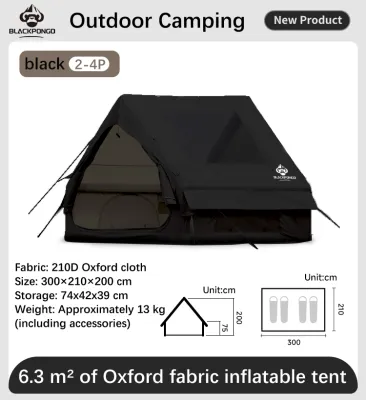
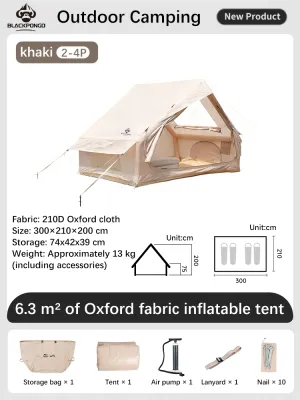
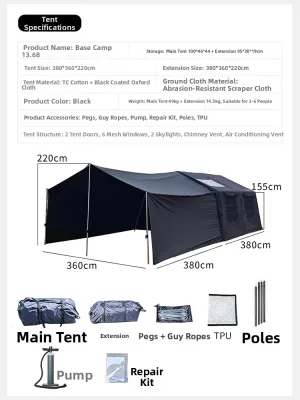
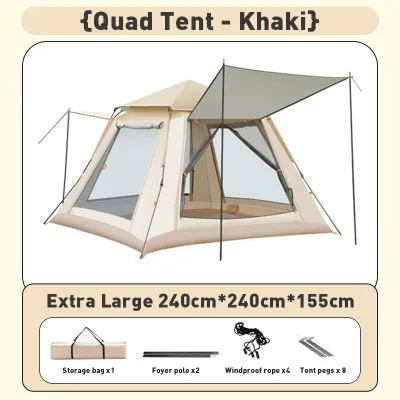
![6.3 Square Meters Automatic Inflatable Tent Rainproof Portable 4 Season Air Tent Inflation Air Tent House for Camping Hiking [Vodool Center]](https://img.lazcdn.com/g/p/2af5f8e372b18339c7b75b4c5f1a45f0.jpg_400x400q80.jpg_.webp)
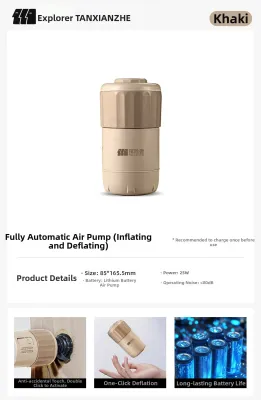
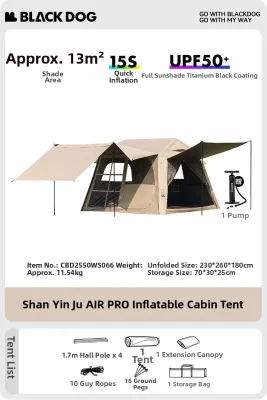
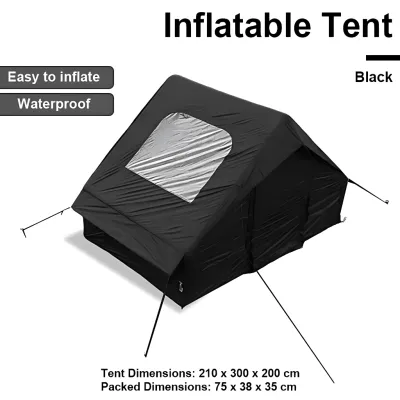
Prices are valid at publication and may change. Please refer to the product page for the latest price.
Verify first if: You are unsure about the specific wind ratings, packed weight limits, or repair options for the exact models you are considering. Always check the manufacturer’s technical specifications before finalizing your purchase.
Setup Speed and Effort: Air Beams vs. Pole Assembly
The physical effort required to pitch a tent can set the tone for your entire camping trip. Inflatable tents replace rigid fiberglass or aluminum poles with inflatable structural columns, commonly referred to as air beams. This design simplifies the pitching process. Instead of threading long poles through narrow fabric sleeves, you secure the corners of the tent, attach a pump to the inflation valves, and pump air into the beams until the structure stands upright.
Inflatable systems generally fall into two categories: single-point inflation and multi-point inflation. Single-point systems allow you to inflate the entire tent from a single valve, as all the air beams are interconnected. While highly convenient, these systems require careful monitoring to ensure even air distribution. Multi-point systems require you to inflate each beam individually. Although this takes slightly longer, it offers a safety advantage: if one beam suffers a puncture, the other beams remain inflated, keeping the tent structurally sound. While pitching is faster and can easily be managed by a single person, it relies entirely on having a compatible high-pressure pump on hand.
The real challenge with inflatable tents often occurs during pack-down. Deflating the air beams is quick, but removing all the trapped air to fit the tent back into its storage bag requires a specific technique. You must carefully fold and roll the fabric toward the open valves to force the remaining air out. Folding the tent incorrectly or forcing it into a tight bag can crease the air beams, potentially damaging the internal bladders over time.
Traditional pole tents require a more hands-on, methodical assembly process. You must unpack the shock-corded poles, slide the segments together, and thread them through fabric sleeves or secure them with plastic clips. This process demands physical coordination, bending, and reaching, which can be challenging during windy conditions or when setting up alone. For larger family-sized pole tents, having at least two people is almost always necessary to prevent the poles from bending awkwardly or tearing the fabric during setup.
However, the takedown process for pole tents is highly forgiving. Once the poles are unclipped and disassembled, the fabric can be folded or stuffed into its bag with minimal effort. There are no internal bladders to worry about creasing, making the packing process straightforward and less physically demanding than rolling an air tent.
To make an informed decision, check the manufacturer’s estimated pitch time and verify if a pump is included in the box. Watching setup videos for specific models can help you gauge the real-world learning curve and determine if the physical process matches your comfort level.
Weight and Packability: Hauling Your Shelter to the Campsite
How you plan to transport your gear is a major factor in choosing between these two tent styles. Inflatable tents are notoriously heavy and bulky. The structural air beams are constructed from thick, heavy-duty materials like polyvinyl chloride (PVC) or thermoplastic polyurethane (TPU) to withstand high pressure and resist punctures. Additionally, the outer canopy of an inflatable tent is often made from heavier, more robust fabrics to support the weight of the air beams.

This combination of heavy fabrics and thick air bladders significantly increases both the packed weight and the packed dimensions of the tent. A typical four-person inflatable tent can easily weigh between 15 to 25 kilograms, and its packed size can resemble a large duffel bag. This makes inflatable tents highly impractical for any activity where you must carry your gear over long distances. They are best suited for car camping, where the tent is transported in the trunk of a vehicle and carried only a few meters to the campsite.
Traditional pole tents offer a much lighter and more compressible profile. Backpacking-specific pole tents utilize lightweight aluminum poles and high-tech, thin fabrics such as siliconized nylon (silnylon) or siliconized polyester (silpoly). These materials allow a two-person pole tent to weigh under 2 kilograms and compress to the size of a small sleeping bag.
Even larger family-sized pole tents are generally lighter than their inflatable counterparts because the poles can be packed separately from the tent fabric. This allows you to distribute the weight among multiple people or pack the components into different areas of a vehicle, motorcycle pannier, or rucksack.
Before purchasing, strictly check the product specifications for “packed weight” and “packed dimensions.” Ensure that the weight listed includes all necessary stakes, pumps, and guylines, as these accessories can add significant bulk to your load.
Durability and Weather Handling: What to Check Before You Buy
A tent’s primary job is to keep you safe and dry when the weather turns bad. In tropical climates like the Philippines, where sudden downpours and strong winds are common, understanding how each tent handles environmental stress is crucial.
A common concern among campers is whether air beams are prone to bursting or if traditional poles are more likely to snap. Modern, high-quality inflatable tents utilize multi-layer, puncture-resistant air beams. Under high wind loads, these air beams are designed to flex and deform temporarily to absorb the force of the wind, and then pop back into their original shape once the gust passes. This flexibility prevents the structural damage that can occur when rigid poles are subjected to extreme forces.
Traditional pole tents rely on the structural flex of aluminum or fiberglass poles. Aluminum poles are highly durable and can bend significantly before breaking, making them the preferred choice for harsh weather. Fiberglass poles, often found in budget-friendly tents, are more rigid and can splinter or snap under sudden, heavy wind loads, potentially tearing the tent fabric in the process.
To verify the weather resistance of any tent, look for specific, measurable metrics on the product label or manual:
- Hydrostatic Head (HH) Rating: This metric, measured in millimeters (mm), indicates the fabric's waterproofing capability. For tropical climates with heavy rainfall, look for a flysheet with an HH rating of at least 2,000mm and a tent floor rating of 3,000mm or higher to prevent water from seeping through from the ground.
- Denier (D) Count and Fabric Type: The denier count measures the thickness of the individual threads in the fabric. A higher denier count (such as 75D or 150D) indicates a thicker, more tear-resistant material. Polyester is highly resistant to UV damage, while nylon offers excellent strength-to-weight ratios.
- Manufacturer Wind Ratings: Some premium brands subject their tents to wind tunnel testing and provide specific wind speed limits. Verify these ratings if you plan to camp in exposed coastal areas or high-altitude ridges.
Field repairability is another critical factor to consider. If an air beam suffers a puncture in the field, locating the leak can be challenging, especially in the rain. Repairing it requires a specific TPU patch kit and adhesive sealant, which often requires several hours of curing time before the beam can be re-inflated. If the puncture is along a seam or near a valve, a field repair may be temporary at best.
In contrast, repairing a broken tent pole is relatively simple. Most pole tents include a lightweight aluminum repair sleeve (or splint). If a pole snaps, you can slide the sleeve over the broken section and secure it with duct tape to restore structural integrity in minutes. If a pole is completely ruined, individual pole segments are inexpensive and easy to replace once you return home.
Remember that no tent is indestructible. Proper staking, correct tensioning of all guylines, and careful site selection are mandatory for both inflatable and pole tents to ensure safety and stability in adverse weather.
Cost and Long-Term Value: Initial Price vs. Repair Costs
Investing in a tent requires balancing your immediate budget against the long-term cost of ownership. Inflatable tents generally carry a premium price tag. The complex engineering required to manufacture airtight bladders, high-pressure valves, and reinforced sleeves drives up production costs. A reliable, entry-level inflatable tent in the Philippines can start around ₱15,000, with premium family-sized models easily exceeding ₱40,000.
Traditional pole tents offer a much wider range of price options. Budget-friendly dome tents with fiberglass poles can be purchased for as low as ₱1,500 to ₱3,000, making them highly accessible for beginners. Mid-range tents with durable aluminum poles typically cost between ₱5,000 and ₱12,000, while high-end backpacking or expedition tents can range from ₱15,000 to ₱30,000.
The cost of long-term maintenance also differs significantly between the two designs. Replacing a broken tent pole segment is highly affordable, often costing only a few hundred pesos, and replacement poles are widely available at local outdoor retailers.
Replacing a damaged air beam bladder or a faulty valve on an inflatable tent can be expensive and logistically challenging. Because air beams are often proprietary to specific brands and models, you may have to order replacement parts directly from the manufacturer, which can result in high shipping fees and long waiting times. If the manufacturer discontives the model, finding a compatible replacement beam can be difficult.
When evaluating the true total cost, check the manufacturer’s warranty terms to see if the air beams are covered under a separate, extended warranty. Additionally, verify what accessories are included in the purchase price; some inflatable tents do not include the necessary high-pressure pump or a protective footprint, which must be purchased separately, adding to your initial investment.
Side-by-Side Comparison: Inflatable Tent vs Traditional Pole Tent
To help you evaluate these options, the table below summarizes the key differences across primary decision-making dimensions.
| Dimension | Inflatable Tent | Traditional Pole Tent |
|---|---|---|
| Setup Speed | Fast and simple; requires a high-pressure pump | Moderate; requires manual assembly of poles |
| Packed Weight | Generally heavy (typically 15kg to 30kg for family sizes) | Ranges from ultralight (under 2kg) to moderate |
| Packed Size | Bulky and large; best suited for vehicles | Compressible; easily fits in backpacks or panniers |
| Wind Handling | Flexes and absorbs wind loads; pops back into shape | Flexes and sheds wind; poles can bend or snap under extreme load |
| Field Repairability | Requires specific patch kits, adhesive, and curing time | Can be splinted quickly with a repair sleeve and tape |
| Typical Price Tier | Premium (typically starting from ₱15,000+) | Wide range (budget-friendly to premium options) |
Final Recommendation: Match the Tent to Your Camping Style
Choosing between an inflatable tent and a traditional pole tent ultimately depends on how you travel, who you camp with, and where you plan to pitch your shelter.
For Family and Car Campers: If your camping trips involve packing up the SUV and heading to a managed campsite with family or friends, an inflatable tent is an excellent investment. The ease of setup allows you to pitch a large, multi-room shelter in minutes, leaving you with more time to manage children, prepare meals, or relax. The added weight and bulk are minor inconveniences when the vehicle does all the heavy lifting.
For Backpackers and Hikers: If you carry your shelter on your back over mountain trails or pack it onto a motorcycle for long-distance touring, a traditional pole tent is the clear choice. The lightweight fabrics and compact packed size of a pole tent are essential for conserving energy and maximizing storage space. Opt for models with high-quality aluminum poles for the best balance of weight and durability.
For Extreme or Remote Camping: If you plan to camp in remote areas, high-altitude environments, or regions prone to unpredictable, severe weather, a traditional pole tent is highly recommended. In these scenarios, self-reliance is critical. The ability to quickly repair a broken pole with a simple metal sleeve and duct tape in the middle of a storm is a vital safety advantage that inflatable tents cannot match.
The right tent is the one that aligns with the logistics of your adventures. Assess your transport capacity, your physical comfort with setup, and the typical weather conditions of your favorite destinations to choose the shelter that will keep you safe, dry, and comfortable on your next outdoor journey.
Frequently Asked Questions (FAQ)
Can an inflatable tent pop or collapse in high winds?
High-quality air beams are engineered to flex and absorb wind loads, often performing comparably to pole tents in moderate to strong winds. Instead of snapping like a rigid pole, the air beams will bend under sudden gusts and immediately pop back into shape. Catastrophic failure or popping is rare, provided the tent is inflated to the manufacturer’s recommended PSI and used within its rated limits. However, wind resistance relies heavily on proper site selection, fully staking out the base, and correctly tensioning all guylines, regardless of the tent type.
Do I need a special pump for an inflatable tent?
Yes, most inflatable tents require a specific high-pressure manual or electric pump equipped with the correct nozzle adapter to reach the required PSI for structural rigidity. Standard low-pressure pumps designed for air mattresses or pool toys do not have the power to inflate the beams sufficiently. Conversely, using high-pressure air compressors designed for car tires can easily over-inflate and rupture the air bladders. Always check the product listing to confirm if the required pump is included in the box or if it must be purchased separately.
Community discussion
Share your experience or ask a question. Comments are reviewed before publication.