
The Short Answer: Is 16mm Nylon Rope Safe for Climbing?
Standard 16mm nylon rope is not safe for lead climbing, top-roping, or any mountain climbing activity where a fall is possible. While a 16mm rope might look incredibly thick, strong, and reassuring to a beginner, it lacks the engineered elasticity required to absorb the severe impact forces of a fall. Using this type of rope for climbing poses a high risk of catastrophic equipment failure or severe bodily injury.
In mountain climbing, ropes are classified into distinct categories based on their mechanical behavior under load. Climbing requires specialized, certified dynamic ropes that stretch under tension. A generic 16mm nylon utility rope is typically designed as a static or low-stretch cord, which is intended for hauling loads rather than catching falling climbers. Furthermore, its extreme thickness makes it physically incompatible with modern climbing safety systems.
If you are currently using a generic 16mm nylon rope for any life-safety climbing application, you should stop using it immediately. No level of personal physical ability, climbing experience, or careful movement can compensate for using uncertified, inappropriate equipment. Always prioritize certified climbing gear designed specifically for the activity, and remember that specialized safety equipment cannot replace proper training, experienced mentorship, and sound personal judgment.
Products mentioned in this guide
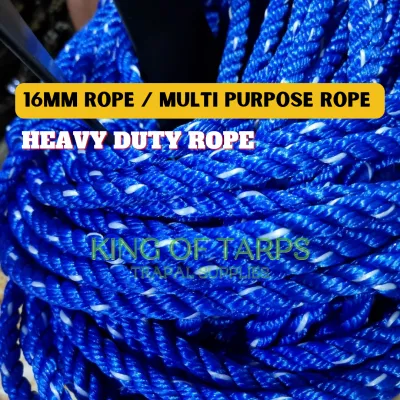
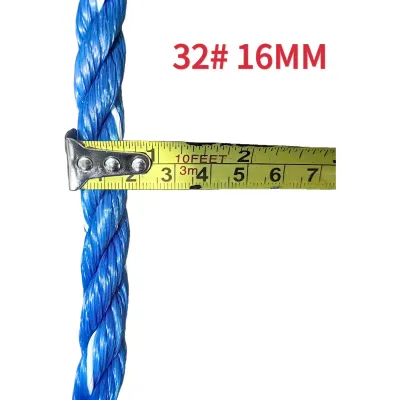
![[200M ]Roll Blue Nylon Rope Tali Rope Heavy Duty High Quality 28#14mm 17KG/32#16mm 22kg/36#18mm 28kg](https://img.lazcdn.com/g/ff/kf/S56db891c3cf34f3face8930e7072df81c.jpg_400x400q80.jpg_.webp)
Prices are valid at publication and may change. Please refer to the product page for the latest price.
Why Standard 16mm Nylon Rope Fails Climbing Safety Standards
Dynamic vs. Static: The Impact Force Problem
The primary reason generic 16mm nylon rope is dangerous for climbing is its lack of dynamic elasticity. When a climber falls, they accumulate kinetic energy that must be safely dissipated. Certified climbing ropes are engineered to act like high-tech bungee cords, stretching significantly to absorb this energy and lower the peak impact force transmitted to the climber’s body, harness, and protection anchors.

In contrast, standard utility nylon ropes, especially those with a thick 16mm diameter, behave as static or very low-stretch lines. Because these ropes do not stretch sufficiently under sudden loads, a fall generates an incredibly high impact force almost instantaneously. This sudden deceleration can cause severe spinal or internal injuries to the climber, even if the harness holds.
Furthermore, this massive impact force is transferred directly to the climbing protection, such as bolts, cams, or nuts placed in the rock. Because the rope does not absorb the energy, the force can easily exceed the holding power of your anchor points, causing them to rip out of the rock face. In extreme cases, the sudden shock load can snap the static rope itself or break the metal carabiners in your safety chain.
Diameter, Weight, and Handling Issues
Even if a 16mm rope possessed some elasticity, its physical dimensions make it completely impractical and hazardous for climbing. Standard dynamic climbing ropes used for lead climbing or top-roping generally range in diameter from 8.5mm to 11mm. A 16mm rope is massive by comparison, dramatically increasing the overall weight you must carry up the mountain.
Carrying hundreds of feet of 16mm rope up a steep approach or a multi-pitch route will quickly exhaust even the most conditioned climber. The sheer bulk of the rope also makes it incredibly difficult to manage at belay stations. Coiling, carrying, and packing a rope of this thickness requires excessive physical effort and takes up valuable space in your pack.
More importantly, a 16mm rope is physically incompatible with standard climbing hardware. Modern belay devices, including tube-style devices and assisted-braking devices, are designed to accept ropes with maximum diameters of 10.5mm or 11mm. Attempting to force a 16mm rope through these devices will jam the system, preventing smooth feeding of slack and making a proper belay impossible. The rope is also too thick to clip easily into standard climbing carabiners and quickdraws, increasing the risk of fumbling during critical clips.
The Absence of UIAA and CE Certifications
Every piece of gear used in life-safety climbing applications must undergo rigorous testing to ensure it can withstand the extreme forces of the sport. Genuine climbing ropes are certified by the Union Internationale des Associations d’Alpinisme (UIAA) or carry European Conformity (CE) markings, specifically meeting the EN 892 standard for dynamic ropes. These certifications guarantee that the rope has been tested for fall rating, impact force, sheath slippage, and edge resistance.
Generic 16mm nylon ropes sold at local hardware stores, marine supply shops, or online marketplaces do not undergo these specialized climbing tests. They are manufactured for industrial, agricultural, or marine applications where loads are static and predictable. Using uncertified rope for climbing means you are trusting your life to an item with unknown dynamic performance characteristics.
Before using any rope for climbing, always check the manufacturer’s product label and packaging for the official UIAA or CE certification logos. If the rope lacks these specific certifications, or if the manufacturer’s instructions do not explicitly state that the rope is approved for dynamic climbing, do not use it for life-safety purposes. If instructions conflict, the item is unidentified, or the use is not covered, stop and consult the manufacturer or a qualified professional directly.
Understanding Load Capacity and Breaking Strength
When evaluating rope safety, it is easy to be misled by high breaking strength numbers. Many generic 16mm nylon ropes are advertised with impressive tensile strengths, sometimes exceeding several thousand kilograms. However, this figure represents the static breaking strength, which is the absolute force required to break the rope under a slow, steady pull in a controlled laboratory setting.
Static breaking strength is highly misleading when applied to dynamic climbing situations. A rope can have a massive static breaking strength but still fail catastrophically during a dynamic fall because it cannot absorb shock loads. For climbing safety, the critical metrics are the maximum impact force (which must be low enough to prevent bodily harm) and the UIAA fall rating (the number of severe factor-1.77 falls the rope can sustain before failing).
Additionally, industrial and utility ropes are rated using a Working Load Limit (WLL), which is typically only a small fraction (often 1/5 to 1/10) of the static breaking strength. This safety margin accounts for wear, knots, and environmental degradation. To determine the safe limits of any utility rope you use for non-climbing tasks, always locate the official manufacturer’s specification sheet or the sewn-in tag at the rope’s end, rather than guessing based on thickness alone.
Appropriate Outdoor Uses for 16mm Nylon Rope
While a 16mm nylon rope is entirely unsuitable for dynamic climbing, it remains a highly valuable tool for other outdoor and utility applications. Its thick diameter and high tensile strength make it ideal for heavy-duty tasks where dynamic elasticity is not required. For example, it is excellent for securing heavy camp equipment, rigging large tarps against strong tropical winds, or acting as a utility tie-down in the back of a vehicle.
In marine environments, 16mm nylon rope is highly valued for mooring and towing because nylon naturally resists rot and has a slight elasticity that helps absorb the constant tugging of waves. It is also commonly used on farms or homesteads for pulling heavy loads, hoisting non-safety gear, or building heavy-duty swings and gym battle ropes.
If a 16mm rope is specifically manufactured, tested, and certified as a static rescue rope under standards like EN 1891 Type A, it may be used in specialized industrial rigging, rescue haul systems, or caving. However, these applications require specialized professional training and must follow strict manufacturer guidelines. For any rigging or load-bearing setup, always inspect the rope beforehand for signs of UV degradation, chemical exposure, or abrasion, and ensure you remain well within the manufacturer’s specified Working Load Limit.
How to Choose the Correct Rope for Mountain Climbing
When purchasing a rope specifically for mountain climbing, your search should focus exclusively on certified dynamic ropes. These ropes are engineered specifically to stretch and keep you safe during a fall. For general sport climbing, top-roping, and traditional climbing, look for a single dynamic rope, which is designed to be used on its own and is marked with a circled number “1” on the end cap.
For the ideal balance of durability, weight, and handling, select a rope diameter between 9.5mm and 10.2mm. Beginners often benefit from ropes on the thicker end of this range (10.0mm to 10.2mm) because they offer greater abrasion resistance and provide more friction in belay devices, making them easier to control. Experienced climbers heading deep into the mountains often prefer thinner ropes (9.5mm to 9.8mm) to save weight on long approaches.
In the humid, tropical climate of the Philippines, selecting a rope with a “Dry Treatment” is highly recommended. Untreated nylon is highly hydrophilic, meaning it readily absorbs water from rain, heavy mist, or wet rock faces. A wet dynamic rope can lose up to 30% of its dynamic strength, becomes extremely heavy, and is prone to freezing or stiffening. A dry-treated rope features a water-repellent coating on the sheath (and sometimes the core) that prevents water absorption, preserving its safety performance and handling characteristics in wet conditions. Standard lengths of 60 meters or 70 meters are typically sufficient for most established climbing routes and local crags.
Essential Safety Checks and Retirement Rules
To ensure your climbing rope remains safe to use over time, you must establish a routine of thorough visual and tactile inspections. Before every climbing session, flake the entire rope through your bare hands. Feel for any flat spots, stiff sections, mushy areas, or lumps, which can indicate internal damage to the core (often referred to as a “core shot”). Visually inspect the sheath for severe abrasion, fuzzy patches, cuts, or exposure of the white inner core fibers.
If you discover any localized core damage near the ends of the rope, you can cut off the damaged section and seal the new end, provided the remaining length is still sufficient for your climbing routes. However, if you find core damage in the middle of the rope, or if the sheath is severely worn across large sections, you must retire the rope immediately.
Additionally, there are strict rules for retiring a rope even if it looks perfectly fine on the outside. You must retire your climbing rope immediately if it has been subjected to a severe, high-factor fall, or if it has come into contact with harsh chemicals, particularly battery acid or strong solvents. Under normal use and proper storage conditions—in a cool, dry, dark bag away from direct sunlight—a climbing rope has a maximum lifespan of 5 to 10 years from the manufacture date, depending on the frequency of use. Always defer to the specific retirement timeline and care instructions provided by your rope’s manufacturer.
Frequently Asked Questions (FAQ)
Can I use a 16mm rope to build a climbing anchor?
You should not use a generic 16mm utility nylon rope to build a climbing anchor. While anchors are static systems, they are still critical life-safety components. If you want to use a thick rope for building anchors or rigging fixed lines, you must use a certified low-stretch or static climbing rope that meets EN 1891 standards, not a hardware-store utility rope. When building anchors, always use proper climbing-grade cord (such as 7mm nylon accessory cord or specialized Dyneema slings), employ correct knotting techniques, and ensure the system is equalized, redundant, and secure.
How does tropical humidity affect nylon climbing ropes?
Tropical humidity and frequent rainfall in the Philippines can significantly impact nylon climbing ropes. Nylon is a hygroscopic material, meaning it absorbs moisture from the air. High humidity can cause an untreated rope to hold water, which increases its weight, reduces its dynamic safety margin, and makes handling through belay devices difficult. To combat this, climbers in tropical regions should invest in dry-treated dynamic ropes. Furthermore, always store your rope in a well-ventilated, cool, dry, and dark place inside a dedicated rope bag to prevent mold growth and UV degradation from intense tropical sunlight.
Is a thicker rope always safer for beginners?
Within the standard range of certified dynamic climbing ropes, a slightly thicker diameter (such as 10.1mm to 10.5mm) is often recommended for beginners because it offers greater durability, slower wear, and increased friction in belay devices, which makes managing falls easier. However, this rule does not apply once you exceed standard climbing diameters. A 16mm rope is not safer; instead, it is highly dangerous because it is too static to absorb fall forces, too heavy to carry safely, and completely incompatible with the belay devices and carabiners required to build a functional climbing safety system.
Community discussion
Share your experience or ask a question. Comments are reviewed before publication.