
When it comes to vertical safety, there is no room for ambiguity: a 5mm nylon rope is absolutely not safe for primary climbing activities. Under no circumstances should you use a 5mm cord for lead climbing, top-roping, or as your primary rappel line. This type of thin cord, commonly referred to in the climbing community as an accessory cord, is designed exclusively for non-life-supporting auxiliary tasks. Attempting to climb on a rope this thin presents an immediate, catastrophic risk of equipment failure, severe injury, or death.
The primary danger lies in the cord’s inability to absorb dynamic impact forces. When a climber falls, gravity accelerates their body, creating a massive amount of kinetic energy. A dedicated dynamic climbing rope is engineered to stretch significantly, acting like a shock absorber to safely dissipate this energy over several milliseconds. A 5mm nylon cord, however, is a static or low-stretch line. It lacks the structural elasticity required to arrest a fall. If a climber fell even a short distance on a static 5mm line, the shock load would transfer directly to the anchor, the harness, and the climber’s body, likely snapping the cord instantly or causing severe internal trauma.
In high-risk sports like rock climbing and mountaineering, equipment cannot replace proper training, experience, and sound judgment. Before attempting any vertical maneuvers, climbers must understand the physical limits of their gear. A 5mm cord has very narrow safety margins, meaning its correct application requires precise knowledge. If you are climbing in tropical environments like the Philippines—where humidity, sharp limestone cliffs, and intense heat can accelerate gear wear—understanding these limitations is even more critical to your survival on the rock.
Products mentioned in this guide
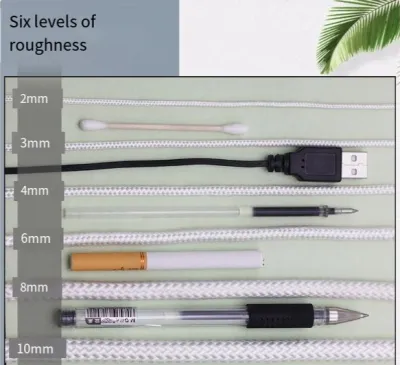
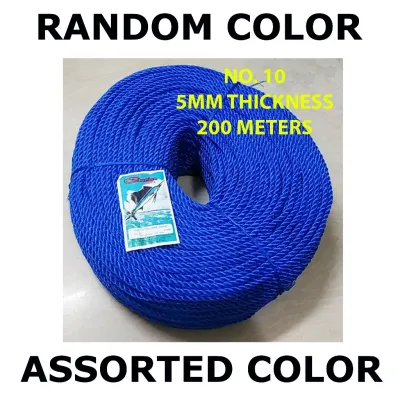
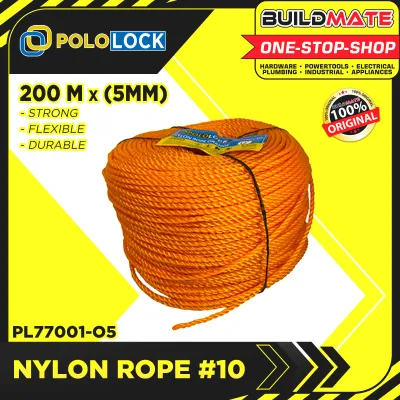
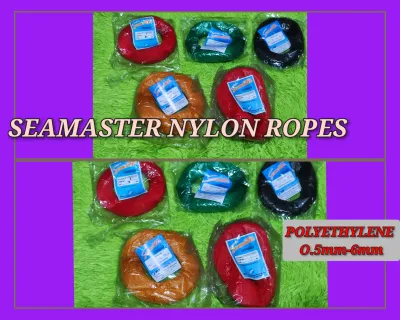
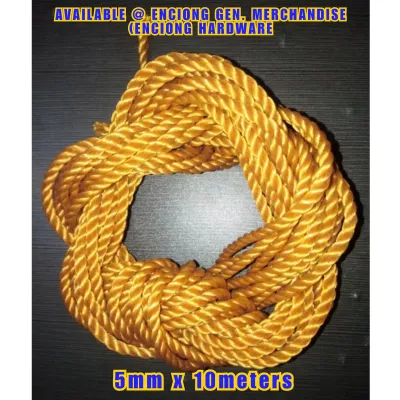
Prices are valid at publication and may change. Please refer to the product page for the latest price.
Understanding Load Limits and Safety Standards for Nylon Rope 5mm
To understand why a nylon rope 5mm in diameter is unsuitable for primary climbing, we must look at the strict engineering specifications and international safety standards that govern climbing equipment. The global climbing community relies on standards established by the Union Internationale des Associations d’Alpinisme (UIAA) and European Standards (such as CE and EN). These regulatory bodies mandate minimum diameters and performance thresholds for life-supporting climbing ropes to ensure they can withstand the extreme forces of repeated falls. For primary climbing, single ropes must typically have a minimum diameter of 8.9mm, while half ropes must be at least 7.5mm, and twin ropes must be at least 6.9mm—and even then, half and twin ropes must always be used in specific, multi-rope configurations.
In contrast, a 5mm nylon cord is certified under the EN 564 standard, which specifically covers accessory cords. These cords are tested for static tensile strength but are never rated to hold dynamic human falls. A typical, high-quality 5mm nylon accessory cord from a reputable climbing brand has a static breaking strength of approximately 5 kN to 7 kN. In practical terms, 1 kilonewton (kN) is roughly equivalent to 100 kilograms of force under static conditions. While a breaking strength of 500 to 700 kilograms might sound sufficient to hold a human body, this rating only applies to static, steady loads on brand-new, unknotted cord. It does not account for the dynamic, multiplied forces of a real-world fall, which can easily exceed 9 kN in a standard lead climbing fall.
While a certified 5mm accessory cord is relatively inexpensive—often costing around ₱50 to ₱100 per meter in local outdoor shops—a full-sized dynamic climbing rope is a major investment, typically ranging from ₱8,000 to ₱15,000. Do not let the lower price of thin cord tempt you into risking your life on an inadequate system. Climbers must always verify their gear’s specific ratings rather than relying on generic material assumptions. Every certified climbing accessory cord comes with a manufacturer’s sewn tag, technical insert, or packaging details indicating its exact breaking strength, material composition (such as nylon or high-modulus polyethylene), and intended use. Generic nylon ropes purchased from local hardware stores or non-specialized online marketplaces lack these critical certifications. They often have much lower breaking strengths, inferior sheath construction, and no quality control guarantees, making them highly dangerous for any climbing application.
The loss of strength due to knots is another critical factor that climbers must account for. Tying any knot in a rope introduces sharp bends that concentrate stress and weaken the fibers. In a thin 5mm cord, common knots like the double fisherman’s or a figure-eight loop can reduce the cord’s overall breaking strength by 30% to 50%. This means a cord rated for 5 kN of static force may only support 2.5 kN to 3.5 kN once knotted. When you combine this reduction with the natural degradation caused by dirt, moisture, and UV exposure, the actual load-bearing capacity of a used 5mm cord drops to levels that are entirely unsafe for supporting human weight.
Proper and Safe Uses for 5mm Accessory Cord
While a 5mm nylon cord must never be used as a primary climbing rope, it remains an indispensable tool when utilized for its intended auxiliary purposes. The most common and widely accepted application for 5mm accessory cord is tying friction hitches, such as Prusik, Klemheist, or Autoblock knots. These hitches are wrapped around a thicker, primary climbing rope to create a slide-and-grip mechanism. They are essential for self-rescue scenarios, ascending a fixed line, or serving as a safety backup (third hand) below a rappel device to prevent an uncontrolled descent if the climber loses their grip.

Another legitimate application is building redundant anchor systems, provided the cord is used in multiples and equalized perfectly to distribute the load. For example, some climbers use accessory cords to tie off natural anchors like small trees or rock horns, or to link multiple gear placements together. However, most experienced climbers prefer thicker cords, such as 7mm or 8mm nylon, or specialized Dyneema slings for anchors due to their higher safety margins. If you choose to use a 5mm cord for rigging, it must only be used in highly redundant configurations where the load is shared across multiple strands, and never as a single, non-redundant point of attachment.
Additionally, 5mm cord is highly useful for organizing and hauling light, non-human loads. Climbers frequently use it to create custom gear slings, attach water bottles to their harnesses, or haul light backpacks up multi-pitch routes. By using a lightweight 5mm cord for these secondary tasks, you keep your expensive primary climbing ropes clean and free from unnecessary wear. It is also excellent for general camp chores, such as hanging food bags away from wild animals or pitching tarps to shelter from sudden tropical downpours.
Regardless of the application, you must ensure that the cord you use is specifically manufactured for climbing and rated under the EN 564 standard. Never substitute certified climbing cord with cheap utility rope from a hardware store. Certified climbing cord is engineered with a high-quality sheath-to-core ratio that provides the necessary friction, heat resistance, and flexibility required for knots to hold securely under tension. Using a non-rated cord for a friction hitch can lead to the knot slipping or melting under the heat generated by friction, defeating its purpose as a safety backup.
Dangerous Misuses You Must Avoid
To maintain safety on the crag, you must establish strict, non-negotiable boundaries regarding what a thin cord cannot do. First and foremost, never use a 5mm nylon rope as a single rappel line. When you rappel, your descender device relies on friction to control your speed, generating intense heat in the process. Because a 5mm cord has very little thermal mass, this friction can rapidly heat the nylon fibers past their melting point (which is around 250°C for standard nylon 6,6). This can cause the sheath to glaze, melt, or fuse, leading to sudden rope failure and a fatal fall.
Similarly, you must never tie a 5mm cord directly into your climbing harness to use as a lead or top-rope climbing line. This is a common mistake among beginners who assume that multiple wraps or short distances make it safe. A human fall on a single strand of 5mm cord will almost certainly result in the cord snapping instantly due to its lack of dynamic elasticity and low tensile strength. Your life depends on using a certified dynamic climbing rope designed specifically to handle these high-impact forces.
Another critical warning is to never use a single strand of 5mm cord as a single-point, non-redundant anchor for human loads. Whether you are setting up a top-rope anchor or securing yourself at a multi-pitch belay station, your primary safety system must always feature redundancy. If a single strand of 5mm cord is subjected to an unexpected shock load or rubs against a sharp edge, it has zero margin for error. If that single strand fails, there is no backup to catch you.
Thin cords are also exceptionally vulnerable to cutting and abrasion. Tropical climbing environments, such as those found in the Philippines, are notorious for sharp, aggressive rock types like limestone and volcanic basalt. When a thin 5mm cord is loaded, even minor lateral movement across a sharp rock edge can slice through the nylon sheath and core in a matter of seconds. No amount of gear can replace proper training, situational awareness, and professional judgment. Always assess the rock quality, manage your rope path to avoid sharp edges, and use edge protectors or thicker webbing when routing lines over abrasive surfaces.
How to Inspect and Retire Your Accessory Cord
Because accessory cords are frequently subjected to abrasion, dirt, and heavy friction, regular inspection is a vital habit for every climber. Before every single climb, you should perform a thorough visual and tactile inspection of your 5mm nylon cord. To do this, flake the cord slowly from one end to the other, running it through your bare hands. This allows you to feel for internal damage that might not be immediately visible to the naked eye.
During your tactile inspection, feel closely for flat spots, mushy sections, or unusually stiff segments. These symptoms indicate internal core damage, where the inner nylon strands have been ruptured or deformed due to overloading or tight bends. Visually, look for core shots, which occur when the outer sheath is worn through or cut, exposing the white inner core fibers. If you detect any core shots, flat spots, or structural inconsistencies, the cord must be retired immediately.
You must also inspect the cord for external signs of degradation. Look for severe abrasion, which presents as excessive fuzziness along the sheath, as well as significant UV fading. In tropical climates, the intense sun can rapidly degrade nylon fibers, making them brittle and weak. Additionally, check for chemical contamination; exposure to substances like battery acid, gasoline, or even certain household cleaning agents can silently destroy nylon fibers without leaving highly obvious visual marks. If your cord has been stored near potential contaminants, or if it has a greasy, discolored, or stiff texture, discard it immediately.
All climbing gear has a finite lifespan, and accessory cords are no exception. Even if a cord looks perfectly fine, it degrades over time due to environmental exposure and microscopic wear. As a general rule, an accessory cord that sees regular use should be retired after two to three years, while a cord that is used occasionally can last up to five years. Any cord that has been subjected to a major, unexpected load—such as holding a falling climber during a self-rescue maneuver—must be retired immediately. If you have any doubt about the safety of your cord, do not hesitate to destroy it by cutting it into short, unusable pieces. This simple act ensures that neither you nor anyone else will accidentally use a compromised cord in a life-threatening situation.
Frequently Asked Questions (FAQ)
Can I use 5mm paracord instead of climbing accessory cord?
No, you should never use standard paracord for any climbing or life-support application. Paracord is utility cord designed for general outdoor tasks like pitching tents or tying down gear, and it is not manufactured, tested, or rated to strict climbing standards like EN 564. Its sheath-to-core ratio, tensile strength, and melting points differ significantly from climbing-specific accessory cords, making it highly prone to melting or snapping under climbing-related friction and loads.
How do I know if my 5mm cord is rated for climbing?
To verify if your cord is rated for climbing, look for the manufacturer’s sewn-in tag or the original packaging, which must explicitly state compliance with climbing safety standards, such as UIAA or CE EN 564. If the cord lacks a traceable brand, clear rating, or standard certification, you must assume it is unsafe for any climbing-related application and relegate it strictly to non-critical camp chores.
Community discussion
Share your experience or ask a question. Comments are reviewed before publication.