
When planning an outdoor getaway, choosing the right shelter is the difference between a restful night under the stars and a cramped, sleepless ordeal. A camping tent 3 to 4 person rating sounds ideal for a small family or a group of friends, but these marketing labels rarely align with real-world expectations of comfort. In most cases, a tent rated for three to four people is only spacious enough for two adults who want room for their gear, or a couple with young children.
Understanding how tent manufacturers calculate capacity is the first step toward making an informed purchase. By learning to decode specification sheets, analyze floor dimensions, and account for environmental factors, you can avoid the common mistake of buying a tent that is far too small for your needs.
The "Person" Rating Myth: What a 3-4 Person Camping Tent Actually Means
The outdoor industry uses a standardized, highly technical method to determine tent capacity, which often surprises first-time campers. When a manufacturer labels a shelter as a 3-4 person tent, they are calculating the maximum number of standard-width sleeping pads that can lie flat on the floor side-by-side. This baseline measurement assumes a standard adult sleeping pad width of approximately 20 to 22 inches (51 to 56 centimeters).
Products mentioned in this guide
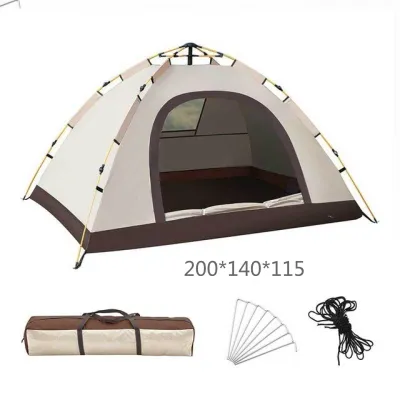
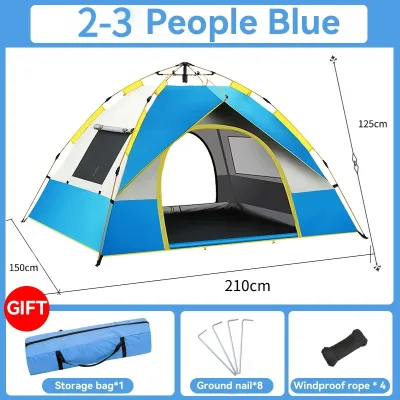
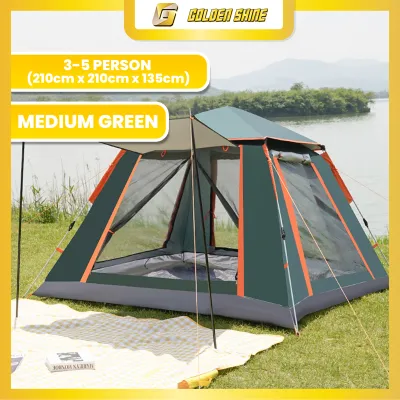
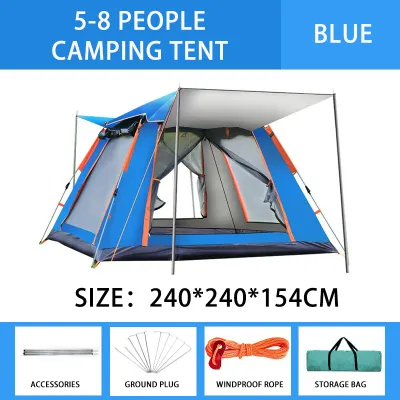
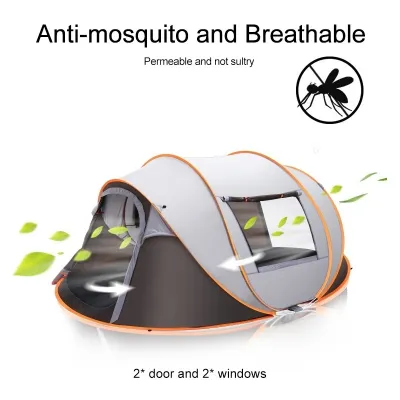
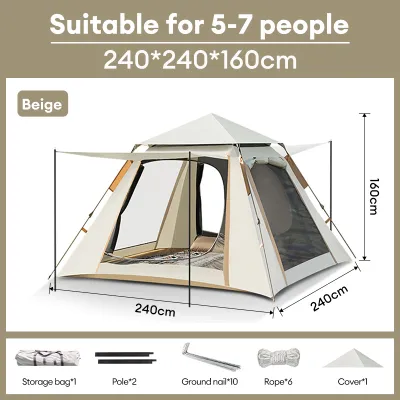
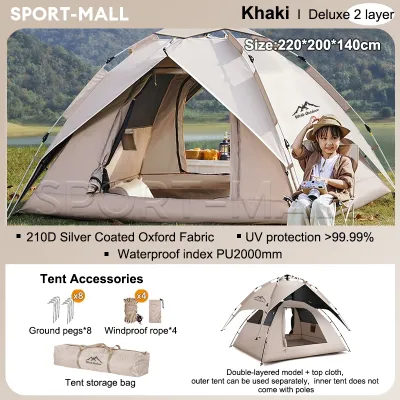
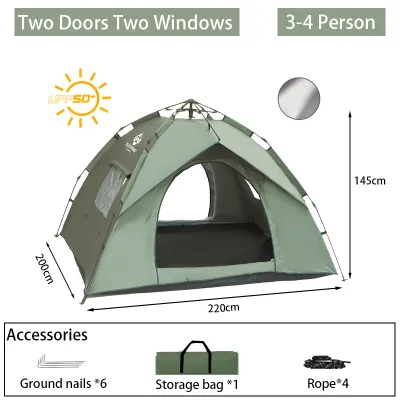
Prices are valid at publication and may change. Please refer to the product page for the latest price.
This calculation represents what outdoor enthusiasts call a “survival fit.” In this scenario, occupants sleep shoulder-to-shoulder with virtually zero space between them. There is no allowance made for turning over, sitting up comfortably, or storing personal items like backpacks, boots, and clothing inside the tent. It assumes a minimalist backpacking scenario where every square inch of floor space is utilized solely for sleeping.
For recreational camping, you should aim for a “comfort fit” instead. A comfort fit allows enough space to store personal gear at your feet or sides, change clothes without crawling over your companions, and enjoy a reasonable level of personal space.
To achieve this level of comfort, apply a simple rule of thumb: subtract one or two people from the manufacturer’s stated capacity. By this standard, a camping tent 3 to 4 person model is best utilized as a spacious two-person tent, or a cozy three-person shelter if everyone traveling is packing exceptionally light.
Real-World Scenarios: Who Actually Fits Best?
To visualize how a 3-4 person tent functions in the field, it helps to look at common group configurations and how they translate to real-world comfort. Different trip styles, gear loads, and occupant sizes will dramatically alter how spacious the tent feels.

Two Adults with Heavy Gear
This configuration is the absolute sweet spot for a 3-4 person tent. When shared by two adults, there is ample room to place two wide sleeping pads or a queen-sized air mattress while leaving a generous strip of floor space along the side or foot of the tent. This extra space is perfect for storing large hiking backpacks, duffel bags, and clean clothes, keeping them safe from outdoor moisture and insects.
Three Adults with Light Gear
Three adults can fit into this tent size comfortably, provided they are using standard, non-bulky sleeping pads and mummy-style sleeping bags. In this scenario, gear storage inside the main cabin must be kept to a minimum. Campers will need to utilize the tent’s vestibules (the covered exterior entryways) or store their larger packs and cooking gear in a vehicle or a separate weatherproof utility bag.
Four Adults
Using a 3-4 person tent for four fully grown adults is a very tight squeeze that should generally be reserved for minimalist backpacking, emergency situations, or short overnight stays. Occupants will have to sleep shoulder-to-shoulder, often alternating head-to-toe to maximize shoulder room. All gear, except for small essentials like headlamps and water bottles, must be stored outside the tent under a rainfly or vestibule.
Two Adults and Two Small Children
This setup is highly popular for young families. Because small children require much less floor length, a 3-4 person tent provides a cozy yet functional layout. There is typically enough room for parents to manage diaper changes, organize kid-friendly gear, and allow toddlers space to move around without feeling claustrophobic. However, as children grow into their pre-teen years, upgrading to a larger tent becomes necessary.
Crucial Dimensions to Check Beyond the Capacity Label
To determine the actual livability of a tent, you must look past the marketing tag and examine the physical dimensions listed on the product’s specification sheet. Four key design elements dictate how roomy a tent will feel in practice.
Floor Area and Shape
Do not rely solely on the total square footage or square meters; look closely at the length and width measurements. A standard 3-4 person tent typically offers a floor area ranging from 45 to 60 square feet (approximately 4.2 to 5.6 square meters).
Pay attention to the floor shape. Rectangular floors maximize usable space because they allow sleeping pads to fit perfectly into the corners. Tapered or hexagonal floor plans, while more aerodynamic in high winds, cut off valuable corner space, forcing campers to crowd toward the center of the tent.
Peak Height and Wall Slope
Peak height refers to the distance from the tent floor to its highest internal point. For a 3-4 person tent, a peak height of 48 to 60 inches (120 to 150 centimeters) is common. However, the slope of the walls determines how much of that height is actually usable.
Traditional dome tents have highly sloped walls that curve inward quickly, meaning you can only sit upright in the dead center of the tent. Cabin-style tents or dome tents designed with pre-bent poles feature near-vertical walls. These designs dramatically increase “elbow room” and vertical volume, allowing multiple occupants to sit up, play cards, or change clothes simultaneously.
Vestibule Space
A vestibule is an extension of the rainfly that creates a covered, floorless storage area outside the inner tent door. Think of it as your tent’s mudroom. A tent with generous vestibule space is incredibly valuable because it allows you to store muddy boots, wet backpacks, and bulky camp chairs outside the sleeping cabin while keeping them protected from the elements. This effectively frees up the entire interior floor area for sleeping.
Door Count and Placement
If you are sharing a tent with more than one person, a single door can quickly become a major inconvenience. Dual-door configurations are highly recommended for 3-4 person tents. Having an entry and exit point on both sides of the tent means you do not have to crawl over sleeping partners for late-night bathroom trips, which preserves sleep quality and improves the overall flow of the campsite.
Weather and Environment: Space Considerations in the Philippines
When camping in tropical environments like the Philippines, local weather conditions play a massive role in how much physical space you need inside your tent. High humidity, sudden tropical downpours, and intense heat alter the dynamics of tent living.
Rain and Humidity Management
During the wet season, tropical downpours can confine you to your tent for hours. In these situations, a cramped tent quickly feels suffocating. Furthermore, high humidity causes condensation to build up on the inside of the rainfly.
If your tent is packed to its maximum capacity, occupants or their sleeping bags are highly likely to press against the inner tent walls. When fabric touches the wet rainfly, it can cause water to seep through via capillary action, dampening your gear. Having extra interior space creates a protective buffer zone between you and the wet outer walls.
Ventilation vs. Structural Space
In hot, humid climates, airflow is critical to prevent the tent from turning into a sauna. To maximize ventilation, look for tents with large mesh inner bodies and adjustable rainfly vents.
However, proper cross-ventilation requires physical space. If a tent is packed tightly with four bodies, air cannot circulate effectively, leading to a rapid buildup of heat and exhaled moisture. Leaving open space inside the tent allows air to flow freely across the mesh panels, keeping the interior significantly cooler.
Campsite Footprint and Guy Lines
While a larger tent offers more comfort, you must balance this with the physical constraints of local campsites. Many popular camping destinations in the Philippines—such as terraced mountain sites in Benguet or crowded beach coves in Zambales—have limited flat ground or designated, compact pitches.
Before purchasing, check the total footprint of the tent, including the extended guy lines and stakes. A 3-4 person tent strikes an excellent balance: it is large enough to offer tropical comfort but compact enough to fit onto tight, uneven, or muddy pitches where a massive 6-person cabin tent simply would not fit.
Practical Tips to Maximize Space and Comfort
If you decide that a 3-4 person tent is the right fit for your adventures, you can employ several practical strategies to organize the space efficiently and elevate your camping experience.
Smart Sleeping Arrangements
To maximize shoulder room, consider alternating your sleeping directions. If three people are sharing the tent, have the middle sleeper position their head at the opposite end of the tent from the outer two sleepers. This head-to-toe arrangement prevents shoulders and elbows from bumping during the night. Additionally, choose tapered mummy-style sleeping pads rather than wide rectangular ones to save precious inches of floor space.
Vertical Storage Solutions
Keep the tent floor clear of clutter by utilizing the vertical space provided by the tent’s frame. Most modern tents feature interior mesh pockets along the walls for small items like phones, glasses, and headlamps.
Take advantage of gear lofts—mesh hammocks that clip to the ceiling of the tent—to store lightweight clothing, towels, or lanterns. You can also use carabiners to clip keys or small gear bags to the integrated loops along the tent seams.
Utilizing the Vestibule
Always maximize your vestibule space to keep the interior clean. Place a small, cheap tarp or footprint specifically under the vestibule area. This allows you to set your backpacks and shoes down on a dry, clean surface rather than directly on wet mud or damp grass, keeping dirt from being tracked into the sleeping cabin. Ensure that gear stored in the vestibule does not block the main zipper path, maintaining a clear exit for safety and quick nighttime access.
When to Size Up
There are clear indicators that a 3-4 person tent will not meet your needs, and recognizing them early will save you from a frustrating investment. You should size up to a 5-6 person tent if:
- You plan to use thick, double-high inflatable queen air mattresses, which have rigid edges that stretch and strain dome tent walls.
- Your camping party consists of individuals with broad shoulders or taller statures who require extra length.
- You plan to camp in one location for more than three consecutive days, where comfort and standing room become high priorities.
- You are camping with pets that require their own sleeping space and floor protection.
Always prioritize safety and comfort by reviewing the manufacturer’s setup instructions, wind limits, and waterproofing care guidelines for your specific model. By matching your tent’s physical dimensions to your group’s actual needs, you ensure a safe, comfortable, and highly enjoyable outdoor experience.
Community discussion
Share your experience or ask a question. Comments are reviewed before publication.