
Deciding whether to add a Smith machine to your home gym depends on your specific training style, safety requirements when lifting alone, and the physical constraints of your workout space. While it offers a guided bar path that simplifies solo lifting and targets specific muscle groups, it may not replace the functional benefits of free weights for everyone. Evaluating your personal fitness goals, budget, and available floor area will help you determine if this substantial piece of equipment is a practical investment or if a versatile power rack is a better fit.
In the Philippines, setting up a home gym often involves navigating unique environmental factors. Many fitness enthusiasts utilize open-air spaces, carports, or spare rooms where tropical humidity and limited ventilation can affect both the lifter and the equipment. A large piece of strength equipment like a Smith machine represents a major commitment of both floor space and household budget. Understanding how this machine operates and how it compares to traditional free weights is the first step in making an informed decision that supports your long-term fitness journey.
Assess Your Training Goals and Experience Level
The defining feature of a Smith machine is its barbell sliding along a fixed vertical or slightly angled track. This mechanical design fundamentally alters how your body interacts with the weight compared to a standard barbell. When you lift a free barbell, your body must constantly work to balance the load across three dimensions. This balance requirement recruits numerous stabilizer muscles, particularly in your core, hips, and shoulders, to keep the bar on a safe path.
Products mentioned in this guide
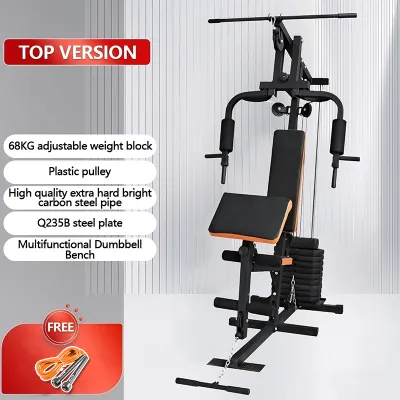
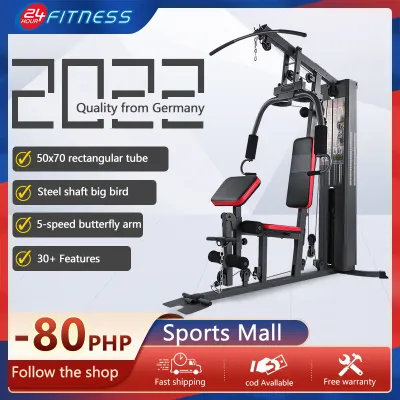
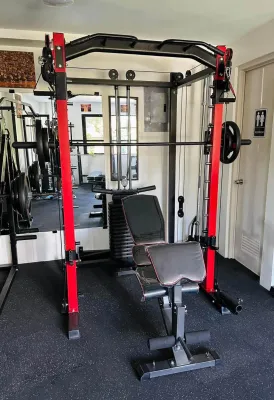
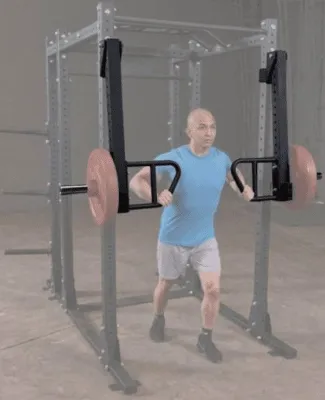
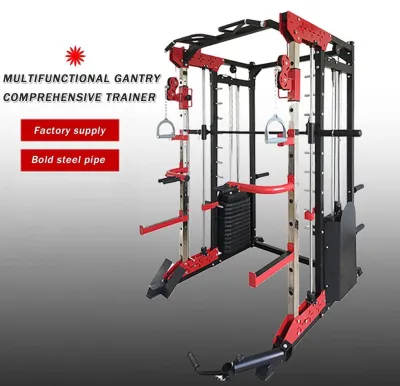
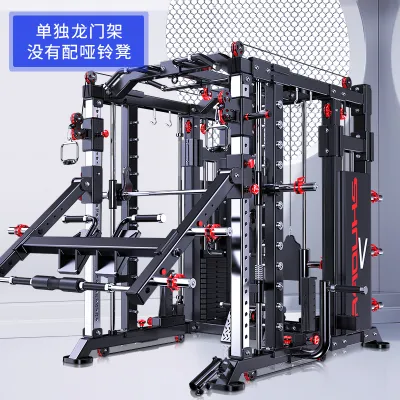
Prices are valid at publication and may change. Please refer to the product page for the latest price.
In contrast, a Smith machine eliminates the need for lateral and horizontal stabilization. Because the track guides the bar, you only need to focus on pushing or pulling the weight along a single plane. This isolation is highly advantageous for bodybuilding and hypertrophy goals. By removing the demand on stabilizer muscles, you can target specific muscle groups, such as the quadriceps during squats or the pectorals during bench presses, with a high degree of precision and intensity.
For beginners, the guided path can offer a sense of security and help build initial strength without the immediate coordination required for free weights. However, relying too heavily on a fixed track early in your fitness journey can prevent your stabilizer muscles from developing at the same rate as your prime movers. This imbalance can sometimes lead to coordination challenges when transitioning to free-weight movements later on.
Advanced lifters and those undergoing physical rehabilitation often find the guided bar path highly beneficial. If you are recovering from an injury, a Smith machine allows you to perform controlled, predictable movements under the guidance of a physical therapist’s recommendations. It enables you to apply progressive resistance to a healing muscle group without the risk of sudden, uncontrolled lateral movements that could aggravate an injury.
Evaluate Your Space, Budget, and Equipment Alternatives
Before purchasing a Smith machine, you must carefully measure your available space and compare it against the manufacturer’s specifications. These machines have a substantial physical footprint, often requiring a dedicated area of at least two meters in width and nearly as much in depth. Furthermore, you must account for the length of the barbell itself, which typically extends beyond the frame, and leave ample clearance on both sides to safely slide weight plates onto the sleeves.

Ceiling height is another critical constraint that is easily overlooked. Many home gyms in residential areas or apartments have standard or low ceilings. A Smith machine’s guide rods often stand over two meters tall, and you must ensure there is enough overhead clearance to assemble the unit and perform exercises comfortably. In the humid tropical climate of the Philippines, proper ventilation is essential; placing a massive machine in a cramped, unventilated room can make workouts uncomfortable and accelerate wear on the equipment.
From a financial perspective, a high-quality Smith machine represents a significant investment in local currency (₱). When planning your budget, compare this cost against the versatility of alternative equipment. For a similar or lower investment, you could acquire a sturdy power rack, an adjustable utility bench, an Olympic barbell, and a set of weight plates. This alternative setup allows for a wider variety of functional, multi-joint exercises that engage the entire body.
If versatility is your priority, look for modern Smith machines that incorporate additional features. Some models are designed as multi-functional trainers, integrating cable pulley systems, pull-up bars, and dip attachments into a single frame. While these hybrid units require a larger initial budget, they can save space by consolidating multiple pieces of equipment into one footprint, provided you verify the weight capacities and attachment compatibility beforehand.
Safety and Spotting Requirements for Solo Training
Training alone at home introduces specific safety challenges, particularly when performing heavy compound lifts like the bench press or squat. Without a human spotter, the risk of getting trapped under a heavy barbell is a serious concern. The Smith machine addresses this issue with its self-locking mechanism. By rotating your wrists, you can instantly hook the barbell onto teeth spaced along the vertical guide rods, securing the weight at almost any point during the lift.
While this self-locking feature provides peace of mind, it is important to recognize the biomechanical trade-offs of a fixed track. Human joints do not naturally move in a perfectly straight line during complex movements. For example, during a natural squat, your hips travel backward and your knees move forward, creating a slightly curved bar path. Forcing your body to conform to a rigid, vertical track can place unnatural shear stress on your knees and lower back, especially if your stance is not perfectly aligned.
To mitigate these biomechanical risks, some lifters prefer a power rack equipped with adjustable safety spotter arms or heavy-duty safety straps. A power rack allows you to lift free weights with a completely natural, unconstrained bar path while still providing a reliable safety net. If you fail a lift, the adjustable spotter arms catch the barbell safely below your active range of motion, protecting you from injury without forcing your joints into a fixed mechanical path.
Decision Matrix: When to Buy, Skip, or Consider Alternatives
To synthesize your self-assessment, consider your primary training style and physical constraints. A Smith machine is a justified investment if your workouts focus heavily on bodybuilding, isolation movements, or controlled rehabilitation, and you regularly train alone without a spotter. It is also an excellent choice if you have a spacious home gym area and the budget to invest in a high-quality, multi-functional model with smooth guide tracks.
Conversely, you should skip the Smith machine if your fitness goals center on athletic performance, functional strength, or Olympic weightlifting, where natural movement patterns and stabilizer muscle engagement are paramount. If your workout space is highly constrained, or if you prefer a budget-friendly setup that maximizes exercise variety per peso spent, a versatile power rack or a set of adjustable dumbbells is generally a more practical choice.
Before making your final purchase, use this pre-purchase verification checklist to evaluate any model you are considering:
- Track Smoothness: Verify whether the machine utilizes linear bearings or simple bushings; linear bearings offer a much smoother, quieter travel along the guide rods.
- Plate Compatibility: Check the diameter of the bar sleeves to ensure they match your existing weight plates, whether they are standard one-inch plates or Olympic two-inch plates.
- Frame Construction and Coating: Look for heavy-gauge steel construction with a durable powder-coated finish to protect the frame from rust in humid environments.
- Warranty Terms: Review the manufacturer's warranty on the frame, bearings, and moving parts to ensure long-term support for your investment.
Frequently Asked Questions (FAQ)
Can I build muscle effectively using only a Smith machine?
Yes, you can build muscle effectively using a Smith machine. Muscle hypertrophy is primarily driven by progressive overload, mechanical tension, and consistent training volume, regardless of the specific equipment used. Because the guided track handles the stabilization, you can safely push your target muscles closer to failure on exercises like chest presses and squats. However, incorporating some free-weight or bodyweight exercises is still recommended to ensure your stabilizer muscles develop proportionally.
Is a Smith machine safer than free weights for beginners?
A Smith machine offers immediate safety advantages for beginners through its built-in safety hooks, which allow you to lock the bar in place with a quick twist of the wrist if you lose control. This can help build confidence when starting out. However, it is not a substitute for proper form. If your body alignment is incorrect, the fixed track can force your joints into unnatural positions, potentially leading to strain. Beginners should still focus on learning correct movement patterns and starting with manageable weights.
How much weight does the Smith machine bar typically weigh?
The starting weight of a Smith machine bar varies widely depending on the specific model and design. Some commercial and high-end home models feature counterbalanced systems that use internal weights and pulleys to reduce the active weight of the bar to nearly zero or a very light starting weight. Non-counterbalanced models do not offset the weight of the bar and sliding carriage, meaning the starting weight can feel heavier. Always consult the manufacturer’s manual or product specifications to verify the exact starting weight before calculating your training loads.
Community discussion
Share your experience or ask a question. Comments are reviewed before publication.