
Deciding whether to ride a thruster surfboard comes down to an honest assessment of your current physical skills and the specific waves you surf most often. While the three-fin setup is the most common configuration found on beaches worldwide, it is not a universal solution for every surfer or every swell. Choosing the wrong board too early can stall your progression, while matching your equipment to your actual environment can unlock new levels of control and maneuverability.
In warm tropical waters, where reef breaks can offer both perfect shapes and sharp hazards, having the right equipment underfoot is essential for both performance and safety. Investing your hard-earned pesos in a new board should always be guided by realistic self-reflection rather than the desire to mimic professional riders. By evaluating your technique and local breaks, you can determine if a thruster will elevate your surfing or if another setup better serves your goals.
What Is a Thruster Setup and How Does It Ride?
A standard thruster configuration consists of three fins of equal size: two symmetrical side fins near the rails and one central stabilizer fin positioned closer to the tail. This design, pioneered in the early 1980s, balances lateral hold with pivotal turning capability. The side fins channel water along the bottom of the board to generate forward drive, while the center fin acts as a rudder to keep the tail from sliding out during hard turns.
Products mentioned in this guide
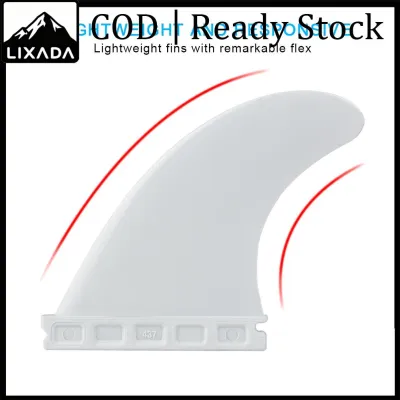
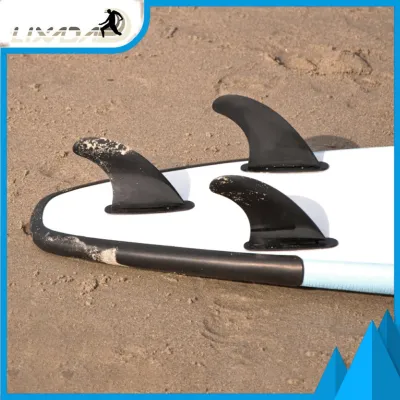
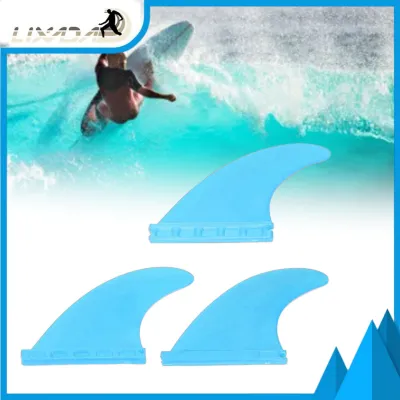
Prices are valid at publication and may change. Please refer to the product page for the latest price.
This setup is traditionally favored by intermediate and advanced riders who want to perform precise, vertical maneuvers in the pocket of the wave. The three fins work together to provide predictable, reliable control when transitioning from rail to rail. Because the center fin sits directly in the path of the water flowing off the tail, it creates a consistent pivot point that allows for sharp, aggressive direction changes.
However, the exact riding characteristics of any thruster are highly dependent on the specific fin templates, foil profiles, flex patterns, and board dimensions you choose. A stiff, wide-base fin will offer more drive and hold, whereas a smaller, flexible fin will make the board feel looser and easier to turn. Surfers should always consult manufacturer specifications and fin charts to match their body weight and board model to the correct fin size.
Is Your Skill Level Ready for a Thruster?
Surfing is an inherently high-risk sport that demands physical fitness, ocean awareness, and quick decision-making. When transitioning to responsive equipment like a thruster, especially over shallow reef breaks, your safety depends on knowing your personal limits. Advanced equipment cannot replace physical training, wave-reading judgment, or proper safety protocols. If you cannot consistently control your board or safely exit a closing wave, stepping down to a more high-performance setup can increase the risk of wipeouts and collisions.

To determine if your skills align with a thruster, look for clear, observable signs of readiness in your daily sessions. You should be catching waves consistently without assistance, executing controlled bottom turns, and maintaining a stable trim line across the open face of the wave. If you can actively pump the board to generate your own speed rather than simply letting the wave push you forward, you possess the foundational technique required to utilize three fins.
Beginners often struggle with thrusters because the center fin introduces noticeable water resistance during paddling compared to single-fin or twin-fin designs. Additionally, a thruster requires highly precise weight distribution to function correctly. If your stance is too far forward, you will stall the board and lose momentum; if you step too far back without sufficient speed, the tail will bog down and sink.
You can perform a simple diagnostic check during your next few sessions to see if your current struggles are equipment-related or technique-related. If you find yourself constantly catching rails, stalling in flat sections, or struggling to catch waves in the first place, the issue is likely a lack of volume and paddle speed rather than your fin configuration. In these cases, continuing to practice on a high-volume funboard or longboard is a safer and more productive path to improvement.
Does a Thruster Match Your Local Wave Conditions?
The physical shape of the waves you ride plays a massive role in how a thruster performs. This configuration is at its best in steep, hollow, and fast-breaking waves, such as the powerful reef breaks found in Siargao. In these conditions, the vertical wall of water provides natural energy, and the center fin offers the critical hold needed to keep you glued to the wave face. When you bottom turn at high speed, the three fins grip the water, allowing you to transition smoothly into your next move without slipping.
Conversely, in small, mushy, or slow-breaking beach breaks, a thruster can feel sluggish and overly restrictive. Because soft waves lack the steepness to generate natural speed, the drag created by the center fin can actively slow you down. In these weaker conditions, a thruster often feels like it is “tracking” or pulling too heavily, making it difficult to maintain momentum through flat, slow sections of the wave.
To make an objective decision, keep a simple log of your surf sessions over the course of a month. Record the wave height, the shape of the break (such as a steep reef, sloping sandbar, or soft point break), and how often you felt you had enough speed to perform turns. If the majority of your sessions occur in soft, waist-high conditions, a different fin configuration may offer a much more enjoyable and efficient ride.
When Should You Stick With Your Current Board?
Before investing thousands of pesos in a brand-new thruster, consider whether your current board setup is actually holding you back. Alternative fin configurations are often better suited for specific riding goals. For example, a twin-fin setup offers incredible speed and a loose, skatey feel in weak, mushy waves, while a quad setup provides excellent speed and hold in fast, hollow sections without the drag of a center fin.
It is also crucial to distinguish between fin performance and overall board design. If your current board feels unstable or difficult to paddle, the culprit is likely a lack of overall volume, an overly aggressive rocker profile, or a narrow outline rather than the number of fins on the bottom. Changing to a thruster will not solve balance or paddling issues if the board itself does not match your physical size and fitness level.
Adjusting your existing equipment is often the most practical and cost-effective first step. If your board features adjustable fin boxes, you can experiment with different fin templates, materials, or sizes to alter how the board rides. Swapping to a slightly smaller center fin or using more flexible side fins can loosen up a stiff board, saving you the expense of purchasing an entirely new surfboard.
Next Steps: How to Test, Adjust, or Upgrade Your Quiver
If you decide to explore a thruster, avoid making an immediate purchase. Instead, look for opportunities to borrow a friend’s board or rent a demo model from a local surf shop near your favorite break. Testing the setup in familiar, predictable wave conditions allows you to isolate how the three fins feel underfoot without the distraction of navigating an unfamiliar surf spot.
For riders who want maximum versatility, look for surfboards equipped with five-fin boxes. This convertible design allows you to set up the board as a traditional thruster on clean, steep days, or switch to a quad configuration when the waves are small, fast, or sectioning. This flexibility lets you adapt your equipment to changing seasonal swells without needing to carry multiple boards.
When you are ready to make a final decision, stop guessing and seek professional guidance. Visit a local surfboard shaper or a reputable surf shop to discuss your height, weight, fitness level, and the specific breaks you plan to ride. A qualified professional can provide personalized recommendations on board dimensions, volume, and fin templates, ensuring your next equipment upgrade is a safe and successful investment.
Frequently Asked Questions (FAQ)
Can I convert my current surfboard to a thruster setup?
Whether you can convert your board depends entirely on its existing fin box system and tail construction. If your board has glass-on fins or a dedicated single-fin box, adding side or center boxes requires professional modification. You should consult a qualified ding repair specialist or surfboard shaper to assess if routing new boxes is structurally safe, as improper installation can compromise the foam core or damage the wooden stringer.
Does a thruster setup work for longboards?
Yes, but the configuration is typically referred to as a 2+1 setup rather than a standard shortboard thruster. This design features a larger central longboard fin paired with two smaller side fins, often called side bites. This combination provides the classic glide of a longboard while adding extra hold and control during turns, though the overall feel will vary significantly depending on the size, flex, and placement of the center fin.
Community discussion
Share your experience or ask a question. Comments are reviewed before publication.