
Choosing the right badminton grip tape is a critical decision that directly impacts your control, comfort, and overall performance on the court. While high-end rackets come with factory grips, these base layers rarely survive the intense humidity and sweat of regular play without an overgrip. Daltom grip tape presents itself as an accessible option for players looking to maintain a secure hold on their racket, but its suitability depends entirely on your specific playing style, sweat levels, and court environment.
Instead of looking for a universal recommendation, players must evaluate grip tape based on tactile feedback, moisture management, and durability. A grip that works perfectly for a casual player in an air-conditioned sports complex might fail rapidly for a competitive player training in a high-temperature, non-air-conditioned gym. By analyzing the physical specifications, material properties, and installation requirements of Daltom grip tape, you can determine if this accessory aligns with your athletic needs.
How to Evaluate Daltom Grip Tape for Your Playing Style
Your grip preference is highly personal and dictates how effectively you can execute quick wrist movements, power smashes, and delicate net drops. The first step in evaluating Daltom grip tape is deciding between a tacky surface and a dry, absorbent surface. Tacky grips utilize a polyurethane coating that adheres slightly to your skin, providing a secure hold with minimal squeezing force. This is highly beneficial for players who rely on quick defensive reactions and need the racket to stay firmly in hand without tensing their forearm muscles.
Products mentioned in this guide
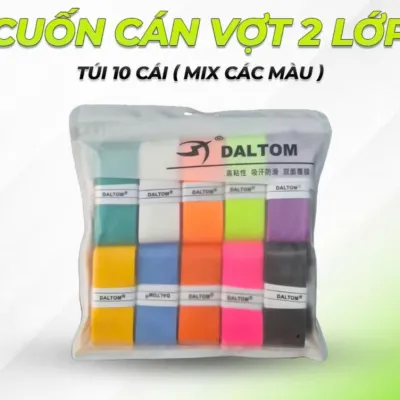
![Combo of 10 1-layer Daltom Racket Grips [Genuine] - For Pickleball Tennis Badminton【24 hours delivery】COD](https://img.lazcdn.com/g/p/88bdc51e4447b0b61a56019411c1c3b2.png_400x400q80.png_.webp)
Prices are valid at publication and may change. Please refer to the product page for the latest price.
Conversely, players who sweat heavily often find that tacky grips become slippery once saturated. If you experience high sweat volume, a dry-feel grip or a specialized towel grip is generally more appropriate because it absorbs moisture into the fibers rather than letting it pool on the surface. You must assess your own physical tendencies during intense rallies to determine which category of Daltom grip tape matches your sweat profile.
Another critical factor is the balance between cushioning and direct handle feedback. Thick, cushioned grips absorb vibrations from hard hits, which can reduce fatigue in your fingers and wrist over long sessions. However, this extra padding rounds out the bevels of the wooden handle, making it harder to feel the exact orientation of the racket face. If you rely on precise slice shots and net play, you may prefer a thinner grip that preserves the sharp edges of the handle, allowing for instantaneous grip transitions.
Finally, consider the financial aspect of your gear maintenance. Evaluate the price per roll of Daltom grip tape in ₱ against how often you play and how quickly you wear through accessories. If you play multiple times a week in a warm climate, you will likely need to replace your grip frequently to maintain hygiene and traction. Comparing the cost of a multi-pack against your monthly replacement rate helps ensure you get sustainable value without overspending on basic maintenance.
Key Specifications to Check on the Product Label
When purchasing Daltom grip tape, you should not rely on generic marketing claims; instead, carefully examine the specifications printed on the packaging or detailed in the online product listing. The material composition is the most important indicator of how the grip will perform under stress. Most synthetic overgrips are made of polyurethane (PU) combined with a non-woven fabric base, which offers a balance of stretch, durability, and tackiness. If the label specifies a high percentage of polyurethane, you can expect a more rubbery, high-friction feel, whereas a higher fabric content typically points to better moisture absorption.

Thickness is another vital specification that directly alters the ergonomics of your racket. Standard overgrips usually range from 0.5 mm to 0.7 mm in thickness, which adds minimal bulk to the handle while providing a fresh surface. Replacement grips, which are designed to be wrapped directly onto the bare wood of the handle, are much thicker, often measuring between 1.5 mm and 2.0 mm, and frequently feature an adhesive backing or foam strip. Verify the thickness of the Daltom model you are viewing to ensure you do not accidentally buy a thick replacement grip when you actually need a thin overgrip.
Surface texture plays a major role in friction and airflow. Look at the product images or packaging to see if the grip is smooth, perforated, or ribbed. Perforated grips feature tiny holes designed to channel sweat away from the surface and improve ventilation, making them highly suitable for warm playing conditions. Ribbed grips incorporate a raised foam strip along the center of the tape, creating distinct ridges that give your fingers extra leverage and prevent the racket from slipping out of your hand during high-velocity swings.
Lastly, confirm the included accessories and packaging details before completing your purchase. A complete grip package should include a strip of adhesive finishing tape to secure the top of the wrap near the racket cone. Check the total quantity per package, as buying multi-packs or bulk rolls often reduces the cost per unit, providing a more economical solution for active players who require frequent replacements.
Matching Grip Features to Court Conditions and Sweat Levels
The performance of any badminton grip is heavily influenced by the environment in which you play. In the Philippines, indoor sports centers can vary dramatically, ranging from fully air-conditioned premium courts to open-air multi-purpose halls with high ambient humidity. High humidity prevents sweat from evaporating quickly, meaning your hands will stay wet throughout your session. Under these tropical conditions, a standard tacky grip can lose its effectiveness within a single game if it cannot handle the moisture volume.
If you frequently play in non-air-conditioned courts or tend to sweat profusely, you should consider opting for towel-style grips. Towel grips, made of cotton, act like a sweatband for your racket handle, absorbing large amounts of moisture to keep your hands dry. However, they require diligent maintenance; towel grips must be allowed to dry completely after play to prevent bacterial growth and unpleasant odors, and they generally need to be replaced much more frequently than synthetic alternatives.
For those who play primarily in air-conditioned indoor courts, synthetic tacky grips are often the ideal choice. The controlled climate reduces overall sweat production, allowing the polyurethane surface to maintain its high-friction, sticky feel without becoming slick. This setup provides excellent control for executing precise shots, as the grip remains consistent from the first serve to the final point of your match.
Before committing to a specific Daltom grip model, look for anti-slip claims on the label and cross-reference them with user reviews from players who share your playing conditions. Pay close attention to feedback regarding how the grip performs after an hour of continuous play. Conducting a simple initial test—such as wrapping a single racket and practicing dry swings at home—can help you verify if the material maintains its traction when your hands begin to warm up.
Installation, Maintenance, and Replacement Signals
Proper installation is just as important as choosing the right material, as a poorly wrapped grip can ruin the feel of even the highest-quality racket. Before applying your new Daltom grip tape, take the time to clean the racket handle thoroughly. Remove any adhesive residue, dirt, or old foam from the previous grip using a dry cloth or a mild cleaning agent, ensuring the surface is completely dry before you begin. This step prevents the new tape from slipping or shifting during intense rallies.
When wrapping the grip, start from the butt cap at the bottom of the handle and work your way up toward the cone. Maintain consistent tension on the tape as you wrap, overlapping each layer by approximately two to three millimeters. Avoid overlapping too much, as this will create uneven lumps that can cause painful friction blisters on your palm and fingers. Conversely, leaving gaps between the wraps exposes the underlying handle, which reduces comfort and can cause the grip to unravel mid-game. Secure the top end firmly with the provided finishing tape to complete the installation.
Recognizing when to replace your grip tape is essential for maintaining control and preventing unnecessary wrist strain. Visual signs of wear are the most obvious indicators; look for tearing along the edges, thinning of the material in high-pressure contact areas, or severe discoloration from dirt and sweat. Tactile cues are equally critical. If you find yourself squeezing the racket handle harder than usual to prevent it from twisting during off-center hits, or if the material feels hard and brittle rather than soft and pliable, the grip has reached the end of its functional lifespan.
To maximize the shelf life of your unused Daltom grips, store them in a cool, dry place away from direct sunlight and extreme heat. High temperatures and humidity can degrade the polyurethane coating of synthetic grips, causing them to lose their tackiness or become sticky and unusable even before they are applied to a racket. Keeping your spare grips in a sealed plastic bag inside your racket bag is an excellent way to protect them from environmental wear.
Frequently Asked Questions (FAQ)
Can I apply Daltom grip tape directly over the original factory grip?
Yes, you can apply Daltom grip tape directly over the original factory grip, provided the model you purchased is designed as an overgrip. Overgrips are thin layers (typically under 0.8 mm) meant to be wrapped over a base grip to provide fresh traction and sweat absorption without adding excessive bulk. However, wrapping an overgrip over a thick, cushioned factory grip will increase the overall circumference of the handle. This can make it difficult for players with smaller hands to hold the racket securely and may dull the feel of the handle’s bevels, reducing your control over precise shots. If you prefer a slim handle, remove the factory grip entirely and use a thicker replacement grip or apply a thin overgrip over a layer of cushion wrap.
How often should I replace my badminton grip tape?
There is no fixed calendar schedule for replacing your grip tape, as the lifespan depends entirely on your playing frequency, sweat levels, and local climate. Instead of waiting for a specific number of weeks, monitor the physical condition of the tape. You should replace the grip immediately if you notice visual signs of degradation, such as peeling, fraying, or dark sweat stains that do not dry out. Tactile signs, such as a noticeable loss of tackiness, a slippery feel during fast swings, or a hardened texture that no longer cushions your hand, are clear indicators that the material can no longer perform its job. Active players who train multiple times a week in humid conditions may need to replace their grip every two to three weeks, while casual players might only need a replacement every few months.
Does grip tape thickness change the balance of the racket?
Yes, the thickness and weight of your grip tape can subtly alter the balance and overall feel of your badminton racket. Adding a thick replacement grip, multiple layers of overgrip, or heavy towel grip adds weight to the handle end of the racket. This extra weight shifts the balance point slightly downward, making a head-heavy racket feel more even-balanced or headlight. While this shift can increase your swing speed and maneuverability during fast defensive exchanges, it may slightly reduce the power of your smashes. To avoid drastically altering your racket’s natural characteristics, it is best to test the feel with a single layer of thin overgrip first before deciding to add extra layers or thicker materials.
Community discussion
Share your experience or ask a question. Comments are reviewed before publication.