
Using a hardware-grade lifting ratchet rope or cargo tie-down strap for climbing anchors, fall protection, or human suspension is highly dangerous and must be avoided under all circumstances. These utility tools are engineered exclusively for securing static cargo, not for preserving human life during a fall. In high-risk vertical sports like rock climbing, your safety depends entirely on specialized gear designed to stretch and absorb kinetic energy. Substituting industrial tie-downs or utility ropes for certified climbing equipment introduces an immediate risk of catastrophic gear failure, anchor collapse, and severe bodily harm.
Before attempting any vertical activity, you must undergo proper instruction from a certified guide; no piece of equipment can substitute for professional training, sound judgment, and rigorous safety checks. If you are planning a climb or setting up a suspension system, you must use gear that is specifically certified for personal protective equipment (PPE) use. Understanding the mechanical differences between industrial cargo securing and climbing safety is the first step in preventing tragic accidents.
Static Load vs. Dynamic Impact: The Engineering Mismatch
To understand why a lifting ratchet rope fails in a climbing scenario, one must look at the mechanical differences between static tension and dynamic impact. Hardware-grade ratchet straps and utility ropes are designed to keep heavy loads completely stationary. They are manufactured with low-stretch materials like polyester or stiff nylon weaves, which are excellent for preventing cargo from shifting on a truck bed or a boat trailer. When you tighten a ratchet, you pull the material taut to eliminate slack. This rigid setup is highly effective for static loads, but it possesses virtually zero elasticity.
Products mentioned in this guide
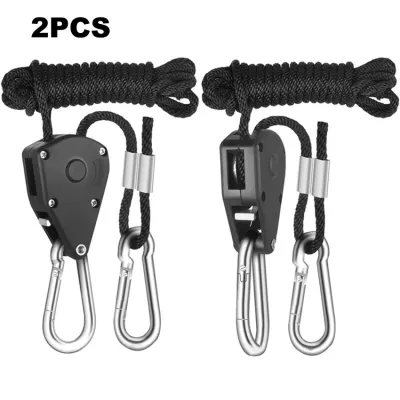
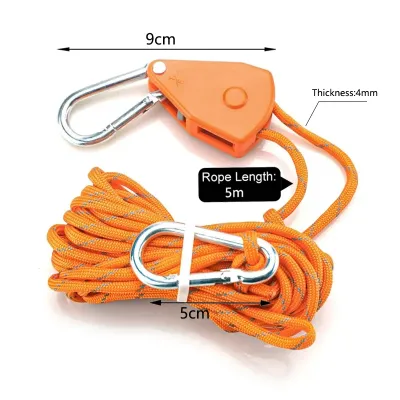
Prices are valid at publication and may change. Please refer to the product page for the latest price.
In contrast, dynamic climbing ropes are highly engineered, elastic lifelines. They are constructed using a “kernmantle” design, featuring a twisted nylon core protected by a woven outer sheath. When a climber falls, the rope stretches significantly—often by 30 percent or more of its length. This elongation is a critical safety feature: it acts as a shock absorber, gradually slowing down the falling body and dissipating the kinetic energy over a longer period.
When a climber falls on a completely static system, such as a hardware lifting ratchet rope, the drop results in a phenomenon known as shock loading. Because the static material cannot stretch, the falling climber’s kinetic energy is brought to an instantaneous halt. This sudden deceleration generates massive impact forces. Even a short fall of just one or two meters can produce forces that easily exceed the breaking strength of utility hardware, causing the ratchet mechanism, the webbing, or the anchor points to snap instantly.
Furthermore, if the static hardware somehow manages to hold the load without breaking, those extreme forces do not simply disappear. Instead, the kinetic energy is transferred directly to the climber’s body and harness. The human body is not built to withstand such violent, instantaneous deceleration. A fall on a static line can cause severe internal injuries, spinal compression, ruptured organs, and extreme harness trauma. This is why dynamic energy absorption is a non-negotiable requirement for any vertical activity where a fall is possible.
Decoding Safety Standards: Lifting Ratings vs. Climbing Certifications
When browsing hardware stores or online marketplaces, you might see a lifting ratchet rope or heavy-duty tie-down strap labeled with an impressive weight rating, such as “2,000 kilograms” or “5,000 pounds.” It is easy to assume that if a strap can hold a multi-ton vehicle, it can easily support a 70-kilogram human. However, this assumption overlooks how these ratings are calculated and what they actually measure.

Industrial lifting gear is rated using terms like Working Load Limit (WLL) and Minimum Breaking Strength (MBS). The WLL is the maximum mass that the manufacturer recommends lifting under normal, steady, static conditions. It is calculated by applying a safety factor to the breaking strength. However, these ratings are strictly based on slow, controlled, non-shock loads. They do not account for the violent, multi-directional, and dynamic forces generated during a human fall. A ratchet mechanism that is rated to hold a static load can easily slip, strip its teeth, or release entirely when subjected to the sudden, jarring impact of a fall.
Personal protective equipment (PPE) for climbing and mountaineering must meet entirely different, highly stringent international safety standards. These are established by organizations like the Union Internationale des Associations d’Alpinisme (UIAA) and European Committee for Standardization (CE/EN). For example, climbing ropes must comply with EN 892 (for dynamic ropes) or EN 1891 (for low-stretch ropes), while climbing slings must meet EN 566. These standards require rigorous testing, including drop tests that simulate real-world climbing falls, edge-abrasion tests, and knot-holding capability checks.
A high weight rating on a hardware utility strap does not mean it has undergone any of these life-saving tests. Industrial straps are not tested for UV degradation from intense tropical sun exposure, resistance to sharp volcanic rock edges, or performance when wet and humid. In tropical environments like the Philippines, high humidity and salt air can accelerate the degradation of uncertified materials, making them even more prone to sudden failure. Relying on a cargo strap for human suspension means using a tool completely outside its engineered scope, bypassing the essential safety certifications that keep climbers alive.
Building a Safe Anchor: Choosing the Right Certified Equipment
To ensure your safety in vertical environments, you must build your systems using only certified, purpose-built climbing gear. If your activity involves any potential for a fall—such as lead climbing, sport climbing, or traditional climbing—you must use a UIAA/CE-certified dynamic rope as your primary safety line. No other material is acceptable for catching a dynamic fall.
For stationary applications, such as building top-rope anchors or setting up fixed lines, you can use certified static ropes, tubular climbing webbing, or sewn slings (often made of nylon or high-modulus polyethylene). While these materials are relatively low-stretch, they are specifically manufactured and certified for climbing applications. They are designed to resist abrasion, handle knots securely, and interface safely with climbing carabiners and protection devices. However, even certified static ropes and slings must never be used to catch a dynamic fall; they are strictly for stationary positioning and anchor construction where there is zero slack in the system.
Before heading out to any crag or vertical venue, establish a strict gear inspection routine. Always verify that every piece of equipment in your kit carries a clear UIAA or CE certification mark. Inspect your ropes, slings, and webbing for signs of wear, including fuzzy sheaths, stiff spots, discoloration from chemical exposure, or fraying. Check metal hardware like carabiners and belay devices for cracks, deep grooves, or sticky gates. If any piece of gear fails inspection, or if you suspect it has been subjected to a severe shock load, retire it immediately by cutting it up so it cannot be accidentally reused. Investing a few thousand pesos (₱) in certified gear is a small price to pay for your life.
Frequently Asked Questions (FAQ)
Can I use a heavy-duty ratchet strap for a static top-rope anchor?
Even in a static top-rope setup where you do not expect to fall, using a heavy-duty hardware ratchet strap is highly dangerous. Standard utility straps lack the specialized UV-resistant treatments, edge-protection weaves, and rigorous abrasion testing that certified climbing webbing undergoes. In tropical climates like the Philippines, intense sunlight and high humidity can rapidly degrade non-climbing plastics and polyesters without showing obvious visual signs. Furthermore, industrial ratchet mechanisms are prone to slipping under shifting angles, and they can easily damage the webbing fibers if tightened too aggressively. There are no climbing-specific safety margins built into these systems. Instead of risking your life on hardware-store tie-downs, always use certified climbing webbing, static ropes, or specialized anchor chains designed specifically to withstand outdoor elements and vertical loads.
What are the physical consequences of falling on a static lifting rope?
Falling on a static lifting rope or strap transfers the entire force of the deceleration directly to your body and your harness. Because the static material does not stretch to absorb and dissipate the kinetic energy, the stop is instantaneous and violent. This sudden deceleration can cause catastrophic physical trauma, including severe spinal compression, whiplash, fractured ribs, and internal organ damage. Additionally, the sudden upward pull of the harness leg loops can cause immediate suspension trauma, restricting blood flow and leading to unconsciousness or cardiovascular failure within minutes. Even if the lifting hardware manages to hold the weight without snapping, the human body simply cannot withstand the extreme dynamic impact forces of a static fall.
Community discussion
Share your experience or ask a question. Comments are reviewed before publication.