
Paracord is absolutely not safe for climbing, rappelling, or any other life-support application. While its high static tensile strength makes it an excellent utility tool for camping, backpacking, and general outdoor tasks, it lacks the structural design, dynamic elasticity, heat resistance, and safety certifications required to support human weight in vertical environments. Attempting to use paracord for fall protection or descent can lead to catastrophic failure, severe injury, or death.
When preparing for outdoor adventures in the Philippines, from scaling the crags of Cantabaco to exploring the rugged terrain of Mount Apo, understanding the limits of your gear is a matter of safety. It is common for beginners to look at a bundle of 550 paracord and assume its rated strength is sufficient to hold their weight. However, static strength is only a small part of the safety equation in vertical sports. Climbing and rappelling subject ropes to extreme dynamic forces, intense friction, and sharp edges that utility cords are simply not built to withstand.
Why Paracord Fails as a Climbing or Rappelling Rope
To understand why paracord is highly dangerous for vertical activities, one must look at how ropes handle the energy of a fall. Certified dynamic climbing ropes are engineered with a high degree of elasticity, allowing them to stretch significantly when a climber falls. This elongation acts as a shock absorber, catching the climber gradually and reducing the impact force transmitted to the climber’s body, the harness, and the anchor points. Paracord, on the other hand, has very little dynamic elongation. If you fall even a short distance on a line made of paracord, the sudden stop generates a massive spike in force that can easily exceed the cord’s breaking strength or cause severe internal injuries.
Products mentioned in this guide
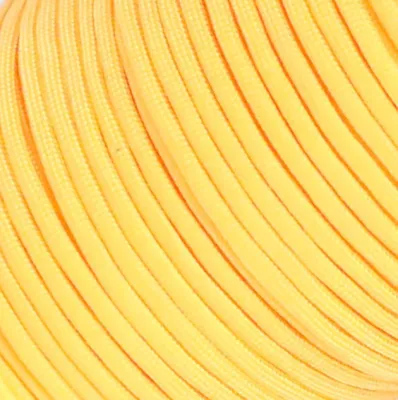
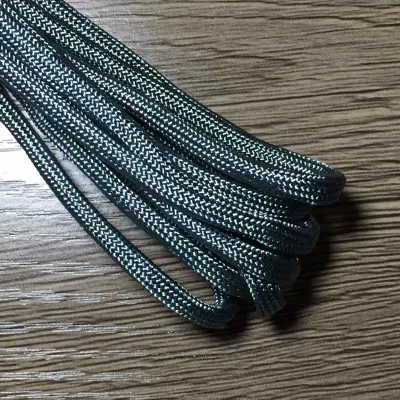
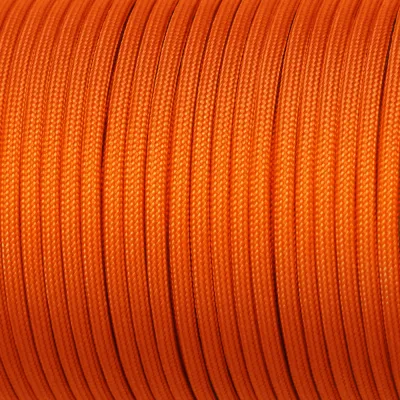

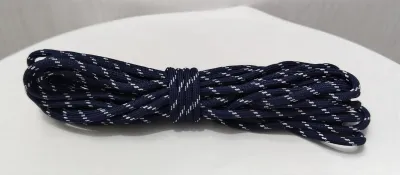
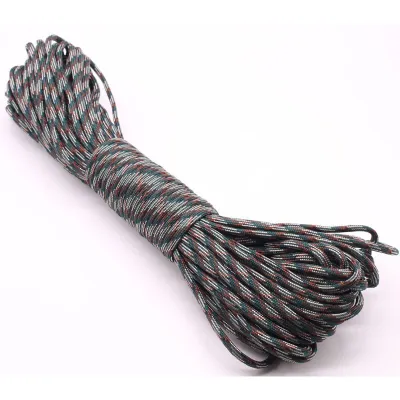
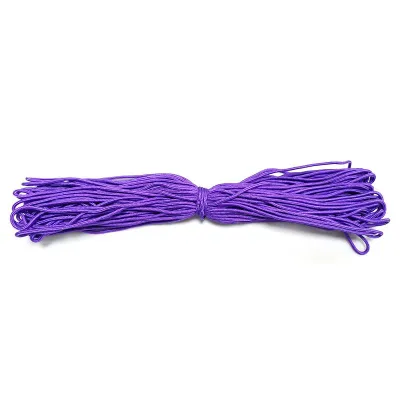
Prices are valid at publication and may change. Please refer to the product page for the latest price.
The structural differences between paracord and climbing ropes are also vast. While both utilize a kernmantle construction—consisting of an interior core (kern) protected by a woven outer sheath (mantle)—their scale and materials are entirely different. Standard military-specification paracord typically features a thin nylon sheath surrounding seven to nine inner strands. This design is optimized for lightweight utility, flexibility, and packability, not for resisting the intense friction generated by climbing hardware. When threaded through a descender or a carabiner during a rappel, the friction generates rapid heat. Because nylon has a relatively low melting point, the thin sheath of a paracord can melt and rupture almost instantly under the heat of friction, leading to a catastrophic core failure.
Furthermore, outdoor environments present hazards like sharp rock edges, abrasive surfaces, and rough volcanic stone. A certified climbing rope has a thick, tightly woven sheath designed specifically to resist abrasion and cut damage under tension. Paracord’s sheath is incredibly thin and easily compromised. A single slide across a sharp limestone edge under the tension of a human body can slice through paracord in a fraction of a second. Once the sheath is cut, the inner core strands are exposed to immediate failure, leaving no safety margin whatsoever.
Critical Safety Distinctions: Paracord vs. Certified Climbing Ropes
Distinguishing between utility cord and life-safety equipment is crucial for anyone venturing into vertical sports. The most reliable way to identify a true climbing rope is by inspecting its manufacturer labels and tags. Certified climbing ropes must carry specific safety certifications from recognized international bodies, such as the Union Internationale des Associations d’Alpinisme (UIAA) or European Committee for Standardization (CE/EN) standards, specifically EN 892 for dynamic ropes. These certifications guarantee that the rope has undergone rigorous laboratory testing to survive multiple high-impact falls, sharp-edge simulations, and strict quality control processes. Paracord carries no such certifications for human load-bearing tasks; any marketing claims regarding its strength refer strictly to static utility use.

Physical dimensions and handling characteristics also set these ropes apart. Certified climbing ropes generally range from 8.5 mm to 11 mm in diameter for single ropes, providing a substantial cross-section that fits securely within standard belay devices and descenders. Paracord is much thinner, typically measuring only 3 mm to 4 mm in diameter. This narrow profile makes it impossible to use safely with modern climbing hardware. A belay device or friction hitch cannot generate enough clamping force on a 4 mm cord to stop a falling climber, resulting in the rope slipping rapidly through the device, causing severe friction burns to the belayer’s hands and a complete loss of control.
It is also vital to understand the difference between static tensile strength and dynamic fall-holding capacity. A standard 550 paracord is rated to hold 550 pounds (approximately 249 kilograms) of static weight under ideal laboratory conditions. While this might seem like more than enough to support an average person, this rating does not account for the physics of a dynamic fall. A falling human body generates forces that can easily exceed several kilonewtons (kN). One kilonewton is roughly equivalent to 224 pounds of force, but a short fall can easily generate 4 to 8 kN of dynamic force. Because paracord cannot stretch to absorb this energy, the force of the fall instantly surpasses the 550-pound static limit, causing the cord to snap.
Safe and Appropriate Uses for Paracord in the Outdoors
While paracord must never be used for life support, it remains one of the most versatile and valuable tools in an outdoor enthusiast’s kit. Its lightweight nature and high static strength make it perfect for a wide variety of low-load utility tasks around a campsite. For instance, you can use it to secure gear to your backpack, tie down tarps to protect your camp from tropical downpours, or construct elaborate shelter ridgelines. In the dense forests of the Philippines, paracord is highly effective for hanging food bags high in the trees to keep them away from rodents and other foraging wildlife.
To maintain safety in the field, you must establish a strict, non-negotiable boundary between “utility” tasks and “life-support” tasks. Utility tasks are those where a failure of the cord results only in minor inconvenience, such as a sagging tarp or a dropped gear bundle. Life-support tasks are those where a failure could result in injury or death, including climbing, rappelling, building anchors, or securing yourself near a steep cliff edge. Under no circumstances should these boundaries overlap. Even if a piece of paracord is brand new, it must never be integrated into a system designed to hold human weight.
Because paracord is frequently exposed to harsh outdoor conditions, regular inspection is necessary to ensure it remains reliable for utility tasks. Tropical environments expose gear to intense ultraviolet (UV) radiation from the sun, high humidity, and organic acids from soil and vegetation. Over time, these factors degrade nylon fibers, reducing their strength. Before using paracord, inspect its entire length for signs of UV fading, fuzzy abrasion on the sheath, core slippage (where the inner strands bunch up or slide independently of the sheath), and chemical discoloration. If the cord feels stiff, brittle, or shows visible wear, it should be retired from active use and replaced.
How to Choose the Right Rope for Climbing and Rappelling
Selecting the correct rope for vertical activities requires a clear understanding of your specific sport and environment. If your activity involves lead climbing or top-roping, where there is a risk of falling from above your last anchor point, you must choose a certified dynamic rope. When shopping for a dynamic rope, look for key specifications on the manufacturer’s label, including the UIAA fall rating (which indicates how many factor-1.77 falls the rope can survive), the impact force (lower impact force means a softer catch), and the dynamic elongation percentage. For general climbing, a single dynamic rope with a diameter between 9.5 mm and 10.2 mm offers an excellent balance of durability, safety, and ease of handling.
For activities where you will only be descending a fixed line, such as rappelling, caving, or canyoning, a static or semi-static rope is the appropriate choice. Unlike dynamic ropes, static ropes are designed to minimize stretch, typically keeping elongation under 5 percent. This lack of stretch prevents the “bungee” effect during a long rappel, making your descent smoother and reducing the risk of the rope rubbing against sharp rock edges under tension. However, because static ropes cannot absorb the energy of a fall, they must never be used for lead climbing or any scenario where a dynamic fall could occur.
When purchasing life-safety equipment, always buy from reputable outdoor retailers and authorized distributors. Avoid purchasing climbing ropes from unverified online marketplaces or discount sellers, as counterfeit or poorly manufactured ropes can have catastrophic consequences. Always check the manufacturing date printed on the rope’s technical notice or end-tags. Nylon degrades over time even when stored on a shelf, and most manufacturers recommend retiring a climbing rope after ten years from its manufacture date, even if it has never been used. In tropical climates with high humidity, store your ropes in a cool, dry, and dark place away from direct sunlight, acids, and household chemicals to maximize their lifespan.
Frequently Asked Questions (FAQ)
Can I use paracord to build a climbing anchor?
No, you must never use paracord to build a climbing anchor. Anchors are the single most critical point of safety in any climbing system, as they must support the combined weight of the climbers and withstand the massive dynamic forces of a potential fall. Building an anchor requires certified climbing webbing, cordelette (typically 7 mm or thicker accessory cord), or specialized static ropes that are rated to withstand forces of 15 kN to 22 kN or more. Paracord lacks the necessary safety margins, thickness, and abrasion resistance to handle these loads. Using it for an anchor introduces an extreme risk of sudden, catastrophic failure that could cause the entire system to collapse.
Is paracord safe for emergency rescue or hauling a person?
Paracord is not safe for emergency rescue or hauling human weight. Hauling a person, even in a slow-moving rescue system, subjects the rope to significant tension and friction. Because of its very small diameter, paracord creates highly concentrated pressure points that can cause severe friction burns, cuts, or deep tissue damage if wrapped around a person’s body. Furthermore, the friction generated within a hauling system can easily melt the thin nylon sheath of the paracord, leading to sudden failure. Professional rescue operations utilize certified rescue ropes with a minimum diameter of 11 mm, along with specialized pulleys and friction brakes designed to manage heavy loads safely.
What should I do if I only have paracord in a survival situation?
If you find yourself in a survival situation with only paracord, you must strictly avoid using it for vertical descent, climbing, or fall protection. Attempting to rappel down a cliff or steep slope using paracord is highly likely to result in a fall due to rope failure or loss of control. Instead, stay on safe ground and use the paracord for low-risk survival tasks such as building a ground-level shelter, repairing gear, securing a splint, or hanging signaling devices to help search-and-rescue teams locate you. If hazardous vertical terrain blocks your path, the safest course of action is to remain in a secure location, conserve your energy, and wait for professional rescue personnel who have the proper training and certified equipment.
Community discussion
Share your experience or ask a question. Comments are reviewed before publication.