
No, steel rope is absolutely not safe for rock climbing protection. Under no circumstances should you ever use a steel rope, wire rope, or steel cable for belaying, lead climbing, top-roping, or any scenario where a climber could fall. Utilizing steel rope as a personal safety line is a critical, life-threatening error that ignores the fundamental physics of fall protection. If you are currently using or considering steel wire for climbing safety, stop immediately and transition to certified dynamic climbing ropes.
A common misconception among beginners is that because steel is stronger than nylon, it must be safer. In the vertical world, however, absolute strength is secondary to energy absorption. Using a rigid, non-elastic material for fall protection bypasses the safety mechanisms engineered into modern climbing gear. Doing so puts the climber at immediate risk of catastrophic equipment failure and severe bodily harm.
Why Steel Cable is Dangerous for Fall Protection
To understand why steel rope is so hazardous for catching a falling climber, one must look at the physics of deceleration. When a climber falls, they accumulate kinetic energy. To stop the fall safely, that energy must be absorbed and dissipated gradually over a fraction of a second. Steel cable possesses virtually zero elasticity. Because it does not stretch under sudden loads, a fall on a steel safety line results in an instantaneous stop, converting kinetic energy into a massive, violent shock load.
Products mentioned in this guide
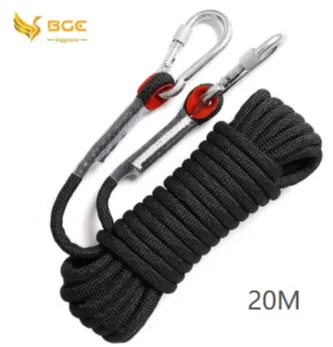
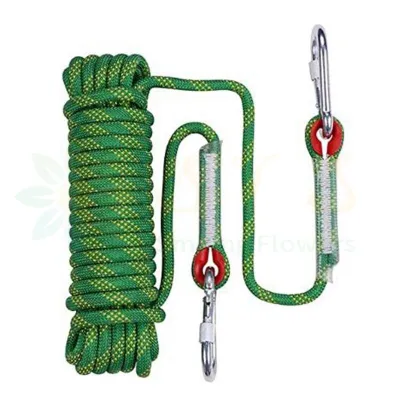
Prices are valid at publication and may change. Please refer to the product page for the latest price.
This extreme impact force is transmitted directly through the safety chain. In a typical lead climbing fall with a high fall factor—the ratio of the fall distance to the length of rope out—the shock load on a static steel line can easily exceed 20 to 30 kilonewtons (kN). This force is far beyond the structural limits of standard climbing equipment. Under such immense loads, steel wire can shear, aluminum carabiners can shatter, and bolts or traditional protection (like nuts and cams) can be violently ripped from the rock face.
Even if the gear somehow holds, the human body cannot withstand this level of deceleration. The sudden stop transfers the crushing force directly to the climber’s harness and skeletal system. This can lead to catastrophic internal injuries, ruptured organs, severe whiplash, and spinal fractures. In contrast, standard climbing safety systems are engineered to limit the impact force on the human body to a maximum of 12 kN—the threshold of human tolerance—with most modern dynamic ropes keeping this force well under 9 kN.
Furthermore, steel cables are highly abrasive and rigid. They do not run smoothly through standard climbing belay devices, carabiners, or pulleys. Attempting to feed a steel cable through a manual or assisted-braking belay device will jam the mechanism, destroy the device, or prevent the belayer from controlling the line. The lack of flexibility also makes it impossible to tie secure climbing knots, such as the figure-eight loop, which are essential for tying into a harness.
Dynamic Climbing Ropes: The Only Safe Choice for Fall Protection
Dynamic climbing ropes are the absolute standard for personal fall protection in rock climbing. Unlike rigid steel rope, dynamic ropes are specifically engineered to stretch under sudden tension. This elasticity acts like a shock absorber, lengthening the time it takes for a fall to come to a complete stop. By spreading the deceleration over a longer interval, the rope dramatically reduces the peak impact force experienced by both the climber and the anchor points.

The secret to this performance lies in the rope’s construction. Modern climbing ropes use a “kernmantle” design, which consists of two distinct parts: the core (kern) and the sheath (mantle). The core is made of high-quality nylon (polyamide) fibers that are twisted or braided in a specific pattern. When a load is applied, these fibers untwist and stretch, absorbing the kinetic energy. The outer sheath is tightly woven to protect the delicate core from abrasion, dirt, and ultraviolet (UV) radiation.
When choosing a dynamic rope, you must verify its safety credentials. Never use unrated utility cords or generic ropes. Look for certifications from the UIAA (International Climbing and Mountaineering Federation) or European CE marks (specifically EN 892 for dynamic ropes). These certifications guarantee that the rope has undergone rigorous testing. The standards ensure the rope can withstand multiple high-factor falls while keeping the maximum impact force within safe, human-tolerable limits, typically measuring dynamic elongation (how much the rope stretches during a fall, usually between 30% and 40%) and static elongation (how much it stretches under a simple bodyweight load, typically under 10%).
Additionally, dynamic ropes are designed to handle the friction and heat generated during a fall or descent. The nylon fibers can withstand the heat of a rope sliding through a belay device, provided proper techniques are used. This thermal and mechanical resilience is something steel cables simply cannot offer in a lightweight, portable package suitable for active climbing.
Legitimate Uses of Steel Rope in Mountaineering and Climbing
While steel rope is highly dangerous as a dynamic belay line, it does have specific, engineered applications in mountain environments. In these scenarios, the systems are designed so that climbers never subject the steel to a direct, unabsorbed dynamic fall, or the cable is used purely for structural, static load-bearing purposes.
The most common encounter with steel cables is on a via ferrata (Italian for “iron path”). These are protected climbing routes found on steep mountain faces, where steel cables are permanently anchored to the rock. Climbers secure themselves to these cables using specialized via ferrata lanyards equipped with energy-absorbing systems (EAS). The lanyard’s tearing webbing absorbs the shock of a fall, preventing the catastrophic impact forces that would otherwise occur on a rigid steel line. Without this dedicated shock absorber, clipping directly to a via ferrata steel cable with static slings is incredibly dangerous.
Steel cables are also utilized in heavy-duty hauling systems and rescue operations. When transporting heavy gear bags up big walls or raising a rescue litter, the static nature and extreme durability of steel wire are highly advantageous. Additionally, permanent anchor points, zip lines, and cable bridges in adventure parks rely on steel for its weather resistance and high tensile strength. In all these cases, the steel is part of a professionally engineered system designed for static tension, never for catching an un-cushioned free fall.
It is also worth noting that structural steel cables used outdoors require regular professional inspection. In tropical climates, such as the coastal crags of the Philippines, salty air and high humidity can accelerate the corrosion of metal cables and anchors. Climbers should always visually inspect fixed steel lines for rust, frayed wires, or loose anchor bolts before trusting them as part of an engineered system.
How to Verify and Choose the Right Climbing Rope
Selecting the correct gear is a fundamental skill that directly impacts your safety on the crag. If you are climbing in tropical environments like the Philippines—where high humidity, intense UV exposure, and salt air at coastal crags like Cantabaco can accelerate gear wear—rigorous inspection is even more critical. Use this step-by-step guide to verify and choose your rope:
Material Verification Always confirm that your climbing line is a dynamic rope made of 100% nylon (polyamide). Never use steel, wire, polyester utility ropes, or generic hardware store cords. Nylon is the only material that provides the necessary balance of strength, lightweight handling, and dynamic elasticity.
Label and Certification Inspection Examine the factory tags, packaging, or the printed markers on the rope’s ends. You must find an explicit “Dynamic” designation alongside UIAA and CE certification stamps. If these markings are missing, defaced, or if the rope’s history is unknown, do not use it for climbing.
Choose the Right Rope Type Dynamic ropes are categorized into three main types based on their intended use:
- Single Ropes: Designed to be used on their own. This is the most common choice for sport climbing, top-roping, and indoor gyms. They are typically marked with a circled number "1" on the rope end.
- Half Ropes: Used in pairs, where the climber alternates clipping left and right protection lines. This reduces rope drag on wandering traditional routes and is marked with a "1/2" symbol.
- Twin Ropes: Must be used as a pair, with both strands clipped into every piece of protection. They are lightweight and ideal for alpine climbing, marked with an overlapping circles symbol.
Assess Condition and Environmental Wear Regularly inspect your rope by running your hands along its entire length. Feel for “core shots” (where the inner core is exposed or damaged), soft mushy spots, or flat sections that indicate internal fiber failure. In humid tropical climates, ensure your rope is dried thoroughly in the shade before storage, as storing a damp nylon rope can lead to mold and fiber degradation. If you detect any structural damage, or if the rope has sustained a severe fall, retire it immediately.
Frequently Asked Questions (FAQ)
Can I use a static rope instead of a dynamic rope for lead climbing?
No, you should never use a static rope for lead climbing. Static ropes are designed with very low stretch (typically less than 5%) to make ascending, rappelling, and hauling gear more efficient. Because they do not stretch significantly, catching a lead fall on a static rope generates dangerously high impact forces that can injure your spine, break your gear, or rip anchors out of the rock. Static ropes are only suitable for caving, rescue operations, canyoneering, or top-roping under strict conditions where the rope is kept completely taut to minimize fall distance.
Are steel carabiners safe for rock climbing?
Yes, steel carabiners are safe and incredibly strong, but they are rarely used for personal climbing gear due to their weight. Aluminum alloy carabiners are the industry standard for sport and traditional climbing because they are lightweight and offer excellent strength-to-weight ratios. Steel carabiners are typically reserved for high-wear environments, such as top-rope anchors in climbing gyms, commercial outdoor operations, rescue hauling, or permanent outdoor rigging where durability against constant friction is more important than weight. Regardless of the material, always ensure your carabiners are UIAA or CE certified for climbing.
Community discussion
Share your experience or ask a question. Comments are reviewed before publication.