
Choosing the right equipment is the first step toward enjoying any racket or paddle sport. For beginners considering the Boomstik paddle, suitability depends on matching the gear to the specific sport, verifying its physical dimensions, and testing its ergonomics under local playing conditions. In the tropical climate of the Philippines, where high humidity and heat cause hand fatigue and slippery grips, a beginner must be highly selective. A solid paddle is not a universal tool; using it for the wrong sport or with an incorrect grip size can lead to early fatigue, poor form, or physical discomfort.
Before purchasing, a new player must understand that equipment cannot replace proper training and court safety awareness. A paddle that is poorly matched to your body size or skill level will hinder your progress. By systematically inspecting and testing the Boomstik paddle, you can make an informed decision that protects your joints and supports your learning curve.
Clarifying the Sport: Is the Boomstik a Racket or a Paddle?
In casual sports conversations, the terms “racket” and “paddle” are often used interchangeably, but they refer to fundamentally different equipment. A traditional racket features a network of interwoven strings stretched across an open frame, designed to flex and repel lightweight projectiles like shuttlecocks or tennis balls. In contrast, a paddle is a solid piece of equipment, typically constructed from wood, composite materials, polymer, or carbon fiber, designed to strike solid or perforated plastic balls.
Products mentioned in this guide
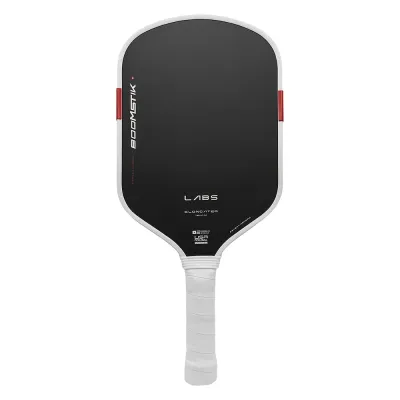
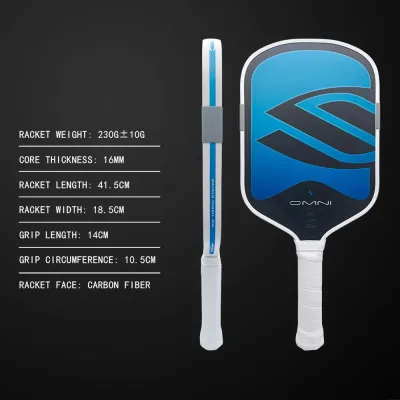
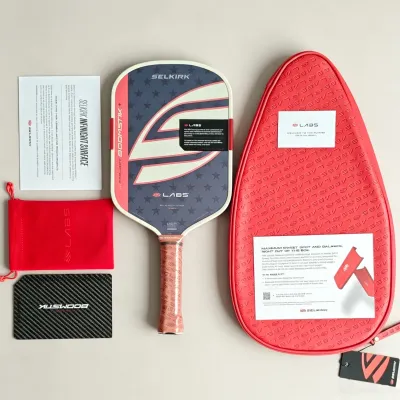
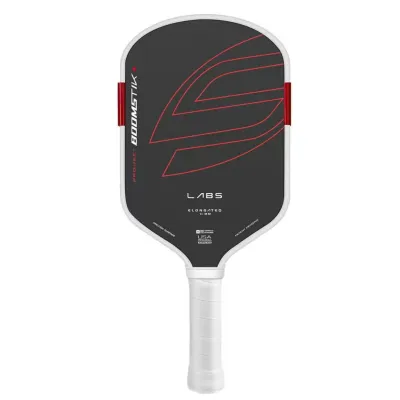
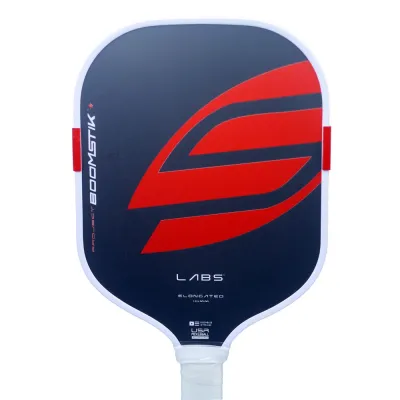
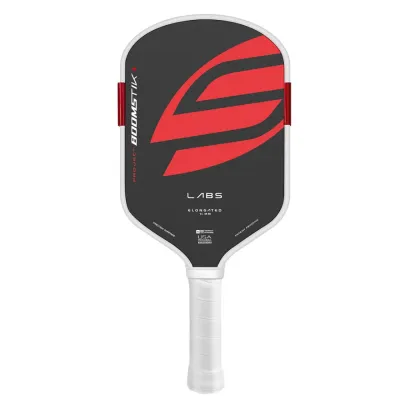
Prices are valid at publication and may change. Please refer to the product page for the latest price.
Using a solid paddle for a sport designed for a stringed racket, or vice versa, presents significant safety risks and performance issues. For instance, playing badminton with a solid paddle will crush the delicate shuttlecock upon impact, while the excessive weight strains your wrist during rapid overhead swings. Conversely, using a lightweight stringed racket to strike a heavy, solid ball can warp the frame or snap the strings instantly.
To ensure you are buying the correct gear, check the manufacturer’s product label or official specifications. Look for explicit designations such as “pickleball,” “padel,” “beach tennis,” or “table tennis.” If you are playing on local outdoor courts or community barangay sports complexes, matching your equipment to the specific court rules and ball types is essential for fair play and personal safety.
Beginner Suitability Checklist: What to Inspect
When evaluating a Boomstik paddle, beginners should perform physical checks to ensure the equipment matches their physical build and skill level. The first factor is weight and balance. A paddle that is too heavy requires excessive muscular effort to swing, leading to shoulder and wrist fatigue, especially during long sessions in hot, humid weather. Hold the paddle by the handle and extend your arm forward; if you feel an immediate downward pull that forces your wrist to bend, the paddle may be head-heavy or too heavy for your current strength level. Beginners benefit from a lightweight, balanced, or slightly head-light paddle that allows for quick reactions.

The second aspect is grip size. A grip that is too small forces your fingers to clench tightly to keep the paddle from twisting, while a grip that is too large prevents you from wrapping your hand securely. In the tropical climate of the Philippines, sweat can make a poorly sized grip incredibly slippery, increasing the risk of the paddle flying out of your hand. To check the fit, wrap your dominant hand around the handle; you should be able to fit the index finger of your non-dominant hand comfortably in the space between your fingertips and the heel of your palm.
Finally, examine the sweet spot and surface area of the paddle face. Beginners need a forgiving surface that accommodates off-center hits, which are common when developing hand-eye coordination. Look for a paddle with a wide, rounded face rather than a narrow or elongated shape. A larger surface area provides a wider margin of error, helping you keep the ball in play more consistently while you focus on mastering your footwork and swing mechanics.
Testing the Boomstik Paddle Before You Commit
Before committing to a purchase, conduct a few low-risk, practical tests at home or in a controlled environment. Start with shadow swings in an open space. Mimic the basic movements of the sport, including underhand serves, forehand drives, and backhand volleys, without hitting a ball. Pay attention to how the paddle feels at the end of each swing; if you feel a jarring sensation in your wrist or elbow when stopping the motion, the paddle’s weight distribution may not be suitable for your joints.
Next, perform a light rallying test against a smooth concrete wall or with a practice partner. Focus on the sensory feedback of each impact. Observe the level of vibration that travels up the handle into your hand and forearm. High-quality beginner paddles are designed to absorb shock, whereas low-grade solid paddles transfer intense vibrations directly to the player’s joints. If every strike produces a harsh, hollow vibration that makes your hand feel numb, the paddle lacks adequate shock absorption.
During these initial tests, establish strict stop conditions to protect yourself from injury. If you experience any sharp pain, dull aches, or persistent stiffness in your wrist, elbow, or shoulder, stop playing immediately. Do not attempt to push through physical discomfort in the hope that your body will adapt. Equipment should conform to your physical needs, and continuing to use an ill-fitting paddle can lead to chronic repetitive strain injuries.
Making Your Decision: Keep, Adjust, or Look for Alternatives
Once you have completed your physical inspection and practical tests, you can make an informed decision. The Boomstik paddle serves as a reliable and cost-effective starting point if it passes your weight and balance checks, feels comfortable during shadow swings, and matches the specific rules of the sport you intend to play. For casual weekend games at local community courts, an entry-level paddle that provides basic control and durability is often all a beginner needs to start learning.
If the paddle is almost perfect but suffers from minor comfort issues, you can make simple, reversible adjustments to improve its performance. For example, if the grip feels slightly too small or slippery due to sweat, you can purchase a high-traction sports overgrip for a few hundred ₱. Wrapping an overgrip around the handle increases the circumference slightly, improves moisture absorption, and provides a softer, cushioned feel that reduces hand fatigue. Additionally, adjusting your holding technique—such as relaxing your grip pressure until the moment of impact—can reduce strain on your forearm muscles.
However, there are clear signs that indicate you should stop using the paddle and look for an alternative. If the paddle is physically too heavy to swing comfortably, causes persistent joint pain, or exhibits poor shock absorption that cannot be fixed with an overgrip, it is time to explore other beginner-friendly models. Prioritize your physical health and skill development over brand loyalty or initial cost; finding a paddle that matches your body will make your sports journey far more enjoyable.
Frequently Asked Questions (FAQ)
Can I use the Boomstik paddle for badminton?
No, you cannot use a solid paddle like the Boomstik for badminton. Badminton requires a highly flexible, lightweight, stringed racket designed specifically to strike a delicate shuttlecock. Using a solid, heavy paddle will destroy the shuttlecock on impact, and the lack of string tension means you will have no control over the flight path. Furthermore, the excessive weight of a solid paddle can cause severe wrist and shoulder strain when you attempt the rapid, overhead snapping motions required in badminton.
How do I know if the grip is too small for my hand?
You can easily determine if a grip is too small by performing the standard finger-gap test. Hold the paddle handle in your normal playing hand. Take the index finger of your other hand and try to slide it into the gap between your fingertips and the palm of your gripping hand. If the space is too narrow to fit your index finger, or if your fingertips are pressing directly into your palm, the grip is too small. A grip that is too small forces you to squeeze the handle excessively, which can lead to forearm fatigue and conditions like tennis elbow.
Is a heavier paddle better for beginners to generate power?
No, a heavier paddle is generally not recommended for beginners looking to generate power. While a heavier paddle does transfer more mass to the ball, it requires significant wrist strength, shoulder stability, and proper swing mechanics to control safely. Beginners who use heavy paddles often struggle to position the paddle quickly enough, leading to late hits, poor form, and increased risk of injury. A lighter paddle allows new players to focus on developing clean swing mechanics, quick hand speed, and precise ball control, which are far more important for long-term skill progression than raw power.
Community discussion
Share your experience or ask a question. Comments are reviewed before publication.