
Evaluating whether the Champ grip enhancer is effective for your heavy barbell and dumbbell lifts depends on the specific product format you choose and your training environment. In high-humidity environments, such as local open-air or non-air-conditioned gyms, managing sweat is often the primary barrier to maintaining a secure hold on heavy iron. If the product is a liquid chalk, it works by absorbing moisture and increasing friction directly on the skin. If it is a mechanical aid like a lifting strap or grip pad, it physically transfers the load from your fingers to your wrists. Both methods can successfully prevent your grip from failing before your target muscles are fully stimulated, but they require different application techniques and safety considerations to be truly effective.
Identifying the Champ Grip Enhancer's Design and Mechanics
Before purchasing any grip accessory, you must first clarify which category of grip aid the Champ product falls under, as the term “grip enhancer” can refer to vastly different training tools. Typically, these products exist as either chemical friction enhancers, such as liquid magnesium carbonate, or mechanical supports, such as lifting straps, grip pads, or lifting hooks. To determine the exact function of your specific Champ model, consult the manufacturer’s official packaging or product specifications. Each type serves a distinct purpose in the weight room, and confusing their mechanical roles can lead to suboptimal performance or premature wear during heavy training sessions.
For chemical enhancers like liquid chalk, the primary ingredients are usually magnesium carbonate and alcohol. When applied to the hands, the alcohol evaporates quickly, leaving a dry, uniform layer of chalk that binds to the skin’s ridges. This layer acts as a barrier against sweat, which is particularly valuable in tropical climates where humidity levels can cause hands to slip even on aggressively knurled barbells. If you are evaluating a mechanical Champ grip aid, such as a strap or a padded wrap, you will want to inspect the structural materials. Look for heavy-duty nylon webbing, reinforced cotton, or genuine leather, along with double-stitched seams and neoprene wrist padding to ensure the accessory can withstand the high tension of heavy pulling movements.
Products mentioned in this guide
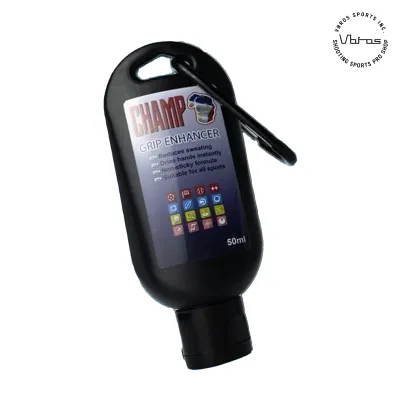
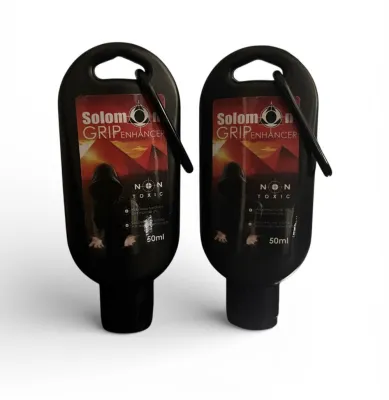
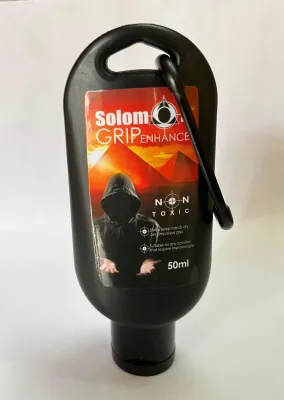
Prices are valid at publication and may change. Please refer to the product page for the latest price.
The mechanical advantage provided by these two categories differs fundamentally. Liquid chalk increases the coefficient of friction between your skin and the steel bar, requiring your forearm muscles to work just as hard but preventing slippage caused by moisture. Mechanical aids, on the other hand, alter the physics of the lift by wrapping around the bar and transferring a portion of the load directly to your wrists. This structural support reduces the active squeezing force required by your fingers, allowing you to hold onto weights that exceed your raw grip capacity. Understanding this distinction helps you align the product’s mechanics with your specific training goals, whether you want to build raw hand strength or maximize muscular hypertrophy in your back and legs.
Assessing Performance During Heavy Barbell Lifts
When executing heavy bilateral compound movements like deadlifts, barbell rows, or Romanian deadlifts, grip security is often the limiting factor that halts a set. A high-quality grip enhancer can dramatically alter your performance on heavily knurled barbells. If you are using a liquid chalk variant, the dry barrier prevents sweat from lubricating the knurling, allowing the steel to bite securely into your palms without slipping. This is especially beneficial during high-rep sets where sweat accumulation normally forces you to re-grip the bar mid-set, disrupting your lifting rhythm and compromising your spinal alignment.

For mechanical grip aids, the setup time and wrist alignment become critical factors during heavy barbell training. Wrapping a strap or securing a grip pad around a barbell requires a brief setup period before each lift, which can sometimes break your mental focus if the accessory is stiff or difficult to align. However, once secured, these aids help maintain neutral wrist alignment by distributing the downward pull of the bar evenly across the wrist joint. This reduction in joint stress can be a game-changer for lifters who experience discomfort in their wrists or elbows during heavy pulling movements, as it minimizes the need to overcompensate with secondary stabilizing muscles.
The primary benefit of using a grip aid during heavy barbell lifts is the prevention of premature grip failure. In exercises like the deadlift, your posterior chain muscles—such as the glutes, hamstrings, and erector spinae—are capable of handling far more weight than the small muscles of your hands and forearms can support over multiple repetitions. By utilizing a grip enhancer, you ensure that your target muscle groups reach true muscular fatigue, rather than ending the set early simply because your fingers started to uncurl from the bar. This allows for greater mechanical tension and progressive overload, which are the primary drivers of muscle growth and strength adaptation.
Practicality for Heavy Dumbbell Training
Transitioning from barbell lifts to heavy dumbbell training introduces unique physical challenges, particularly regarding how you secure and manage your grip aids. Unlike a barbell, where you can use both hands to adjust straps or pads sequentially, dumbbell exercises are often performed unilaterally or require you to hold two separate weights simultaneously. This makes the ease of application a major factor in whether a grip aid is practical for daily gym use. If you are using mechanical straps, securing the second hand can be exceptionally difficult, as you must wrap the strap around the dumbbell handle using only the fingers of the hand that is already holding the weight.
To evaluate the practicality of the Champ grip enhancer for dumbbells, consider how it affects your wrist flexibility and range of motion. During heavy dumbbell pressing variations, such as flat or incline dumbbell chest presses, your wrists must remain mobile enough to stabilize the weight directly over your elbows. A bulky mechanical grip aid can sometimes restrict this natural movement or push the dumbbell handle too far forward in your palm, altering the line of force and increasing the risk of shoulder strain. Conversely, a liquid chalk enhancer provides the necessary slip resistance without adding physical bulk, preserving your natural hand position and allowing for an unrestricted range of motion throughout both pressing and pulling exercises.
Furthermore, high-volume dumbbell routines, such as heavy single-arm rows or walking lunges, generate intense forearm fatigue and a deep muscular pump. If your goal is to maximize the stimulus on your upper back or legs during these movements, a mechanical grip aid can alleviate the forearm burn, allowing you to focus entirely on the target muscles. However, if you prefer to maintain a high level of active forearm engagement while ensuring the dumbbell does not slip out of your hand due to sweat, a liquid chalk enhancer is the more appropriate choice. It keeps your hands dry and secure while still requiring your forearm muscles to actively contract to hold the weight.
Safety Limits and Pre-Purchase Checks
While grip enhancers are incredibly useful tools for overcoming training plateaus, they also come with safety limits that every lifter must respect. Relying too heavily on mechanical aids can mask underlying weaknesses in your raw grip strength, leading to an imbalance between your overall pulling power and your hand strength. Over time, this discrepancy can compromise your lifting form, as your nervous system may struggle to stabilize heavy loads that your hands cannot naturally support. To prevent this, it is essential to treat grip aids as supplemental tools rather than permanent crutches, ensuring you still perform raw, unassisted lifts during your warm-up sets.
Before every heavy training session, you must perform a thorough inspection of your grip equipment to prevent sudden failure under load. For mechanical aids like straps or wraps, check for visible wear and tear, such as fraying threads along the seams, thinning material at high-friction points, or cracking rubber surfaces. If you notice any structural degradation, replace the item immediately; a strap snapping mid-deadlift can lead to severe muscle strains, dropped weights, or joint injuries. If you are using a liquid chalk product, check the container’s seal to ensure it has not dried out, and verify that the consistency remains smooth and free of large, unusable clumps.
Additionally, you must verify the compatibility of the grip enhancer with your specific gym equipment and physical dimensions. Barbell knurling patterns vary widely, from smooth, passive bars found in commercial fitness centers to sharp, aggressive powerlifting bars. A liquid chalk enhancer works exceptionally well on aggressive knurling by filling the microscopic gaps, whereas a thick rubber grip pad might slide or wear down quickly on sharp steel. You should also measure your hand size against the manufacturer’s sizing charts for mechanical aids, as an ill-fitting strap or wrap can slip off your wrist or fail to wrap around dumbbell handles of larger diameters.
Deciding If It Fits Your Training Routine
Deciding whether to integrate the Champ grip enhancer into your strength routine requires a realistic assessment of your current training bottlenecks. If your primary goal is powerlifting or general strength development, your priority should be building a robust, unassisted grip, meaning you should reserve grip aids for your heaviest working sets or high-volume finishers. If your focus is bodybuilding or hypertrophy, where isolating specific muscle groups is paramount, using a grip aid more frequently is highly justified, as it allows you to target your back and legs without forearm fatigue cutting your sets short.
To implement these tools strategically, adopt a progressive approach during your workouts. Perform all of your warm-up sets and lighter working sets with your raw grip, allowing your hands and forearms to adapt to the increasing load. Only when the weight reaches a point where your grip begins to slip or distracts you from maintaining proper form should you introduce the grip enhancer. This balanced method ensures that you continue to develop functional hand strength while still reaping the hypertrophic benefits of training your larger muscle groups to near-failure.
Before making a purchase, go through a practical pre-purchase checklist to ensure you are getting a genuine product that fits your budget. Verify that you are sourcing the Champ grip enhancer from an authorized local distributor or a reputable online marketplace to avoid counterfeit goods, which often use inferior materials that fail under heavy loads. Check the seller’s return and exchange policies, especially for mechanical aids where sizing is critical. Finally, weigh the ₱ cost against your weekly training frequency; investing in a durable, high-quality grip aid is highly cost-effective if you perform heavy pulling movements multiple times a week, as it directly enhances your training safety and consistency.
Frequently Asked Questions (FAQ)
Will using a grip enhancer stop my forearms from growing?
Using a grip aid can affect forearm development, but only if you rely on it excessively for every exercise in your routine. When you use mechanical aids like lifting straps or grip pads, they take over a significant portion of the holding force, which reduces the active tension on your forearm flexors and grip muscles. Over time, this can lead to slower forearm hypertrophy and a stagnation in your raw grip strength. However, this outcome is entirely preventable with smart training programming.
To ensure your forearms continue to grow while using grip aids, reserve their use for your heaviest pulling movements where grip is the primary bottleneck, such as heavy deadlifts or rows. For all other exercises, including warm-ups, curls, and press variations, perform them unassisted. Additionally, you can incorporate dedicated forearm and grip training at the end of your workouts, such as plate pinches, farmer’s walks, or wrist rollers. This targeted approach allows you to build thick, powerful forearms.
Can I use the Champ grip enhancer for Olympic weightlifting?
Using certain grip enhancers for Olympic weightlifting requires extreme caution due to the dynamic, high-velocity nature of movements like the clean and jerk and the snatch. If the Champ product is a liquid chalk, it is highly suitable and widely recommended for Olympic lifting, as it keeps your hands dry and improves friction without restricting your wrist movement or interfering with your ability to release the bar quickly. However, if the product is a mechanical strap or wrap, the safety considerations change dramatically.
Standard lifting straps or thick grip pads are generally unsafe for dynamic Olympic lifts because they can lock your wrists to the bar. During a clean or a snatch, you must be able to transition your hands quickly under the bar and release it instantly if a lift fails. If your wrists are securely wrapped in heavy-duty straps, a failed lift can drag your arms down, leading to severe wrist, elbow, or shoulder injuries. Always check the manufacturer’s guidelines regarding dynamic load bearing, and if you must use straps for Olympic pulling variations, ensure they are thin, single-loop weightlifting straps designed specifically for quick-release safety.
Community discussion
Share your experience or ask a question. Comments are reviewed before publication.