
Using a Haxinfire diving flashlight for night diving in the Philippines can be a viable and budget-friendly choice, but its ultimate suitability depends entirely on the specific model’s specifications and your intended diving profile. While some models offer the focused beams and adjustable brightness levels required for delicate macro spotting, others are better suited as general navigation backups. Understanding how these budget-friendly torches perform in the unique marine environments of the Philippines is essential before packing your gear bag.
To make an informed decision, you must evaluate the flashlight against the demanding conditions of local dive sites, the physiological sensitivities of nocturnal marine life, and the mechanical reliability required for saltwater submersion. Choosing the wrong light can lead to washed-out underwater photos, startled marine life, or worse, a sudden equipment failure in complete darkness.
Understanding Night Diving Conditions in Anilao and Puerto Galera
Anilao in Batangas and Puerto Galera in Oriental Mindoro are globally celebrated as premier destinations for muck diving and macro photography. Unlike deep-water wall dives, night dives in these areas typically take place in shallow to moderate depths, ranging from 5 to 20 meters. The underwater topography consists largely of sandy slopes, volcanic silt, patch reefs, and seagrass beds, which become highly active with nocturnal biodiversity once the sun sets.
Products mentioned in this guide
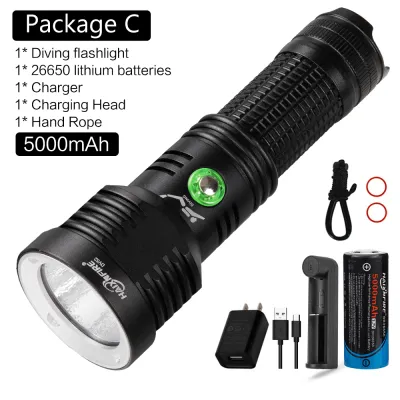
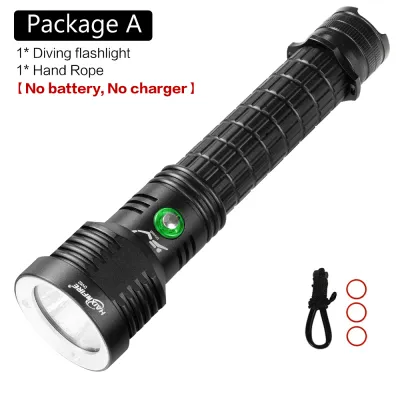
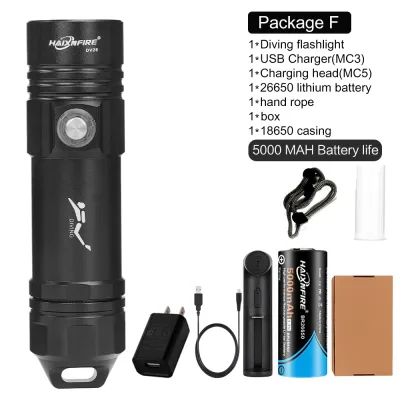
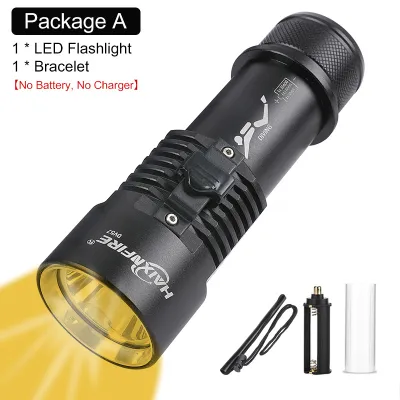
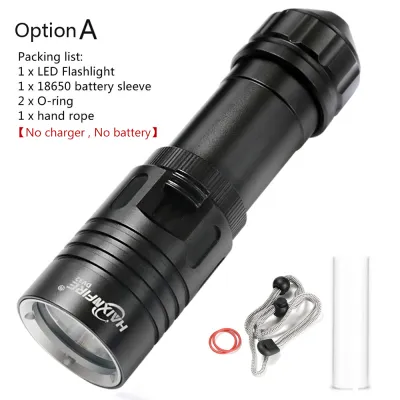
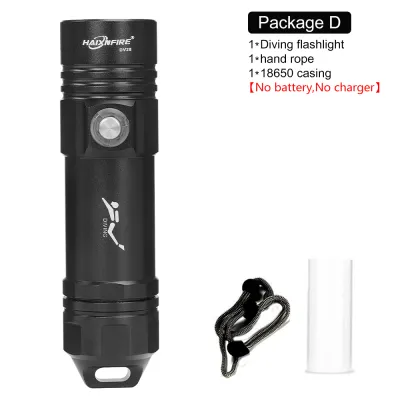
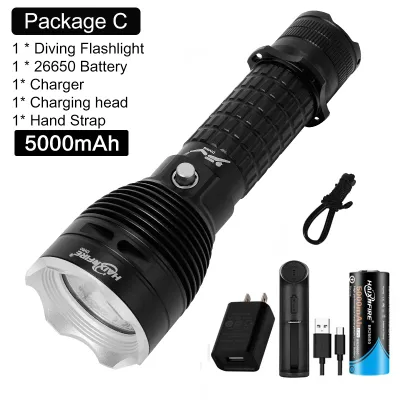
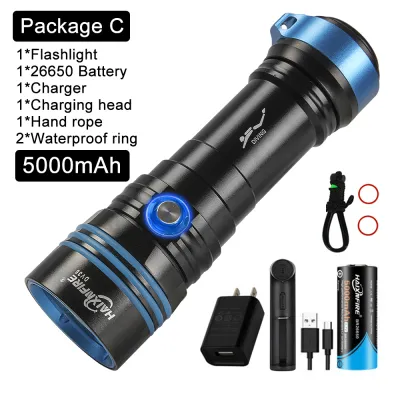
Prices are valid at publication and may change. Please refer to the product page for the latest price.
During a night dive in these locations, your primary objective is usually to spot tiny, cryptic critters that remain hidden during the day. Divers search for colorful nudibranchs, pygmy seahorses clinging to sea fans, blue-ringed octopuses hunting on the sand, bobbit worms emerging from the silt, and camouflaged frogfish. Because these creatures are incredibly small and often blend seamlessly into their surroundings, finding them requires careful, close-up inspection rather than broad, sweeping illumination.
This specific environment presents a major optical challenge known as backscatter. The sandy and silty bottoms of muck sites are easily disturbed by water currents or careless fin kicks. If your dive light emits a wide, high-powered flood beam, the light will reflect off suspended sand particles and organic matter directly back into your eyes or camera lens, creating a blinding glare. Consequently, successful night diving in Anilao and Puerto Galera demands a highly controlled, narrow light source that illuminates only your immediate subject.
Furthermore, the marine life active at night is highly sensitive to sudden changes in light intensity. Many nocturnal species hunt or mate under the cover of darkness, and a sudden blast of intense white light can cause severe stress, disrupt their natural behaviors, or prompt them to flee into hiding. To observe these animals ethically and successfully, you need a light that can be adjusted to lower intensities or filtered to minimize disturbance.
Critical Flashlight Specs to Verify for Philippine Night Dives
Before taking any dive light into the water, you must verify its technical specifications against the physical demands of the dive. Do not rely solely on marketing claims; instead, inspect the product packaging, user manual, or manufacturer specification sheet for verified performance metrics.

Brightness and Adjustable Lumens While land-based flashlights often compete on maximum lumen output, underwater macro diving requires a more nuanced approach. A light emitting a blinding 3,000 or 5,000 lumens is often counterproductive for close-up spotting, as it washes out the natural, vibrant colors of marine life and frightens sensitive subjects. Look for a flashlight that offers adjustable power modes, such as low, medium, and high settings. A low setting of 300 to 500 lumens is often ideal for close-up macro observation, while a high setting of 1,000 to 1,200 lumens is sufficient for general navigation across the reef.
Beam Angle and Focus The shape of the light beam determines how much of the reef you illuminate and how much backscatter you generate. For spotting tiny critters in silty environments, a narrow spot beam with an angle of 5 to 10 degrees is highly recommended. This concentrated beam acts like a spotlight, allowing you to pinpoint a single nudibranch without lighting up the surrounding water column. If your flashlight has a wide flood beam (60 degrees or more), it should only be used for wide-angle videography or as a general area light in clear water.
Depth Rating and Pressure Seals Recreational night dives in the Philippines rarely exceed 20 meters, but your flashlight must possess a depth rating that provides a safe margin of physical resistance. Verify that the light is officially rated to at least 40 meters (approximately 130 feet), though a rating of 100 meters is preferred for long-term durability. Inspect the battery compartment to ensure it utilizes double or triple rubber O-rings, which are critical for preventing water ingress under the ambient pressure of saltwater environments.
Light Color and Specialized Modes Many advanced night divers prefer lights that feature a dedicated red-light mode or support physical red filters. Because many marine organisms cannot easily perceive red light wavelengths, using a red beam allows you to approach and observe nocturnal creatures without triggering their flight response. Additionally, verify if the flashlight has a strobe or SOS mode, which serves as an essential signaling tool in emergency situations.
Evaluating the Haxinfire Flashlight for Macro and Muck Diving
Haxinfire is widely recognized as an accessible, budget-friendly brand frequently available on popular online marketplaces, with prices typically ranging from ₱1,000 to ₱3,000. Because the brand produces a wide variety of models with differing specifications, you cannot assume that every model is suitable for scuba diving. You must evaluate the physical construction and functional features of your specific unit to determine its appropriate role in your dive kit.
First, examine the beam characteristics of your Haxinfire model. Many budget-friendly utility lights are designed with a fixed, relatively wide beam angle. If your specific model lacks an adjustable focus or a narrow spot beam, it will likely generate significant backscatter in the silty waters of Anilao or Puerto Galera. In this scenario, the light is not well-suited as a primary macro spotting tool; instead, it should be relegated to a backup light or used strictly for general navigation in areas with high water clarity.
Next, assess the build quality and materials of the flashlight body. Reliable diving lights are constructed from marine-grade anodized aluminum or high-strength engineering plastics to resist the corrosive effects of warm, tropical saltwater. Check the anodizing on your Haxinfire light for any chips or thin spots, as these areas will quickly corrode in saltwater. Ensure the threads on the battery compartment are clean, deeply cut, and well-lubricated with silicone grease.
The switch mechanism is another critical point of evaluation. Budget flashlights often utilize either a mechanical push-button switch or a magnetic rotary slider. Magnetic switches are highly preferred for diving because they do not require a physical opening through the flashlight body, significantly reducing the risk of water leakage. If your model features a mechanical push-button, verify that the button feels firm and does not stick, as the increased ambient pressure at depth can sometimes compress cheap buttons and lock the light in the “on” or “off” position.
Finally, consider the battery configuration. Many Haxinfire models rely on rechargeable 18650 or 26650 lithium-ion batteries. While these batteries offer excellent energy density and runtime, they must be handled with care. Ensure you use high-quality, protected cells from reputable manufacturers, and always carry fully charged spares in a dry case. In the warm, humid climate of the Philippines, moisture can easily collect inside open battery compartments during transit, so always dry your hands and the surrounding area thoroughly before changing batteries on a dive boat.
Essential Night Diving Safety and Light Etiquette
Operating a dive light responsibly is crucial for your safety, the comfort of your dive buddies, and the preservation of the delicate marine ecosystems in the Philippines. Adhering to established underwater etiquette ensures a positive experience for everyone on the dive.
Underwater Light Etiquette Never shine your flashlight beam directly into the eyes of marine life, as this can cause temporary blindness, disrupt their hunting, or make them easy targets for predators. Instead, use the soft outer edge of the light beam (the halo) to illuminate the subject, or switch to a red-light mode if your flashlight supports it. Similarly, never shine your light directly into your dive buddy’s mask, as this will instantly ruin their night vision and can cause temporary disorientation or panic. When signaling your buddy, always point your light down at the seabed or across their chest, never at their face.
Maintaining Light Redundancy Equipment failure in the pitch black of the ocean is a serious safety hazard. For every night dive, you must carry at least two independent light sources: a primary flashlight and a fully charged backup light. If your primary Haxinfire light fails, floods, or runs out of battery, you should be able to easily locate and activate your backup light to safely terminate the dive and navigate back to the boat or shore. Never rely on your dive buddy’s light as your sole backup.
Pre-Dive Maintenance and Checks Before boarding the dive boat, perform a thorough inspection of your flashlight in a clean, dry environment. Open the battery compartment and inspect the rubber O-rings for any signs of cracking, flattening, or debris such as sand, hair, or salt crystals. Clean the O-rings and their grooves gently with a lint-free cloth, apply a very thin film of silicone grease to keep the rubber supple, and reseal the compartment firmly. Test the light briefly on land to ensure the switch and battery connections are functioning, but avoid running high-powered dive lights on land for more than a few seconds, as they rely on surrounding water to dissipate heat and can quickly overheat.
Frequently Asked Questions (FAQ)
Do I need a special permit for night diving in Anilao or Puerto Galera?
No special government permit is required for recreational night diving in these regions. However, you must hold a recognized night diving certification or be participating in a supervised training course with a certified instructor. Additionally, you must dive with a licensed local resort or dive center and be accompanied by a certified local dive guide. The dive center will manage the necessary local environmental fees, such as the Anilao Sanctuary Fee (typically around ₱200 to ₱400), and ensure your dive complies with local maritime safety regulations.
Can I use a standard tactical flashlight for scuba diving?
No, you should never use a standard tactical flashlight designed for land use when scuba diving. Land-based tactical flashlights are not engineered to withstand the significant ambient pressure of underwater environments, and their single O-ring seals will quickly fail, causing the light to flood and short-circuit. Furthermore, tactical lights lack the specialized corrosion-resistant materials needed to withstand saltwater exposure and do not feature pressure-resistant switches designed to operate reliably at depth.
Community discussion
Share your experience or ask a question. Comments are reviewed before publication.