
Finding the right badminton racket is not about choosing the most expensive model or copying what professional players use on television. To determine if the Yonex Muse is the correct match for your game, you must evaluate how its physical properties—such as weight distribution, shaft flexibility, and overall mass—interact with your unique swing mechanics and physical conditioning. In the tropical climate of the Philippines, where high humidity and warm indoor court temperatures can accelerate fatigue and affect your grip stability, selecting a racket that complements your natural physical limits is essential for both performance and injury prevention. This guide provides a practical diagnostic framework to help you analyze your playing style, decode the technical specifications printed on the racket, and make an informed decision before stepping onto the court.
Assess Your Current Skill Level and Physical Strength
Your technical proficiency directly dictates how much performance you can extract from a racket. Beginners typically rely on a slower, full-arm swing to generate power, requiring a racket that offers built-in energy transfer and a forgiving frame. Intermediate and advanced players, by contrast, utilize rapid wrist snaps, forearm pronation, and precise finger power to generate explosive shuttlecock speed. If your swing technique is still developing, using a racket designed for high-speed, stiff-shaft performance will often result in weak clears and short defensive lifts because your muscles cannot flex the frame sufficiently to create a trampoline effect.
Physical endurance and grip strength are equally critical, especially during long, multi-game sessions in local covered courts or sports centers. A racket that feels light and manageable during a five-minute warm-up can feel incredibly heavy by the third set when humidity has sapped your energy. If you experience premature forearm fatigue, shoulder tightness, or wrist soreness, your current racket may be too heavy or poorly balanced for your physical baseline. Evaluating your personal strength limits helps you identify whether you need a lightweight frame that preserves your stamina or a heavier frame that adds stability to your shots.
Products mentioned in this guide
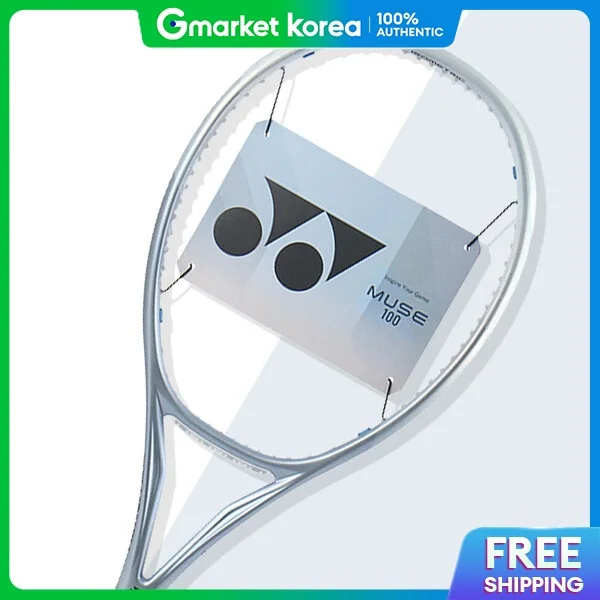
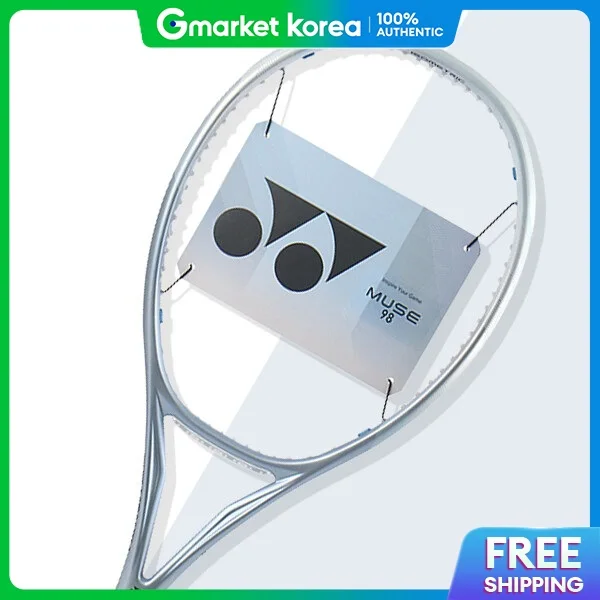
Prices are valid at publication and may change. Please refer to the product page for the latest price.
Finally, you must balance your need for forgiveness against your desire for precision. Off-center hits are common when learning the game or playing at a fast, recreational pace. A racket with a larger sweet spot and a more flexible frame dampens vibrations and keeps the shuttlecock in play even when your timing is slightly off. Conversely, highly competitive players who consistently strike the center of the string bed prioritize stiff, compact frames that offer immediate tactile feedback and pinpoint control, even if those frames punish minor timing errors.
Decode the Yonex Muse Specifications for Your Play Style
To understand how the Yonex Muse will behave on the court, you must learn to read the manufacturer’s technical markings, which are typically laser-engraved or printed on the cone and shaft of the racket. The weight of Yonex rackets is designated by a “U” rating, where a lower number indicates a heavier frame. For example, a 3U racket generally weighs between 85 and 89 grams, while a 4U racket is lighter, ranging from 80 to 84 grams. Choosing the correct weight class is your first line of defense against shoulder strain; lighter frames are easier to maneuver in quick defensive exchanges, while heavier frames offer more plow-through power for deep clears.

Affected by the humid Philippine climate, selecting the right grip size is vital because excessive sweat can cause the racket to slip in your hand. The grip size is indicated by a “G” rating, such as G5 or G6, with higher numbers representing thinner handles. Many local players prefer a thinner G5 or G6 handle because it allows them to wrap an additional polyurethane overgrip or a highly absorbent towel grip without making the handle too bulky to hold comfortably. A grip that is too thick prevents proper finger manipulation, which is essential for executing deceptive drop shots and quick net play.
The balance point of the racket—whether it is head-heavy, head-light, or even-balanced—determines where the mass is concentrated. Head-heavy rackets concentrate weight toward the top of the frame to assist in generating momentum for powerful smashes, but they require stronger wrist mechanics to swing quickly. Head-light rackets shift the balance toward the handle, making them incredibly fast to swing for defensive blocks and net play, though they require more physical effort from the player to generate deep power. Even-balanced models seek a middle ground, offering a versatile blend of speed and power that adapts well to all-around play.
Match Racket Traits to Your On-Court Tactics
Your tactical role on the court should heavily influence how you match your racket’s physical traits to your play style. If you are an aggressive, attacking player who prefers to dominate the rally from the backcourt with steep smashes and fast drives, you will naturally lean toward a racket configuration that supports power generation. However, you must verify that your wrist and shoulder strength can handle the extra swing weight of a head-heavy setup without sacrificing your recovery speed between shots.
For defensive players, rally builders, and net specialists, maneuverability is the primary tactical requirement. A defensive style relies on quick reflexes to return hard smashes and place the shuttlecock into open spaces. If this describes your game, a head-light or even-balanced frame with a flexible to medium shaft stiffness is highly advantageous. This setup allows you to react instantly to fast-paced shots, using the natural flex of the shaft to redirect the shuttlecock with minimal physical strain, keeping you competitive during long, defensive rallies.
The tactical demands also differ significantly between singles and doubles play. Singles is a game of endurance, court coverage, and deep, precise clears that force your opponent to run, making a balanced, consistent racket highly valuable. Doubles, on the other hand, is characterized by extremely fast, flat exchanges, rapid net interceptions, and continuous attacking sequences. A racket that is too heavy or slow to recover will leave you vulnerable during rapid-fire doubles drives, meaning a lighter, more aerodynamic frame is often preferred to keep pace with the high-speed transitions of modern doubles play.
Signs the Yonex Muse Is (or Isn’t) the Right Fit
Knowing when to commit to a racket or when to look for an alternative depends on recognizing clear physical and performance signals during play. A perfect fit is indicated when you can consistently clear the shuttlecock from baseline to baseline without feeling like you are straining your shoulder or forcing your swing. If the racket feels like a natural extension of your arm, allows you to transition smoothly from a deep smash defense to a delicate net drop, and leaves you free of joint pain after a two-hour session, the specifications are well-matched to your current physical baseline.
Conversely, there are several warning signs that a racket is poorly suited to your current level. If you experience persistent pain in your wrist, elbow, or shoulder after playing, the shaft may be too stiff or the overall weight too heavy for your muscles to support safely. Another red flag is a consistent lack of depth on your clears; if your deepest shots are landing mid-court, you likely need a more flexible shaft or a more head-heavy balance to assist with power generation. Additionally, if you find yourself frequently hitting the frame or missing the sweet spot, you may need a racket with a more forgiving, isometric head shape.
If you are uncertain about your compatibility with the Yonex Muse, the most effective next step is to conduct a structured demo test. Many local badminton clubs, specialized sports shops, or coaching academies in the Philippines offer demo programs where you can play a few games with the racket before purchasing. Alternatively, consulting a certified badminton coach for a quick swing analysis can provide invaluable clarity. A coach can observe your swing speed and contact point, helping you determine whether you should proceed with the Yonex Muse or pivot to a more forgiving, game-improvement model that better supports your development.
Frequently Asked Questions (FAQ)
How can I verify the exact weight and balance of the Yonex Muse before buying?
To find the precise, manufacturer-verified specifications of your racket, look closely at the physical decals printed on the shaft or the cone just above the handle. Yonex clearly prints the weight classification (such as 3U or 4U) and the grip size (such as G5) directly on the frame. For exact millimeter measurements of the balance point or weight in grams, consult the official product tag attached to the racket at purchase, or visit the official Yonex regional website to cross-reference the model’s technical specifications.
Is the Yonex Muse suitable for beginners learning basic strokes?
Whether the Yonex Muse suits a beginner depends entirely on its specific model variation, as some versions feature stiffer shafts and heavier balances designed for intermediate players. Beginners generally develop their strokes best using a racket with a flexible shaft, an even or head-light balance, and a generous isometric head shape to maximize the sweet spot. Before purchasing, check the racket’s shaft stiffness label; if it is rated as medium or flexible, it will provide the necessary forgiveness and power assistance for novice players.
What string tension should I pair with the Yonex Muse for my skill level?
You should always select a string tension that falls within the recommended range printed directly on the inside of the racket frame, as exceeding this limit can warp or crack the graphite. Beginners and recreational players should opt for lower tensions, typically between 20 and 24 pounds, to provide a larger sweet spot and effortless depth. Intermediate and advanced players with consistent swing mechanics can safely increase tension to 25 pounds or higher to gain more control and precision, provided it remains within the manufacturer’s safety guidelines.
Community discussion
Share your experience or ask a question. Comments are reviewed before publication.