
Quick Answer: Is This Racket Built for Your Game?
The Yonex Nanoflare 1000Z is designed specifically for players who thrive on speed, rapid defensive recovery, and lightning-fast flat exchanges. If your game relies on quick interceptions at the net, rapid mid-court drives, and defensive blocks that turn an opponent’s smash into a counter-attack, this racket matches your tactical profile. It excels in fast-paced doubles scenarios where reaction time is measured in milliseconds.
Conversely, if you are a rear-court attacker who relies on the heavy momentum of a head-heavy frame to produce steep, booming smashes, this racket may feel hollow or demanding. The fundamental trade-off of this speed-oriented design is prioritizing rapid maneuverability over effortless, weight-driven power. Choosing this racket means committing to a style that wins points through placement, speed, and relentless pressure rather than raw physical force.
Decoding the Head-Light and Speed-Focused Mechanics
By shifting the balance point closer to the handle, a head-light racket physically reduces its swing weight. This mechanical adjustment allows you to initiate a swing with less effort and stop or redirect the racket head mid-swing. In fast-paced rallies, this rapid recovery time can determine whether you successfully intercept a drive or get jammed by a body shot.
Products mentioned in this guide
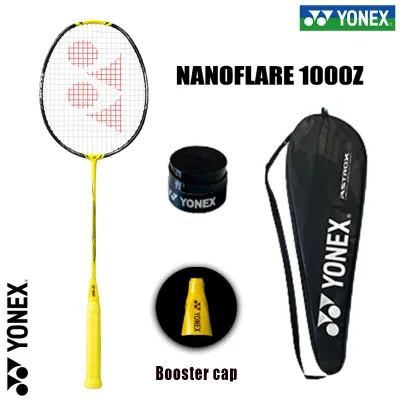
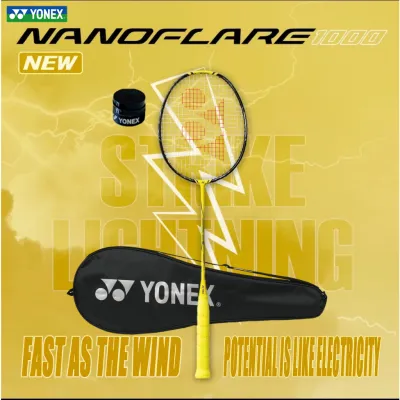
![[Ready Stock] YONEX NANOFLARE 1000Z Badminton Racket Full Carbon 4U Ultra Light Single Speedy Attackin Strung 26-30Lbs Speedy Attacking Badminton Racket and badminton](https://img.lazcdn.com/g/p/151e2eab143c88ce7b37ffa7b2b6d7e7.jpg_400x400q80.jpg_.webp)
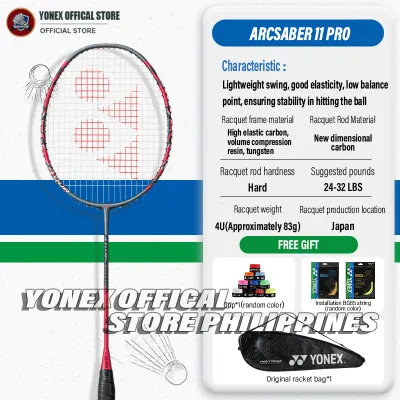
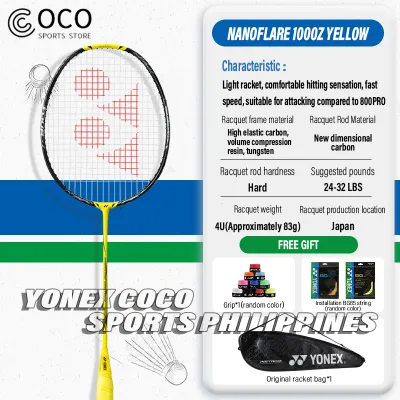
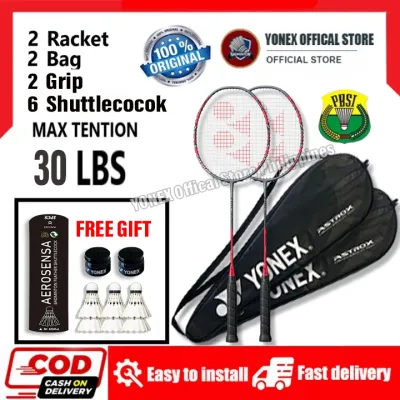
Prices are valid at publication and may change. Please refer to the product page for the latest price.

However, this physical configuration alters how kinetic energy is transferred to the shuttlecock. A head-heavy racket uses its own mass momentum to drive the shuttle. In contrast, a head-light racket requires the player to generate the necessary head speed through rapid acceleration. This means you must rely on your own physical technique to produce deep clears and powerful smashes.
Aerodynamics play a crucial role in this design. The frame is engineered to slice through the air with minimal drag, helping you maintain high swing speeds even during short, compact strokes where you do not have the luxury of a full backswing. In humid tropical environments, such as indoor courts in the Philippines where the air can feel thick and heavy, minimizing aerodynamic drag is a noticeable advantage during long, exhausting rallies.
Self-Diagnosis: Does Your On-Court Habit Match?
To determine if this racket fits your play style, evaluate your typical tactical habits across different areas of the court.
Front-Court and Net Play Do you find yourself hunting for interceptions at the net? If your tactical role involves tight net drops, quick pushes to the mid-court, and cross-court net kills, a head-light frame provides the agility needed for these delicate, high-speed maneuvers. The reduced head weight allows for micro-adjustments of the racket face right up to the moment of impact, giving you better control over tight net spins.
Mid-Court Drives In modern doubles, the flat drive game is often where rallies are won or lost. If your style involves keeping the shuttle low and driving it hard through the mid-court, you need a racket that can recover instantly. A speed-oriented frame excels here, allowing you to play consecutive drives without your forearm fatiguing rapidly. If you prefer short backswings and quick wrist action over long, winding strokes, this setup aligns with your habits.
Rear-Court Attacking If you find yourself in the rear court, you must evaluate how you generate power. Players with excellent kinetic chain mechanics—initiating power from the legs, transferring it through the torso, and releasing it via rapid forearm rotation and wrist snap—can still produce incredibly fast smashes with a head-light racket. However, if your technique relies on the racket’s weight to do the pulling work, your rear-court clears and smashes may land short, leaving you vulnerable to counter-attacks.
Assessing Your Skill Level and Physical Readiness
Maximizing a high-end, stiff-shafted racket requires a high level of physical readiness and technical precision. A common misconception is that a fast, head-light racket is easy for anyone to use, but the reality is more demanding.
The shaft stiffness means the racket does not bend easily during a slow swing. To get the whip effect and generate explosive repulsion, you must possess rapid wrist snap and forearm acceleration. Without this explosive technique, the racket will feel stiff and unforgiving, often resulting in weak clears that fail to reach the opponent’s baseline.
Transitioning from a head-heavy or even-balance racket also introduces a timing challenge. Because the head-light frame moves through the air much faster, players often swing too early, leading to mistimed hits or frame shots. Adjusting your timing requires patience and focused practice to synchronize your physical contact point with the increased swing speed. Beginners and lower-intermediate players may find this transition frustrating and might benefit more from a more flexible, even-balance alternative.
Final Checks: Specs, Setup, and Authenticity
If you decide this racket aligns with your playing style, several practical steps remain before making your purchase.
Weight Variants Check the manufacturer’s labels on the cone of the racket. Typically, these rackets are available in 3U (heavier, offering slightly more stability and power) and 4U (lighter, maximizing speed and defense) options. Consider your physical stamina and whether you prioritize extra defensive speed (4U) or a bit more substance behind your shots (3U).
String Tension Stringing setup is critical. High-end players often opt for higher tensions to maximize the crisp, repulsive feel of a fast frame. However, higher tension shrinks the sweet spot and demands precise hitting. In humid tropical climates, strings can lose tension slightly faster, so consult a professional stringer at your local pro shop to find a tension that balances repulsion with durability. Expect to pay a standard restringing fee of a few hundred pesos for quality service.
Authenticity and Warranty Given the premium nature of high-end sports equipment, counterfeit rackets are common in online marketplaces. Always purchase from authorized physical retailers or official online brand stores in the Philippines. Verify the presence of the manufacturer’s hologram sticker on the shaft, check the laser-engraved serial numbers on the cap and cone, and ensure the seller provides an official warranty card to protect your investment.
Frequently Asked Questions (FAQ)
How long does it take to adjust to a head-light racket?
For most intermediate to advanced players, the adjustment period ranges from two to four weeks of regular play. Initially, you may experience mistimed shots or find your clears landing short. To accelerate this transition, focus on short-court driving drills and wall-volleying exercises. These drills help recalibrate your wrist timing and build the specific forearm endurance required for rapid, short-swing acceleration. Once your timing aligns with the faster frame speed, you will notice cleaner contact and improved defensive recovery.
Can I use a speed-oriented head-light racket for singles play?
Yes, though it serves a specific tactical style in singles. While singles players traditionally favor even-balance or head-heavy rackets to assist with deep, effortless clears and steep smashes, a head-light racket is highly effective for defensive, counter-attacking singles players. If your strategy relies on exhausting your opponent through rapid court coverage, tight net play, and quick defensive retrievals, this racket can reduce arm fatigue over long, multi-game matches. However, you must be prepared to exert more physical effort to maintain deep baseline-to-baseline clears.
Community discussion
Share your experience or ask a question. Comments are reviewed before publication.