
Deciding when to introduce your toddler to their first bike is an exciting milestone, but it requires looking closely at your child’s physical development rather than their age. While some toddlers are eager to roll by age two, others may need more time to build the necessary coordination. Choosing between a balance bike and a traditional bike with training wheels depends on which skills you want your child to master first.
In the Philippines, where outdoor play often happens on neighborhood streets, subdivision driveways, or local barangay basketball courts, selecting the right setup is crucial for safety. High humidity and sudden tropical rain showers mean you must also consider the riding surface and the durability of the bike materials. By assessing your child’s current abilities and understanding how each bike type works, you can create a safe, fun, and frustration-free introduction to cycling.
Signs Your Toddler Is Ready for a Bike
Physical coordination is the first indicator. Observe how your child navigates daily activities. If they can run steadily without frequent tripping, jump with both feet, and stand on one foot for a few seconds, their core stability is likely ready for a basic set of wheels.
Products mentioned in this guide
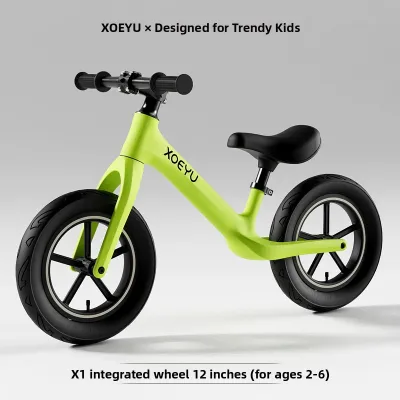
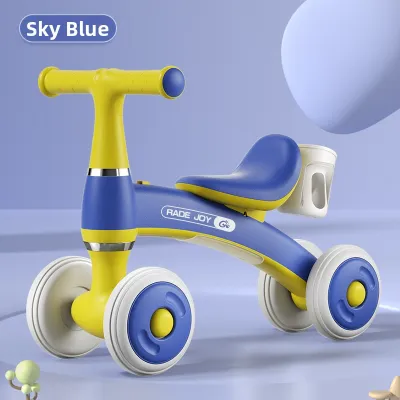
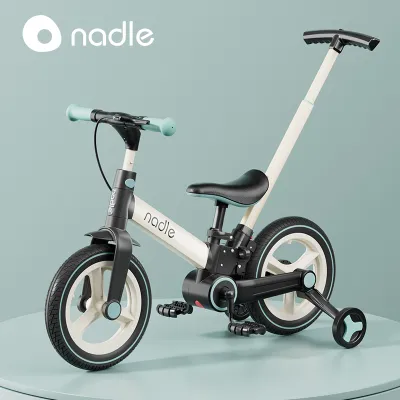
Prices are valid at publication and may change. Please refer to the product page for the latest price.
Leg strength and physical measurements are equally important. Your toddler must have the leg power to push off or pedal, along with an inseam height that allows them to sit comfortably on the saddle. For safety, both feet must rest completely flat on the ground when they are seated. This flat-foot contact gives them the leverage to stop, balance, and support the bike’s weight.
Cognitive readiness is often overlooked but is vital for outdoor safety. Your child needs to understand and immediately react to basic instructions like “stop,” “slow down,” and “turn.” If they easily get distracted or struggle to follow simple directions, they may not be ready to manage a moving vehicle, even a small toy bike, in an open outdoor space.
Balance Bikes vs. Training Wheels: Which Is Right for Your Child?
Choosing between these two options shapes how your child learns the mechanics of riding. A balance bike prioritizes steering and equilibrium, while training wheels focus on the physical motion of pedaling. Each path has distinct advantages and leads to a standard two-wheel pedal bike through different transition phases.

The Balance Bike Approach: Learning to Balance First
A balance bike is a two-wheeled bicycle without pedals, chains, or a drivetrain. Children sit on the saddle and propel themselves forward by pushing off the ground with their feet. This design allows toddlers to focus entirely on steering, leaning, and shifting their weight to stay upright, which are the most challenging aspects of riding a bicycle.
Because there are no pedals to distract them, toddlers quickly develop a natural feel for how a bike leans during turns. They can easily drop their feet to the ground whenever they feel off-balance, which builds confidence and reduces the fear of falling.
You will know your child is ready to transition from a balance bike to a standard pedal bike when they can glide for long distances with their feet completely off the ground. Once they can confidently steer and balance while coasting down a gentle slope, adding pedals is usually a quick and seamless step.
The Training Wheels Approach: Learning to Pedal First
The traditional method utilizes a small pedal bike equipped with two auxiliary rear wheels for stability. This setup allows your toddler to learn the circular motion of pedaling and the concept of hand or coaster braking without the immediate risk of tipping over. It provides an instant sense of security, allowing them to ride immediately.
However, training wheels can sometimes delay the development of true balance. Because the auxiliary wheels keep the bike completely upright, children do not learn to lean into turns or use their core muscles to stabilize the bike. Instead, they may develop a habit of leaning away from turns, relying on the training wheels as a crutch.
Transitioning away from training wheels often requires a distinct adjustment period. Parents must gradually raise the training wheels to allow some lean, or remove them entirely, which can sometimes cause anxiety as the child suddenly has to learn balance from scratch.
Key Features to Check When Choosing a Toddler Bike
Before purchasing any toddler bike, you must verify specific measurements and safety features to ensure a proper fit. Never buy a bike that is too large with the expectation that your child will grow into it. An oversized bike is difficult to control and increases the risk of falls.
Measure your child’s inseam and compare it directly to the bike’s minimum seat height. For a balance bike, the seat height should be slightly lower than the inseam so the child can sit with slightly bent knees and flat feet. For a pedal bike with training wheels, the seat can be slightly higher, but the balls of their feet should still comfortably touch the ground.
Pay close attention to the overall weight of the bike. Ideally, a toddler’s bike should not exceed 30% of their total body weight. A heavy steel frame can be incredibly frustrating for a small child to push, steer, or lift off the ground after a fall, whereas a lightweight aluminum or high-quality composite frame is much easier to handle.
Evaluate the braking system based on your child’s physical development. Many small pedal bikes use coaster brakes, which engage when the child pedals backward. If the bike has hand brakes, verify that the levers are specifically designed for small hands and that your toddler has the physical hand strength to squeeze them effectively to bring the bike to a complete stop.
Safety Gear and Riding Environment Setup
Safety equipment is non-negotiable from day one, regardless of how slow your toddler rides. A properly fitted helmet is the most critical piece of gear. Ensure the helmet sits level on your child’s head, covering the forehead, with the straps forming a snug “V” shape under the ears and fastening securely under the chin without pinching.
In addition to a helmet, equip your toddler with lightweight knee and elbow pads to protect against scrapes on rough concrete. Closed-toe shoes, such as sturdy sneakers, are essential to protect small toes from scrapes, especially on balance bikes where feet are used for stopping. Avoid sandals or slippers, which offer no protection and can easily get caught in wheels.
Choose your practice environment carefully to minimize hazards. Look for flat, dry, and smooth surfaces away from motorized traffic, such as a fenced backyard, a quiet subdivision cul-de-sac, or a clean concrete basketball court. Avoid steep slopes, gravel paths, and areas with standing water or wet moss, which can cause tires to slip and lead to unnecessary falls.
When to Wait: Signs Your Toddler Needs More Time
Sometimes, the best decision is to put the bike away for a few weeks or months. If your toddler shows strong resistance, fear, or a complete lack of interest when introduced to the bike, forcing the activity can create a lasting negative association with cycling. Let them set the pace for when they want to try again.
Physical indicators also signal when to wait. If your child struggles to support the weight of the bike, constantly drops it, or cannot comfortably reach the ground while seated, their physical strength or height is not yet sufficient. Pushing them to ride before they are physically ready can lead to painful falls and discouragement.
Finally, safety commands must be fully understood before independent riding begins. If your toddler does not consistently stop or turn when instructed, they lack the cognitive readiness required to stay safe. Wait until they can reliably follow basic safety directions before letting them ride in open spaces.
Frequently Asked Questions (FAQ)
What is the best age to start using a balance bike?
There is no single perfect age, as readiness depends entirely on your child’s physical development and height. Many children can start exploring a balance bike between 18 months and 2 years old, provided they can walk and run confidently. Always check the manufacturer’s minimum seat height and weight limits to ensure the bike physically fits your toddler before introducing it.
Can I remove the pedals from a regular bike to use it as a balance bike?
Yes, removing the pedals and training wheels from a small standard bicycle is a practical way to create a temporary balance bike. To do this safely, ensure the seat can be lowered enough for your child’s feet to rest completely flat on the ground. You must also check that the bottom bracket and pedal cranks do not have sharp edges or protrude in a way that could scrape your child’s legs while they glide.
Community discussion
Share your experience or ask a question. Comments are reviewed before publication.