
Selecting the right jig head hook is one of the most critical decisions you can make to improve your fishing success. A jig head hook is a specialized piece of tackle that combines a weighted head—typically made of lead, tungsten, or zinc—with a single hook shank. This design serves a dual purpose: it acts as the ballast to sink your lure to the target depth and provides the structural frame for rigging soft plastic baits. To choose the correct specification, you must understand how weight and hook size interact to control your lure’s presentation.
Reading these specifications requires navigating two distinct measurement scales. The weight of the jig head is measured in ounces or grams, which directly dictates how fast the lure sinks and how well it holds its position in moving water. Conversely, hook sizes use an inverse numbering system where larger numbers represent smaller hooks (such as a tiny #4 hook), transitioning into a direct scale once you reach the “aught” sizes (where a 3/0 hook is physically larger than a 1/0 hook). Matching these dimensions to your target species and local water conditions is the key to presenting your bait naturally.
Decoding Jig Head Weights for Depth and Action
The weight of your jig head directly controls its sink rate and how it behaves throughout the water column. Lighter weights, ranging from 1/32 oz to 1/8 oz, fall slowly through the water, creating a highly natural, drifting presentation. This slow fall is particularly effective in shallow flats, calm inland lakes, or when targeting fish suspended near the surface.
Products mentioned in this guide
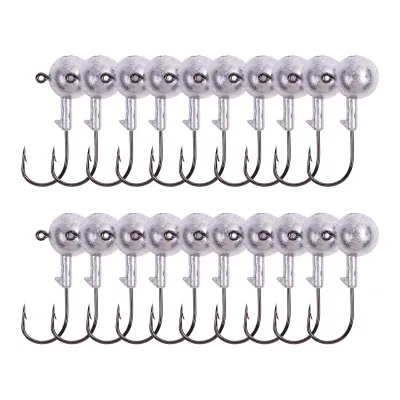
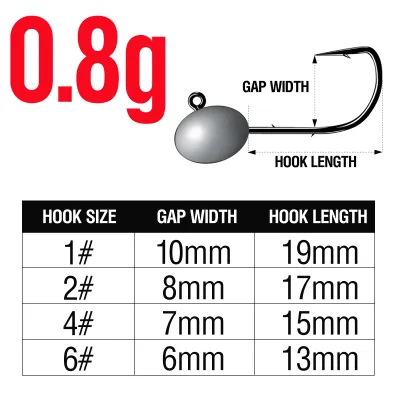
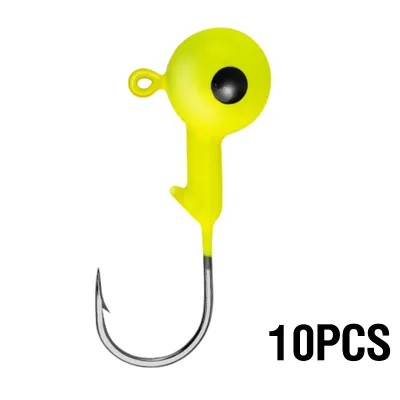
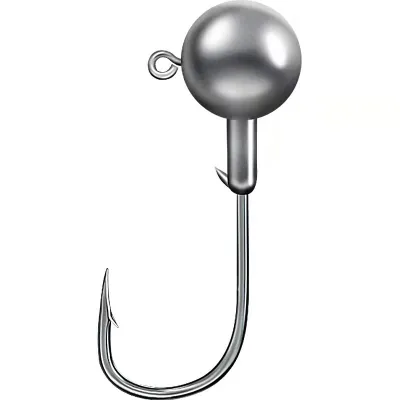
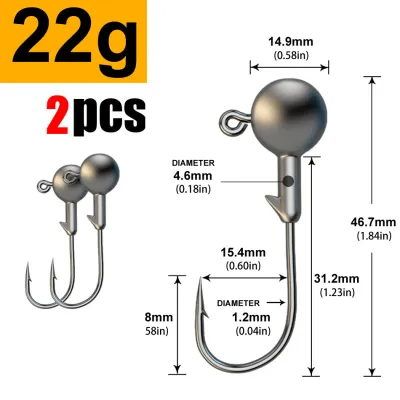
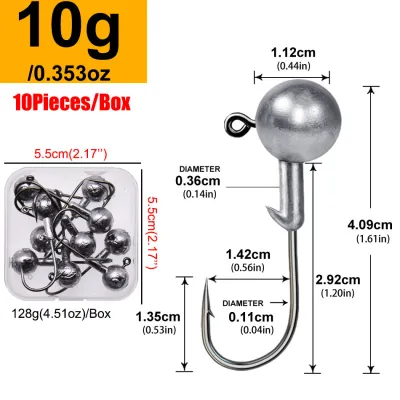
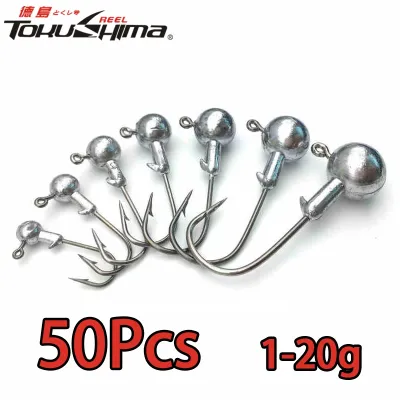
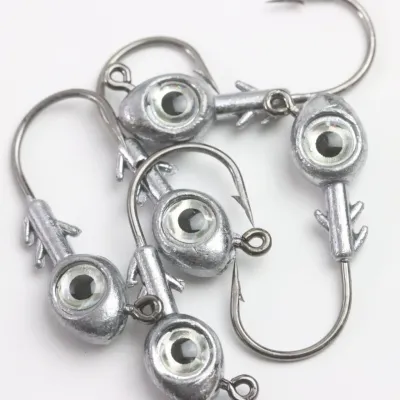
Prices are valid at publication and may change. Please refer to the product page for the latest price.
Heavy weights, spanning from 1/4 oz to 1 oz or more, are necessary when you need to punch through fast-moving currents or reach deep bottom structures. The trade-off is immediate: heavier weights sink rapidly to the strike zone but can make your presentation look mechanical and unnatural if used in shallow, still water. When casting heavier setups in windy conditions or near water hazards, prioritize personal safety by wearing protective eyewear and maintaining a stable footing on slippery banks.
Head shape and weight distribution also dictate the swimming action of your soft plastics. A weight concentrated forward pulls the bait nose-down, creating a hopping motion along the bottom, while a centered weight distribution helps a swimbait swim horizontally. Before casting heavier setups, verify that your fishing rod’s lure weight rating and your line’s breaking strength are compatible to avoid damaging your equipment.
Understanding Hook Sizes, Gaps, and Wire Thickness
Selecting the right hook size is not just about the length of the shank; it is heavily dependent on the hook gap, which is the distance between the shank and the hook point. A gap that is too narrow will be masked by a thick soft plastic bait, preventing the hook from penetrating the fish’s mouth. Conversely, an excessively wide gap can snag debris and look unnatural to wary fish.

To match your hook to a soft plastic bait, lay the jig head alongside the bait body before rigging. The hook should exit the plastic at a point that allows the bait to remain completely straight; a bunched or stretched bait will spin unnaturally in the water and fail to attract fish.
Wire thickness is another critical variable that dictates your hookup ratio and landing success. Thin-wire hooks require very little pressure to penetrate, making them excellent for light lines and soft-mouthed fish, but they can bend open under the strain of a heavy fish or thick cover. Thick-wire hooks offer the structural integrity needed to pull strong fish out of dense vegetation or mangrove roots, but they require a heavier rod and a firmer hookset to drive the point home. Always perform a physical check by pressing the bait flat against the hook to ensure the point clears the plastic easily.
Choosing the Right Jig Head Shape and Style
The physical shape of the jig head determines how it interacts with underwater obstacles and how it moves during retrieval. Round jig heads are the most versatile option, ideal for bouncing along sandy bottoms or executing a steady, mid-water retrieve. Their symmetrical shape provides a predictable sink rate and works well with a wide variety of soft plastics.
For a more dynamic presentation, darting heads feature a triangular, hydrodynamic shape that cuts through the water. When twitched, these heads cause the soft plastic to dart erratically from side to side, mimicking an injured baitfish. This style is highly effective for active predators feeding on baitfish in clear water.
When fishing in heavy cover, such as submerged brush, weeds, or mangrove structures, standard open hooks will snag constantly. In these environments, weedless jig heads featuring wire guards or offset hooks designed for Texas-rigging are essential for keeping your presentation clean. Establish clear stopping conditions during your session: if you experience constant snags or fail to secure hookups despite multiple strikes, reassess your setup and switch to a lighter weight or a weedless design.
Building Your Jig Head Selection Strategy
Building a versatile tackle selection does not require buying every size available; instead, focus on a systematic approach tailored to your target environments. Start by selecting three primary weights and two hook sizes that cover your most common fishing depths and bait sizes. A basic starter kit of quality jig heads typically costs between ₱100 and ₱300 per pack, making it an affordable way to expand your presentation options.
Keep your tackle organized in a secure, dry utility box with clearly labeled compartments. High tropical humidity can quickly rust an entire tray of hooks if moisture is trapped inside, so consider adding silica gel packets to your storage boxes and keeping them out of direct sunlight.
Before heading out to any local waterway, always verify the current fishing regulations for your specific area. Some conservation zones or managed fisheries enforce strict rules regarding hook types, such as requiring barbless hooks or banning lead-based weights to protect the local ecosystem. Equipment and tackle cannot replace local knowledge and adherence to conservation guidelines.
Frequently Asked Questions (FAQ)
How do I keep soft plastics from tearing on the jig head?
To prevent tearing, ensure the hook is perfectly centered as you thread it through the nose of the soft plastic. Check the jig head shank for any rough metal burrs or rust before rigging, as these can slice the soft material. For high-stress situations or soft baits prone to sliding, apply a tiny drop of specialized fishing glue to the collar of the jig head before sliding the bait fully into place.
Can I use the same jig head for both freshwater and saltwater?
You can use jig heads across both environments, but you must verify that the hooks feature corrosion-resistant coatings like tin or nickel. After any saltwater outing, establish a mandatory routine of rinsing your used jig heads in fresh water and drying them completely before returning them to your tackle box. Inspect your hooks regularly for any signs of structural compromise, pitting, or rust, and discard any hooks that show signs of weakening.
Community discussion
Share your experience or ask a question. Comments are reviewed before publication.