
Quick Answer: Core Specs for Recreational Dive Lights
Selecting a reliable underwater light requires looking beyond basic marketing terms. For recreational snorkeling and diving in tropical waters, you must prioritize a pressure-tested depth rating of at least 60 to 100 meters, a beam angle tailored to your specific activity, and a robust double O-ring sealing system. While a wide flood beam is ideal for illuminating expansive coral reefs during shallow night snorkels, a narrow spot beam is essential for penetrating deep crevices and observing marine life hidden under ledges.
Additionally, choosing a light with a secure travel lock and easily maintainable battery seals will prevent accidental activation and catastrophic flooding. When searching for a high-performance, plus-grade waterproof light, understanding these technical specifications is essential. By focusing on these core specifications, you can ensure your equipment performs safely and consistently in demanding marine environments.
Decoding Waterproof Ratings and Depth Certifications
When browsing for underwater gear, you will frequently encounter various water-resistance labels. It is vital to understand that standard consumer electronics ratings, such as IPX7 or IPX8, do not equate to scuba-ready depth certifications. An IPX7 rating only guarantees protection against temporary submersion in shallow water, which is entirely inadequate for diving. Even an IPX8 rating, which denotes continuous submersion, is highly variable and depends on the manufacturer’s specified depth limit. For actual diving, you must look for dedicated dive lights that are explicitly pressure-tested and certified to specific depths, usually starting at 60 meters for basic recreational use and extending to 100 meters or more for advanced diving.
Products mentioned in this guide
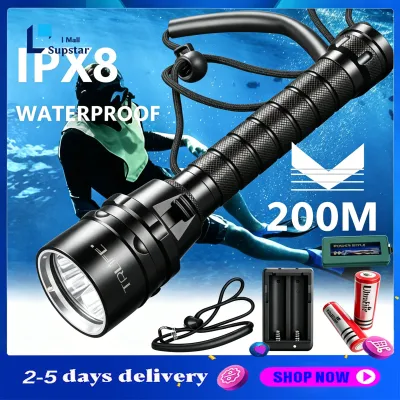
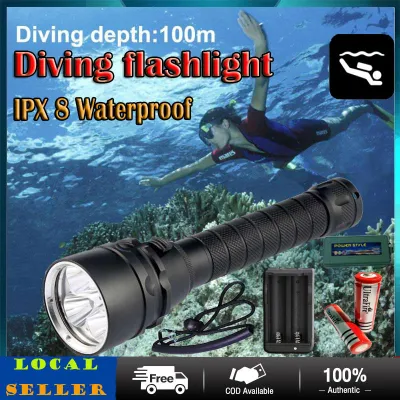
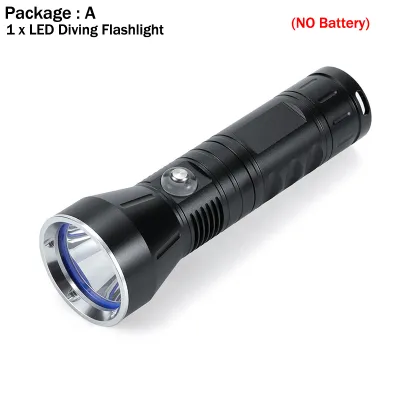
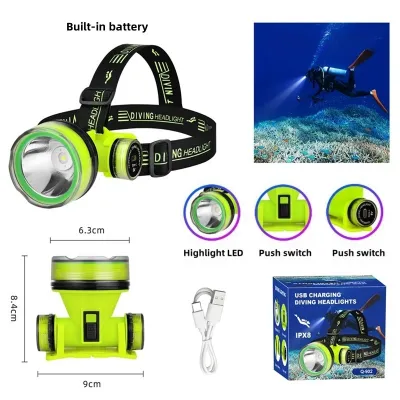
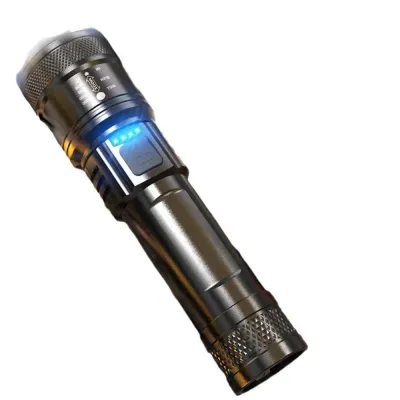
Prices are valid at publication and may change. Please refer to the product page for the latest price.

To verify these claims, inspect the physical body of the light and its official packaging. Reputable manufacturers engrave the maximum depth rating directly onto the aluminum or polycarbonate casing of the device. This physical marking indicates that the design has undergone hydrostatic pressure testing to withstand the crushing force of deep water. In the ocean, pressure increases by approximately one atmosphere for every 10 meters of depth. A light that lacks a clear, engraved depth rating should never be taken below the surface film, as the increasing pressure will compress the seals, flatten the buttons, and force saltwater directly into the electronics compartment.
If you encounter a light with ambiguous packaging, or if the manufacturer’s documentation fails to specify a clear depth limit, treat the device as a splash-proof light suitable only for surface snorkeling. Never attempt to push a light beyond its stated limits. If your planned dive profile approaches or exceeds the depth rating of your equipment, or if you are unsure how to interpret the specifications, stop and consult the manufacturer or a qualified dive professional. Using uncertified gear at depth poses a significant safety risk, as sudden light failure in deep or dark waters can lead to disorientation and panic.
Matching Light Output and Beam Angles to Your Dive Profile
Evaluating the brightness of a dive light requires looking past the raw lumen numbers printed on the box. Lumens measure the total amount of visible light emitted by a source in all directions, but water is much denser than air and absorbs light rapidly. Suspended particles, organic matter, and plankton further scatter the beam, a phenomenon known as backscatter. Because of this, a high-lumen light can actually reduce your visibility if the beam angle is poorly matched to the water conditions. To make an informed choice, you must evaluate how those lumens are projected and how the light interacts with the underwater environment.
The choice between a wide flood beam and a narrow spot beam depends entirely on your primary activity. A wide flood beam, typically ranging from 60 to 120 degrees, distributes light evenly across a broad area without creating a harsh central hotspot. This is the preferred option for shallow-water snorkeling over expansive coral gardens, as it allows you to take in the entire scene naturally. It is also indispensable for underwater videography and photography, where even illumination is required to avoid dark shadows. Conversely, a narrow spot beam, usually between 5 and 15 degrees, concentrates the light into a tight, piercing column. This intense beam is essential for daytime diving to peer into deep crevices, caves, and under ledges where nocturnal marine life hides. It is also the standard choice for primary dive lights during night dives, as it allows you to signal your buddy and cut through turbid water.
Another critical factor is the quality of the light itself, which is determined by color temperature and the Color Rendering Index (CRI). Water acts as a natural color filter, absorbing red, orange, and yellow wavelengths within the first few meters of the surface. To restore the brilliant, natural colors of tropical reefs, look for a light with a high CRI rating (ideally 90 or above) and a neutral color temperature between 4000K and 5000K. Cool white lights with color temperatures exceeding 6000K tend to produce a harsh, bluish tint that washes out the natural hues of marine life and intensifies backscatter in murky water.
Assessing Battery Systems and Burn Time Conditions
A dive light is only as reliable as its power source. When evaluating battery systems, you must weigh the convenience of built-in rechargeable batteries against the versatility of user-replaceable cells. Built-in batteries are sealed inside the light housing at the factory, which eliminates the risk of user-induced flooding caused by dirty or misaligned O-rings. However, if the battery runs out of charge during a multi-dive trip, the light is unusable until it can be plugged into a charger. User-replaceable rechargeable lithium-ion batteries, such as standard 18650 or 21700 cells, allow you to swap in a fresh, fully charged spare between dives. The trade-off is that every time you open the battery compartment, you expose the internal seals to potential contamination from sand, hair, and moisture.
To accurately assess manufacturer burn time claims, you must look closely at the testing conditions and output modes. A specification sheet that boasts a long runtime almost always refers to the light’s lowest output setting, which may only produce a faint, unusable glow underwater. Verify the runtime specifically for the high or medium modes that you will actually use during a dive. Additionally, check whether the light features a regulated output driver. Regulated lights maintain a consistent level of brightness throughout the battery cycle, whereas unregulated lights will gradually dim as the voltage drops, leaving you with a weak, yellowing beam long before the battery is completely dead.
Safety protocols for charging and transporting lithium-ion batteries are paramount. High-capacity batteries can overheat if charged incorrectly or exposed to extreme tropical heat. Always use the manufacturer-approved charger and avoid leaving batteries unattended while charging. Furthermore, look for a dive light that incorporates a physical travel lock or an electronic lockout mode. Because high-powered dive lights generate intense heat, an accidental activation inside a dry bag or gear crate can melt synthetic fabrics, damage nearby equipment, or even pose a fire hazard.
Evaluating Build Materials and Mounting Compatibility
The marine environment is incredibly harsh on equipment, making build materials a primary consideration for longevity. Saltwater accelerates corrosion and galvanic reactions between dissimilar metals. To withstand these conditions, high-quality dive lights are constructed from marine-grade anodized aluminum (typically Type III hard anodizing) or heavy-duty, impact-resistant polycarbonate. Anodized aluminum provides excellent heat dissipation, which is crucial for keeping high-output LEDs cool, while also offering a tough outer layer that resists scratching and pitting. Avoid cheap, painted metal housings, as the paint will quickly chip, exposing the underlying metal to rapid saltwater corrosion.
The integrity of a dive light relies entirely on its O-ring system. The O-ring acts as the mechanical barrier that prevents water from bypassing the threaded joints. Look for lights that utilize a double O-ring configuration at the battery compartment interface, as this provides a redundant layer of protection against leaks. The O-rings should be made of high-quality synthetic rubber, such as nitrile or silicone, which maintain their elasticity under pressure. Always check the manufacturer’s documentation for the recommended lubrication and replacement schedule, and ensure that you use only the specified silicone grease, as petroleum-based lubricants will degrade the rubber seals.
Finally, consider how the light will integrate with your existing gear. A light that is difficult to hold or secure can easily be dropped and lost in the depths. For general snorkeling and diving, look for a light that includes a robust, adjustable wrist lanyard or a soft Goodman-style glove mount that secures the light to the back of your hand, leaving your fingers free to adjust your mask or operate other equipment. If you plan to use the light for underwater imaging, verify that the housing features standard mounting options, such as a 1/4-inch threaded socket, a ball joint adapter, or a YS mount, allowing it to attach securely to camera trays and articulating arms.
Building Your Shortlist: A Pre-Purchase Verification Checklist
Before finalizing your purchase, it is highly beneficial to compile a shortlist of candidate lights and systematically verify their specifications against your actual diving needs. Begin by cross-referencing the depth rating of each light with your certification level and planned activities. If you are a recreational open water diver limited to 18 meters, a light rated to 60 or 100 meters provides an excellent safety margin. Ensure the beam angle and color temperature align with whether you plan to inspect dark crevices during daytime reef dives or illuminate wide coral formations during night snorkels.
Next, investigate the practical aspects of ownership, including warranty terms and the local availability of replacement parts. In the Philippines, dive trips often take you to remote coastal areas where specialized gear shops are unavailable. Choosing a light that utilizes standard, non-proprietary battery sizes and common O-ring dimensions makes it much easier to find replacements or assistance if a component fails. Verify if the manufacturer offers local service centers or if you will be required to ship the light internationally for warranty repairs, which can be costly and time-consuming.
Once your chosen light is delivered, perform a thorough physical inspection before taking it near the ocean. Carefully open the battery compartment and inspect the O-rings under a bright light to ensure they are free of dust, hair, lint, or manufacturing defects. Test the switch mechanism several times to confirm it operates smoothly and that the travel lock engages reliably. Finally, conduct a simple test by submerging the dry, fully assembled light in a bucket of fresh water for 30 minutes. Check the battery compartment afterward for any signs of moisture; verifying seal integrity in a controlled environment is the best way to prevent a costly flood on your very first dive.
Frequently Asked Questions (FAQ)
Can I carry spare dive light batteries on commercial flights?
Yes, but you must adhere strictly to international aviation safety regulations regarding lithium-ion batteries. Spare lithium-ion batteries are classified as hazardous materials and are strictly prohibited in checked baggage due to the risk of thermal runaway. They must be packed in your carry-on luggage. To prevent short circuits, place each spare battery in an individual plastic protective case, cover the exposed terminals with electrical tape, or keep them in their original retail packaging.
If the battery is installed inside the dive light, ensure the light is completely powered off and the physical travel lock is engaged to prevent accidental activation during the flight. Always check the specific guidelines of your airline and the local civil aviation authority, as there are strict limits on the maximum Watt-hour rating of batteries allowed on board.
How should I rinse and store my dive light after saltwater use?
Proper post-dive maintenance is essential to prevent salt crystallization and preserve the integrity of the waterproof seals. Immediately after exiting the ocean, soak the fully sealed dive light in a tub of clean, fresh water for 15 to 30 minutes. This dissolves the salt deposits that accumulate around the threads, buttons, and switch mechanisms. Crucially, do not press the power button or rotate any control bezels while the light is submerged in the rinse tank, as this action can inadvertently force salt crystals past the O-rings.
After soaking, dry the exterior completely with a clean, lint-free towel. Only open the battery compartment once the light is entirely dry. For long-term storage, remove the batteries to prevent damage from potential leaks, apply a thin coat of manufacturer-approved silicone grease to the O-rings, and store the light in a cool, dry place away from direct tropical sunlight and high humidity. If you notice any cracks, flattening, or debris on the O-rings during your inspection, stop using the light and replace the seals immediately.
Community discussion
Share your experience or ask a question. Comments are reviewed before publication.