
Finding the right sports waist bag is the difference between a smooth, focused run and a frustrating workout spent adjusting a bouncing pack. A high-performing running waist bag must remain completely stable, distribute weight comfortability, manage heavy sweat, and keep your essentials secure without shifting. Unlike casual everyday waist bags, running-specific models are engineered to move in harmony with your body’s natural biomechanics. When selecting a bag, you must evaluate technical specifications across four primary categories: fit and stability, capacity and layout, material performance, and low-light visibility. Understanding these features allows you to choose a model that supports your training distance, protects your gear, and ensures your comfort on the road or trail.
The Core Specs That Define a Running Waist Bag
Casual waist bags, often designed for travel or daily errands, prioritize maximum storage volume and aesthetic appeal. These lifestyle bags typically feature loose nylon straps, bulky compartments, and heavy metal zippers that sag and bounce violently once you transition into a running stride. The constant vertical oscillation of a loose bag not only causes physical discomfort but can also lead to skin chafing and disrupted running posture.
In contrast, a dedicated sports waist bag is built specifically to handle the high-impact forces of running. The engineering of a running bag prioritizes a streamlined profile, balanced weight distribution, and advanced moisture management. Instead of hanging loosely from the waist, these bags are designed to wrap snugly around the lower torso or hips, pulling the load closer to your center of gravity to minimize movement.
Products mentioned in this guide
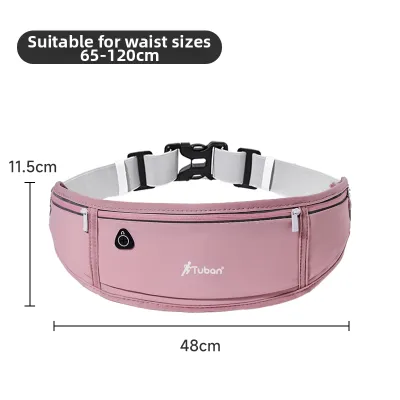
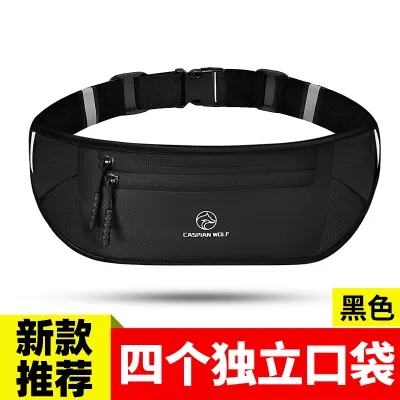
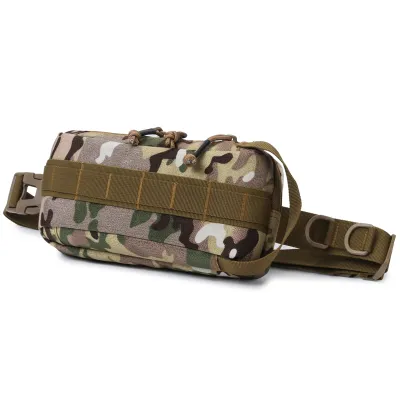
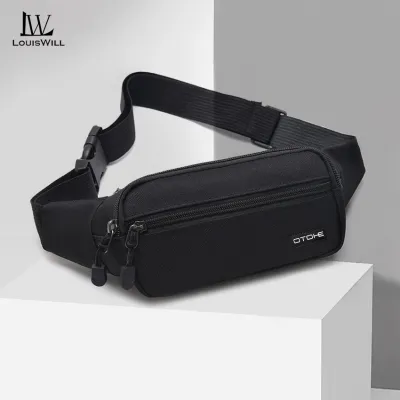
Prices are valid at publication and may change. Please refer to the product page for the latest price.
When evaluating different models, you should look beyond basic color choices and focus on technical specifications. The ideal running bag balances structural stability with breathable, lightweight materials that can withstand rigorous workouts. By analyzing specifications such as belt width, pocket configuration, fabric coatings, and reflective surface area, you can identify a bag that matches your specific running habits and environmental conditions.
Fit and Stability: Decoding Anti-Bounce Designs
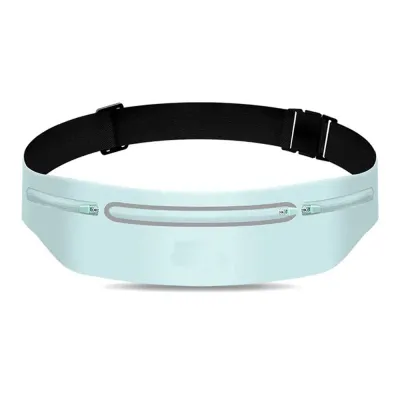
The most critical factor in a running sports waist bag is its ability to remain completely still while you run. This stability is largely determined by the width of the belt or strap. Thin straps concentrate the entire weight of the bag onto a narrow line, which often cuts into the skin and allows the pack to pivot and bounce. Look for a belt width of at least 3 to 5 centimeters, or opt for a continuous tubular band design, which distributes pressure evenly across your hips and lower back.

The fastening and adjustment mechanisms also play a vital role in maintaining a secure fit. Standard plastic buckles are quick to secure but can slip under the repetitive tension of a running stride. High-quality running bags often utilize low-profile, heavy-duty polymer buckles, sliding adjusters that lock the strap in place, or wide hook-and-loop closure systems. These designs allow you to make micro-adjustments on the fly without stopping your workout.
To ensure a bounce-free experience, pay close attention to the elastic tension and adjustable sizing ranges specified by the manufacturer. A running belt must have a degree of high-tensile elastic stretch to accommodate your body’s movement, but it must not stretch so easily that it loses its grip under the weight of a phone. Before purchasing, measure your waist or upper hips—depending on where you prefer to wear the bag—and verify that your measurements fall comfortably within the bag’s adjustable range.
When trying on a waist bag, remember that a proper fit should feel snug and secure without restricting your breathing or limiting your hip flexion. If you feel the belt pressing uncomfortably against your stomach when you inhale deeply, or if it restricts your legs when you lift your knees, the sizing or tension needs adjustment. The belt should sit low on the hips, resting on the pelvic bones, which naturally minimizes vertical movement.
Capacity and Layout: Matching Storage to Your Distance
Your storage needs will vary significantly depending on your typical running distance and training goals. For short-distance runs, such as a quick 5K or 10K, a minimal setup is usually sufficient. These low-profile bags are designed to hold only the essentials: a smartphone, a house key, and an ID or cash. They feature a very slim profile that lays flat against your body, ensuring maximum aerodynamics and zero bounce.
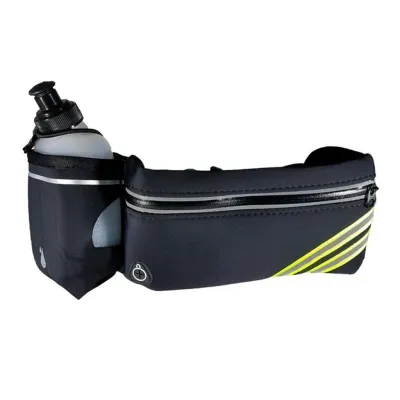
For long-distance training runs or marathons, your storage requirements expand to include energy gels, hydration, and salt tablets. Some sports waist bags feature specialized external loops for gel packets or dedicated holsters designed to hold soft hydration flasks. If you plan to carry water, look for designs that position the flask pockets diagonally or horizontally across the lower back, as this placement keeps the center of gravity low and prevents water sloshing from throwing off your stride.
The internal layout of the bag is just as important as its overall volume. A single, undivided compartment allows your keys to scratch your phone screen and permits heavy items to shift from side to side. Look for bags with internal dividers, dedicated phone sleeves, and integrated key clips that lock items in place. Keeping your gear organized ensures that the weight remains evenly distributed throughout your entire run.
There is a direct trade-off between maximum storage capacity and overall stability. Overpacking a waist bag beyond its intended design specifications will inevitably compromise its anti-bounce properties and cause the fabric to sag. To avoid this, list your mandatory carry items, measure their dimensions, and match them carefully against the manufacturer’s stated compartment sizes before making a decision. Prices for these bags vary, ranging from budget-friendly running belts under ₱500 to premium technical waist packs costing over ₱2,000.
Materials and Weather Resistance for Tropical Runs
Running in tropical climates, such as in the Philippines, presents unique challenges due to high humidity, intense heat, and sudden torrential downpours. In these conditions, sweat and rain can easily penetrate poorly constructed bags, potentially damaging expensive electronics. You must distinguish between water-resistant fabrics, which use light coatings to repel drizzle, and fully waterproof materials that feature welded seams and TPU (Thermoplastic Polyurethane) laminates to block heavy moisture.
The material facing your body requires careful inspection to prevent painful skin irritation. During long runs in hot and humid weather, friction combined with trapped sweat can lead to severe chafing. To prevent this, choose a sports waist bag that features a breathable, multi-layered 3D mesh back panel. This specialized mesh creates a physical ventilation gap between your skin and the bag, allowing sweat to evaporate and reducing friction against your clothing.
Regular maintenance is essential for preserving the lifespan and performance of your running gear. Sweat contains salt and body oils that can accumulate in the fabric pores, degrading the elastic fibers and reducing the belt’s tension over time. Always check the manufacturer’s care label for specific washing instructions. Most high-quality running bags should be hand-washed in cold water with a mild, non-abrasive detergent and air-dried away from direct sunlight.
Never assume that a bag labeled as “water-resistant” is completely sweat-proof or capable of protecting your phone during a heavy downpour. Always verify the manufacturer’s specific weather-resistance ratings and material specifications. If you frequently run in heavy rain, consider placing your electronics inside a simple plastic zip bag before storing them in your waist pack for an extra layer of protection.
Safety and Visibility Specs for Low-Light Conditions
To avoid the intense daytime heat, many runners prefer to train during the early morning hours before sunrise or in the evening after sunset. Running during these low-light periods requires extra safety precautions to ensure you are visible to motorists, cyclists, and pedestrians. When selecting a sports waist bag, you should carefully evaluate its integrated reflective specifications and visibility features.
Look for bags that offer 360-degree reflectivity, which means reflective elements are strategically placed on the front, sides, and back of the pack. A single reflective logo on the front of the bag is insufficient if a vehicle is approaching you from behind. High-quality reflective materials, such as retroreflective piping or high-visibility panels, are designed to bounce light directly back to its source, making you stand out clearly in car headlights.
It is important to understand how reflective materials function so you do not rely on them blindly. Reflective elements do not emit light on their own; they require an external light source, such as vehicle headlights or streetlights, to become visible. Because of this limitation, reflective specs on a waist bag should be treated as supplementary safety features rather than a replacement for active light sources.
If you regularly run on unlit roads, dark trails, or high-traffic areas, always pair your reflective waist bag with active lighting, such as a headlamp or a clip-on flashing LED light. Additionally, choosing a waist bag with a high-visibility base color, such as neon yellow, vibrant green, or hot pink, can significantly improve your visibility during daytime runs and the transitional light of dawn and dusk.
Community discussion
Share your experience or ask a question. Comments are reviewed before publication.