
To choose the right pre-charged pneumatic (PCP) pump for your airgun, you must match the pump’s maximum pressure rating to your airgun’s reservoir requirements, evaluate the physical effort and stroke count required, and ensure robust moisture filtration. In high-humidity tropical environments like the Philippines, moisture control is especially critical to prevent internal corrosion of your airgun’s delicate valves. Selecting a high-pressure hand pump, such as an Airmega PCP pump or a similar model, requires verifying specific hardware connections and stability features to ensure safe and efficient operation.
Matching Maximum Pressure (PSI/Bar) to Your Airgun
Before purchasing any high-pressure hand pump, you must locate the exact fill pressure specified in your airgun’s user manual or stamped directly onto the airgun’s receiver or reservoir. PCP airguns typically require fill pressures ranging from 2,000 PSI to over 4,500 PSI (approximately 138 to 310 bar). Attempting to fill an airgun without knowing its precise limit can lead to dangerous overpressurization or underperformance.
When evaluating a pump like an Airmega PCP pump, it is vital to distinguish between its continuous rated working pressure and its absolute peak limit. Some pumps may advertise a high peak limit but are only designed for comfortable, repeated use at a lower continuous pressure. Operating a pump constantly at its absolute maximum limit accelerates seal wear and increases the physical effort required to complete a fill.
Products mentioned in this guide
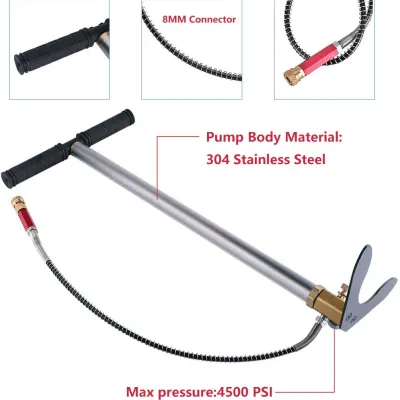
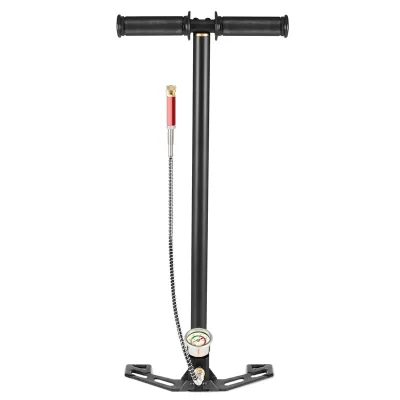
Prices are valid at publication and may change. Please refer to the product page for the latest price.
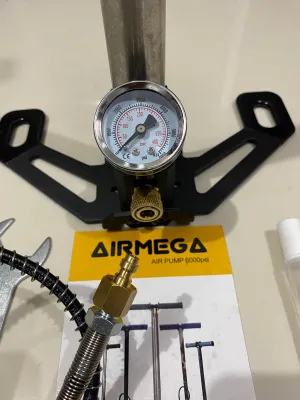
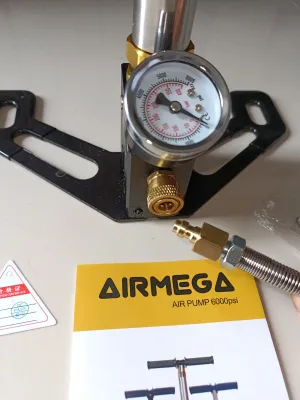
You should also inspect the pressure gauge integrated into the pump. A high-quality gauge must have clear, readable markings in both PSI and bar, allowing you to monitor the pressure increments accurately during operation. Ensure the gauge is well-calibrated and features a clear face, as misreading the dial in low-light conditions or during vigorous pumping can easily result in overfilling your airgun’s reservoir.
Assessing Stroke Count and Physical Effort
Filling a PCP airgun with a manual hand pump is a physical workout that requires consistent leverage and technique. The number of strokes needed to fill your airgun depends directly on the volume of the airgun’s reservoir and the starting pressure. Reviewing manufacturer charts or user guidelines can help you estimate the approximate stroke count required to top off your specific airgun model from a partial fill.

As the pressure inside the airgun reservoir increases, the physical resistance of each pump stroke rises significantly. The final high-pressure strokes require you to use your full body weight rather than just arm strength. Pumps designed with efficient three-stage or four-stage compression chambers help distribute this resistance, making the final stages of the fill more manageable for the user.
Excessive heat is the primary enemy of high-pressure seals and O-rings inside a manual pump. Rapid, continuous pumping generates friction heat that can quickly degrade internal components. To prevent premature seal failure, you should incorporate recommended cooling pauses during your pumping routine, allowing the pump body to cool down to the touch before continuing.
Moisture Filtration and Air Quality
In warm, humid climates, compressing ambient air concentrates moisture inside the pump and the airgun’s reservoir. This moisture can cause internal rust, ruin seals, and damage delicate firing valves over time. Effective moisture filtration is a non-negotiable specification when choosing a PCP hand pump to protect your investment.
Many PCP pumps feature built-in inline moisture traps, while others utilize larger external desiccant filter attachments connected to the hose. External filters containing desiccant beads generally offer superior moisture absorption capacity compared to small, internal brass filters. You should evaluate your local humidity levels to decide if an upgraded external filtration system is necessary for your setup.
To maintain dry air delivery, you must regularly monitor the condition of the filtration media. Many external filters use color-changing desiccant beads that transition from blue to pink or gold to green when saturated with moisture. Checking these visual indicators ensures you replace the filter media before damp air bypasses the system and enters your airgun.
Connections, Hoses, and Base Stability
The physical hardware connecting the pump to your airgun must be rated for extreme high-pressure operation. Most modern PCP pumps utilize a standard 8mm quick-disconnect (QD) female fitting at the end of the hose. You must confirm that this fitting matches your airgun’s fill probe or that you have the correct adapter to secure a leak-free connection.
The hose itself must be a dedicated micro-bore high-pressure hose designed to withstand the maximum rated pressure of the pump. Check the hose’s exterior markings for its working pressure and burst pressure ratings to ensure it meets safety standards. A high-quality hose minimizes dead space, which reduces the amount of air wasted when you bleed the system after filling.
Pumping at high pressures requires a stable foundation to prevent the pump from tipping or wobbling. Look for a pump with a wide, heavy-duty steel base plate and non-slip footpads that allow you to plant both feet firmly. Folding base plates offer convenient storage and transport, but they must lock securely into place to provide a rigid platform during vigorous pumping sessions.
Frequently Asked Questions (FAQ)
Can a standard bicycle or tire pump fill a PCP airgun?
No, a standard bicycle or car tire pump cannot fill a PCP airgun because they are designed for low-pressure, high-volume applications. Standard tire pumps typically top out at around 100 to 150 PSI, whereas PCP airguns require pressures starting at 2,000 PSI up to 4,500 PSI. Attempting to use a standard pump will not generate sufficient pressure and can damage the pump’s seals or fail to open the airgun’s check valve. Always consult your airgun’s manual to confirm the necessity of a dedicated high-pressure hand pump or a specialized PCP compressor.
How do I know when my PCP pump needs rebuilding or servicing?
You will know your PCP pump needs servicing when you observe physical symptoms such as a sudden increase in pumping resistance, the handle rising on its own, or air leaking audibly from the base. If the pump fails to build pressure or requires significantly more strokes than usual to fill your airgun, the internal O-rings are likely worn or damaged. Additionally, finding moisture or oil residue inside the hose or near the bleed valve indicates that the internal seals have bypassed. When these signs occur, consult the manufacturer’s guidelines and use an official rebuild kit to replace the worn seals.
Community discussion
Share your experience or ask a question. Comments are reviewed before publication.