
Deciding on the right scooter for adult commuters involves balancing your daily route, physical comfort, and budget. In the Philippines, where tropical heat, sudden downpours, and heavy traffic are daily realities, choosing the right personal mobility device can transform your daily journey. A manual kick scooter offers a lightweight, highly portable, and cost-effective solution for short last-mile connections. Conversely, an electric scooter provides a motorized, low-effort alternative that handles longer distances and hilly terrain without leaving you drenched in sweat before your workday begins.
To make an informed choice, you must look closely at how each option fits into your specific lifestyle. Your daily routine, the structure of your office building, and your physical fitness goals all play a role in this decision. By comparing the mechanical designs, practical ranges, physical demands, and long-term costs of both options, you can select the vehicle that best matches your commuting needs.
Core Differences: Manual Kick vs. Electric Scooters
At their core, manual kick scooters and electric scooters rely on completely different engineering principles. A manual kick scooter features a minimalist, purely mechanical design consisting of a deck, handlebars, two wheels, and a foot-operated friction brake. Because it lacks electrical components, it is incredibly lightweight, often weighing between three to six kilograms. This lightweight profile allows you to fold the unit in seconds and carry it effortlessly up office stairs, onto elevated trains, or inside a crowded jeepney.
Products mentioned in this guide
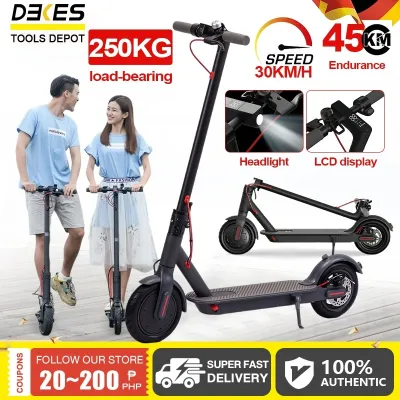
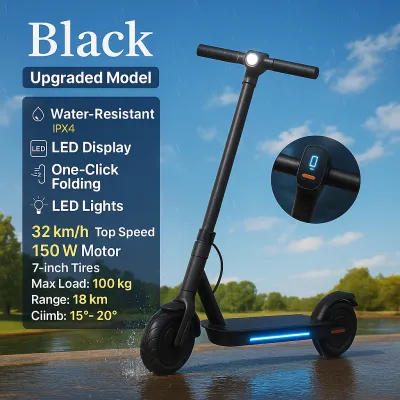
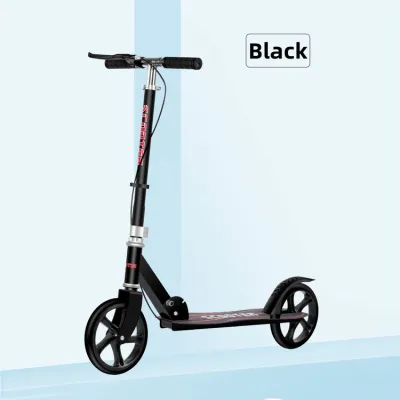
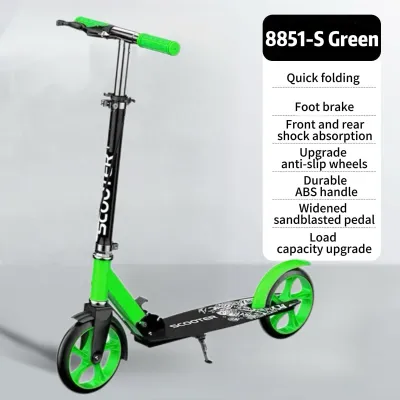
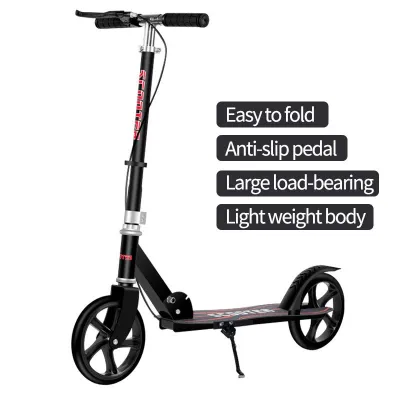
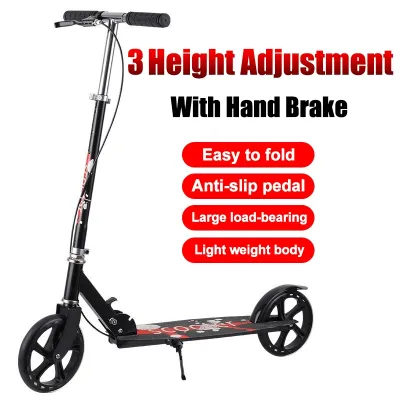
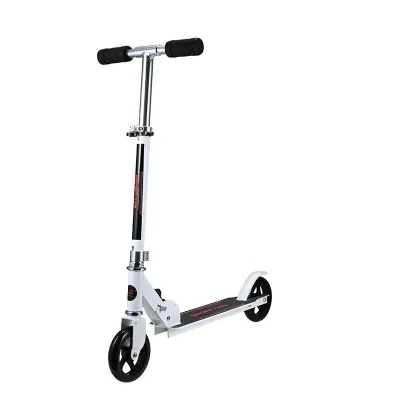
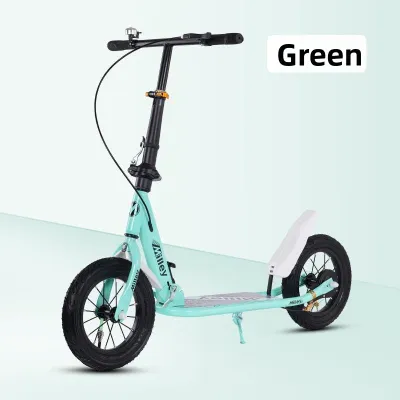
Prices are valid at publication and may change. Please refer to the product page for the latest price.
Electric scooters introduce a battery pack, an electric hub motor, wiring, and electronic braking systems into the frame. This added technology significantly increases the vehicle’s weight, typically ranging from twelve to over twenty-five kilograms. While the motor eliminates the need for physical kicking, the added bulk makes the scooter much harder to carry over long distances, lift onto high public transit steps, or store in tight spaces.
Operational requirements also differ drastically between the two types. A manual scooter is always ready to ride, requiring no charging, software updates, or battery management. Electric models demand a consistent charging routine and regular checks of the electronic systems, battery health, and wire insulation to ensure safe operation, especially in humid environments.
Commute Distance and Route Conditions
The length and physical characteristics of your daily route are critical factors when choosing a scooter for adult commuting. Manual kick scooters are highly efficient for short distances, typically under two kilometers. Kicking continuously beyond this distance can become physically exhausting, particularly when navigating uneven sidewalks or crowded pedestrian lanes.

For commutes stretching from three to over ten kilometers, an electric scooter becomes a much more practical choice. The motorized propulsion allows you to cover longer distances quickly and with minimal physical fatigue. However, you must carefully verify the manufacturer’s stated battery range, as real-world performance is heavily influenced by rider weight, carried cargo, tire pressure, and local weather conditions like strong headwinds or wet roads.
Route conditions also dictate which scooter can safely navigate your journey. Steep inclines, flyovers, and bridge approaches require immense physical exertion on a manual scooter, often forcing you to dismount and push. An electric scooter handles moderate hills with ease, though climbing steep slopes will drain the battery much faster than riding on flat pavement. Furthermore, rough roads, potholes, and cracked asphalt require larger wheels and robust suspension systems, which are far more common on heavier electric models than on compact manual ones.
Physical Effort and Riding Experience
Your willingness to engage in physical exertion during your commute is a major deciding factor. Riding a manual kick scooter provides a low-impact cardiovascular workout that helps build leg strength and endurance. However, continuous kicking in a warm, tropical climate inevitably leads to sweating, which can conflict with professional office dress codes or make your morning arrival uncomfortable.
An electric scooter offers a relaxed, sweat-free riding experience where the motor does all the heavy lifting. This allows you to commute in formal business attire or delicate fabrics without worrying about perspiration. The riding posture on an electric scooter is generally more stable, featuring wider decks that allow you to place both feet side-by-side, compared to the narrower decks of manual scooters that require a staggered foot position.
Weight capacity and cargo management also alter the riding experience. Carrying a heavy laptop backpack or work bag shifts your center of gravity and increases the physical effort required to balance, kick, and brake on a manual scooter. On an electric scooter, carrying extra cargo does not increase your physical workload, but it does place additional stress on the motor and battery, which can slightly reduce your top speed and overall travel range.
Budget, Maintenance, and Long-Term Costs
The financial commitment of owning a scooter for adult commuting extends far beyond the initial purchase price. Manual kick scooters occupy the highly affordable end of the spectrum, with quality adult models typically priced between ₱3,000 and ₱8,000. Because they have no electrical parts, their ongoing maintenance costs are virtually zero, requiring only occasional cleaning and wheel bearing lubrication.
Electric scooters represent a much larger initial investment, with entry-level commuter models starting around ₱15,000 to ₱30,000, while premium models with advanced suspension and larger batteries can exceed ₱60,000 or ₱80,000. Beyond the purchase price, you must factor in the cost of electricity for daily charging, though this is generally very low compared to public transport fares or fuel for a car.
Long-term upkeep for electric scooters includes battery replacement, which is a significant expense. Lithium-ion batteries degrade over several years of daily use, and replacing them can cost a substantial portion of the scooter’s original price. Both manual and electric scooters require periodic replacement of wear-and-tear parts like tires, brake pads, and handlebar grips. Before purchasing any model, verify the local availability of spare parts and authorized service centers to avoid long periods of downtime if a component fails.
Quick Comparison Matrix
| Metric | Manual Kick Scooter | Electric Scooter |
|---|---|---|
| Ideal Commute Distance | Short (under 2 km) | Medium to Long (2 km to 15+ km) |
| Physical Effort Required | High (continuous kicking) | Low (motor-assisted) |
| Portability & Weight | Very High (lightweight, compact) | Moderate to Low (heavy, bulky) |
| Initial Budget Tier | Low (₱3,000 – ₱8,000) | Moderate to High (₱15,000 – ₱80,000+) |
| Maintenance Complexity | Low (basic mechanical checks) | Moderate to High (battery, motor, electronics) |
| Suitability for Wet Weather | Low (slippery wheels, manual braking) | Low to Moderate (requires IP-rated water resistance check) |
How to Choose: Decision Framework
To finalize your decision, evaluate your daily routine against these clear, condition-based guidelines.
Choose a manual kick scooter if your commute is short, flat, and relies heavily on multi-modal transportation like trains or buses. It is the ideal choice if you have limited storage space at your workplace, want to avoid the hassle of charging batteries, and prefer a highly budget-friendly option with minimal maintenance.
Choose an electric scooter if your daily route exceeds two kilometers, features moderate hills or flyovers, and you need to arrive at your destination looking clean, dry, and professional. This option is best if you have a secure ground-floor storage area or an elevator in your building, and you are willing to invest in a higher-priced, motorized vehicle.
Before making any purchase, verify local building policies regarding indoor battery storage and elevator access for heavy personal mobility devices. You should also check the security of your destination’s parking facilities and research local municipal guidelines to ensure your chosen scooter is fully compliant with local traffic rules.
Frequently Asked Questions (FAQ)
Are electric scooters allowed on public roads in the Philippines?
Regulations for personal mobility devices can vary significantly by local government unit (LGU) and specific road types. The Land Transportation Office (LTO) and local cities have specific guidelines that restrict low-speed electric scooters from major national highways, primary roads, and crowded sidewalks. Generally, motorized scooters are permitted on local barangay roads, designated bike lanes, and specific municipal pathways. Always check the latest LTO administrative orders and the local traffic ordinances of your specific commuting route before riding.
How do I secure my scooter during the workday?
The safest option is to bring your scooter indoors and store it under your desk, in a locker, or in a designated indoor parking zone. If you must park outdoors, use a heavy-duty U-lock or a robust chain lock secured through a structural part of the frame rather than just the wheels. For high-value electric models, remove any detachable displays or batteries if the design allows, and consider using a disc lock equipped with a motion alarm to deter potential thieves.
Community discussion
Share your experience or ask a question. Comments are reviewed before publication.