
Choosing the right floating aid depends entirely on your primary swimming goal—whether you want to isolate specific muscle groups for training, seek versatile support for rehabilitation, or simply enjoy casual leisure in the water. Selecting the wrong tool can hinder your stroke development, cause physical strain, or fail to provide the necessary support. By matching your specific water activity to the design of a kickboard, pull buoy, or pool noodle, you can maximize your time in the pool while staying safe and comfortable.
Diagnose Your Swimming Needs and Goals
Before purchasing any gear, evaluate what you want to achieve during your pool sessions. If your goal is to build cardiovascular endurance or refine your stroke technique, your needs will differ significantly from someone recovering from an injury or planning a relaxing weekend dip. Identifying your primary objective helps narrow down the options before you invest in equipment.
Consider your current swimming skill level and comfort in deep water. Beginners often require tools that offer stable, reassuring buoyancy to help them practice basic breathing patterns. Advanced swimmers, on the other hand, look for targeted resistance or isolation tools to fine-tune specific parts of their stroke.
Products mentioned in this guide
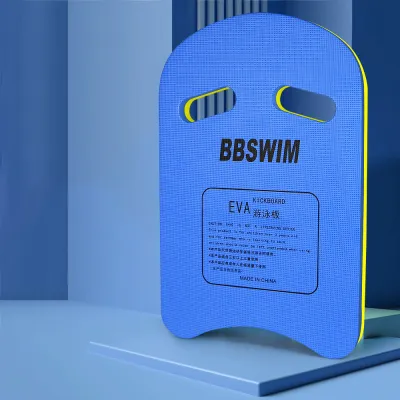
Prices are valid at publication and may change. Please refer to the product page for the latest price.
Physical limitations also play a major role in your decision. If you experience lower back discomfort or shoulder stiffness, certain floating aids can either alleviate or aggravate these conditions. For instance, a tool that forces your body into an unnatural arch might worsen lower back pain, while a supportive device can take the pressure off sensitive joints.
Look for observable signals during your swims to guide your choice. Do your legs sink when you try to glide? Do you find yourself gasping for air because you cannot focus on your breathing rhythm? Or do you simply want a flexible, low-cost way to stay afloat while chatting with family? Pinpointing these specific pain points will point you directly toward the correct category of floating gear.
When to Choose a Kickboard for Leg Isolation and Confidence
A kickboard is the classic choice when your primary objective is lower-body isolation. By holding the board in front of you, you immobilize your arms and force your legs to do all the work. This is highly effective for refining your flutter, breaststroke, or dolphin kick, as well as improving ankle flexibility over time.

For beginners, a kickboard serves as a valuable confidence builder. It provides a stable platform to rest your hands on while you practice submerging your face and exhaling underwater. This allows you to master the rhythm of side-breathing without the added complexity of coordinating arm strokes at the same time.
However, using a kickboard requires careful attention to your body alignment. Resting your entire upper body heavily on the board can force your hips down and arch your lower back excessively. To prevent lower back strain during prolonged kicking drills, keep your grip light, engage your core, and keep your head down in the water, lifting it only to breathe.
Verify the board’s material and size before use. Rigid, high-density EVA foam boards offer excellent durability and buoyancy, but they must match your body size. A board that is too large will force your shoulders too high out of the water, while one that is too small will not provide enough support to keep your upper body afloat.
When to Choose a Pull Buoy for Upper-Body Focus and Alignment
If you want to shift the entire workload to your arms, shoulders, and back, a pull buoy is the ideal tool. This figure-eight-shaped foam device is placed high between your thighs, keeping your hips and legs afloat without the need for kicking. By neutralizing your lower body, you can focus entirely on your catch, pull, and recovery phases.
A pull buoy is excellent for improving horizontal body alignment in the water. Many swimmers struggle with sinking legs, which creates massive drag. The buoyancy of the pull buoy lifts your hips to the surface, simulating the natural body position of an elite swimmer and teaching you how a streamlined posture should feel.
This tool also demands and builds core engagement. Because your legs are held together, you must use your abdominal and lower back muscles to stabilize your hips and prevent your body from snaking side-to-side. It is a highly effective way to transition from a leg-dependent swim style to a balanced, upper-body-driven stroke.
To ensure proper usage, check the sizing and placement of the buoy. It should fit snugly between your upper thighs without slipping out during turns. Avoid squeezing it too tightly, which can cause muscle cramping, and be mindful of your shoulder health; overusing a pull buoy can lead to shoulder strain if your arm stroke technique is not yet fully developed.
When to Choose a Pool Noodle for Leisure and Rehabilitation
When your time in the water is focused on relaxation, low-impact exercise, or physical therapy, the pool noodle is the most versatile option. Unlike rigid training aids, a pool noodle can be bent, wrapped, or sat upon to provide customizable support exactly where you need it.
In rehabilitation and water aerobics, pool noodles are highly valued for their adaptable shapes and versatile grip options. You can tuck one under your armpits to support your chest during deep-water walking, or wrap it behind your back to float effortlessly while performing gentle leg exercises. This makes it an excellent tool for joint-friendly therapy sessions.
However, pool noodles are not designed for high-intensity athletic training or precise stroke refinement. Their flexible nature means they do not provide the streamlined stability required for competitive swim drills. Instead, they excel at providing light, distributed buoyancy for casual recreation and gentle movement.
Before relying on a pool noodle, check its material durability and structural integrity. Standard hollow foam noodles can degrade quickly under intense tropical sunlight and chlorine exposure, leading to flaking or snapping. Ensure the noodle’s thickness and density are sufficient to support your body weight comfortably without collapsing or losing its shape during use.
Finalize Your Choice: A Quick Decision Checklist
To finalize your choice, match your current water goals to the specific characteristics of each floating aid. If you are in a training phase focused on building leg power, choose a kickboard. If you are working on upper-body endurance and stroke alignment, opt for a pull buoy. For gentle rehabilitation, water aerobics, or casual family fun, a pool noodle is your best bet.
Consider your practical pool environment and storage constraints. Some public or condominium pools have strict rules regarding the types of gear allowed in the water, often banning oversized pool noodles while permitting standard training kickboards. Additionally, think about portability; a compact pull buoy fits easily into a standard backpack, whereas a long pool noodle requires dedicated storage space.
Before making a purchase, run through this quick self-check list:
- Does the device support my specific physical needs (e.g., avoiding lower back or shoulder strain)?
- Is the material durable enough to withstand regular exposure to chlorine and tropical humidity?
- Does the size of the aid match my body weight and height for optimal buoyancy?
- Am I using this device as a training tool rather than a life-saving flotation device?
Frequently Asked Questions (FAQ)
Can I use a kickboard and a pull buoy in the same workout?
Yes, combining both devices in a single workout is an excellent way to structure a balanced training session. You can split your routine into distinct blocks, starting with a kickboard set to warm up your legs, followed by a pull buoy set to focus on upper-body endurance. Avoid using them simultaneously, as holding a kickboard while keeping a pull buoy between your thighs can distort your body alignment and strain your lower back.
How do I clean and store my foam floating aids?
To prolong the lifespan of your foam gear, always rinse them thoroughly with fresh, clean water after every pool session to remove chlorine, salt, and sunscreen residues. Allow them to air dry completely in a shaded, well-ventilated area before storing them. Avoid leaving them in direct sunlight or inside a hot car trunk, as extreme heat and UV rays will cause the foam to degrade, warp, or crumble over time.
Are pool noodles safe for young children learning to swim?
Pool noodles are fun recreational toys, but they are not safety devices and should never be used as a substitute for life jackets or personal flotation devices (PFDs). They do not prevent drowning and can easily slip out from under a child’s arms. Young children and non-swimmers must always wear certified life jackets and remain under constant, close adult supervision while in or near the water.
Community discussion
Share your experience or ask a question. Comments are reviewed before publication.