
Choosing between the Kizuna D66 and Z63 badminton strings is a decision that directly shapes how your racket interacts with the shuttlecock. Rather than relying solely on model names, which often hint at but do not guarantee exact physical dimensions, players must evaluate the physical specifications printed on the packaging. Your choice ultimately hinges on whether you prioritize long-term durability or immediate repulsion and tactile feedback. In the tropical climate of the Philippines, where high humidity and heat can accelerate tension loss and alter string behavior, matching the right string to your playing style and racket profile is essential for maintaining consistent performance on the court.
Equipment alone cannot replace proper technique, training, and court judgment. A high-performance string will not automatically correct a late swing or poor footwork, but selecting the wrong string specification can lead to premature breakage, wasted restringing fees, or unnecessary strain on your wrist and elbow. By understanding the physical characteristics of these two popular Kizuna models, you can make an informed decision that complements your current skill level and protects your racket frame from structural damage.
Understanding the Core Specifications
Before purchasing any badminton string, you must verify the exact physical specifications printed on the manufacturer’s packaging. Model numbers like D66 and Z63 are highly suggestive of their respective thicknesses, but manufacturing standards, regional packaging variations, and product updates mean you should always confirm the exact gauge in millimeters. Typically, the packaging for the Kizuna D66 will indicate a gauge of approximately 0.66mm, while the Z63 packaging generally lists a thinner gauge of around 0.63mm. This minor difference in decimal points significantly alters how the string behaves under tension.
Products mentioned in this guide

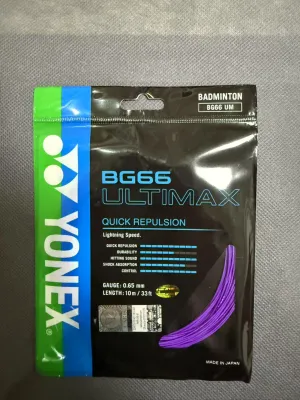
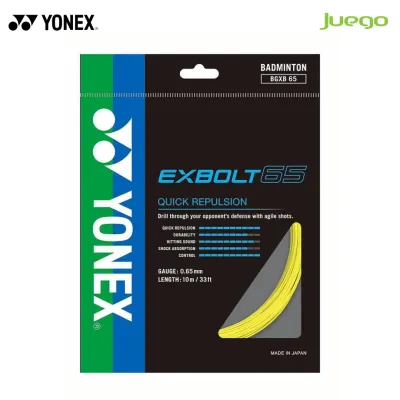
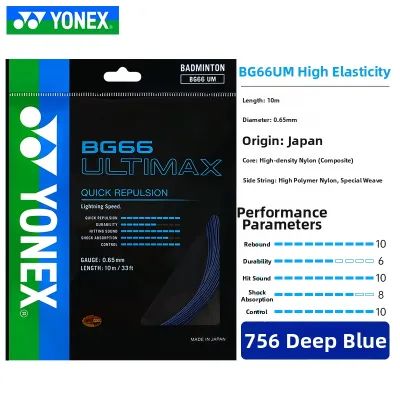
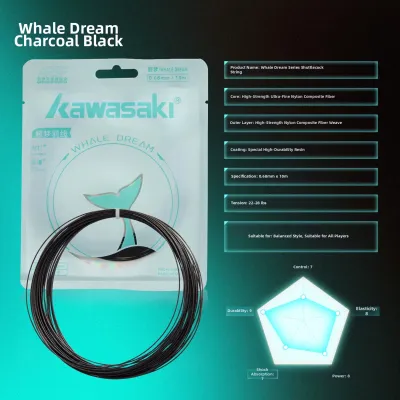
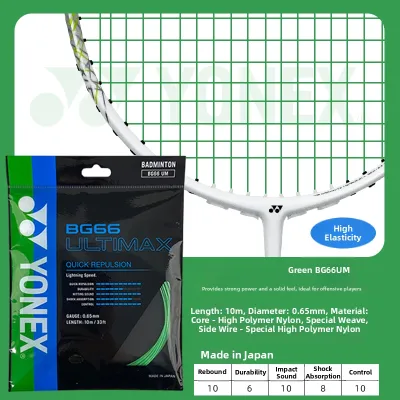
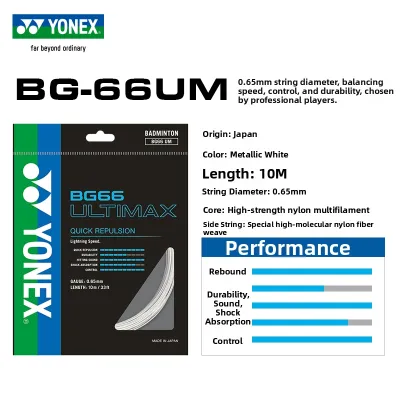
Prices are valid at publication and may change. Please refer to the product page for the latest price.
Next, inspect the core and coating materials detailed on the product label. High-performance badminton strings generally utilize a multifilament nylon core wrapped in a braided high-intensity nylon fiber sheath. The specific formulation of the outer coating determines how much grip or “bite” the string has on the shuttlecock’s skirt. A thicker outer braid, often found on strings matching the D66 profile, provides a robust physical barrier against the friction generated during hard smashes and slice shots. Conversely, a thinner construction like that of the Z63 reduces overall mass, allowing the string bed to deform and snap back more rapidly upon impact.
Finally, always cross-reference the manufacturer’s recommended tension range listed on the string packaging with the structural limits of your specific racket. Stringing a thin gauge at an excessively high tension can cause the string to reach its elastic limit prematurely, leading to sudden breakage even on clean hits. Conversely, stringing a thicker gauge too loosely can result in a dull, unresponsive string bed. Ensure your local stringer operates a calibrated electronic or mechanical stringing machine to guarantee that the actual tension matches your desired settings.
Matching String Traits to Your Playstyle
Your choice between a thicker and a thinner string should align closely with your on-court habits, skill level, and physical demands. Thicker strings, such as those matching the D66 specification, are highly recommended for players who prioritize durability and shock absorption. If you play multiple times a week, participate in intense doubles matches, or frequently hit the shuttlecock off-center, a thicker gauge offers a more forgiving sweet spot. The extra material mass helps absorb the harsh vibrations of off-center hits, reducing the risk of developing repetitive strain injuries like tennis elbow.

Thinner strings, such as those matching the Z63 specification, are designed for players who demand maximum repulsion, a sharp hitting sound, and precise tactile feedback. Because a thinner string bed deforms more easily under the force of an incoming shuttlecock, it acts like a trampoline, launching the shuttlecock with high velocity even with a shorter, quicker swing. This rapid snap-back is highly advantageous for defensive players executing quick drives, front-court players looking for delicate net play, and advanced attackers who rely on explosive wrist power. The trade-off, however, is a significantly reduced lifespan, as thinner materials wear down much faster under friction.
Your historical string-breaking frequency is a practical metric to guide your budget. In the Philippines, professional restringing services typically cost between ₱300 and ₱600, excluding the price of the string itself. If you find yourself breaking strings every few weeks, opting for a thinner gauge like the Z63 can quickly become an expensive habit. For recreational players, students, or those on a budget, starting with a thicker, more durable option like the D66 is often the most practical choice. It allows you to focus on developing consistent hitting technique without the constant worry of an unexpected breakage mid-game.
Racket Compatibility and Tension Strategy
Pairing your chosen string with the correct racket profile is critical to achieving a balanced setup. Stiff, head-heavy rackets designed for power players generate immense force but can feel incredibly harsh on the joints if paired with an unforgiving string bed. If you use a stiff racket, pairing it with a slightly thicker string like the D66 at a moderate tension can soften the overall feel, making the racket more comfortable during long defensive rallies. The thicker string helps dampen the high-frequency vibrations that travel down a stiff carbon fiber shaft.
Flexible or head-light rackets, which are popular for fast-paced doubles play, benefit greatly from the lively characteristics of a thinner string like the Z63. Because flexible shafts inherently bend more to generate power, a thin, high-repulsion string complements this whipping action, maximizing shuttlecock speed on defensive clears and quick blocks. This combination allows players with moderate arm strength to generate competitive depth on their clears without over-exerting their shoulders.
Before handing your racket to a stringer, always inspect the frame for structural integrity. Look closely for micro-cracks around the grommet holes, paint chips that reveal raw carbon fiber, or any warping in the frame’s hoop. If your racket shows signs of structural fatigue, do not attempt to string it at high tensions, as the uneven stress can cause the frame to collapse entirely on the stringing machine. Always stay within the maximum tension limit printed on your racket’s shaft or cone to preserve your manufacturer warranty.
Decision Framework: Which Kizuna String Should You String?
To finalize your decision, evaluate your playing conditions and personal priorities using this straightforward, condition-based framework:
- Choose the thicker option (verify D66 specifications on the package) if:
- Your primary goal is to maximize the lifespan of your string bed and minimize restringing costs.
- You frequently play outdoors or in humid indoor courts where moisture accelerates string wear.
- You prefer a solid, damp, and highly forgiving feel that reduces shock on off-center hits.
- You are a beginner or intermediate player still working on hitting the sweet spot consistently.
- Choose the thinner option (verify Z63 specifications on the package) if:
- You prioritize explosive repulsion power, fast defensive drives, and a crisp, loud hitting sound.
- You have consistent hitting technique and rarely break strings due to off-center mishits.
- You are willing to budget for more frequent restringing sessions to maintain peak performance.
- You play primarily in controlled, air-conditioned indoor venues where tension loss is more manageable.
Before proceeding, check that your racket’s grommets are in good condition. Split or worn grommets can cut directly into thin strings, causing them to snap instantly during stringing or on your very first hit. If you are unsure about your ideal tension, start at a moderate baseline—such as 24 to 26 lbs—and adjust by one or two pounds in future sessions based on how the string bed feels during play.
Frequently Asked Questions (FAQ)
How often should I restring my racket with these Kizuna models?
Rather than following a strict calendar schedule, you should regularly inspect your string bed for physical signs of degradation. Look for deep notches where the main and cross strings intersect, as well as visible fraying near the grommets at the top of the racket frame. Significant tension loss, which causes the strings to shift out of place easily after a rally, is another clear indicator that it is time to restring. In the hot and humid climate of the Philippines, the nylon fibers in badminton strings naturally stretch and lose their elasticity over time, even if the racket is stored in a bag. Active players who step onto the court two to three times a week should generally plan to restring their rackets every six to eight weeks to maintain consistent playability, while recreational players may stretch this interval to three months.
Does the string color affect its performance or durability?
Cosmetic dyes and color coatings applied during the manufacturing process generally do not alter the core performance metrics of a badminton string, such as its repulsion, gauge, or overall durability. However, some players report minor subjective differences in feel or slickness between highly pigmented strings and natural white variants. To ensure you are getting the exact performance characteristics you expect, always check the packaging to confirm that the colored variant shares the identical material construction, core nylon type, and outer braid specifications as the standard white version of that model. Avoid purchasing unbranded or counterfeit strings from unverified online marketplaces, as these imitation products often use cheap, dyed plastics that mimic the color of premium Kizuna strings but fail to deliver the same elasticity, strength, or safety standards.
Community discussion
Share your experience or ask a question. Comments are reviewed before publication.