
Choosing the right leg machine for your home gym or commercial fitness space in the Philippines comes down to matching the equipment’s mechanical design with your specific fitness goals, joint health, and available floor space. If your primary objective is to pack on overall lower-body mass using heavy loads without straining your lower back, a leg press is a highly effective option. For those aiming to maximize quadriceps development through deep knee flexion while maintaining an upright posture, a hack squat machine is a highly suitable choice. If you need a compact, budget-friendly tool to isolate the quadriceps, warm up the knees, or assist in rehabilitation, a leg extension machine is a practical fit.
Assess Your Training Goals and Muscle Targets
Before investing in heavy fitness equipment, you must define what you want to achieve in your training. Compound movements that recruit multiple joints and muscle groups simultaneously are the foundation of lower-body strength and size. If your goal is to build overall mass across your quads, glutes, and hamstrings, you should look toward compound machines like the leg press or hack squat. These machines allow you to overload the muscles with significant weight while providing a guided path that reduces the balance requirements of free-weight squats.
Conversely, if you want to target specific areas of the thigh or require a dedicated tool for rehabilitation, isolation equipment is more appropriate. An isolation machine focuses on a single joint movement, allowing you to target a specific muscle group without exhausting the surrounding muscles. This is particularly useful if you are recovering from an injury or looking to correct muscular imbalances between your left and right legs.
Products mentioned in this guide
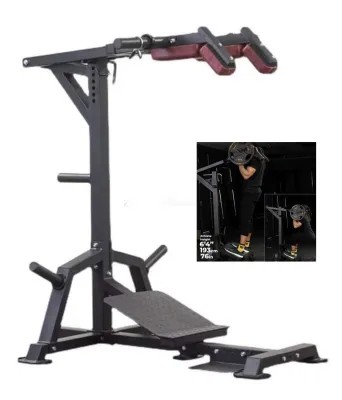
Prices are valid at publication and may change. Please refer to the product page for the latest price.
Physical limitations must also guide your decision. Individuals dealing with chronic lower back pain often struggle with axial loading—the downward pressure placed on the spine during traditional barbell squats. Choosing a machine that supports the back or redirects the load can keep you training safely. Additionally, you must evaluate your physical environment, considering how tropical humidity might affect equipment maintenance and how much physical space you can dedicate to a heavy steel unit.
Leg Press: Overall Mass and Heavy Loading
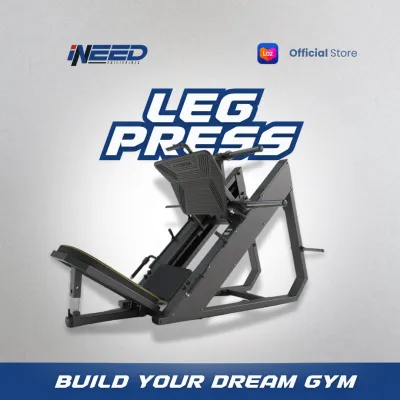
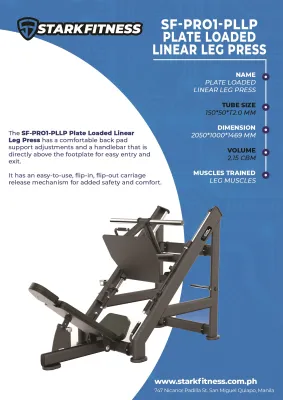
The leg press is a cornerstone of lower-body strength training, highly valued for its ability to facilitate heavy loading with minimal spinal compression. Because you sit in a reclined seat and push the weight platform away from your body, your spine is supported by a padded backrest. This design eliminates the need for your core and lower back to stabilize a heavy load, allowing you to focus entirely on pushing with your legs. It is an excellent option for lifters who want to push their muscular limits safely without the risk of dropping a heavy barbell.

One of the primary advantages of the leg press is its versatility through foot placement. By shifting your feet higher on the sled platform, you can shift more of the emphasis to your hamstrings and glutes. Placing your feet lower on the platform increases knee flexion, directing more of the tension into your quadriceps. A wider stance targets the adductors on the inner thighs, while a narrower stance focuses on the outer quad sweep. This adaptability makes the leg press a highly functional multi-purpose machine for comprehensive leg development.
However, purchasing a leg press requires careful planning regarding space and logistics. These machines have a massive footprint, often requiring a dedicated area of at least two to three meters in length. Because they are designed for heavy loading, you will also need to purchase a substantial number of weight plates to make the machine effective, which increases the overall cost. In humid tropical climates, the guide rods and linear bearings of a leg press require regular lubrication to prevent rust and ensure a smooth, friction-free glide.
Hack Squat: Quad Focus and Upright Torso
The hack squat machine is engineered to place intense focus on the quadriceps by guiding you through a fixed, angled path. Unlike a traditional squat where your torso naturally leans forward to maintain balance, the hack squat features a backrest angled at roughly 45 degrees with shoulder pads that secure your upper body. This configuration allows you to maintain an upright torso throughout the entire movement, which significantly increases the range of motion at the knee joint and places a direct, deep stretch on the quadriceps.
This upright position makes the hack squat highly effective for developing the vastus medialis oblique (VMO)—the tear-drop muscle just above the knee—as well as the outer quad sweep. Because the machine stabilizes your torso, you can safely perform deep squats that might otherwise compromise your form with a free barbell. The fixed path of the sled ensures that your movement remains consistent, reducing the risk of lateral knee wobbling and allowing for precise muscular targeting.
While the hack squat provides excellent quad stimulation, it does place a higher demand on the knees due to the deep knee flexion involved. It also requires a moderate amount of lower back stability, as your hips must remain firmly pressed against the back pad to prevent pelvic tilt at the bottom of the movement. For home gym owners, a hack squat machine represents a significant investment in both budget and space, often requiring high ceilings and a reinforced floor to handle the concentrated weight of the machine and its plates.
Leg Extension: Isolation and Joint Rehabilitation
The leg extension machine serves a highly specific role as a pure isolation tool for the quadriceps. Unlike the leg press and hack squat, which are multi-joint compound movements, the leg extension involves movement only at the knee joint. This design allows you to target the quadriceps—specifically the rectus femoris, which is difficult to fully stimulate in compound movements—without involving the glutes, hamstrings, or lower back. It is a valuable tool for bodybuilders looking to sculpt their thighs or athletes seeking targeted quad conditioning.
Because it isolates the quadriceps so effectively, the leg extension is frequently used in physical therapy and joint rehabilitation settings. It allows users to rebuild quad strength after an injury without putting pressure on the hips or lower back. It is also an excellent machine for warming up the knee joints and increasing synovial fluid flow before transitioning to heavier compound lifts. The relatively low weight requirements mean you do not need to purchase hundreds of kilograms of plates, making it a more cost-effective option.
Refrain from using momentum or explosively locking out your knees at the top of the movement, as hyperextension under load can cause joint damage. The leg extension should be viewed as a supplementary tool to shape and condition the muscles, rather than a primary driver of overall lower-body mass.
Space, Budget, and Safety Considerations Before Buying
When finalizing your purchase, practical constraints like space, budget, and safety features must take precedence. Leg presses and hack squats are exceptionally large and heavy, often requiring a dedicated room or a spacious garage gym. You must measure not only the floor footprint but also the ceiling height, especially for hack squats where the sled travels upward. In contrast, a leg extension machine is much more compact, making it a highly viable option for smaller spare rooms or tight workout spaces.
Your budget will also dictate whether you choose a plate-loaded machine or a selectorized weight stack machine. Plate-loaded machines are generally more affordable upfront, but you must factor in the cost of buying Olympic weight plates priced in ₱. Selectorized machines, which use a pin-and-stack system, offer faster weight adjustments and a cleaner look, but they carry a higher initial price tag and are more difficult to repair if a cable snaps. In humid environments, look for frames with electrostatic powder coating to resist sweat-induced corrosion, and ensure the upholstery is made of high-density, moisture-resistant vinyl.
Before using any newly delivered machine, perform a thorough safety inspection. Verify that all welding joints are clean and free of cracks, and check that the safety catch mechanisms engage smoothly and securely. For sled-based machines like the leg press and hack squat, test the smoothness of the linear bearings along the guide rods; any grinding or sticking indicates a need for alignment or lubrication. Ensure that the locking pins on selectorized stacks insert fully and securely to prevent the weight from slipping during a heavy set.
Frequently Asked Questions (FAQ)
Can I build big legs with just one of these machines?
Yes, you can build significant leg size using a single compound machine like a leg press or a hack squat by consistently applying the principle of progressive overload. By gradually increasing the weight, repetitions, or training volume over time, you will stimulate muscle hypertrophy in your quadriceps, glutes, and hamstrings. However, relying solely on a leg extension machine will limit your overall development, as it completely misses the hamstrings and glutes, making it unsuitable as a standalone leg training solution.
Which leg machine is safest for bad knees?
For individuals with knee concerns, a leg press is often considered more manageable because it allows you to adjust your foot placement high on the platform, which reduces knee flexion and shifts the load toward the hips and hamstrings. Leg extensions generate higher shear forces on the patellar tendon, which can aggravate existing knee issues if performed with heavy weights or poor form. Regardless of the machine, you should always consult a qualified physical therapist or sports medicine professional to design a safe rehabilitation program tailored to your specific joint health.
Community discussion
Share your experience or ask a question. Comments are reviewed before publication.