
Choosing between a long knee compression support and a regular knee sleeve depends entirely on where you feel discomfort, the physical demands of your activity, and your personal comfort preferences. While a standard sleeve focuses strictly on the knee joint, extended coverage reaches into the thigh and calf to manage muscle vibration and fatigue. Use this self-assessment guide to determine which level of support aligns with your current physical signals and athletic needs.
Evaluating your physical symptoms, the nature of your sport, and the practical realities of wearing compression gear in your daily environment will help you make the right choice. Selecting the wrong type of support can lead to unnecessary discomfort, restricted movement, or a lack of the targeted pressure your body actually needs.
Map Your Symptoms: Joint Pain vs. Muscle Fatigue
To determine which gear fits your needs, start by mapping where you feel discomfort. If your symptoms are concentrated directly within the knee joint, a regular knee sleeve is often the most practical choice. This includes feelings of mild stiffness after sitting, localized soreness around the kneecap after a workout, or minor swelling confined to the joint area. A standard sleeve applies targeted pressure directly to the joint, which helps increase blood flow locally and provides proprioceptive feedback—the sensory input that helps your brain recognize joint positioning.
Products mentioned in this guide
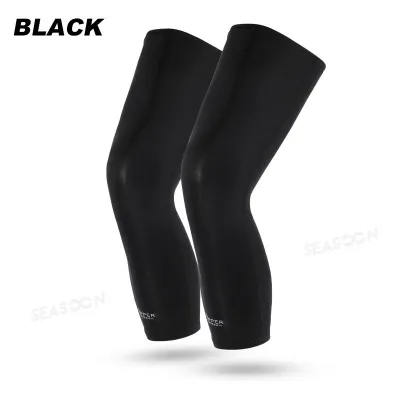
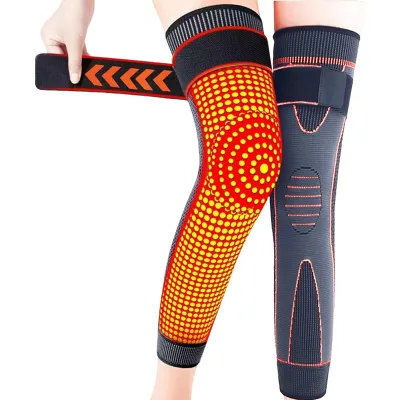
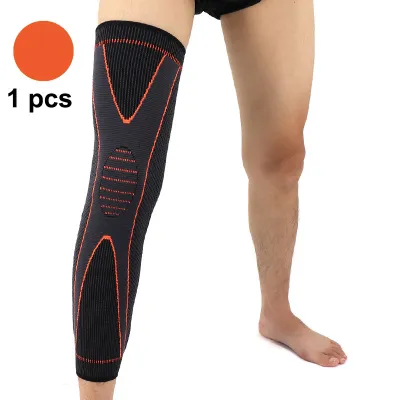
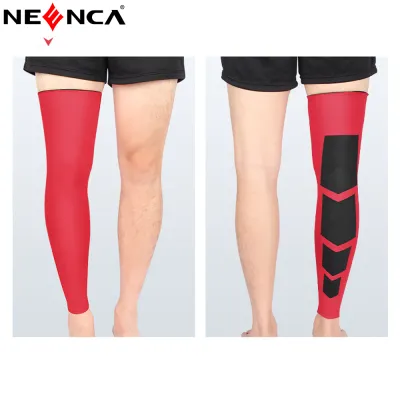
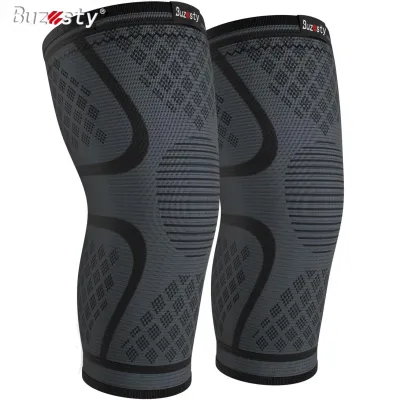
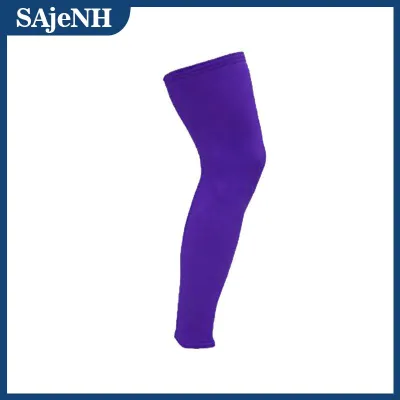
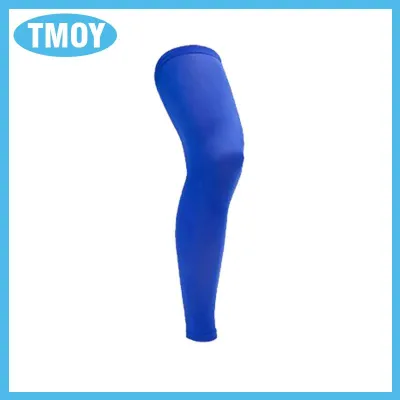
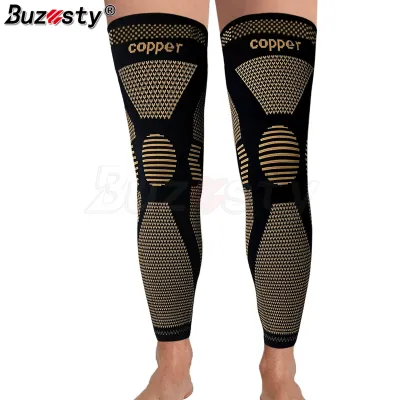
Prices are valid at publication and may change. Please refer to the product page for the latest price.
If your physical discomfort spreads beyond the joint, you may need to consider a long knee compression support. Pay close attention to whether your soreness radiates upward into your quadriceps or downward into your calf muscles during or after physical activity. Runners, hikers, and court athletes often experience deep muscle fatigue, tightness, or minor strains in these surrounding muscle groups rather than inside the joint itself. The extended length of a long support helps stabilize these larger muscle bodies, reducing the micro-oscillations or vibrations that occur every time your foot strikes the ground. This stabilization can help manage muscle soreness and prevent that heavy, fatigued feeling in your legs.
However, it is crucial to distinguish between general muscle fatigue and structural joint damage. Compression garments, whether short or long, are designed for mild support, warmth, and sensory feedback. They are not substitutes for rigid medical braces that feature metal hinges, straps, or structural stays. If you are recovering from a ligament tear, such as an ACL or MCL sprain, or if you have a meniscus injury that compromises the structural integrity of your knee, a soft compression sleeve will not provide the mechanical stabilization required to keep the joint safe. Always evaluate whether you are seeking muscle management or structural joint protection.
Match the Gear to Your Sport and Movement
The physical demands of your sport or workout routine play a major role in deciding which compression length is appropriate. For low-impact, stationary, or highly controlled movements, a regular knee sleeve is typically sufficient. Activities like weightlifting, powerlifting, stationary cycling, or rowing rely on predictable, linear movement patterns. In these scenarios, your primary goal is to keep the knee joint warm and lubricated between sets or during steady pedaling. A standard sleeve excels here because it provides concentrated warmth directly to the patella and surrounding tendons without adding unnecessary material to the rest of your leg.

For high-impact, multi-directional, or endurance activities, a long knee compression support offers distinct advantages. Sports like basketball, volleyball, trail running, and football involve constant deceleration, rapid lateral cuts, and repetitive jumping. These dynamic movements subject your thighs and calves to intense eccentric loads, which can quickly lead to muscle fatigue and cramping. A long sleeve wraps the entire lower-limb kinetic chain, helping to keep the major muscle groups warm and active throughout the game. This full-leg compression can be particularly beneficial during long-distance road running, where repetitive pavement pounding causes continuous muscle vibration.
Before purchasing a long compression sleeve for competitive use, check the specific rules of your sport’s governing body or local league. Some organized leagues, school athletic associations, or tournament referees enforce strict uniform guidelines regarding the color, length, and visibility of compression garments. For example, some basketball leagues require all players to wear matching compression gear or limit the length of sleeves to ensure they do not interfere with team uniforms. Verifying these rules beforehand ensures your gear is fully compliant and usable during official matches.
Weigh the Practical Trade-Offs: Fit, Heat, and Usability
While the physiological benefits of compression are clear, the practical aspects of daily wear can make or break your experience. Sizing is one of the most significant challenges when choosing a long knee compression support. Because a long sleeve covers the thigh, knee, and calf, it must accommodate three distinct body circumferences. If you have highly developed quadriceps but relatively narrow calves, finding a long sleeve that fits securely on both ends without slipping or pinching can be difficult. A sleeve that is too tight at the thigh will roll down during movement, while one that is too loose at the calf will bunch up behind the knee, causing chafing. Regular knee sleeves, requiring only a single measurement around the knee joint, are generally much easier to fit accurately.
Environmental conditions also play a major role in your comfort, particularly in warm and humid climates like the Philippines. Wearing a thick, full-length compression sleeve in high humidity can lead to rapid heat retention and excessive sweating. This trapped moisture can lead to skin irritation, heat rashes, or bacterial buildup if the material is not highly breathable. If you train in non-air-conditioned gyms or outdoor spaces under the tropical sun, a regular knee sleeve offers a much smaller footprint, allowing the rest of your leg to breathe and cool down naturally.
Finally, consider the effort required for daily usability and maintenance. Putting on a long compression sleeve requires careful, patient handling. You must gradually pull the fabric up your leg, ensuring there are no twists, folds, or uneven tension across the thigh and calf. Pulling too hard on the ends of a long sleeve can stretch out the elastic fibers or tear the seams over time. A regular knee sleeve is much simpler to slide on and adjust quickly before a workout. If you prefer a low-maintenance routine, the simplicity of a standard sleeve is hard to beat.
Know When to Stop and Consult a Professional
Compression gear is an excellent tool for managing mild discomfort and enhancing your athletic experience, but it has clear limits. You must immediately stop using any compression sleeve and seek professional medical evaluation if you experience sharp, sudden pain during movement, or if your knee feels unstable, locks in place, or gives way under your weight. These symptoms often point to structural injuries, such as ligament tears or meniscus damage, which require targeted medical treatment. Severe swelling, visible bruising, or an inability to bear weight on your leg are also clear indicators that you need to consult a doctor or physical therapist.
Safety precautions are also necessary if you have underlying health conditions. If you have diagnosed circulatory issues, peripheral artery disease, neuropathy, or highly sensitive skin, consult a healthcare provider before wearing tight compression garments. Improperly fitted sleeves can restrict blood flow or cause skin breakdown. Remember that persistent knee pain that does not improve with rest, ice, and basic self-care is a signal from your body that requires professional diagnosis. Upgrading to a longer or tighter sleeve will not resolve an underlying mechanical issue or chronic joint condition.
Frequently Asked Questions (FAQ)
Can I wear a long knee compression support all day?
It is generally not recommended to wear a tight compression support continuously throughout the entire day unless specifically advised by a medical professional. For athletic and active recovery purposes, limit wear time to the duration of your physical activity and a short recovery period afterward. Wearing tight compression for prolonged, uninterrupted hours while sedentary can restrict healthy blood circulation. Always remove the sleeve periodically to inspect your skin for redness, irritation, or deep indentations. If you experience any numbness, coldness in your foot, or a tingling sensation, remove the sleeve immediately, as these are clear signs that the compression is too tight or has been worn for too long.
How do I wash and maintain my compression gear to keep it elastic?
To preserve the elasticity and structural integrity of your compression gear, always follow the manufacturer’s care label instructions. As a general rule, hand wash or machine wash your sleeves in cold water using a gentle cycle and a mild detergent. Avoid using fabric softeners, bleach, or harsh chemical cleaners, as these substances break down the elastane and spandex fibers that provide the compression. Never put your compression sleeves in a mechanical dryer or expose them to direct sunlight or high heat sources, as extreme heat will degrade the elastic materials. Instead, gently squeeze out excess water without wringing the fabric, and lay the sleeve flat to air dry in a well-ventilated indoor space.
Community discussion
Share your experience or ask a question. Comments are reviewed before publication.