
Selecting the right fitness equipment for a home setup requires balancing space, budget, and training goals. Resistance bands have become a staple for home workouts in the Philippines, offering a highly portable and space-saving alternative to bulky iron weights. However, walking into a sporting goods store or browsing an online marketplace reveals a confusing array of shapes, sizes, and materials. The three primary designs—loop, tube, and flat bands—are not interchangeable, as each serves a distinct purpose in a well-rounded fitness routine.
The ideal choice depends entirely on your primary exercise focus, whether you want to activate your glutes, build upper-body strength, or improve joint mobility. Loop bands excel at lower-body activation and lower-body strength, tube bands with handles mimic cable machines for upper-body pulling and pushing, and flat bands are ideal for mobility, stretching, and physical therapy. Understanding how these shapes differ in tension delivery, grip comfort, and durability ensures you invest in gear that actually gets used rather than sitting forgotten in a closet.
Structural Differences: Loop, Tube, and Flat Bands Explained
To make an informed purchase, you must first understand the physical construction and tension mechanics of each band type. These structural differences dictate how the bands behave under load and how you interact with them during high-intensity movements.
Products mentioned in this guide
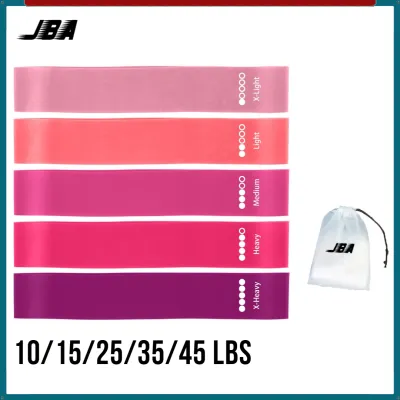
Prices are valid at publication and may change. Please refer to the product page for the latest price.
Loop bands are continuous, closed-circle bands that require no tying or anchoring to stay in a loop. They generally fall into two material categories: thin latex rubber or thick woven fabric. Latex loops are highly elastic, stretching to several times their original length, which provides a wide range of resistance but can cause the band to roll up or pinch bare skin. Woven fabric loops, often blended with elastic fibers, are much wider and stiffer, offering high resistance over a shorter range of motion while remaining flat against your limbs.
Tube bands are cylindrical, hollow rubber cords equipped with attachment points at both ends. They are typically made from extruded latex or synthetic rubber, and high-quality versions often feature a protective braided nylon sleeve to prevent the tube from snapping outward if it tears. Unlike loop bands, tube bands are designed to be used with accessories, featuring built-in or interchangeable foam handles, ankle straps, and heavy-duty carabiners that allow you to connect multiple tubes to a single handle to increase the total resistance.
Flat bands are long, wide, open-ended sheets of thin latex or synthetic non-latex material, usually measuring between four to six feet in length. They do not have handles, loops, or clips, relying instead on the user wrapping the material directly around their hands or feet to create secure anchor points. Because they are flat and wide, they distribute pressure evenly across a large surface area, making them exceptionally comfortable for pressing against the soles of your feet or wrapping around your back.
Matching Band Shapes to Your Target Muscles and Exercises
Different exercises require different tension profiles and gripping methods, meaning each band shape naturally aligns with specific muscle groups and training styles. Matching the band to your target movement prevents frustration and ensures optimal muscle recruitment.

For lower-body training and glute activation, continuous loop bands are the undisputed standard. Exercises like lateral band walks, monster walks, clamshells, and glute bridges require a band that stays securely wrapped around your thighs or calves without sliding. Fabric loop bands are particularly effective here because their textured surface grips clothing, preventing the painful rolling and snapping common with thin latex loops. The high lateral tension of a loop band forces your glutes to fire continuously to keep your knees from collapsing inward during squats or hip thrusts.
For upper-body strength and pulling movements, tube bands with handles are the most effective substitute for traditional gym equipment. Because they feature ergonomic handles and can be paired with a door anchor, tube bands allow you to replicate cable machine exercises such as bicep curls, tricep press-downs, chest presses, and lat pulldowns. The handles provide a secure, sweaty-palm-resistant grip that protects your wrists from awkward twisting, while the door anchor allows you to change the angle of resistance from high, medium, or low positions.
For mobility, flexibility, and physical therapy, flat bands offer the gentle, highly customizable resistance needed for delicate joint work. In Pilates and rehabilitation settings, exercises like shoulder dislocates, hamstring stretches, and ankle inversion or eversion require precise control over tension. With a flat band, you can easily adjust the resistance mid-set simply by choking up on the band or folding it in half, allowing for a smooth, progressive stretch that does not overload healing tissues.
Evaluating Comfort, Durability, and Handling Before You Buy
Beyond exercise compatibility, practical daily usability determines whether a resistance band remains a core part of your routine. Factors like local climate, material wear, and safety accessories play a massive role in long-term satisfaction.
Comfort and skin contact are critical considerations, especially during sweaty home workouts in the tropical heat of the Philippines. Bare skin contact with thin latex bands can lead to painful pinching, hair pulling, and skin chafing during high-repetition sets. If you frequently exercise in shorts or sleeveless tops, woven fabric loop bands or wide flat bands offer a much softer, non-slip experience. Additionally, individuals with latex sensitivities must carefully check product labels, as many standard bands are made of natural rubber latex; synthetic elastomer or fabric alternatives are essential for avoiding allergic reactions.
Durability and wear indicators must be checked regularly to prevent painful snaps during use. Latex is highly sensitive to environmental factors, including humidity, sweat, and direct sunlight, which can cause the material to dry out, discolor, or develop microscopic tears. Inspect your bands before every session by stretching them slightly under a bright light to look for tiny cracks, nicks, or areas of permanent stretching. To maximize their lifespan, wipe down your bands with a damp cloth after sweaty sessions, let them air dry away from direct sunlight, and store them in a cool, dry place.
Versatility and anchoring safety should never be overlooked, particularly when using tube bands that rely on external anchor points. Always inspect the stitching on door anchors and the integrity of carabiner clips before anchoring a band to a door frame or heavy post. Ensure that you place the door anchor on the side of the door that closes toward you, so that the physical frame of the door supports the tension rather than relying solely on the latch. If anchoring outdoors to a pole or tree, ensure the surface is smooth, as rough bark or concrete can quickly abrade and ruin the rubber.
Decision Framework: Which Resistance Band Should You Buy?
To finalize your purchase, evaluate your current fitness level, primary training goals, and physical environment against this structured decision framework.
Choose loop bands if your primary goal is lower-body hypertrophy, glute activation, or adding variable resistance to compound barbell lifts like squats and deadlifts. A set of fabric loop bands is highly recommended for lower-body warm-ups and home glute workouts due to their comfort and resistance to rolling.
Choose tube bands if you want a highly versatile, portable gym setup that replicates cable machines for upper-body isolation, chest presses, and back rows. Opt for a multi-band set with interchangeable handles, ankle straps, and a secure door anchor to allow for progressive overload as your strength increases.
Choose flat bands if you are recovering from an injury, practicing Pilates, focusing on flexibility, or need a gentle tool for joint mobility and stretching. Their lightweight, packable design makes them the easiest option to slip into a travel bag for quick hotel room workouts.
Before checking out, verify your specific physical requirements. If you have joint limitations or are recovering from surgery, consult a physical therapist to determine the appropriate resistance level. Always check the product specifications for material composition if you have a latex allergy, and look for reputable fitness brands that offer clear safety certifications for their anchoring systems. Prices in the local market can range from around ₱150 for a basic flat band to upwards of ₱1,500 for a comprehensive, heavy-duty tube band set with multiple resistance levels and accessories, allowing you to find an option that fits both your budget and your fitness aspirations.
Frequently Asked Questions (FAQ)
Can I use multiple types of resistance bands in the same workout?
Yes, combining different band shapes is an excellent way to optimize a full-body home workout. You can use a fabric loop band around your thighs to warm up your glutes and hips, transition to a tube band anchored to a door for your upper-body pulling and pushing movements, and finish your session with a flat band for deep stretching and shoulder mobility. When combining bands, always ensure that each band is anchored safely and that you inspect the integrity of each piece of equipment before transitioning between exercises.
How do I know when it is time to replace my resistance bands?
You should replace your resistance bands immediately if you observe any visible signs of wear, such as micro-tears, cracks, fraying, discoloration, or areas where the rubber has become sticky or brittle. Over time, exposure to sweat, humidity, and stretching will cause the material to lose its elasticity, resulting in a band that feels loose or fails to return to its original length. Following the manufacturer’s storage guidelines—such as keeping them out of direct sunlight and avoiding sharp edges—will prolong their lifespan, but safety should always come first to prevent a sudden snap during an exercise.

Community discussion
Share your experience or ask a question. Comments are reviewed before publication.