
The choice between a magnetic coach board and a dry erase board depends on your coaching environment, the age of your players, and how quickly you need to communicate plays during high-pressure timeouts.
Magnetic boards excel in structured environments like locker rooms or half-court practices where tactile, three-dimensional representation helps players visualize spatial relationships. They are highly effective for youth teams who benefit from seeing physical “players” move across the board.
Dry erase boards are the go-to option for fast-paced, on-the-fly adjustments during intense game situations. Their lightweight design and rapid drawing capability make them indispensable for quick sideline huddles, especially when wind or outdoor conditions make handling small magnetic pieces impractical.
Products mentioned in this guide
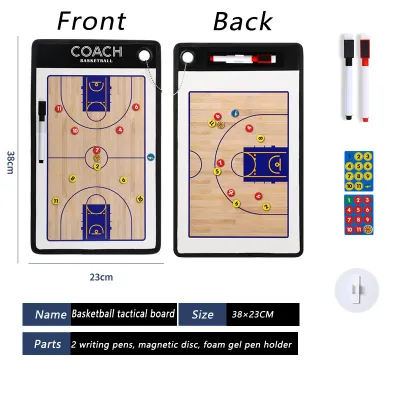
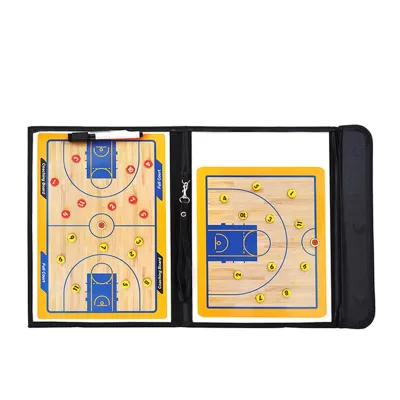
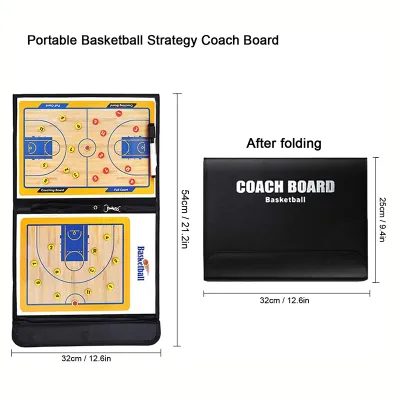
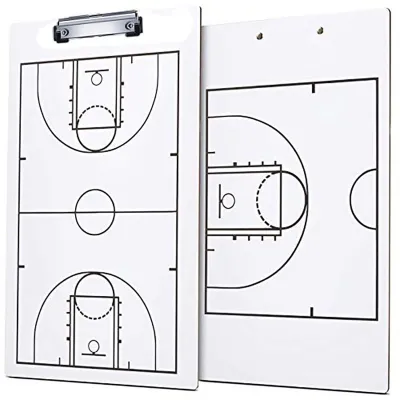
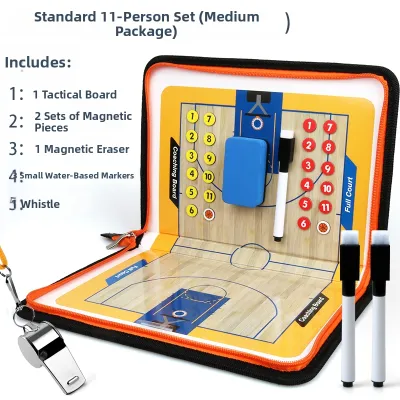
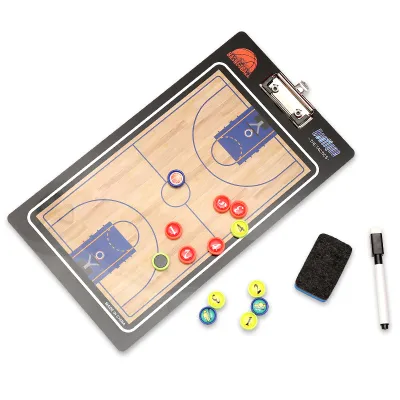
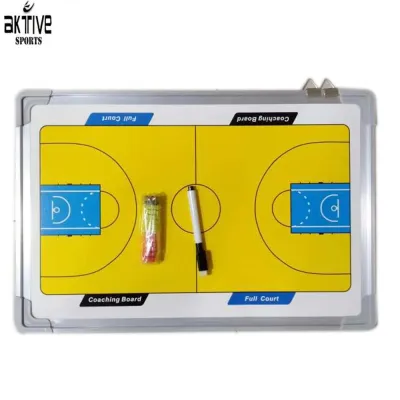
Prices are valid at publication and may change. Please refer to the product page for the latest price.
Ultimately, your decision should align with your specific coaching style, the venue where you play, and how your team absorbs tactical information.
Understanding the Core Differences in Surface Technology
To choose the right tool, it helps to understand how these two surfaces differ in their construction and daily operation. Each technology relies on distinct materials to deliver its specific coaching advantages.
How Magnetic Boards Function
Magnetic coach boards utilize a multi-layered construction, typically featuring a steel or iron-receptive sheet sandwiched between a protective backing and a printed court graphic layer. This design allows small, color-coded magnetic discs—representing offensive players, defenders, and the ball—to cling securely to the surface.
Because of the metal core, these boards are generally heavier and thicker than their non-magnetic counterparts. They offer a rigid, durable feel that can withstand being tossed into gear bags or dropped on the hardwood.
Coaches use these boards to physically slide pieces across the court layout, demonstrating player movement, screens, and defensive rotations without needing to draw and erase constantly.
How Dry Erase Boards Function
Dry erase boards rely on a smooth, non-porous outer coating applied over a lightweight substrate, such as plastic, compressed cardboard, or thin aluminum. This specialized coating allows dry erase marker ink to sit on the surface without penetrating the material, enabling clean, instant wiping.
These boards are exceptionally lightweight and thin, making them easy to hold with one hand while drawing with the other during a tense timeout.
The primary interaction involves drawing lines, arrows, and symbols to represent player routes, passes, and screens, which can be wiped away in seconds with a felt eraser or a dry cloth.
Key Comparison Dimensions for Basketball Coaching
When evaluating these boards for daily use, several practical factors come into play on the court. Understanding how each surface performs under pressure will help you select the most reliable tool for your team.

Visibility and Contrast In bright indoor gyms or under the harsh glare of outdoor court lights, visibility is critical. Dry erase boards offer high contrast when paired with fresh, dark markers, but glare from overhead lights can sometimes obscure the lines. Magnetic boards, with their raised, three-dimensional pieces, provide excellent visibility from multiple angles, allowing players standing at the back of the huddle to see the play clearly without squinting.
Speed of Play Execution During a 30-second timeout, every tick of the clock matters. Drawing a complex play on a dry erase board is incredibly fast; a few quick strokes can outline a pick-and-roll option immediately. Moving multiple magnetic pieces, while highly accurate, can take slightly longer if you have to reposition every player on the board individually. However, for repeating a drill sequence, sliding magnets is often faster than erasing and redrawing the entire play.
Surface Durability and Climate Resistance In tropical environments with high humidity, gear faces unique challenges. Cheap dry erase boards can degrade over time, as moisture and sweat from players’ hands can cause the non-porous coating to peel or bubble. Magnetic boards with sealed steel cores are highly durable, though any exposed metal edges must be checked for rust if exposed to humid air or rain. The physical magnets themselves are virtually indestructible, though they can lose their magnetic strength if exposed to extreme heat over long periods.
Portability and Weight Carrying coaching gear to and from the court requires lightweight, compact solutions. Standard dry erase clipboards are incredibly portable, easily sliding into a backpack or under your arm. Magnetic boards, due to their metal plates and the need to carry a separate box of magnetic pieces, are heavier and bulkier, which might be a drawback if you travel frequently for away games.
Accessory Management Keeping track of your tools is a constant battle on game day. Dry erase boards only require a marker and an eraser, which can often be clipped directly to the board. Magnetic boards require managing up to 12 or more small magnetic discs. Losing a single piece representing your point guard can disrupt your entire presentation, making accessory storage a critical consideration for busy coaches.
Matching the Board to Your Coaching Environment
The environment in which you train and compete plays a massive role in determining which board will serve you best. Matching the tool to your specific venue ensures smoother communication when it matters most.
Sideline Use During Active Games When the game is on the line and emotions are high, simplicity is key. A lightweight dry erase board allows you to quickly sketch a last-second play while standing up, holding the board high so the entire team can see. The lack of loose parts means you do not have to worry about dropping magnets onto the court during a chaotic huddle.
Locker Room and Halftime Adjustments Halftime adjustments require a more structured, analytical approach. In the quiet of a locker room, a larger magnetic board mounted on a wall or placed on a table is ideal. It allows you to set up the opponent’s defensive alignment with one set of magnets and your offensive strategy with another, providing a clear, tactile map that players can study while resting.
Outdoor vs. Indoor Court Conditions Outdoor courts present environmental challenges like wind, dust, and sudden rain showers. On a windy day, drawing on a dry erase board is safe, but using a magnetic board requires high-quality, strong magnets to ensure the wind does not blow your “players” off the court. Additionally, dust on outdoor courts can settle on dry erase boards, making markers run dry or scratch the surface during erasing, whereas magnetic pieces are less affected by a dusty surface.
Youth vs. Advanced Team Needs Player development stages dictate how tactical information should be presented. Youth players often struggle with abstract lines and arrows drawn on a board; they learn much faster by watching physical, color-coded magnets move, mimicking real-life court positioning. Advanced players, who already understand basic spacing and terminology, can quickly interpret complex drawn diagrams, making the speed of a dry erase board highly efficient for older teams.
Decision Framework: Which Board Should You Buy?
To finalize your choice, consider this practical decision framework based on your primary coaching style and team setup.
Choose a Magnetic Board if:
- You coach youth or developmental teams who benefit from tactile, visual learning.
- You primarily conduct strategy sessions in controlled indoor environments, such as locker rooms or classrooms.
- You prefer showing step-by-step player rotations by physically sliding pieces rather than drawing multiple arrows.
- You want a highly durable, rigid board that provides a clear three-dimensional view for players standing at a distance.
Choose a Dry Erase Board if:
- You need to make rapid, on-the-fly adjustments during fast-paced game timeouts.
- You prioritize lightweight, highly portable gear that fits easily into a standard backpack.
- You frequently coach on outdoor courts where wind, dust, or sudden weather changes could interfere with loose accessories.
- You prefer drawing custom routes, screens, and passing lanes with high-contrast colors.
Important Verification Steps Before Purchasing:
- Check League Rules: Always verify if your local league or tournament organizers have specific rules regarding the size or placement of coaching boards on the sidelines.
- Confirm Dual-Functionality: Many modern boards offer a hybrid design. Check the product specifications to see if the board features a magnetic-receptive steel core coated with a high-quality dry erase surface, giving you the best of both worlds.
- Inspect Accessory Quality: Ensure the magnets have sufficient holding power and that any included markers are non-toxic and low-odor, especially for use in confined locker rooms.
Maintenance and Care for Longevity
Proper care ensures your coaching board remains clear, readable, and functional season after season. Simple, routine maintenance can prevent permanent damage to the writing surface.
To prevent marker ghosting—the faint, dark stains left behind by old ink—always erase your dry erase board immediately after use. Avoid leaving plays drawn on the board for days, as the ink solvents can dry out and bond with the surface coating.
Store your board in a cool, dry place away from direct sunlight and extreme humidity, which can warp plastic backings or degrade the magnetic receptive layer. Keep magnetic pieces in a dedicated pouch or container to prevent loss and avoid scratching the board’s surface during transport.
Always check the manufacturer’s label before using any liquid cleaners. Avoid abrasive pads, harsh household chemicals, or alcohol-based solvents unless explicitly approved by the manufacturer, as these can strip away the protective non-porous coating. If the surface begins to peel, bubble, or lose its erasability permanently, stop using chemical cleaners and consult the manufacturer for replacement options.
Frequently Asked Questions (FAQ)
Can I use dry erase markers on a magnetic board?
You can only use dry erase markers on a magnetic board if the product specifications explicitly state that the surface is dual-purpose (magnetic and dry erase receptive). These hybrid boards feature a steel backing coated with a specialized, non-porous dry erase layer.
If you use dry erase markers on a purely magnetic board that lacks this specific coating—such as one with a textured plastic or vinyl surface—the ink can seep into the pores of the material. This will cause permanent staining and ghosting that cannot be easily cleaned. Always check the manufacturer’s label to confirm surface compatibility before writing.
How do I clean ghosting off a dry erase coach board?
A safe and effective method to remove stubborn ghosting is to scribble completely over the old, stained marks with a fresh, dark dry erase marker. The active solvents in the new ink will help re-liquefy the old, dried residue, allowing you to wipe both away immediately with a clean, soft microfiber cloth.
If ghosting persists, check the board’s care instructions to see if a mild, specialized whiteboard cleaner is permitted. Never use abrasive sponges, steel wool, or harsh household scrubbing agents, as these will create microscopic scratches on the surface. These scratches will trap ink in the future, permanently ruining the board’s erasability.
Community discussion
Share your experience or ask a question. Comments are reviewed before publication.