
Quick Answer: Which Treadmill Type Is Best for Heavier Adults?
Selecting the ideal treadmill is not a matter of finding a single, universally superior machine. Instead, it requires matching the equipment’s mechanical design to your physical baseline, joint health, and fitness goals. When searching for a high-quality manual treadmill for adult heavy duty exercise, users often find themselves comparing these self-powered machines against their motorized counterparts. The right choice depends heavily on how your body interacts with the running surface under load.
Heavy-duty motorized treadmills are generally the most suitable option for heavier adults who prioritize joint protection and controlled pacing. These machines feature built-in deck cushioning and shock absorption systems that actively reduce ground reaction forces. Because the motor-assisted belt moves at a constant speed, it pulls your foot backward, reducing the physical force required to complete a stride. This makes motorized models highly accessible for beginners, individuals recovering from injuries, or those carrying significant excess weight who need to manage their cardiovascular exertion carefully.
Curved manual treadmills offer exceptional durability and a highly engaging, self-powered workout. Because they operate without an electric motor, they rely entirely on your physical effort to glide the belt. This design promotes excellent running form and activates more lower-body muscles, but it also demands significant baseline strength and mobility. For a heavier beginner, the physical effort required to start and maintain belt movement can be exhausting, potentially leading to rapid fatigue and compromised form. Additionally, cheap, flat manual treadmills should be avoided entirely by heavier users, as their lightweight frames and high-friction magnetic resistance systems are not engineered to handle heavy loads safely.
Products mentioned in this guide
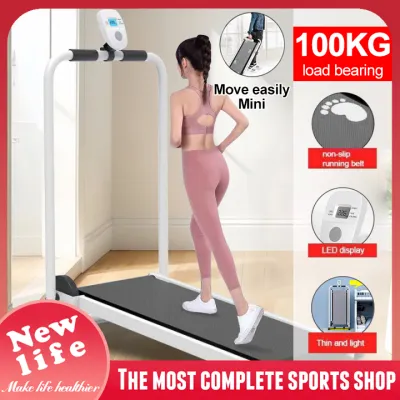
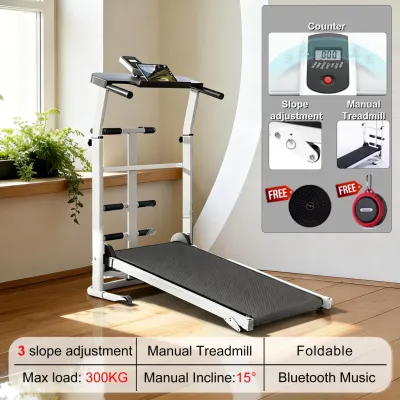
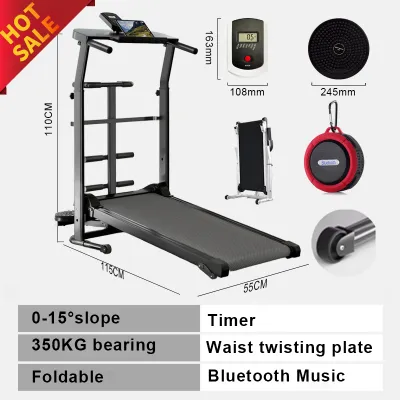
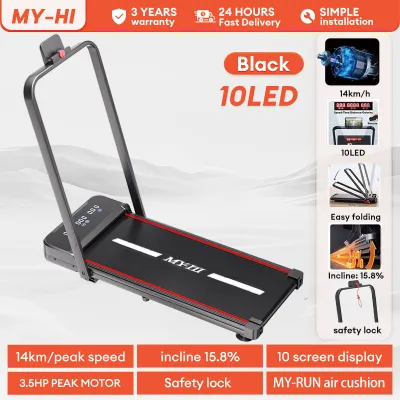
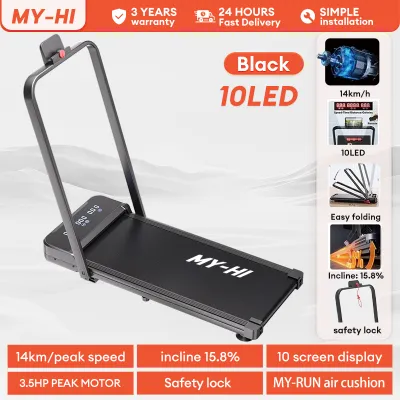
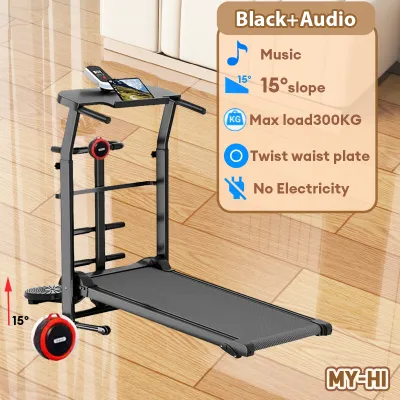
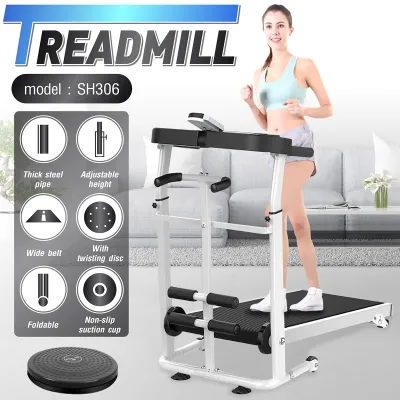
Prices are valid at publication and may change. Please refer to the product page for the latest price.
Durability and Weight Capacity: How Each Type Handles Heavy Loads
The physical stress placed on a treadmill increases exponentially with user weight. Every foot strike delivers a dynamic load that can be several times your static body weight. Consequently, understanding how both motorized and manual treadmills handle this structural stress is critical for ensuring long-term durability and safety.

Motorized treadmills rely on a complex interplay of structural steel and electrical power. For a heavier adult, the frame must be constructed from heavy-gauge steel with robust, clean welds to prevent flexing. However, the most critical component under load is the motor. When your foot strikes the belt, it creates a momentary braking force that increases friction between the belt and the deck. The motor must exert additional torque to overcome this resistance and maintain a constant speed. This process draws high electrical current, generating substantial internal heat. In tropical, highly humid environments like the Philippines, heat dissipation is naturally compromised. If the motor is underpowered—such as a light-duty motor rated below 3.0 Continuous Horsepower (CHP)—it will rapidly overheat, leading to control board failures or motor burnout. Heavier users must insist on a heavy-duty motor rated at 3.0 to 4.0 CHP to ensure the machine can handle the continuous resistance without degrading.
Manual treadmills present a completely different mechanical profile, but they must be carefully categorized into flat and curved models. Flat manual treadmills typically feature lightweight steel or aluminum frames, small rollers, and basic magnetic resistance. Under a heavy load, the high friction between the belt and the deck makes fluid movement nearly impossible, often causing the belt to slip or the frame to wobble. They are generally not recommended for heavy-duty use.
Curved manual treadmills, on the other hand, are engineered as commercial-grade, heavy-duty machines. Instead of a thin belt sliding over a flat wooden deck, curved models utilize a track of thick, interlocking vulcanized rubber slats mounted on high-precision, sealed ball bearings. Because there is no motor, drive belt, or control board, there are no electrical components to overheat or fail under load. The mechanical simplicity of a curved manual treadmill allows it to support exceptionally high weight capacities, often exceeding 350 to 400 pounds (approx. 158 to 181 kg), with virtually zero structural degradation over years of heavy use.
To ensure your safety and protect your investment, always check the manufacturer’s certified maximum weight capacity before purchasing. It is highly recommended to select a treadmill that provides a weight capacity buffer of 20 to 50 pounds (approx. 9 to 23 kilograms) above your actual body weight. This buffer accounts for the elevated dynamic forces generated during running or fast walking, preventing premature wear on the deck, bearings, or motor.
Joint Safety: Cushioning vs. Biomechanical Impact of a Manual Treadmill for Adult Heavy Duty Workouts
For heavier adults, joint safety is often the single most important factor when choosing exercise equipment. Every step taken on a treadmill sends impact forces through the ankles, knees, hips, and lower back. Minimizing these forces is essential for preventing chronic injuries like patellar tendonitis, shin splints, or plantar fasciitis.
Motorized treadmills excel at active shock absorption. Most quality models feature a flexible wooden deck mounted on elastomeric shock absorbers situated along the steel frame. When your foot strikes the belt, the deck flexes downward, absorbing a significant portion of the kinetic energy before it can travel up your skeletal system. Furthermore, because the motor-driven belt moves at a constant speed, it pulls your foot backward. This mechanical assistance minimizes the force your posterior chain must generate to push off the deck, resulting in a smooth, low-impact stride that is gentle on sensitive joints.
In contrast, operating a manual treadmill requires your body to overcome static friction to move the belt. On a flat manual treadmill, this mechanical demand is particularly severe. Because these machines rely on a steep incline to help slide the belt, users must lean forward heavily and push off with immense force. This posture places high shear stress on the knee joints and can strain the Achilles tendons, making flat manual models highly unsuitable for individuals with pre-existing joint pain.
Curved manual treadmills offer a much improved biomechanical experience, but they require careful physical preparation. The curved deck utilizes gravity and your body’s positioning to glide the belt. When your foot strikes the front curve, the belt slides downward and backward. This design naturally encourages a midfoot or forefoot strike pattern, aligning your joints and reducing the jarring heel-strike impact that often causes joint pain. However, because you are the sole power source, your muscles must work continuously to pull the belt backward. If you possess the baseline lower-body strength and ankle mobility to maintain an upright, balanced posture, this self-powered movement can be highly biomechanically efficient. However, if you lack this baseline strength, muscle fatigue will set in quickly. As your muscles tire, your running form will degrade, causing your hips to drop and your lower back to arch, which ultimately transfers the impact forces directly into your joints.
If you experience sharp joint pain, swelling, or severe discomfort during or after a workout, stop using the treadmill immediately. While equipment design can assist in reducing impact, it cannot replace proper running mechanics, physical conditioning, or medical advice.
Workout Effectiveness: Pacing Control vs. Self-Powered Resistance
The effectiveness of your workout depends on your ability to maintain a target level of physical exertion for a sustained duration. Both motorized and manual treadmills offer distinct physiological pathways to help you achieve your fitness goals, but they demand very different levels of physical effort.
Motorized treadmills provide precise pacing control, which is highly advantageous for structured training. By allowing you to set exact speeds and incline angles, these machines enable you to systematically target specific heart rate zones. For heavier adults, staying within a moderate-intensity aerobic zone is highly effective for burning fat and improving cardiovascular health without overtaxing the nervous system. The constant speed of the motor-driven belt prevents you from slowing down when you begin to tire, encouraging you to complete your planned workout duration. This predictable, controlled environment is ideal for building consistency and gradually increasing your fitness baseline over time.
Curved manual treadmills, conversely, deliver a high-intensity, self-powered workout. Because you must physically push the belt to move, your body recruits more muscle fibers in your glutes, hamstrings, and calves compared to walking or running on a motorized belt. This elevated muscular engagement results in a significantly higher metabolic demand, meaning you will burn more calories per minute on a curved manual treadmill at any given speed. Additionally, manual treadmills allow for instantaneous speed adjustments; if you want to sprint, you simply take faster, longer strides, and the belt responds immediately. This makes them exceptional tools for High-Intensity Interval Training (HIIT).
However, the high physical demand of a manual treadmill introduces the fatigue factor. For a heavier adult who is just starting their fitness journey, the effort required to keep a manual belt moving can lead to rapid muscular exhaustion. A workout that could have lasted 30 to 40 minutes on a cushioned motorized treadmill might be cut short to just 10 minutes on a curved manual model. In terms of overall daily energy expenditure and cardiovascular adaptation, a longer, moderate-intensity workout is often more beneficial than a highly intense but extremely brief session. If your primary goal is to build long-term consistency and endurance, the controlled pacing of a motorized treadmill may prove more effective in the early stages of your fitness journey.
Quick Comparison: Heavy-Duty Motorized vs. Curved Manual Treadmills
To help you evaluate these two distinct treadmill designs, the table below outlines the key mechanical and operational differences between heavy-duty motorized models and curved manual models. Flat manual treadmills have been excluded from this comparison due to their structural limitations for heavier users.
| Feature | Heavy-Duty Motorized Treadmill | Curved Manual Treadmill |
|---|---|---|
| Power Source | Requires dedicated electrical outlet (220V/110V) | 100% self-powered (no electricity required) |
| Weight Capacity Focus | Dependent on frame strength and motor CHP rating | Dependent on frame strength and bearing durability |
| Joint Impact Profile | Low to moderate (active deck cushioning systems) | Moderate to high (requires proper biomechanics and strength) |
| Maintenance Needs | Regular belt lubrication, motor cleaning, belt alignment | Low maintenance (periodic bearing checks and debris removal) |
| Space & Power Requirements | Larger footprint, requires proximity to power outlet | Variable footprint, can be placed anywhere regardless of outlets |
| Ideal User Profile | Beginners, those recovering from injury, or users seeking steady pacing | Intermediate to advanced users seeking high-intensity training |
Decision Framework: Which Treadmill Fits Your Routine?
Choosing between a heavy-duty motorized treadmill and a curved manual treadmill ultimately comes down to your physical capabilities, space constraints, and workout preferences. Use the following guidelines to determine which machine aligns best with your daily routine.
Choose a Heavy-Duty Motorized Treadmill if:
- You prioritize joint comfort: You require active shock absorption to protect your knees, hips, and lower back from repetitive impact forces.
- You prefer structured, steady-state cardio: You want to maintain a precise, consistent pace to target specific heart rate zones for fat loss or endurance building.
- You want built-in workout variety: You enjoy using pre-programmed workouts, virtual running trails, or automatic incline adjustments to keep your routines engaging.
- You have dedicated space and stable power: You have adequate floor space near a reliable power outlet and can use a high-quality surge protector to safeguard the electronic components.
Choose a Curved Manual Treadmill if:
- You want a highly challenging, self-powered workout: You are looking to maximize muscle recruitment, elevate your heart rate quickly, and burn more calories in less time.
- You prioritize long-term durability and low maintenance: You want a commercial-grade machine with no motor, drive belt, or control board to service or replace over time.
- You want to eliminate electricity costs: You live in an area with high electricity rates, such as the Philippines, and prefer a machine that runs entirely on your own physical energy.
- You want placement flexibility: You prefer a machine that can be placed anywhere in your home, garage, or semi-outdoor space without worrying about proximity to power outlets or potential voltage fluctuations.
Verify First if:
- You are recovering from a lower-body injury or have chronic joint pain: If you have a history of knee, hip, or ankle injuries, or if you are entirely new to physical exercise, consult a healthcare professional or physical therapist before purchasing. A motorized treadmill is generally the safer starting point, as the physical demand of a manual treadmill may exacerbate existing joint issues if your muscles fatigue and your running form degrades.
Essential Specs to Verify Before You Buy
To ensure you select a treadmill that is safe, reliable, and built to last, always verify the following technical specifications before making a purchase.
- Weight Capacity: Never compromise on this specification. Ensure the treadmill's certified maximum weight capacity exceeds your actual body weight by at least 20 to 50 pounds (approx. 9 to 23 kg). This safety buffer protects the structural integrity of the frame, deck, and bearings under the elevated dynamic forces of your stride.
- Motor Size (Motorized): For motorized models, look for a motor rated at 3.0 Continuous Horsepower (CHP) or higher. Avoid models that only list "Peak Horsepower" (PHP), as this rating only measures the motor's maximum output for a brief moment and does not reflect its ability to handle continuous heavy loads. A powerful CHP motor will run cooler, draw less current, and last significantly longer under heavy use, especially in warm, humid climates.
- Belt Dimensions: Ensure the running surface is wide and long enough to accommodate your natural stride safely. For heavier adults, a belt width of at least 20 inches (ideally 22 inches) is highly recommended to prevent stepping on the side rails. The belt length should be at least 55 inches for walking and 60 inches for running to accommodate longer strides without risk of falling.
- Warranty Coverage: A manufacturer's warranty is a direct indicator of their confidence in the machine's durability. Look for a lifetime warranty on the frame, a 5-to-10-year warranty on the motor (for motorized models), and at least 2 years of coverage on parts and labor. Heavier use accelerates wear and tear, making robust warranty coverage a critical safeguard for your investment.
Frequently Asked Questions (FAQ)
Can a manual treadmill support users over 300 lbs?
Yes, but it depends entirely on the specific model’s engineering and build quality. While inexpensive, flat manual treadmills often have low weight limits (typically under 250 lbs) and lightweight frames that are not suitable for heavier users, premium curved manual treadmills are built to commercial standards. These curved models feature heavy-duty steel frames, high-precision sealed bearings, and thick, reinforced rubber slats designed to easily support user weights of 350 to 400 lbs or more. Always verify the manufacturer’s certified weight capacity before purchasing rather than assuming all manual treadmills are constructed to the same standard.
Do manual treadmills burn more calories for heavier users?
Yes, manual treadmills generally burn more calories per minute than motorized treadmills at the same speed because they require significantly more muscular effort. Because there is no motor assisting the belt’s movement, your body must recruit more muscle fibers in your lower body to overcome static friction and keep the belt sliding. However, because this self-powered movement is highly demanding, heavier users may fatigue much faster on a manual treadmill. If muscular exhaustion forces you to shorten your workout significantly, your total overall calorie burn for the session may actually be lower than a longer, steady-state workout completed on a cushioned motorized treadmill.
Community discussion
Share your experience or ask a question. Comments are reviewed before publication.