
The choice between a manual treadmill and a motorized treadmill for your home gym in the Philippines depends on your available space, budget, and specific fitness goals. A manual treadmill is powered entirely by your own physical effort, making it an excellent option for high-intensity workouts, compact living spaces, and setups without easy access to power outlets. Conversely, a motorized treadmill uses an electric motor to turn the belt at a consistent speed, offering automated incline adjustments, built-in training programs, and cushioned decks that are ideal for steady-state cardio and joint comfort.
In the tropical climate of the Philippines, where outdoor running can often be disrupted by intense afternoon heat, high humidity, or sudden monsoon downpours, having a reliable indoor cardio option is highly beneficial. However, selecting the wrong type of treadmill can lead to a noisy machine that gathers dust, takes up too much living space, or drives up your monthly electricity bill. By understanding the mechanical differences, spatial requirements, and maintenance needs of each option, you can make an informed decision that fits your lifestyle and home environment.
How Manual and Motorized Treadmills Actually Work
The primary difference between these two types of fitness equipment lies in how the running belt is set into motion. On a manual treadmill, there is no motor to assist you; the belt only moves when you push against it with your feet. This design requires you to overcome static friction with every step, meaning you must actively engage your muscles to initiate and maintain the belt’s rotation. Because of this mechanical design, manual treadmills demand a higher level of physical effort from the very first stride.
Products mentioned in this guide
![[COD] Foldable Manual Home Treadmill with Adjustable Slope LED Display Anti-Slip Running Belt Free Twist Disc & Resistance Rope Space Saving Walking Machine for Home Fitness Exercise](https://img.lazcdn.com/g/p/1446617c7dcf63717d1a1640b68a647e.jpg_400x400q80.jpg_.webp)

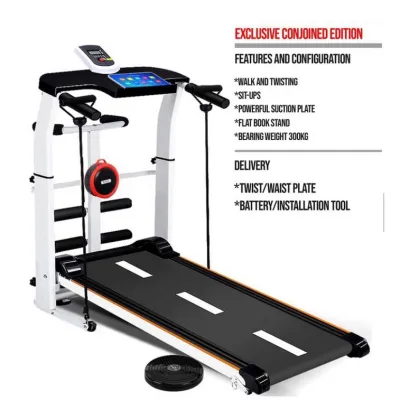
Prices are valid at publication and may change. Please refer to the product page for the latest price.
This difference in mechanics directly impacts muscle engagement during your workout. When using a manual treadmill, you must rely heavily on your posterior chain muscles, including your glutes, hamstrings, and calves, to pull the belt backward beneath you. On a motorized treadmill, the electric motor drives the belt at a continuous, pre-set speed. Your primary task is to lift your feet quickly enough to keep up with the moving surface, which shifts the physical demand more toward your quadriceps and hip flexors.
Speed control also differs significantly between the two designs. With a manual treadmill, you are in complete control of the pace at every moment. If you want to speed up, you simply run or walk faster; if you slow down, the belt responds instantly to your change in pace. On curved manual treadmills, your position on the deck also influences speed, as moving closer to the front curve accelerates the belt. On a motorized treadmill, you must press buttons on the console to adjust the speed, which introduces a slight mechanical delay as the motor adjusts to the new setting.
Space, Power, and Setup Constraints in Your Home
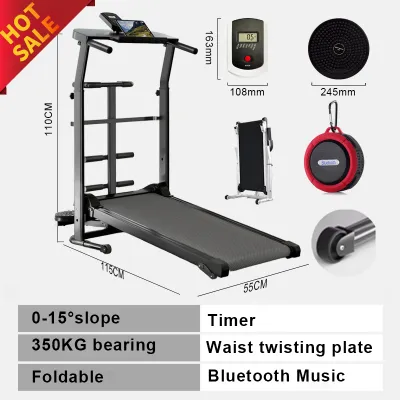
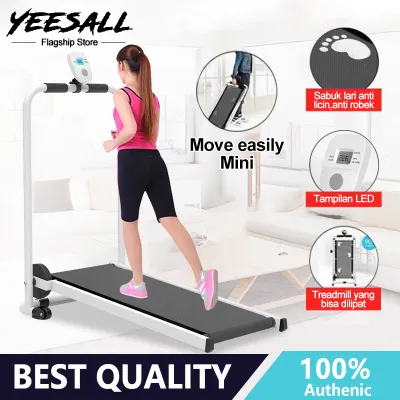
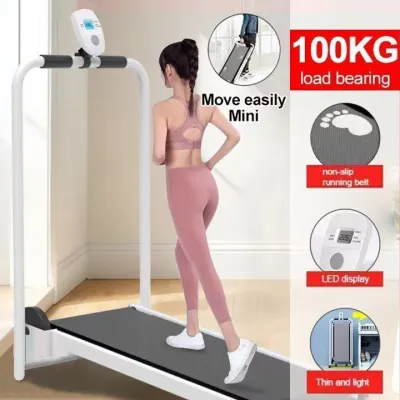
When planning a home gym in a Philippine household, spatial constraints and building rules are critical factors to consider. Many urban residents live in condominiums, townhouses, or apartments where floor space is limited. Manual treadmills, particularly flat models, are generally much lighter and more compact than their motorized counterparts. Many manual models are designed to fold completely flat, allowing you to store them under a bed, inside a closet, or behind a door when they are not in use.

Motorized treadmills, on the other hand, require a more permanent footprint. Due to the weight of the electric motor, heavy-duty steel frames, and internal electronics, these machines are heavy and difficult to move once assembled. They also require a dedicated area with sufficient clearance around the deck for safe operation. If you choose a motorized model, you must plan for a fixed location in your home where the machine can remain stationary.
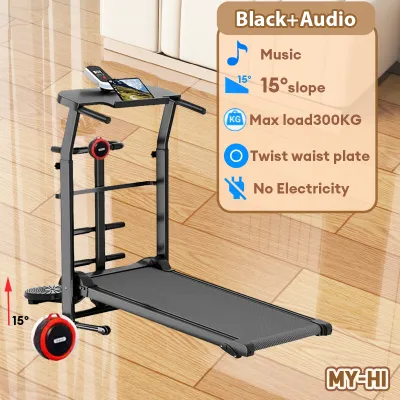
Power availability and cord management are additional setup considerations. Motorized treadmills must be plugged directly into a grounded electrical outlet to operate safely. This requirement limits where you can place the machine and may necessitate the use of cord covers to prevent tripping hazards in high-traffic areas of your home. Manual treadmills require no electrical power to turn the belt, giving you the freedom to set them up anywhere, including on a covered balcony, in a garage, or in a room without nearby wall outlets.
Floor weight capacity and noise transmission are also important when living in multi-story residential buildings. Motorized treadmills generate both motor noise and physical vibrations that can travel through concrete floors, potentially disturbing neighbors below. While manual treadmills do not have motor noise, the impact of your feet on the deck still creates vibrations. To mitigate this, placing a thick, high-density rubber equipment mat under either type of treadmill is highly recommended to absorb shock and dampen sound.
Workout Experience: Pacing, Incline, and Comfort
The workout experience on each treadmill type affects how consistently you train and how comfortable you feel during exercise. Motorized treadmills excel at maintaining a precise, steady pace over long periods. This makes them highly effective for endurance training, recovery walks, or steady-state cardio sessions where you want to maintain a specific heart rate zone. The machine forces you to keep up with the belt, which can help build mental discipline and physical stamina.
On a manual treadmill, pacing is entirely self-regulated, which can make long-distance running more mentally demanding. Because the belt slows down the moment your effort flags, maintaining a consistent speed requires continuous focus. However, this instant responsiveness makes manual treadmills exceptionally well-suited for high-intensity interval training (HIIT) and sprint intervals, as you can transition from a full sprint to a complete stop without waiting for a motor to slow down.
Incline adjustments also differ between the two types of machines. Most motorized treadmills feature electronic incline systems that allow you to change the slope of the running deck at the press of a button while you are moving. This allows for dynamic hill workouts and varied terrain simulation. In contrast, manual treadmills typically have a fixed incline—often set at a slight upward angle to help keep the belt moving—or require you to stop your workout, step off the machine, and manually adjust pins on the frame to change the slope.
Joint comfort and shock absorption are vital considerations for long-term injury prevention. Motorized treadmills are generally equipped with built-in deck cushioning systems, such as rubber elastomers or springs, designed to absorb the impact of each footstrike. Flat manual treadmills often have very basic decks with minimal shock absorption, which can feel firmer and put more stress on your joints. However, premium curved manual treadmills often feature rubberized slats that provide excellent shock absorption, though they come at a much higher price point.
Upfront Costs and Long-Term Maintenance
Budget considerations play a major role in deciding which treadmill to bring into your home. In the Philippine market, basic flat manual treadmills are highly affordable, often starting under ₱10,000. This makes them an attractive entry-level option for those who want a simple walking machine without a large financial commitment. However, specialized curved manual treadmills designed for high-performance running are premium pieces of equipment, with prices that can easily exceed ₱80,000.
Motorized treadmills span a wide price range depending on their features, motor power, and build quality. Entry-level motorized models typically start around ₱15,000, while mid-range units with automated incline and larger running decks generally range from ₱25,000 to ₱45,000. High-end, commercial-grade motorized treadmills designed for heavy daily use can cost well over ₱60,000. When comparing costs, it is important to balance the initial purchase price against the features you will actually use.
Long-term maintenance is another area where the two types diverge. Motorized treadmills have complex electrical and mechanical systems that require regular upkeep. You must periodically lubricate the running deck with silicone oil, check belt alignment, and keep the motor housing free of dust. In the humid tropical climate of the Philippines, moisture and dust can accumulate on the electronic circuit boards, potentially leading to electrical faults if the machine is not kept clean and dry.
Manual treadmills have far fewer moving parts and no electronic control boards, making them significantly more durable and easier to maintain over time. Maintenance is generally limited to occasional belt alignment, tension adjustments, and lubricating the bearings. Additionally, manual treadmills do not consume electricity, whereas running a motorized treadmill regularly will add to your monthly household utility bill, especially given the relatively high electricity rates in the Philippines.
Decision Framework: Which Treadmill Should You Buy?
To choose the right treadmill for your home, evaluate your personal fitness goals, living space, and budget against the specific characteristics of each machine.
Choose a manual treadmill if:
- You have limited space: You need a compact, lightweight machine that can be folded flat and stored away easily when not in use.
- You want to minimize ongoing costs: You prefer a machine with zero electricity consumption and minimal long-term maintenance requirements.
- Your training focuses on HIIT: Your primary workouts consist of short, high-intensity intervals, sprints, or power walking.
- You lack nearby power outlets: You want the flexibility to place your treadmill anywhere in your home, including semi-outdoor spaces like a covered patio.
Choose a motorized treadmill if:
- You prefer steady-state cardio: You want a machine that maintains a consistent pace for you during long-distance walks or runs.
- You want automated features: You enjoy built-in workout programs, electronic incline adjustments, and digital fitness tracking.
- You require joint protection: You need advanced deck cushioning to reduce the impact of running on your knees and joints.
- You have dedicated space and power: You have a permanent spot in your home with a reliable, grounded electrical outlet nearby.
Verify these factors before purchasing:
- Ceiling clearance: Measure your ceiling height and add your own height plus the deck height of the treadmill (especially at maximum incline) to ensure you will not hit your head.
- Floor load limits: If you live in an older building or are placing the machine on an upper floor, verify that the floor can support the combined weight of the treadmill and the user.
- Warranty terms: Review the manufacturer's warranty carefully, paying close attention to coverage for the motor and frame, and ensure there is a local service center available for repairs.
Frequently Asked Questions (FAQ)
Are manual treadmills bad for your knees? (FAQ)
Manual treadmills are not inherently bad for your knees, but they do require more physical effort to initiate belt movement, which can place extra stress on your joints if you have pre-existing knee issues. Because flat manual treadmills often lack advanced deck cushioning, the impact of running on them can feel firmer than on a cushioned motorized deck. If joint comfort is a primary concern, look for manual models with rubberized slats or check the manufacturer’s specifications for shock absorption features before buying.
Can you run on a manual treadmill? (FAQ)
Yes, you can run on a manual treadmill, but the experience depends heavily on the design of the machine. Flat manual treadmills are generally better suited for walking or light jogging because keeping the belt moving at high speeds on a flat surface requires a very steep incline and can feel awkward. For serious running, curved manual treadmills are designed specifically to accommodate natural running strides and high-speed sprinting, though they require a larger physical effort and a higher financial investment.
Do manual treadmills need to be plugged in? (FAQ)
Purely manual treadmills do not require electricity to operate because the belt is moved entirely by your physical effort. This means you do not need to plug them into a wall outlet. However, some manual treadmills feature small, battery-powered LCD consoles to track basic metrics like time, speed, and distance. Additionally, some hybrid manual models may require a power connection or batteries to operate advanced console features or magnetic resistance systems, so always check the product specifications for power requirements.

Community discussion
Share your experience or ask a question. Comments are reviewed before publication.