
Selecting a heavy-duty treadmill for home workouts requires balancing structural integrity with your specific training style. For heavy-duty use, the primary decision lies between a manual (self-powered) treadmill and a motorized (electric) treadmill. Manual treadmills, particularly curved models, rely entirely on your physical effort to move the belt, offering high resistance and rapid speed transitions. Motorized treadmills use an electric motor to dictate the pace, providing automated programs, steady-state speed control, and motorized incline adjustments. To make the right choice, you must evaluate how each system handles high-impact loads, environmental factors like tropical humidity, and long-term maintenance costs.
Understanding Heavy-Duty Build and Durability
A heavy-duty treadmill must withstand significant downward force and lateral impact with every stride. When evaluating these machines, the frame material serves as the foundation of durability. Look for heavy-gauge, powder-coated steel frames rather than thin aluminum or plastic-heavy structures. In humid environments, such as tropical coastal areas, high-quality powder coating is essential to prevent moisture from reaching the steel and causing structural rust over time. Check the manufacturer’s specified weight capacity; a true heavy-duty machine should support at least 130 kg to 150 kg, providing a safe buffer above your actual body weight to accommodate the dynamic forces of running.
The running deck and belt construction differ fundamentally between manual and motorized designs. Heavy-duty manual treadmills, especially curved models, often utilize thick vulcanized rubber or composite slats mounted on ball-bearing guide rails. This design minimizes friction and distributes impact evenly across the deck, reducing wear on individual components. Motorized treadmills rely on a continuous multi-ply belt sliding over a solid wooden or composite deck. For heavy-duty motorized use, verify that the belt is at least 2-ply or 3-ply (with a thickness of 2.0 mm or more) and that the deck features robust elastomer shock absorbers to cushion your joints and protect the frame from impact stress.
Products mentioned in this guide
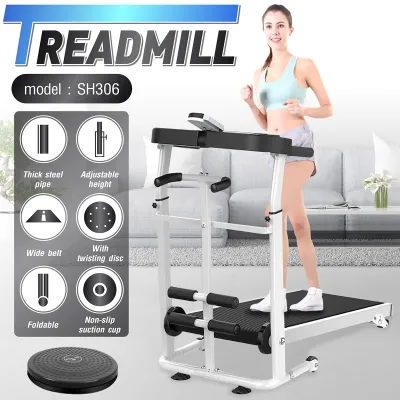

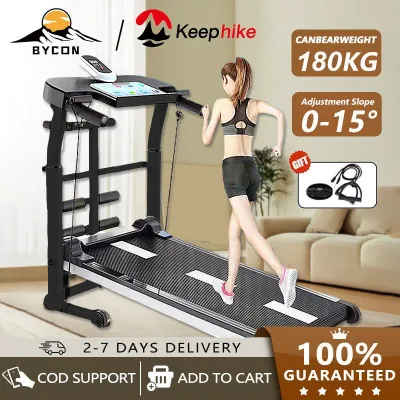
![[COD] Foldable Manual Home Treadmill with Adjustable Slope LED Display Anti-Slip Running Belt Free Twist Disc & Resistance Rope Space Saving Walking Machine for Home Fitness Exercise](https://img.lazcdn.com/g/p/1446617c7dcf63717d1a1640b68a647e.jpg_400x400q80.jpg_.webp)
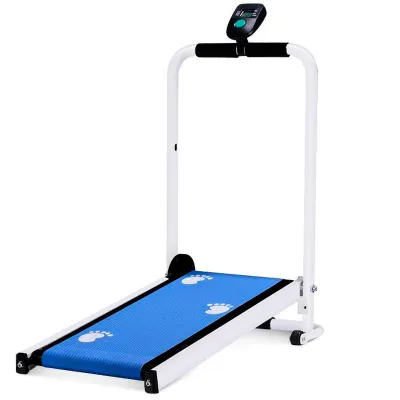
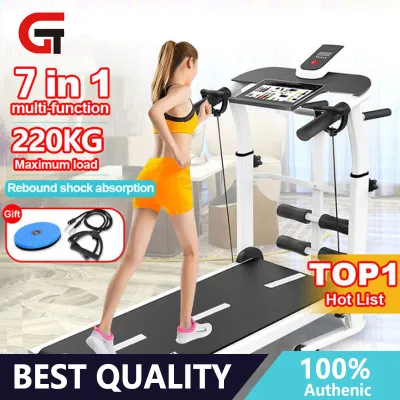
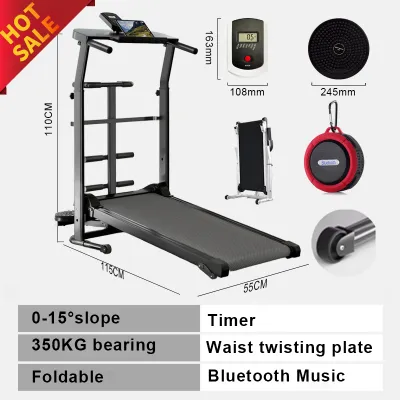
Prices are valid at publication and may change. Please refer to the product page for the latest price.
For motorized units, the continuous horsepower (CHP) rating of the motor is the single most critical factor under heavy loads. Do not confuse CHP with peak horsepower; peak horsepower only represents the motor’s maximum output for a brief moment, whereas CHP indicates the sustained power the motor can deliver during a prolonged workout. A heavy runner requires a motor that does not overheat when overcoming the friction of a heavy stride. Look for a motor rated at 3.0 CHP or higher for walking, and 3.5 to 4.0 CHP if you plan on regular running or interval training. A motor operating near its limit will degrade quickly, leading to costly electrical failures.
Comparing Workout Intensity and Training Mechanics
The mechanics of movement on a manual treadmill demand higher physical engagement from the very first step. Because there is no motor, your legs must overcome the static inertia of the belt to start and maintain movement. On a curved manual treadmill, placing your foot further forward on the curve accelerates the belt, while sliding back slows it down. This self-powered design engages the hamstrings, glutes, and calves more intensely than flat-surface running, simulating the natural biomechanics of outdoor sprinting. The resistance is entirely user-dependent, meaning the harder you push, the more resistance you encounter, making it an exceptional tool for power development.

Motorized treadmills excel at providing a consistent, controlled training environment. The electric motor forces you to maintain a set pace, which is highly beneficial for long-distance endurance training and steady-state cardio. If your training program requires precise speed control—such as maintaining exactly 10 kilometers per hour for an hour—a motorized deck is the logical choice. Additionally, motorized models offer automated incline adjustments at the touch of a button, allowing you to simulate hill climbs without interrupting your stride. This automated control helps you manage your heart rate zones with high precision.
When it comes to high-intensity interval training (HIIT), the two systems offer contrasting experiences. On a manual treadmill, you can transition from a dead stop to an all-out sprint instantly, and slow down just as quickly, without waiting for a motor to ramp up or decelerate. This makes manual decks highly responsive and safer for rapid interval transitions. Conversely, motorized treadmills require a few seconds to adjust to high speeds, which can disrupt short, explosive sprints. However, motorized units are superior for structured, pre-programmed workouts where the machine automatically varies the speed and incline to guide you through different training phases.
Evaluating Long-Term Value and Maintenance Needs
Operating costs and power requirements are key considerations for any home gym setup. Motorized treadmills are significant consumers of electricity, especially when supporting heavier users at high speeds or steep inclines. In regions with high utility rates, running a 3.5 CHP motor for an hour daily can noticeably increase your monthly electricity bill, impacting your monthly utility budget in ₱. Furthermore, motorized units require proximity to a dedicated electrical outlet and may need a surge protector to safeguard the sensitive control boards from voltage fluctuations. Manual treadmills operate entirely off-grid, consuming zero electricity and allowing you to position the machine anywhere in your home without worrying about cord management.
The mechanical complexity of a motorized treadmill introduces more potential points of failure over its lifespan. The motor, control board, incline motor, and electronic console are all vulnerable to dust, humidity, and wear. Motor brushes may eventually require replacement, and electrical connections can degrade in humid climates. Manual treadmills have far fewer moving parts. Because they lack motors and complex wiring, the primary wear points are limited to the belt bearings and the physical deck surface. While a high-quality manual treadmill often carries a higher initial purchase price, its minimal maintenance requirements and lack of electrical components can result in lower long-term operating costs.
Space efficiency and noise levels also influence the home workout experience. Heavy-duty motorized treadmills are typically large, heavy machines; while some offer folding decks with hydraulic assists, they still occupy a substantial footprint. The noise of a motorized treadmill includes both the hum of the motor and the impact of your feet on the deck. Manual curved treadmills are generally non-folding due to their rigid structural frames, requiring a permanent dedicated space. The noise from a manual slat treadmill is distinct—often a rhythmic clicking or rolling sound of the slats moving over the bearings—which can be loud during high-speed sprints but lacks the high-pitched whine of an electric motor under load.
Key Specifications to Verify Before Buying
Before finalizing your purchase, compare the technical specifications of your candidate models against heavy-duty standards. Do not rely solely on marketing terms like “commercial grade” without verifying the actual numbers. Use the following comparison table as a baseline guide for your evaluation:
| Specification | Heavy-Duty Manual Treadmill | Heavy-Duty Motorized Treadmill |
|---|---|---|
| Minimum Weight Capacity | 150 kg (Verify frame rating) | 135 kg to 150 kg (Verify frame rating) |
| Running Belt Dimensions | Minimum 48 cm x 150 cm | Minimum 50 cm x 152 cm |
| Drive System | Self-powered (Bearing-guided slats) | Minimum 3.0 CHP (Verify continuous rating) |
| Incline Range | Fixed curve (User-position dependent) | 0% to 12% or higher (Motorized adjustment) |
| Power Source | None (Manual operation) | Standard outlet (Verify amperage draw) |
| Warranty Coverage | Focus on frame and belt bearings | Focus on motor, frame, and electronics |
Be cautious of product listings that highlight “Peak Horsepower” (PHP) instead of Continuous Horsepower (CHP). A motor advertised at “4.5 HP Peak” might only deliver 2.0 CHP under continuous load, which will quickly overheat and fail under a heavy user. Always check the manufacturer’s warranty terms; a shorter warranty period on the motor or frame often indicates lower-grade components. Additionally, review the user manual or manufacturer guidelines for daily usage limits and environmental placement restrictions, as operating a treadmill in a damp garage or non-airconditioned room can void the warranty.
Decision Framework: Which Treadmill Fits Your Routine?
To choose the right treadmill, start by assessing your primary fitness goals and training style. If your routine centers on high-intensity interval training, short sprints, and functional athletic conditioning, a manual curved treadmill is highly suitable. It demands more physical effort, builds explosive power, and eliminates the risk of electrical component failure. It is also the ideal choice if you want to place your equipment in a garage, patio, or any area without easy access to electrical outlets, as it requires no external power to operate.
If your workouts consist of long-distance running, steady-state walking, or structured training programs with automated speed and incline changes, a motorized treadmill is the better fit. The motor-driven belt helps you maintain a consistent pace, reducing mental fatigue during long sessions. It is also more accommodating if multiple family members with varying fitness levels will use the machine, as the speed can be adjusted down to a gentle, controlled walk at the press of a button.
Finally, verify that your home environment can physically accommodate a heavy-duty machine. These treadmills often weigh well over 100 kg, meaning you must check your floor structure, especially if placing the unit on an upper floor of a residential home. Ensure you have a flat, level surface and sufficient clearance space around the machine—at least two meters of clear space behind the treadmill is a critical safety requirement in case of a fall.
Frequently Asked Questions (FAQ)
Can a manual treadmill support sprint training for heavy users?
Yes, heavy-duty manual treadmills with curved decks are highly effective for sprint training. The curved shape allows you to accelerate naturally by shifting your center of gravity forward, and the belt responds instantly to your stride length and frequency. However, you must verify that the specific model’s maximum weight capacity supports your body weight under dynamic sprinting forces, which are significantly higher than walking forces. Always check the manufacturer’s guidelines to ensure the belt and bearing system are rated for high-speed, high-impact athletic training.
Do heavy-duty motorized treadmills require special electrical wiring?
Most heavy-duty motorized treadmills designed for home use can run on a standard household electrical outlet. However, high-CHP motors draw substantial amperage, especially when starting up or operating under heavy loads. To prevent tripping your home’s circuit breakers, it is highly recommended to plug the treadmill into a dedicated circuit that does not share power with other high-draw appliances like air conditioners or refrigerators. Always consult the user manual to verify the specific amperage and voltage requirements before plugging in the machine.
How often should the belt be lubricated under heavy daily use?
Lubrication frequency depends on the treadmill type and usage intensity. Motorized treadmills typically require regular lubrication with 100% silicone oil every 150 to 180 kilometers of use, or roughly every three to six months under heavy daily use, to reduce friction between the belt and the deck. Manual slat treadmills often use sealed ball bearings that require far less frequent lubrication, though some models still require periodic maintenance. Perform a visual and tactile check by sliding your hand under the belt; if the underside of the belt and the top of the deck feel dry to the touch, it is time to apply lubricant according to the manufacturer’s instructions.
Community discussion
Share your experience or ask a question. Comments are reviewed before publication.