
Choosing the right home cardio equipment requires balancing your fitness goals with the realities of your living space. If you are setting up a workout corner in a compact apartment or a dedicated home gym, the debate often comes down to a manual walking pad versus a motorized treadmill. The ideal choice depends on whether you prioritize self-paced muscle engagement and compact storage, or preset speed control and varied cardio intensity. Neither option is universally superior; the right fit depends on your specific floor plan, floor type, noise tolerance, and fitness objectives. In tropical climates where outdoor humidity or sudden downpours can disrupt outdoor routines, having a reliable indoor option is essential, but the mechanical differences between these two machines will drastically alter your daily exercise experience.
How Power Source Changes Your Workout Mechanics
The fundamental difference between these two machines lies in how the running belt moves. A manual walking pad relies entirely on your physical effort to rotate the belt. When you step forward, your feet must push the belt backward, which naturally engages your posterior chain—specifically your hamstrings, calves, and glutes—much more intensely than a motorized alternative. This design means you must exert more effort just to start the movement and maintain a consistent pace. Because there is no motor to keep the belt sliding, your stride dictates the speed entirely, making it a highly active, self-paced workout that can feel more challenging even at lower speeds.
In contrast, a motorized treadmill uses an electric motor to pull the belt underneath your feet. This motorized assistance allows you to maintain a precise, steady-state pace without having to consciously push the deck. It also enables advanced features such as automated speed adjustments, preset training programs, and motorized incline changes that simulate uphill terrain. For those focusing on steady-state cardio or endurance training, the motorized belt reduces the initial muscular effort required to keep moving, allowing you to focus on form and cardiovascular stamina.
Products mentioned in this guide
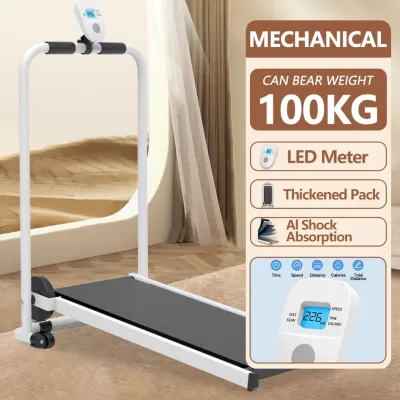
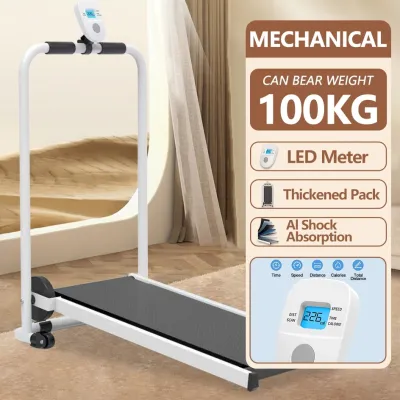
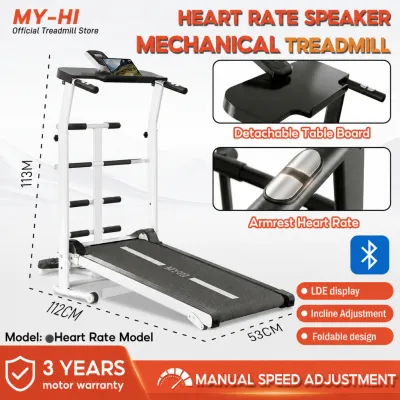
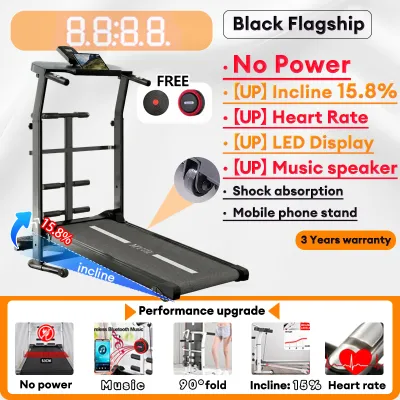
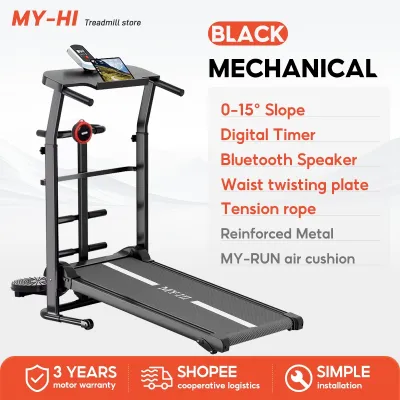
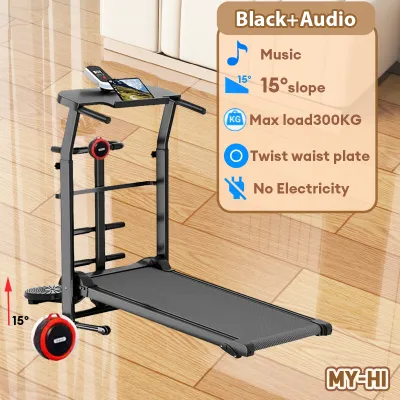
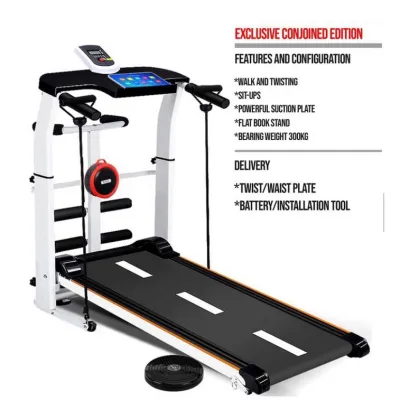
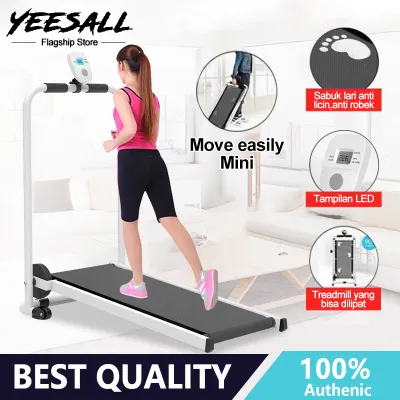
Prices are valid at publication and may change. Please refer to the product page for the latest price.
Before making a decision, it is crucial to check the product specifications of any model you consider. Look closely at the maximum speed limits and the total belt length. Manual walking pads often have shorter decks and lower speed thresholds, which may limit your stride if you have a longer gait. Additionally, verify whether the manual pad features a flat deck or a curved deck. A curved manual deck uses gravity and the contour of the frame to help slide the belt, which drastically alters your running biomechanics compared to a flat manual pad that requires a more deliberate pushing motion.
Evaluating Space, Weight, and Setup Requirements
Integrating fitness equipment into your home requires a realistic assessment of your physical layout and structural constraints. Manual walking pads are generally designed with portability and space-saving in mind. They are typically lightweight, feature a low-profile frame, and often fold completely flat. This makes them highly suitable for multi-use spaces, as you can easily roll them under a bed, slide them behind a wardrobe, or prop them up against a wall when your workout is finished. Their minimalist construction means they rarely require a permanent footprint in your living room.

Motorized treadmills, on the other hand, are substantially heavier and bulkier due to the internal motor, steel frame, and electronic console. While many home-use motorized models offer folding designs, they rarely fold completely flat and still require a significant amount of vertical and horizontal space when stored. Moving a motorized unit often requires multiple people or careful maneuvering, making it a semi-permanent fixture in your home. You must measure your available floor space carefully, ensuring you have adequate clearance behind and around the machine for safety.
Beyond physical dimensions, you must verify your floor’s load capacity and structural stability. Heavy motorized treadmills exert significant downward force, especially when you are running or jogging on the deck. To protect your flooring—whether you have delicate hardwood, laminate, or ceramic tiles common in local homes—always plan to use a heavy-duty equipment mat. A dedicated mat not only prevents the machine from slipping during high-intensity sessions but also helps distribute the weight evenly and protects your floors from scratches, sweat, and mechanical grease.
Managing Noise and Vibration in Apartments
Living in a multi-story building or a shared apartment complex introduces noise considerations that can affect your workout consistency. When evaluating these machines, it is important to distinguish between motor hum and impact vibration. Motorized treadmills produce a continuous hum from the electric motor, which can vary in pitch and volume depending on the motor’s horsepower and quality. While this sound might be minor in a ground-floor room, it can resonate through walls in quieter residential settings, especially during early morning or late-night workouts.
Impact vibration, however, is often the primary source of noise complaints from downstairs neighbors. This occurs when your feet strike the deck, sending kinetic energy down through the machine’s frame and into the floor structure. While manual walking pads do not have a noisy motor, they still produce impact noise from your footsteps. Because manual pads require more physical force to push the belt, your foot strikes can sometimes be heavier than they would be on a motorized belt that glides smoothly beneath you.
To mitigate these issues, check the product manual for the specific motor type and the built-in shock absorption features. High-quality shock absorbers, such as rubber dampeners or cushioned deck suspension, are critical for reducing the transfer of impact energy. If you live in a building with strict strata or association guidelines, consider testing the equipment in a local showroom to gauge the noise level firsthand. Keep in mind that actual decibel levels and structural vibrations will vary significantly based on your body weight, running style, and the type of flooring in your home.
Comparing Maintenance and Long-Term Durability
Owning fitness equipment comes with the responsibility of regular upkeep to ensure longevity and safe operation. Both manual walking pads and motorized treadmills require routine maintenance, though the complexity varies. The most common task is belt lubrication; you must regularly apply 100% silicone oil beneath the belt to minimize friction between the belt and the deck. Additionally, you will need to perform periodic tension and alignment adjustments to prevent the belt from slipping or shifting to one side during use. Keeping the deck free from dust, pet hair, and debris is also essential, particularly in humid environments where moisture can cause dust to cake and clog moving parts.
The long-term durability and repair outlook differ significantly between the two types. Motorized treadmills contain complex electronic components, including control boards, digital consoles, speed sensors, and the drive motor itself. If any of these electronic parts fail due to power surges, wear, or humidity, the machine may become completely unusable until a professional technician services it. Finding replacement parts for older or budget motorized models can sometimes be challenging and costly.
Manual walking pads, by contrast, have fewer moving parts and rarely feature complex internal electronics. This mechanical simplicity generally translates to fewer points of failure and a longer lifespan with basic care. When shopping, do not rely solely on the initial price tag in ₱; instead, carefully review the manufacturer’s warranty terms. Compare the specific coverage durations for the frame, the motor (for motorized units), and individual parts or labor. A robust warranty is a strong indicator of the manufacturer’s confidence in the machine’s durability.
Decision Framework: Which Equipment Fits Your Routine?
To finalize your decision, align the characteristics of each machine with your daily habits, physical space, and fitness goals.
Choose a Manual Walking Pad if:
- You have limited floor space or live in a compact apartment where equipment must be stored away after every use.
- You prefer a self-paced, low-to-moderate intensity workout that naturally engages more of your lower-body muscles.
- You want a straightforward, mechanically simple machine with minimal electronic components to maintain over time.
- You want the flexibility to place your equipment anywhere without worrying about proximity to an electrical outlet.
Choose a Motorized Treadmill if:
- You require precise speed and incline control to follow structured training programs, interval workouts, or specific running paces.
- You prefer a powered belt that assists with pacing, making it easier to sustain longer, steady-state cardio sessions.
- You have a dedicated workout area or a permanent home gym space that can accommodate a heavier, larger machine.
- You plan to transition from walking to high-speed running or marathon training, which demands a longer deck and robust frame.
Verify First if:
- You are uncertain about your apartment floor's weight capacity or live in a building with strict noise and vibration rules.
- You have pre-existing joint concerns or knee sensitivity, which requires verifying the deck's specific shock absorption ratings before purchasing.
- You plan to use the equipment in a high-humidity area, meaning you must check the manufacturer's guidelines regarding moisture exposure and electrical safety.
Frequently Asked Questions (FAQ)
Can I run on a manual walking pad?
Most flat manual walking pads are specifically engineered for walking, power walking, or very light jogging. Their shorter belt lengths and lightweight frames make high-speed running unstable and potentially unsafe. If your primary goal is running, you should check the manufacturer’s maximum speed rating and deck dimensions. While curved manual treadmills are specifically built for high-performance running and sprinting, they are much larger, heavier, and require a significantly higher budget than standard flat walking pads.
Do manual walking pads need to be plugged in?
Purely manual walking pads do not require an electrical outlet to operate, as the belt is moved entirely by your physical stride. This lack of a power cord gives you complete freedom to position the machine anywhere in your home, including balconies or rooms without nearby outlets. However, you should verify the product specifications on the label, as some hybrid or smart manual pads utilize batteries or a small power connection to run digital consoles, track workout metrics, or adjust magnetic resistance levels.

Community discussion
Share your experience or ask a question. Comments are reviewed before publication.