
Quick Answer: Which Treadmill Fits Your Condo Setup?
Choosing between a mechanical treadmill and a motorized treadmill for a small condominium gym depends on your primary fitness goals, floor layout, and how you manage noise transfer to neighboring units. A motorized treadmill is best if you prefer steady-state cardio, structured training programs, and have a dedicated space near a grounded power outlet.
Conversely, a mechanical treadmill—whether a compact flat manual model or a heavy-duty curved manual runner—is ideal if you prioritize high-intensity interval training (HIIT), want to operate without electricity, or have limited floor space. However, in high-rise living, the ultimate deciding factor is often the structural noise and vibration transmitted to the unit below you, making acoustic isolation your most critical planning step.
Navigating Condo Constraints: Space, Noise, and Power
Setting up a personal fitness corner in a modern condominium requires balancing personal health goals with structural realities. Unlike commercial fitness centers built with thick, double-slab concrete floors and dedicated commercial power grids, residential units have strict physical boundaries.
Products mentioned in this guide
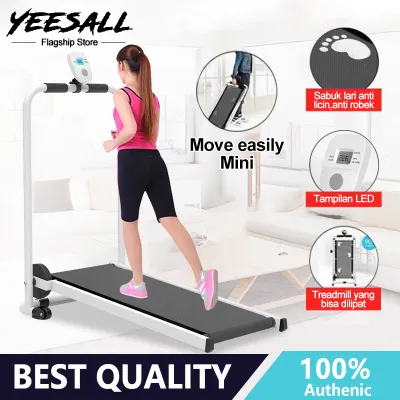
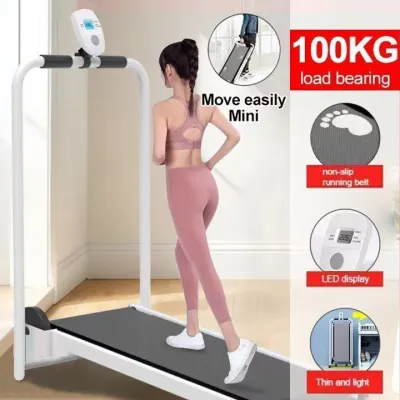
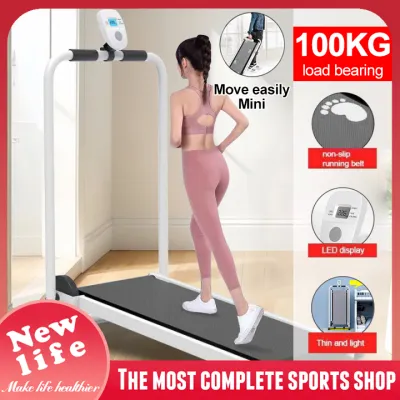
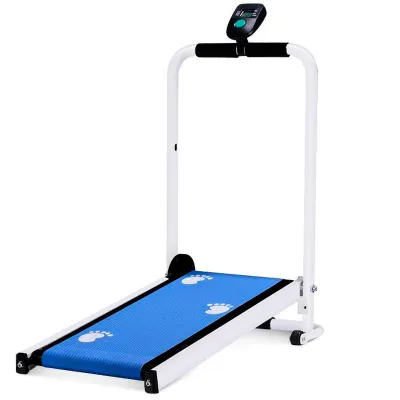
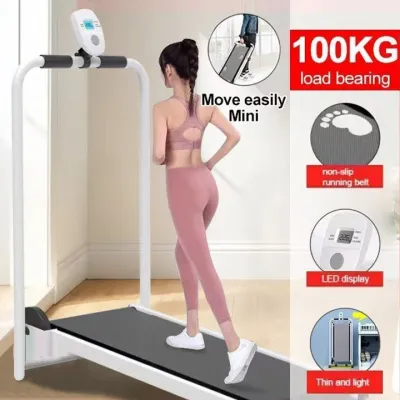
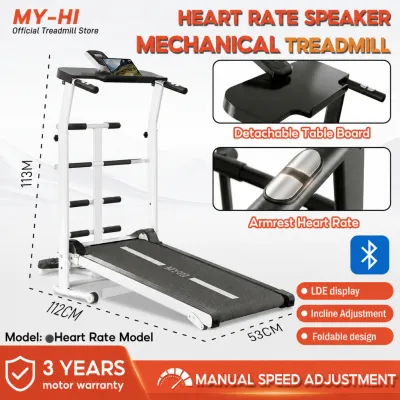
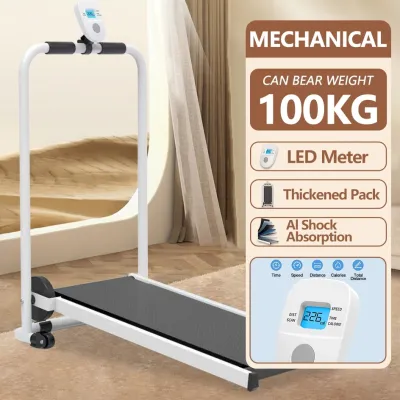
Prices are valid at publication and may change. Please refer to the product page for the latest price.

Selecting a treadmill means evaluating three primary environmental factors: the physical footprint of the machine, the acoustic vibration transmitted through the floor, and the electrical configuration of your unit. Failing to account for these constraints can lead to unusable equipment, electrical overloads, or formal complaints from your condominium’s property management office.
Spatial Footprint and Storage
In a typical studio or one-bedroom condo unit where space is at a premium, every square meter must be carefully allocated. Flat-bed manual treadmills are often the most space-efficient option because they feature lightweight frames and highly foldable designs. Many flat manual models can fold completely flat, allowing you to slide them under a bed frame or store them vertically inside a utility closet when not in use.
Motorized treadmills, by contrast, are significantly bulkier and heavier due to the internal motor housing and reinforced steel decks. Even when a motorized treadmill features a folding mechanism, it usually folds at an angle, requiring a permanent footprint and substantial clearance space around the machine to operate safely.
Curved mechanical treadmills present a different spatial challenge; they are built with rigid, non-folding frames designed to handle high-intensity running. Because curved models cannot be folded or easily rolled away, they require a permanent, dedicated floor area in your unit. Before purchasing any model, measure your designated floor space, verify your ceiling height, and measure the dimensions of your condo’s service elevators and doorways to ensure the delivery team can physically transport the machine to your unit.
Noise, Vibration, and Downstairs Neighbors
Living in a multi-story residential building means your floor is someone else’s ceiling, making sound transmission a critical consideration. Motorized treadmills produce a continuous, low-frequency hum from the electric motor, along with the steady swishing sound of the running belt sliding over the deck. While this motor hum is relatively easy to mask with television audio or headphones, the mechanical vibration of the motor can still travel through the floorboards.
Mechanical treadmills eliminate motor noise entirely, but they can produce louder, more sudden footstrike impacts. Because you must use your own physical force to push the belt backward on a manual treadmill, your stride naturally becomes more impact-heavy, especially on curved models designed for sprinting. This heavy footfall generates low-frequency impact vibrations that travel directly through concrete floor slabs, which can easily disturb downstairs neighbors.
To maintain neighborly harmony, you must check your building’s house rules regarding heavy fitness equipment and restricted workout hours. Investing in a high-density, specialized anti-vibration rubber mat is essential to absorb these structural shocks before they penetrate the floor joists. The total weight of the machine, the built-in shock absorption of the running deck, and your personal running style will ultimately dictate the actual noise level experienced in the unit below.
Power Outlet Requirements and Energy Use
Electrical layout and energy consumption are often overlooked when planning a home gym setup. A mechanical treadmill requires zero electricity to operate, giving you complete freedom to place the machine anywhere in your unit—even on a balcony or in a corner far from any wall outlets. This cordless setup eliminates tripping hazards and ensures your fitness routine is unaffected by power outages or fluctuating electricity rates.
Motorized treadmills require a dedicated, grounded electrical outlet to operate safely and prevent electrical surges. These machines draw continuous power, which can significantly increase your monthly utility bill, particularly during peak usage hours. In many Philippine condominiums, electrical circuits are shared across multiple outlets in a single room.
Running a high-horsepower motorized treadmill on the same circuit as a window-type or split-type air conditioner can easily overload the circuit breaker. You must verify your condo unit’s circuit capacity and ensure the treadmill has a dedicated line, or plan your workouts when other high-wattage appliances are turned off.
Workout Experience: Pacing, Mechanics, and Tech
Beyond the physical and spatial constraints of your condominium, the type of treadmill you choose fundamentally alters your daily exercise routine. The mechanical differences between a motor-driven belt and a self-propelled belt dictate not only how hard you work but also which muscle groups you target. Understanding these biomechanical differences will help you align your equipment choice with your specific athletic and fitness objectives.
Pace Control and Running Mechanics
Mechanical treadmills, particularly curved models, are entirely self-paced and user-driven. To move the belt, you must actively push off with your feet, which closely mimics the natural biomechanics of outdoor running. This movement pattern requires greater activation of your posterior chain muscles, specifically your hamstrings, glutes, and calves, resulting in a higher caloric burn at lower speeds.
Because there is no motor setting your speed, your maximum pace is limited only by your physical effort, making mechanical treadmills excellent for high-intensity interval training (HIIT) and short sprints. Motorized treadmills operate on a motor-driven belt that pulls the running surface beneath your feet at a constant, pre-selected speed. This design forces you to maintain a consistent stride frequency and pace to keep from falling off the back of the deck.
While this reduces posterior chain engagement compared to manual running, it is highly effective for steady-state cardio, pacing discipline, and long-distance endurance training. If your primary goal is to build cardiovascular endurance through long, steady runs, the assisted movement of a motorized belt is generally more comfortable and easier to sustain.
Incline, Programs, and Tech Features
Modern motorized treadmills are equipped with interactive digital consoles, pre-programmed workouts, and automated incline adjustments. With the press of a button, you can simulate hill climbs, follow virtual running trails, or sync your machine with interactive fitness apps. The motorized incline motor automatically raises and lowers the deck during your run, providing a dynamic workout without interrupting your stride.
In contrast, flat manual treadmills offer very basic, battery-operated LCD monitors that display only fundamental metrics like time, distance, and estimated calories. Any incline adjustments on a flat manual treadmill must be done manually before you begin your workout, usually by adjusting physical pins or legs on the base of the machine.
Curved manual treadmills simulate an uphill climb through their physical, ergonomic shape, but they do not feature motorized incline mechanisms or automated program changes. You must decide whether you need the distraction and structured motivation of a digital screen and automated programs, or if you prefer a raw, self-regulated, screen-free workout experience.
Feature Comparison: Mechanical vs. Motorized Treadmills
To help you quickly weigh these factors, the table below summarizes the key operational differences between mechanical and motorized treadmills within a condominium environment.
| Feature | Flat Mechanical Treadmill | Curved Mechanical Treadmill | Motorized Treadmill |
|---|---|---|---|
| Power Source | None (100% User-Powered) | None (100% User-Powered) | Dedicated Grounded Outlet |
| Typical Footprint | Ultra-compact, highly foldable | Large, heavy, non-folding | Moderate to large, partially foldable |
| Noise Profile | Low (no motor, moderate footfall) | Moderate to high (loud footstrikes) | Moderate (continuous motor hum) |
| Vibration Risk | Low to moderate | High (heavy impact during sprints) | Moderate (continuous motor vibration) |
| Maintenance Needs | Minimal (occasional belt alignment) | Low (belt conditioning, bearing check) | High (regular lubrication, motor dusting) |
| Ideal User | Casual walkers, budget-conscious | HIIT athletes, serious runners | Steady-state runners, tech lovers |
Costs, Maintenance, and Humid Climate Care
The financial investment of setting up a home gym extends far beyond the initial purchase price of the machine. Basic flat manual treadmills represent the most budget-friendly entry point, offering a simple, low-cost solution for light exercise. Motorized treadmills occupy a broad pricing spectrum, ranging from affordable entry-level models with basic motors to high-end, commercial-grade machines with interactive touchscreens. Curved mechanical treadmills generally carry a premium upfront cost due to their specialized bearing systems, heavy-duty curved slats, and robust engineering.
Maintenance requirements also vary significantly between these categories, with motorized units requiring the most hands-on care. To keep a motorized treadmill running smoothly, you must regularly lubricate the deck with silicone oil, vacuum the motor compartment to prevent dust buildup, and occasionally troubleshoot electronic console errors. Mechanical treadmills have fewer moving parts and no electrical components to fail, though curved models still require periodic belt tension checks and bearing conditioning.
In tropical and humid climates like the Philippines, environmental factors play a massive role in the lifespan of your fitness equipment. High relative humidity can accelerate the rusting of steel frames, degrade the adhesive on running belts, and cause moisture damage to sensitive electronic consoles on motorized units.
To protect your investment, keep your treadmill in a well-ventilated room, ideally with an air conditioner or a dedicated dehumidifier running during the most humid months. Regularly wipe down the frame and belt after every workout to remove sweat, which contains corrosive salts that can quickly ruin metal finishes and electrical components.
Decision Framework: Which Treadmill Should You Buy?
To make your final decision, evaluate your condo setup against these clear, condition-based rules:
Choose a Motorized Treadmill if:
- You prioritize long, steady-state cardio sessions or endurance training at a fixed, disciplined pace.
- You rely on built-in workout programs, automated incline changes, and interactive screens to stay motivated.
- You have dedicated floor space near a grounded power outlet that will not overload your condo's existing electrical circuits.
Choose a Flat Mechanical Treadmill if:
- You have a limited budget and want a simple, low-cost machine for light walking or gentle jogging.
- Your condo is highly space-constrained, requiring a lightweight treadmill that can fold completely flat and slide under furniture.
- You want a completely silent motor and zero electricity consumption.
Choose a Curved Mechanical Treadmill if:
- You are an experienced runner or athlete focusing on high-intensity interval training (HIIT), sprinting, and athletic conditioning.
- You want to maximize posterior chain muscle engagement and burn more calories in a shorter workout window.
- You have a dedicated, permanent floor space with high ceilings and a solid floor structure that can handle heavy impact vibrations.
Verify first if:
- Your condominium's property management office (PMO) has strict weight limits for fitness equipment or specific noise curfews that would restrict your workout times.
- Your floor structure requires additional acoustic isolation, such as double-layered high-density rubber gym mats, to prevent sound transmission to the unit below.
Frequently Asked Questions (FAQ)
Can I use a manual treadmill on a high-rise floor without causing noise complaints?
Yes, you can use a manual treadmill on a high-rise floor, but you must take active steps to mitigate vibration transfer. While manual treadmills do not have a loud electric motor, the physical force required to move the belt means your footstrikes can be quite heavy. This impact noise travels easily through concrete floor slabs as low-frequency vibration, which downstairs neighbors will hear as a dull, repetitive thudding.
To prevent noise complaints, place a professional-grade, high-density anti-vibration rubber mat (at least 10mm to 20mm thick) directly under the treadmill. Additionally, focus on maintaining a light, mid-foot strike running form rather than heavy heel-striking, and schedule your runs during your building’s approved daytime hours.
Do curved mechanical treadmills require more ceiling height?
Yes, curved mechanical treadmills require significantly more ceiling height than traditional flat-deck treadmills. The curved design means the lowest point of the deck is in the center, while the front and rear of the running surface curve upward. Furthermore, the overall deck height of a curved treadmill is typically higher off the ground than a standard motorized or flat manual treadmill.
When you stand on the curved deck, you are elevated higher, which reduces your overhead clearance. Before buying a curved model, measure the machine’s maximum deck height, add your own height, and add a safety margin of at least 30 to 45 centimeters to account for your vertical bounce while running. Ensure this total height is well below your condo’s ceiling level and clear of any low-hanging light fixtures, air conditioning units, or ceiling fans.
Community discussion
Share your experience or ask a question. Comments are reviewed before publication.