
Diving in the warm, biodiverse waters of the Philippines is a bucket-list experience for many men, but selecting the right gear is crucial for comfort and safety. When choosing diving socks for men, the ideal neoprene thickness for tropical Philippine waters ranges from 1mm to 3mm. While the surface water is famously warm, factors like deep-water thermoclines, repetitive multi-dive days, and the physical rub of open-heel fins make a thin layer of specialized foot protection essential. Selecting the wrong thickness can lead to either cold, cramped feet or bulky, overheating extremities that ruin an otherwise spectacular dive.
To make the right choice, you must balance thermal insulation with flexibility, fit, and your specific dive itinerary. Understanding how neoprene behaves under pressure and how it interacts with your existing gear will ensure your feet stay warm, comfortable, and blister-free throughout your underwater adventures.
Decoding Neoprene Thickness: What the Millimeters Actually Mean
Neoprene thickness is measured in millimeters, and this specification directly dictates how much heat your diving socks will retain. Standard options on the market generally range from ultra-thin 1mm liners up to heavy-duty 5mm or 7mm cold-water boots. Each millimeter adds a layer of nitrogen-filled rubber bubbles that trap a thin layer of water next to your skin, which your body heat then warms to create an insulating barrier.
Products mentioned in this guide
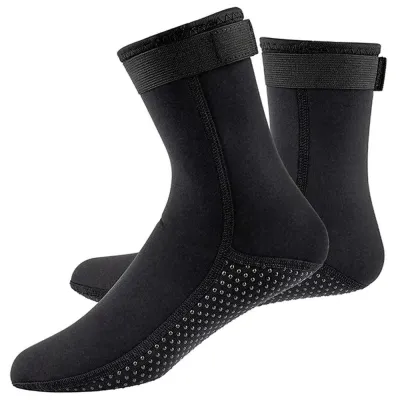
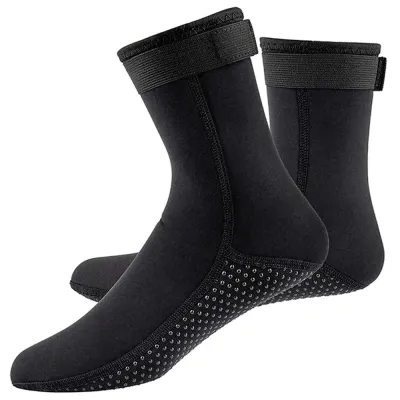
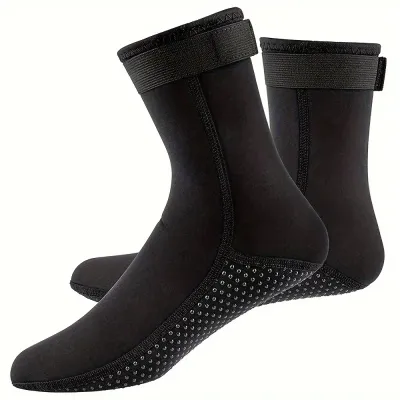
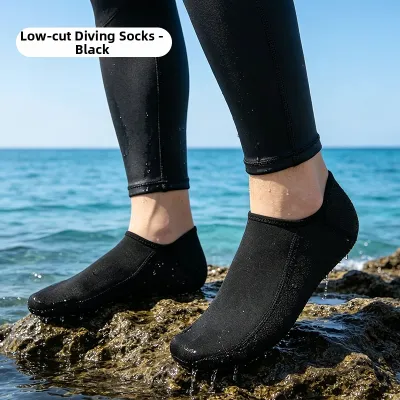
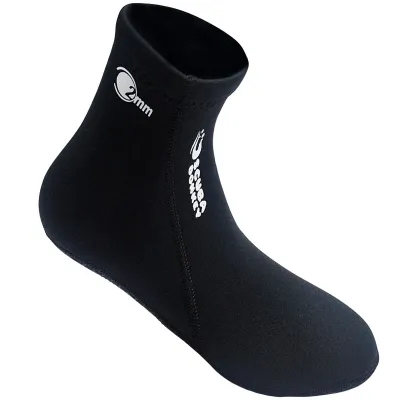
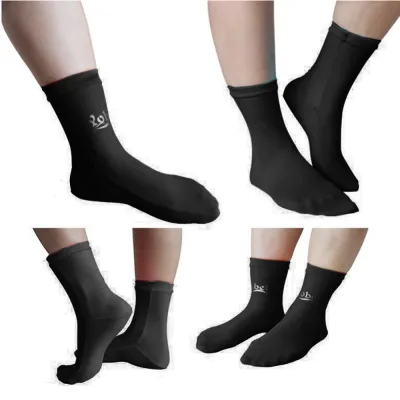
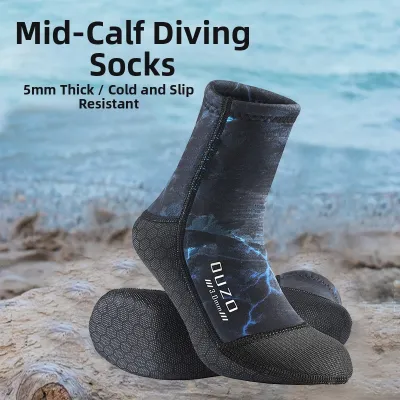
Prices are valid at publication and may change. Please refer to the product page for the latest price.
As neoprene thickness increases, you gain thermal protection but face distinct trade-offs in flexibility and buoyancy. Thicker socks restrict the natural movement of your ankles and toes, which can alter your finning efficiency. Additionally, thicker neoprene is inherently more buoyant, meaning you may need to adjust your trim or add slightly more weight to your diving belt to maintain neutral buoyancy, especially around your lower extremities.
Many divers fall into the trap of assuming that thicker material is always superior. In tropical climates, wearing excessive insulation can cause your feet to overheat during surface intervals or shallow dives, leading to heavy sweating and discomfort. Furthermore, stuffing a thick sock into a standard-sized boot can compress your blood vessels, restricting circulation and paradoxically making your feet feel colder while increasing the risk of painful muscle cramps.
For tropical diving, you should focus almost exclusively on the 1mm to 3mm range. A 1mm or 1.5mm sock is highly flexible and primarily serves as a barrier against friction and mild chill. A 2mm or 3mm sock offers a noticeable step up in thermal retention, making it the sweet spot for divers who plan to spend extended periods at depth or who are particularly sensitive to temperature drops.
Matching Sock Thickness to Philippine Dive Environments
Philippine dive destinations present a diverse range of underwater topographies and water conditions. Surface water temperatures across popular hubs like Moalboal, Bohol, and Coron typically hover between a comfortable 27°C and 30°C. However, these surface measurements do not tell the whole story, as diving deep walls or drop-offs often exposes you to sudden thermoclines where temperatures can plummet to 24°C or lower.

Seasonal variations and local currents also play a massive role in how warm the water actually feels. During the northeast monsoon (Amihan), which runs roughly from November to March, water temperatures across the archipelago dip noticeably. Strong tidal currents, such as those found in the Verde Island Passage near Puerto Galera, accelerate convective heat loss, making a 2mm or 3mm sock far more appropriate than a thin 1mm liner during these cooler months.
Your choice should also align with your specific dive style and entry methods:
- Boat Diving: If you are diving primarily from a boat with long, breezy surface intervals, your feet can cool down quickly between dives. A 2mm sock provides the necessary warmth to keep your feet comfortable while waiting for the next splash.
- Shore Diving: Destinations like Anilao or Dauin often require shore entries over rocky volcanic sand, sharp coral rubble, or slippery pebbles. For these environments, a thin 1mm sock is best used as a liner inside a sturdy, hard-soled dive boot to prevent chafing, rather than being worn as standalone foot protection.
Before finalizing your gear list, always check real-time water temperature reports and consult local dive operators regarding current thermocline activity at your specific destination.
Adjusting for Personal Cold Sensitivity and Dive Itineraries
Every diver’s physiology is unique, meaning two people diving the same reef can have vastly different thermal needs. Men with lower body fat percentages, slower metabolisms, or poor peripheral circulation generally lose heat more rapidly through their extremities. If you find yourself shivering while others are comfortable, opting for a 3mm sock will provide the necessary thermal buffer to keep you focused on your dive rather than your cold toes.
Your dive itinerary is another critical factor to consider, particularly the cumulative effect of heat loss over multiple days. On a liveaboard trip in Tubbataha or a multi-day dive excursion in Apo Reef, you might perform three to four dives a day. Over consecutive days, your core body temperature gradually decreases, and your body struggles to fully warm up between dives. While a 1mm sock might feel sufficient on day one, by day three or four, you will likely appreciate the added insulation of a 2mm or 3mm sock.
Your physical activity level underwater also influences your warmth. If you are drift diving in high-current areas, the constant physical exertion of finning generates internal body heat, reducing the need for heavy insulation. Conversely, if you are a macro photographer spending 60 minutes hovering nearly motionless over the muck in Dumaguete, your lack of movement means you will cool down rapidly, making a thicker 3mm sock highly beneficial.
If you want maximum versatility, consider a layering strategy. Keeping a pair of ultra-thin 1mm lycra or neoprene socks in your gear bag allows you to wear them alone on warm, shallow dives, or slip them inside your standard 3mm boots as an extra thermal layer during deeper, cooler dives.
Ensuring Proper Fit: How Thickness Affects Boots and Fins
Proper fit is the most critical safety factor when combining diving socks with boots and open-heel fins. Squeezing a thick neoprene sock into a bootie or fin pocket that is already a snug fit is a safety hazard. This compression flattens the neoprene’s insulating air bubbles, rendering the material useless for warmth, and restricts blood flow to your feet, which can cause severe muscle cramping and numbness mid-dive.
To avoid these issues, follow these sizing and adjustment guidelines:
- Size Up When Necessary: If you plan to transition from a thin liner to a 3mm sock, you may need to size up your dive boots by one full size to accommodate the extra volume.
- Adjust Fin Straps: Ensure your open-heel fin straps can be loosened sufficiently to prevent pressure points on your Achilles tendon and the top of your foot.
- Check for Numbness: If you feel any tingling, loss of sensation, or tightness in your toes while geared up on land, your setup is too tight and must be adjusted before entering the water.
Additionally, pay attention to how your socks interface with your wetsuit. Always tuck the cuffs of your diving socks under the ankle seals of your wetsuit rather than over them. This overlapping technique prevents water from scooping into the socks during giant-stride entries or strong fin kicks, minimizing the “flushing” of cold water through your footwear.
Before embarking on your trip, assemble your complete footwear system—socks, boots, and fins—and test them in a controlled environment like a pool or shallow shoreline. Verify that you can easily slip your feet out of the fins in an emergency and that there are no rubbing points that could lead to painful blisters.
Frequently Asked Questions (FAQ)
Can I wear regular athletic socks under my dive boots instead of neoprene?
No, regular cotton or synthetic athletic socks are entirely unsuitable for diving. Cotton absorbs and retains water, losing all structural integrity and insulating properties when wet. This waterlogged fabric will bunch up inside your boots, creating severe friction points that lead to painful blisters. Neoprene diving socks are specifically engineered to trap a thin layer of water and hold it still to insulate your feet, while maintaining their shape and cushioning under pressure.
Do I need diving socks if I am already wearing a full wetsuit?
Yes, diving socks serve several distinct purposes that a full wetsuit cannot fulfill. While a wetsuit protects your core and legs, it terminates at the ankles, leaving your feet vulnerable. Diving socks prevent the stiff rubber of full-foot fins or dive boots from rubbing against your skin and causing blisters. They also provide targeted thermal protection for your extremities, which are the first areas to lose heat, and offer valuable slip resistance and protection during shore entries or when walking on hot boat decks.
Community discussion
Share your experience or ask a question. Comments are reviewed before publication.