
Quick Answer: Which Basketball Ball Bag Style Is Right for You?
Finding the right basketball ball bag is not just about choosing a container; it is about matching your gear to your daily transportation, playing environment, and storage habits. The three primary styles—mesh bags, backpacks, and duffels—each serve distinct routines, and selecting the wrong one can lead to damaged gear, carrying discomfort, or moldy basketballs.
For players who only need to transport a single ball to a nearby court, a minimalist mesh bag offers the highest level of airflow and simplicity. It keeps your ball ventilated and is exceptionally lightweight, making it perfect for quick, grab-and-go sessions. However, it provides zero protection from the elements and has no room for extra gear.
If you are a student or a daily commuter who travels by foot, bicycle, or public transit, a dedicated basketball backpack is generally the most practical choice. It features dual shoulder straps for balanced weight distribution and keeps your hands completely free. Most importantly, it includes specialized compartments to isolate a dirty basketball from your laptop, textbooks, or clean clothes.
Products mentioned in this guide
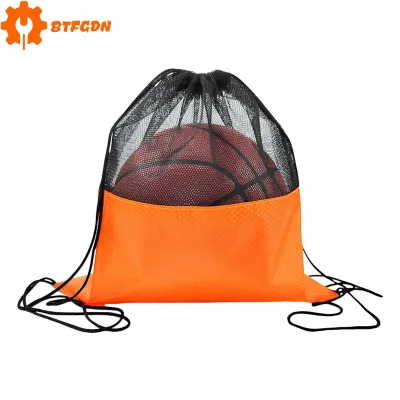
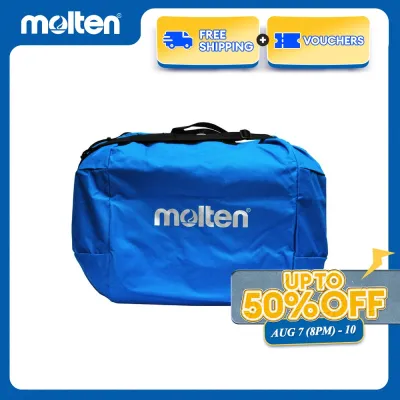
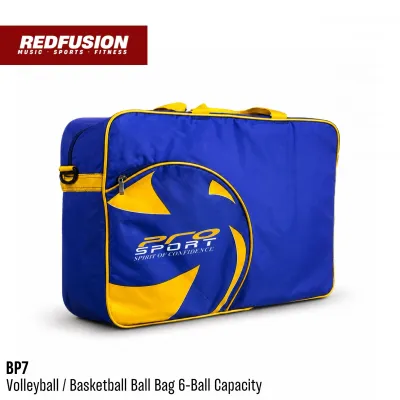
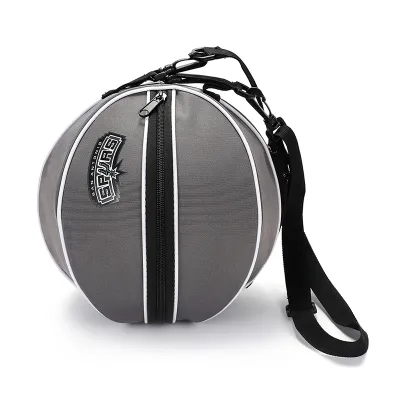
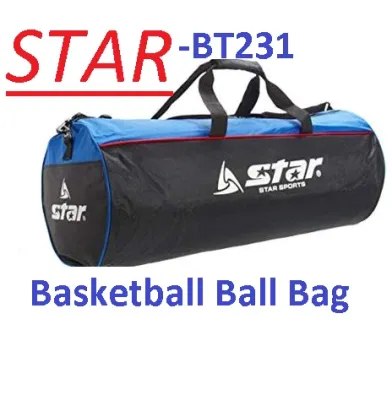
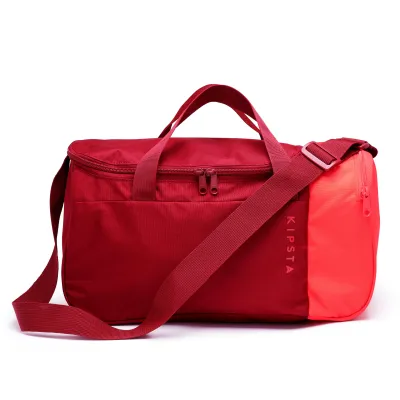
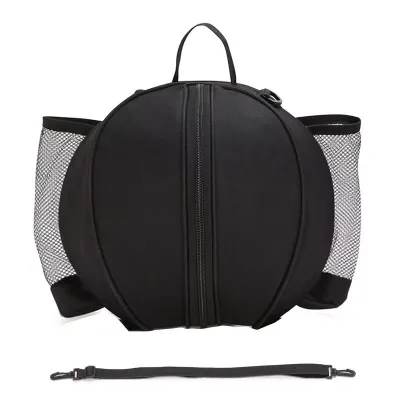
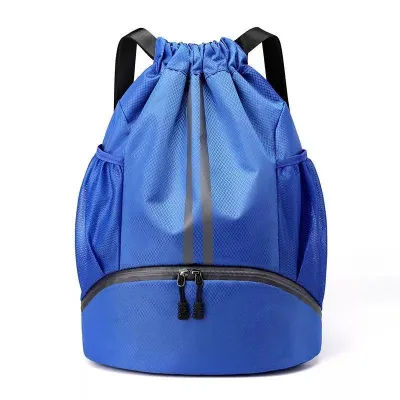
Prices are valid at publication and may change. Please refer to the product page for the latest price.
For coaches, team captains, or players who carry extensive training equipment, a duffel bag is the unmatched heavy-duty option. It provides a massive main compartment capable of holding multiple balls, shoes, a change of clothes, and training aids. While it can become heavy and awkward to carry over long distances, its storage capacity is essential for organized team travel and tournament days. Ultimately, the best style is the one that seamlessly integrates into your daily commute and storage environment.
Mesh Bags: Airflow and Minimalist Basketball Ball Bag Transport
The classic mesh drawstring or single-strap bag represents the ultimate minimalist approach to carrying a basketball. Designed almost entirely from open-weave synthetic netting, this style is built for players who prioritize speed, simplicity, and weight savings above all else. Understanding how this design interacts with your carrying habits and local environment is key to deciding if it fits your routine.

When it comes to carrying habits, a mesh bag is designed for short, direct trips. It typically features lightweight drawstrings that double as shoulder straps, or a simple single-strap configuration. While this makes the bag incredibly easy to pack, unpack, and sling over one shoulder, it offers very poor weight distribution. If you must walk long distances or navigate a busy commute, the thin straps can quickly dig into your shoulders, making it uncomfortable for extended wear.
Storage and ventilation are where mesh bags truly excel. In highly humid climates, such as the tropical environment of the Philippines, moisture is the constant enemy of basketball gear. When a composite leather or genuine leather basketball absorbs sweat from a heavy game and is immediately sealed in an airtight space, the material can quickly degrade, lose its grip, and develop mold or mildew. The open-mesh construction ensures continuous, 360-degree airflow, allowing the ball to dry naturally and preventing the buildup of unpleasant odors and destructive fungal growth.
However, this open design comes with significant structural limitations. A mesh bag offers absolutely no protection from external elements. If you get caught in a sudden tropical downpour, your basketball will get soaked, and any dirt or mud on the ground will easily transfer through the mesh onto the ball. Furthermore, these bags provide zero security or space for personal items. You cannot safely store your keys, smartphone, wallet, or a change of clothes in a mesh bag without risking them falling out, getting wet, or being exposed to public view on the court sidelines.
For these reasons, the mesh style is best suited for casual shooters who play at local outdoor barangay courts, backyard hoops, or indoor community centers. It is also an excellent option for home storage, allowing you to hang your basketball in a well-ventilated garage or closet where it can dry safely between games without cluttering your living space.
Backpacks: Commuting and Multi-Gear Organization
For the modern player who balances school, work, and basketball, a dedicated athletic backpack is often the most versatile solution. This style is engineered specifically to accommodate the unique shape of a basketball while providing the organized, multi-compartment structure required for daily life. It bridges the gap between a standard school bag and a specialized sports carrier.
The primary advantage of a basketball backpack lies in its carrying habits and superior ergonomics. Equipped with dual padded shoulder straps and often an adjustable sternum strap, a backpack distributes the weight of a heavy basketball, a pair of high-top shoes, and a water bottle evenly across your shoulders and upper back. This balanced distribution is crucial for players who walk long distances, ride bicycles, or rely on public transportation like jeepneys, tricycles, or crowded commuter trains. Keeping your hands completely free allows you to navigate busy streets safely and maintain your balance during transit.
From an organizational standpoint, these bags are highly sophisticated. They typically feature a dedicated ball compartment, which may be an exterior expandable mesh web, a zippered bottom pocket, or a front-loading sleeve. This isolation is essential for hygiene and gear protection; it ensures that the court dust, sweat, and outdoor grime on your basketball never come into contact with your clean change of clothes, schoolbooks, or sensitive electronics like laptops and tablets. Specialized side pockets also provide secure spots for water bottles, keys, and personal valuables.
Despite these benefits, backpacks have clear physical limitations. Because they must accommodate a large, spherical basketball alongside other gear, they can become incredibly bulky and wide. This extra depth can make navigating crowded spaces or tight aisles on public transit difficult. Additionally, ventilation can be a major concern. If the dedicated ball compartment is fully enclosed and lacks high-quality mesh panels or metal eyelets, trapping a damp, sweaty basketball inside for hours will quickly lead to severe bacterial odors and can damage the bag’s interior lining over time.
The basketball backpack is the ideal choice for student-athletes, daily commuters, and recreational league players. If your routine requires you to transition directly from a classroom or an office straight to an indoor or outdoor court without stopping at home to change, the backpack provides the exact balance of daily utility and athletic storage you need.
Duffel Bags: Maximum Capacity and Team Travel
When your storage needs extend beyond a single ball and a pair of shoes, the traditional athletic duffel bag becomes the necessary choice. Characterized by its long, cylindrical or rectangular shape and cavernous main compartment, the duffel bag is built for high-volume storage, extensive gear transport, and the demanding logistics of team sports.
Carrying a fully loaded duffel bag requires a different set of habits compared to other styles. Duffels are equipped with dual hand-carry handles and a single, long shoulder strap that is typically worn diagonally across the chest or over one shoulder. While this design makes it incredibly easy to toss the bag into the trunk of a car, onto a team bus, or under a bench, it is not optimized for long-distance foot travel. When packed to capacity with multiple basketballs and heavy training gear, a duffel bag puts asymmetrical strain on one side of your body, which can cause shoulder and neck fatigue during long walks.
The storage capacity of a duffel bag is unmatched. The wide-open main compartment allows you to pack multiple inflated basketballs, training cones, agility ladders, extra jerseys, towels, and comprehensive first-aid kits. Many high-quality sports duffels also feature dedicated shoe tunnels—zippered side compartments that extend into the main bag—allowing you to keep dirty, sweaty court shoes completely isolated from your clean uniforms and towels. This massive space makes it easy to organize and access your gear quickly during fast-paced tournament environments.
However, the sheer size of a duffel bag presents several limitations. For an individual player who only needs to carry one ball and a water bottle, a duffel is massive overkill, resulting in a mostly empty, sagging bag that is unnecessarily awkward to carry. Furthermore, duffel bags take up a substantial amount of space, making them difficult to fit into standard-sized gym lockers or under tight seating areas. Ventilation is also a common weak point; unless the duffel features specialized, full-length mesh panels or dedicated breathable compartments, the large volume of trapped air inside can quickly become stale and musty if damp gear is left inside.
The duffel bag is best suited for coaches, team managers, tournament players, and serious athletes who travel frequently for games. If you are responsible for transporting team equipment, or if you simply prefer to carry a comprehensive array of training tools, recovery gear, and multiple changes of clothing to the court, the duffel offers the heavy-duty capacity required to get the job done.
Head-to-Head Comparison: Matching the Bag to Your Routine
To help you clearly visualize how these three styles compare across the most critical performance and practical dimensions, we have compiled a direct comparison based on standard design characteristics.
| Comparison Dimension | Mesh Bags | Backpacks | Duffel Bags |
|---|---|---|---|
| Ball Capacity | Typically 1 ball | 1 ball (specialized compartment) | Multiple balls (typically 2 to 5+) |
| Ventilation & Airflow | Excellent (fully open mesh) | Moderate to High (model dependent) | Low to Moderate (requires mesh panels) |
| Comfort (Long Carries) | Low (thin straps, poor weight distribution) | High (dual padded straps, ergonomic) | Moderate (single strap, asymmetrical load) |
| Extra Gear Storage | None (ball only) | High (dedicated pockets for laptop/shoes) | Maximum (large open compartment) |
| Weather Protection | None (fully exposed) | Moderate to High (zippered, coated fabrics) | Moderate to High (heavy-duty materials) |
Decision Framework: Selecting Your Ideal Style
Choosing the right bag comes down to identifying your primary transport method and the specific items you cannot leave behind. Use this quick decision guide to match a style to your specific routine:
- Choose a Mesh Bag if your primary goal is maximum airflow to dry out your basketball, you only need to carry the ball itself, and you want the lightest, most budget-friendly option for quick trips to a nearby court.
- Choose a Backpack if you commute daily via walking, biking, or public transportation, require hands-free mobility, and need to keep your basketball gear organized and completely separate from your daily school or work essentials.
- Choose a Duffel Bag if you are a coach, team captain, or serious player who needs to transport multiple basketballs, extensive training aids, or enough gear and clothing for multi-day tournament travel.
Regardless of which style you choose, it is vital to assess your playing environment before heading out. If you play at public outdoor courts or busy community gyms, remember that leaving any bag unattended on the sidelines poses a high risk of theft. Always verify if the venue offers secure lockers or designated storage areas, and choose a bag style that is easy to keep within your line of sight or secure under lock and key.
Essential Features to Verify Before Buying
Before making a final purchase, it is important to look past marketing claims and verify the actual specifications and materials of the bag. Checking these critical details ensures that your selected model will withstand daily wear and protect your investment.
First, verify the ball size compatibility directly from the manufacturer’s technical specifications. Do not rely solely on product photos, which can be visually misleading. Standard adult basketballs are Size 7 (with a circumference of approximately 29.5 inches), while youth and women’s leagues use Size 6 or Size 5 balls. Ensure the bag’s dedicated ball compartment explicitly states it can accommodate a fully inflated Size 7 ball without stretching the zippers or seams to their breaking points.
Second, examine the material composition and water resistance labels. Most athletic bags are constructed from synthetic fibers like polyester or nylon, often rated by denier (such as 600D or 900D), which measures fabric density and durability. While many bags feature water-resistant exterior coatings (like polyurethane or DWR) that can shed light rain during a sudden tropical shower, standard zippers and stitched seams are rarely waterproof. Unless a bag has an official IP (Ingress Protection) rating or includes a dedicated rain cover, avoid exposing it to heavy downpours, and always check the manufacturer’s care instructions regarding wet conditions.
Third, inspect the ventilation design of the shoe and ball compartments. In warm, humid environments, proper airflow is non-negotiable. Look for physical design features such as mesh ventilation strips, metal grommets, or breathable mesh panels. These features allow moisture from sweat and damp court surfaces to evaporate quickly, preventing the growth of odor-causing bacteria and protecting the structural integrity of both your bag and your basketball.
Finally, evaluate the strap padding and stitching durability. A basketball, a pair of shoes, and a full water bottle can easily weigh several kilograms. Examine the shoulder straps to ensure they are wide, contoured, and lined with breathable mesh padding to prevent chafing. Look closely at the connection points where the straps meet the body of the bag; high-quality models feature reinforced box-stitch patterns or heavy-duty metal D-rings to prevent tearing under heavy loads.
Frequently Asked Questions (FAQ)
How do I clean a basketball bag that smells like sweat?
To clean a smelly basketball bag, always check the manufacturer’s care label first for specific washing instructions. For most synthetic bags, do not machine wash or tumble dry, as high heat and aggressive agitation can melt synthetic fibers or strip away water-resistant coatings. Instead, empty the bag completely and wipe down the interior and exterior surfaces with a damp microfiber cloth and a mild, diluted soap solution. Pay special attention to the seams and corner pockets where dirt and sweat accumulate. Allow the bag to air-dry completely in a well-ventilated, shaded outdoor area away from direct sunlight, which can fade fabrics and degrade materials over time.
Can I use a regular school backpack instead of a dedicated basketball backpack?
While a standard school backpack can physically hold a basketball if the main compartment is large enough, it is not recommended for regular use. Standard backpacks lack a separate, isolated compartment for athletic gear. Placing a dirty, sweaty basketball and dusty court shoes directly into the same compartment as your textbooks, notebooks, clean clothes, or laptop will inevitably transfer dirt, moisture, and odors to your everyday items. Furthermore, standard backpacks rarely feature the reinforced stitching, heavy-duty zippers, or specialized ventilation panels required to carry the specific weight and shape of basketball gear comfortably, which can lead to premature wear and torn seams.
Community discussion
Share your experience or ask a question. Comments are reviewed before publication.