
Quick Answer: Matching the Material to Your Team's Routine
Choosing the right pom-pom for a school cheerleading team in the Philippines requires balancing visual appeal, physical performance, and long-term durability under tropical conditions. There is no single universal material that fits every routine or budget. Instead, the ideal selection depends on where your squad performs, the complexity of your choreography, and your athletic department’s funding cycle.
Metallic pom-poms deliver maximum visual flash and are highly suited for indoor arenas, gymnasiums, and televised school leagues where spotlighting can catch their reflective surfaces. Standard plastic offers durable, bold, opaque colors that remain highly visible during outdoor pep rallies and traditional cheerleading routines under direct sunlight. Vinyl provides a sleek, heavier, ribbon-like flow that is ideal for dance-heavy routines, pep squads, and jazz-infused choreography where fluid movement is prioritized over sharp, staccato motions.
Understanding how these materials behave under intense training schedules, high humidity, and tight school budgets will help coaches, sports coordinators, and student captains make an informed bulk purchase. The following sections break down the performance characteristics, climate resilience, and cost-effectiveness of each material to guide your school’s next equipment investment.
Products mentioned in this guide
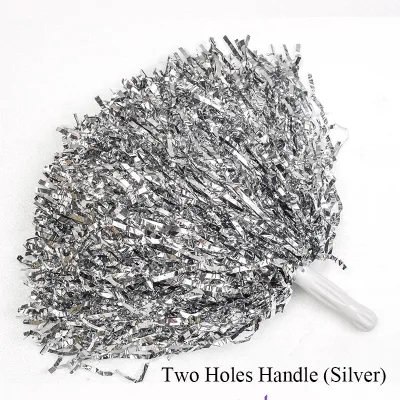
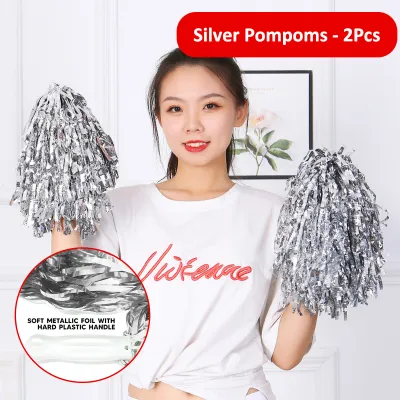
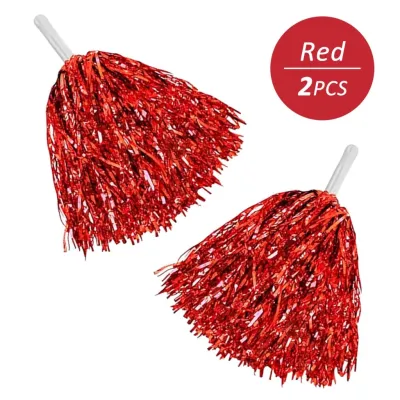
Prices are valid at publication and may change. Please refer to the product page for the latest price.
Visual Impact and Performance: How Each Material Moves
The way a pom-pom moves in the air directly influences how judges and spectators perceive your team’s synchronization. The thickness, weight, and texture of the strands determine whether a motion looks sharp and clean or fluid and sweeping. Selecting a material that matches your choreography style is essential for maximizing your visual score during competitions.

Metallic: Maximum Flash for Indoor Arenas
Metallic foil pom-poms are designed to catch and throw light, making them the standard choice for indoor sports complexes and stage performances. The ultra-thin, highly reflective polyester film glimmers under artificial lighting, creating a sense of high energy even during basic arm movements. When your team performs under spotlighting or in well-lit indoor courts, metallic strands create a shimmering halo effect that amplifies the visual scale of the routine.
Beyond their visual impact, metallic options are incredibly lightweight, allowing cheerleaders to execute rapid wrist-flicks and high-speed transitions without premature arm fatigue. They also produce a distinct, crisp rustling sound when shaken. This auditory feedback adds a layer of sensory energy to cheer chants and crowd-leading segments, helping to rally the student section during crucial moments in a game.
However, metallic foils have a notable limitation when taken outdoors. Under flat, overcast skies or direct, harsh midday sunlight, the highly reflective surfaces can occasionally create glare or look surprisingly washed out. If your school team primarily performs on open-air fields or during daytime community parades, the intense reflection may obscure the actual colors of your team uniform.
Plastic: Bold Colors and Sharp Cheer Motions
Standard plastic pom-poms, often made from extruded polyethylene, are characterized by their solid, opaque colors and stiff, resilient strands. Unlike metallic foils that rely on reflected light, plastic relies on pure color blocks. This makes plastic exceptionally legible from high-up bleachers and distant stadium seats, as the colors do not blend into a shiny blur.
This material is the historical staple for traditional cheerleading because the individual strands hold their shape and volume. When a flyer executes a high-V motion, plastic strands remain fluffed and spherical rather than drooping. This structural rigidity is excellent for emphasizing sharp, synchronized, staccato arm motions, giving the illusion of perfect unison across a large squad.
Additionally, plastic offers highly consistent visibility across all venues. Whether your team is performing inside a dimly lit school gym or out on a sunny track-and-field oval, the color representation remains identical. For schools that want their exact school colors to stand out clearly in promotional photos and local news coverage, plastic provides the most reliable color matching.
Vinyl: Streamlined Flow for Dance-Heavy Routines
Vinyl pom-poms feature a heavier, thicker strand composition with a semi-gloss or matte finish. The material behaves more like soft satin ribbons than stiff plastic or crinkly foil. This physical weight gives vinyl a graceful, sweeping drape that excels in lyrical, jazz, and contemporary cheer-dance routines where fluid transitions are key.
When a dancer performs a slow arm extension or a turning sequence, vinyl strands follow the path of motion with a elegant lag, creating beautiful, continuous color trails in the air. The material does not crinkle or bounce erratically; instead, it swings with a controlled momentum that emphasizes the emotional and artistic flow of the choreography.
This added weight, however, requires a higher level of physical conditioning. Because vinyl strands are denser, they place more physical demand on the shoulders, forearms, and wrists of the performers. For younger junior high school squads or primary school pep teams, the weight of standard vinyl can cause early fatigue, leading to drooping arms and sloppy lines toward the end of a long routine.
Durability and Climate Care for Philippine School Teams
The tropical climate of the Philippines presents unique challenges for athletic equipment. High relative humidity, intense seasonal heat, and sudden downpours during the wet season can rapidly degrade low-quality materials. School gear is often stored in non-air-conditioned equipment rooms, meaning your pom-poms must be resilient enough to withstand moisture and warmth without losing their shape or safety grip.
Metallic Durability and Care
Metallic foil is the most delicate of the three materials. Because the strands are incredibly thin, they are highly susceptible to creasing, tearing, and shedding. If metallic poms are stuffed carelessly into crowded gear bags or crushed under heavy training mats, the creases become permanent, which ruins their ability to reflect light evenly.
During high-impact stunts, basket tosses, or pyramid transitions, rough contact can easily tear individual foil strands from the handle. Over a single season of intense practice, a metallic pom can lose a significant portion of its volume, resulting in a thin, deflated appearance. They require dedicated storage containers where they can sit upright without being compressed.
Plastic Durability and Care
Plastic is the undisputed workhorse for daily training sessions. It is virtually impervious to moisture, meaning a sudden tropical shower during an outdoor halftime show will not ruin the strands. You can shake off excess rainwater, and the plastic will return to its original shape without structural damage.
However, plastic is vulnerable to prolonged ultraviolet (UV) exposure. If your squad conducts daily multi-hour practices on outdoor concrete courts or open fields under the afternoon sun, the UV rays will eventually break down the chemical bonds in the polyethylene. Over time, this causes the vibrant school colors to fade, and the strands will become brittle, snapping off during routine shakes. To maximize their lifespan, training should be conducted in shaded areas whenever possible, or the equipment should be kept bagged until the actual performance.
Vinyl Durability and Care
Vinyl is highly resistant to tearing and fading, making it exceptionally durable under normal physical wear. It handles moisture well and does not become brittle under moderate sun exposure. The primary vulnerability of vinyl lies not in the strands themselves, but in the physical connection to the handle.
Because vinyl is heavy, every shake exerts significant centrifugal force on the handle attachment point. Over time, this heavy pulling can cause individual strands to slip out of the binding, or it can cause the handle grip itself to loosen. Furthermore, if the handle material incorporates foam or soft rubber grips, these materials can absorb sweat and ambient humidity, leading to mold growth or a sticky, deteriorating surface that compromises safety during high-velocity movements.
General Maintenance Guidelines for Tropical Climates
To ensure performer safety and extend the lifespan of your school’s equipment, establish a strict post-practice care routine.
- Wipe Down Handles: After every practice, have athletes wipe the pom-pom handles with a dry, clean microfiber cloth to remove sweat, oils, and dirt.
- Avoid Extreme Heat: Never leave equipment inside a parked vehicle or in a metal storage shed exposed to direct midday sun, as extreme heat can warp plastic and melt adhesive bindings.
- Air Dry Thoroughly: If the equipment gets wet from sweat or rain, allow them to air dry completely in a well-ventilated indoor space before packing them away.
- Inspect Grip Integrity: Regularly check the handle bindings and grip wraps. If a grip feels loose or slippery, repair or replace it immediately to prevent the pom-pom from flying out of an athlete's hand during a stunt.
Budget and Value: Maximizing Your School's Equipment Fund
School athletic directors and parent-teacher associations must balance performance needs with strict budget limitations. When purchasing gear for a large squad, evaluating the total cost of ownership—rather than just the initial purchase price—is key to stretching your school’s peso.
Metallic options often feature a lower upfront cost, making them highly attractive for schools preparing for a single major regional competition or a short championship series. However, because they damage easily and shed strands during high-impact training, they often require partial or complete replacement before the next school year. If your team has a dedicated annual budget that allows for regular equipment refreshes, metallic provides excellent short-term visual return on investment.
Plastic represents the most cost-effective long-term investment for general school use. While the initial purchase price may be slightly higher than basic metallic options, their ability to survive multiple years of daily training, pep rallies, and outdoor sports events means you will not need to buy replacements every semester. For public schools, barangay youth leagues, and multi-sport athletic programs, plastic offers the best utility-to-cost ratio.
Vinyl sits at the premium end of the pricing spectrum. The manufacturing process for heavy-grade vinyl strands makes these pom-poms a significant investment that can easily strain a modest school sports budget. Consequently, vinyl is best reserved for dedicated, competitive cheer-dance teams that prioritize choreography aesthetics and have secured external sponsorship or specialized athletic funding.
When planning a bulk purchase, always factor in hidden costs. Breathable mesh storage bags are essential for preventing moisture buildup during transport, and replacement strands or repair kits should be kept on hand. Coaches should also inquire if local sports suppliers offer institutional discounts, tiered wholesale pricing, or package deals that bundle pom-poms with other safety gear like athletic tape and wrist supports.
Quick Comparison: Metallic vs. Plastic vs. Vinyl
| Material | Best Routine Style | Visual Effect | Weight & Feel | Primary Durability Risk | Ideal Venue |
|---|---|---|---|---|---|
| Metallic | High-energy cheer, quick transitions | High-reflectivity sparkle, shimmering halo | Ultra-lightweight, crisp rustling sound | Creasing, tearing, and shedding strands | Indoor arenas, stage lights, night games |
| Plastic | Traditional cheer, sharp staccato motions | Solid, opaque color blocks, high contrast | Lightweight, stiff and holds round shape | UV fading, brittleness from sun exposure | Outdoor fields, daytime pep rallies, parades |
| Vinyl | Fluid dance, jazz, lyrical cheer-dance | Glossy, ribbon-like trailing effect | Heavy, smooth and sweeping momentum | Handle strain, grip degradation from sweat | Indoor dance halls, specialized exhibitions |
The Final Decision: Which Pom-Pom Fits Your Squad?
To make the final purchasing decision, match your school team’s specific operating conditions to the strengths of each material. Use this condition-based framework to guide your procurement process.
Choose Metallic if:
- Your team performs almost exclusively indoors under gym spotlights or bright stadium lighting.
- Your routine relies heavily on rapid wrist movements, visual sparkle, and crowd-leading auditory cues.
- Your athletic program has a recurring seasonal budget that can accommodate replacing worn-out or shedding equipment before each school year.
Choose Plastic if:
- Your squad is the primary pep team for outdoor sports like football, track, or baseball, performing under direct sunlight.
- Your choreography focuses on traditional cheerleading, requiring perfectly synchronized, sharp arm motions that demand stiff, voluminous shapes.
- You need a highly durable, multi-season workhorse that can survive rough handling by student-athletes and damp storage conditions.
Choose Vinyl if:
- Your team is primarily a dance squad or pep troupe focusing on fluid, sweeping choreography rather than high-impact stunts.
- You require a premium, elegant aesthetic with heavy ribbon-like movement that creates beautiful visual trails.
- Your athletic department or booster club has the budget to invest in premium-tier gear and the athletes have the physical conditioning to handle heavier equipment.
Verify First Before Buying:
Before submitting your purchase order to a supplier, verify if your school has strict brand-color matching guidelines. Opaque plastic, metallic foil, and vinyl reflect light differently, meaning the exact same shade of royal blue or scarlet red can look vastly different across the three materials. Additionally, if you are buying for a combined junior and senior high school program, verify the weight comfort; you may need to order lighter plastic options for the younger performers while reserving heavier vinyl or metallic options for the varsity squad.
Frequently Asked Questions (FAQ)
Can you mix different pom-pom materials in one routine?
While mixing materials is physically possible, it is generally discouraged within the same synchronized formation. Because metallic, plastic, and vinyl reflect light differently and move at different speeds, mixing them can make a highly coordinated routine look visually cluttered or uncoordinated to competition judges. However, intentional mixing can be effective if used to distinguish specific roles, such as giving metallic poms to the team captains or using different materials for specific prop-based transitions during a halftime show.
How do you store pom-poms to prevent damage in humid weather?
To prevent damage in humid tropical climates, never store pom-poms in sealed plastic bags or airtight plastic bins immediately after use. Trapped moisture from sweat and humidity will promote the growth of mold and mildew, particularly on the handles and inner bindings. Instead, store them in breathable mesh bags or open-air wire bins in a cool, dry equipment room. Ensure they are kept completely off the floor to prevent moisture absorption, and always allow them to air dry thoroughly after wet outdoor practices before packing them away.
Community discussion
Share your experience or ask a question. Comments are reviewed before publication.