
Selecting the right basketball requires balancing your playing environment, budget, and personal preferences for grip and feel. Molten basketballs, widely recognized for their distinct 12-panel design and official tournament presence, span a broad spectrum of materials engineered for specific court conditions. Whether you are playing on a polished indoor hardwood court or a dusty outdoor concrete court under intense tropical heat, understanding how these models differ in cover material, internal construction, and texture is essential to making an informed purchase.
In the Philippines, where basketball is played everywhere from air-conditioned indoor arenas to open-air neighborhood courts, environmental factors like high humidity, ambient dust, and concrete abrasion heavily influence a ball’s performance. A model that delivers exceptional, moisture-absorbing grip indoors may quickly degrade or lose its traction when exposed to outdoor dirt and rough surfaces. By analyzing Molten’s material tiers, grip characteristics, tactile feel, and long-term durability, you can identify the exact model that aligns with your playing style and local court conditions.
Understanding Molten's Material Tiers and Court Ratings
To navigate Molten’s extensive lineup, players must first understand the primary cover materials used across their product tiers. Molten categorizes its basketballs into four main material classes: genuine leather, premium composite leather, standard composite leather, and natural or synthetic rubber. Genuine leather represents the pinnacle of their indoor game balls, offering a traditional feel that evolves over time but requires a dedicated break-in period. Premium and standard composites utilize synthetic polyurethane or polyvinyl chloride layers to deliver a consistent, ready-to-play feel out of the box, while rubber models prioritize maximum wear resistance for harsh outdoor environments.
Products mentioned in this guide
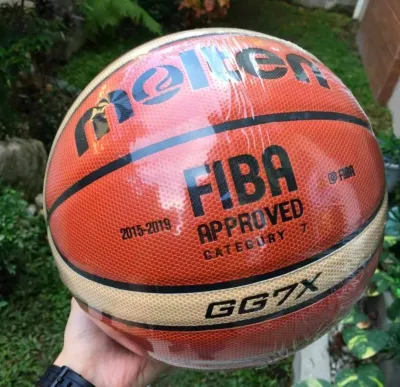
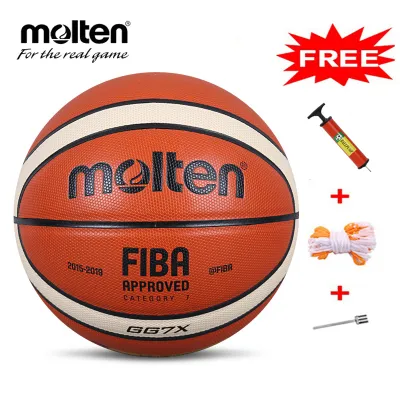
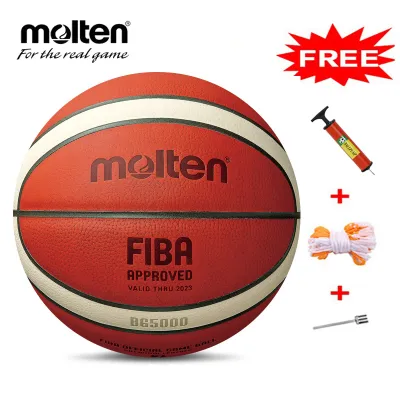
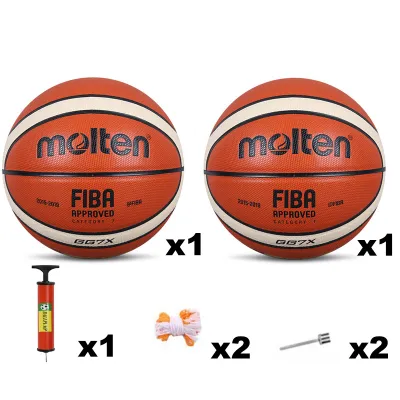
Prices are valid at publication and may change. Please refer to the product page for the latest price.
Molten’s model naming conventions generally serve as a roadmap to these material tiers and their intended court applications. For instance, the modern BG-series uses a numerical hierarchy where higher numbers typically indicate more advanced material compositions and construction techniques. Entry-level models in the lower numerical ranges often feature rubber or basic synthetic covers designed for outdoor durability, whereas mid-tier models utilize standard composites suitable for dual indoor and outdoor use. The highest-numbered models in the series are crafted from premium composite or genuine leather, engineered specifically for indoor competitive play.
Before purchasing, players should carefully inspect the ball’s surface markings, packaging, or manufacturer specifications to verify its official court rating. Molten explicitly labels its balls with designations such as “Indoor” or “Indoor/Outdoor” to guide consumer expectations. Checking these physical labels ensures you do not mistakenly use a premium indoor-only composite on abrasive concrete, which would void any performance expectations and rapidly destroy the cover material.
Grip and Texture: Indoor vs. Outdoor Performance
The interaction between a player’s hands and the ball’s surface is critical for ball control, shooting consistency, and passing accuracy. Molten’s signature 12-panel design increases the number of seams compared to traditional 8-panel balls, providing additional finger placement reference points and enhancing overall grip. However, the actual traction you experience depends heavily on how the cover material interacts with your playing environment. On clean, indoor hardwood courts, premium composite and genuine leather covers excel by absorbing microscopic amounts of hand sweat, maintaining a tacky, reliable grip throughout intense gameplay.

Outdoor courts present a completely different set of challenges, particularly regarding dust and debris. When fine dust settles on a smooth, premium indoor ball, it acts as a barrier, making the surface incredibly slick and difficult to control. To combat this, outdoor-oriented Molten models often feature deeper channels and a more pronounced pebble texture. This coarser surface profile helps channel dust away from the contact points, allowing the rubber or rugged composite material to make direct contact with your hands even on unpolished concrete surfaces.
Environmental humidity, a constant factor in tropical climates, also plays a major role in grip performance. High humidity can cause moisture to pool on the surface of non-porous rubber or lower-grade synthetic balls, leading to a slippery feel during extended play. When evaluating a ball out of the box, perform an observable grip check by applying light pressure with your fingertips and rotating the ball; a suitable indoor ball should feel slightly tacky and compliant, while an outdoor ball should exhibit a firm, high-friction texture that resists sliding against your palm.
Feel and Cushioning: Bounce and Touch Differences
The tactile sensation of catching, dribbling, and releasing a basketball is determined by its cushioning layers and internal carcass construction. Professional-grade genuine leather models initially feel stiff and firm to the touch, requiring hours of active play to soften the fibers and develop their characteristic responsive feel. In contrast, Molten’s premium composite models often incorporate a dual-cushion skin or a soft backing layer beneath the outer cover, providing an immediate, cushioned touch that reduces hand fatigue and enhances control right from the first bounce.
Beneath the outer cover lies the structural core of the ball, consisting of a bladder wrapped in high-tensile nylon or polyester threads. This carcass construction is responsible for maintaining a perfectly spherical shape and delivering a consistent, predictable bounce. While latex bladders offer excellent responsiveness, they tend to lose air pressure more quickly; consequently, many Molten models utilize butyl bladders, which provide superior air retention over extended periods. Players should verify the specific bladder and winding specifications provided by the manufacturer to understand the ball’s structural grade.
It is also important to note that external factors like ambient temperature and court hardness can alter how a ball bounces and feels. In hot tropical conditions, the air inside the bladder expands, which can make a properly inflated ball feel excessively hard and bouncy. Conversely, playing on unyielding concrete courts amplifies the impact shock transmitted to your hands, making a cushioned composite or rubber ball highly desirable for reducing joint strain compared to a stiff, unyielding alternative.
Durability and Lifespan: Matching the Ball to the Court
A basketball’s lifespan is directly tied to the friction it encounters during play. Rough asphalt and concrete surfaces act like sandpaper, rapidly grinding down the delicate pebble grain of genuine leather and premium indoor composites. Once this outer texture is worn smooth, the ball loses its grip and aerodynamic consistency. For this reason, rubber and specialized outdoor composite models are engineered with highly abrasion-resistant compounds that can withstand constant scraping against concrete, metal chain nets, and outdoor backboards.
To determine when your basketball has reached the end of its functional life, monitor it for key visual and physical wear indicators. The most common sign is the smoothing of the pebble grain in high-contact areas, particularly around the seams. Seam separation, where the panels begin to peel away from the carcass, is another critical indicator that the ball’s structural integrity is compromised. Additionally, if a ball struggles to maintain its shape or requires frequent reinflation due to slow leaks around the valve or through the bladder, it is time to transition it to casual recreational use or replace it entirely.
Maximizing the lifespan of any Molten basketball requires consistent maintenance and proper storage. After playing on dusty outdoor courts, wipe the ball down with a damp, clean cloth to remove abrasive dirt particles that can degrade the cover material over time. Store the ball in a cool, dry place away from direct sunlight, as extreme heat can weaken the adhesives holding the panels together and cause the bladder to warp. Finally, always use a pressure gauge and a lubricated inflation needle when adjusting air pressure to avoid damaging the valve core.
How to Choose the Right Molten Basketball for Your Game
Selecting the ideal Molten basketball comes down to identifying your primary playing environment and matching it to the appropriate material tier. If your games take place exclusively on polished indoor hardwood courts and you demand a professional-grade, highly responsive feel that customizes to your grip over time, investing in a genuine leather model is the optimal path. These balls represent a long-term commitment to indoor performance and require proper break-in and care to reach their full potential.
For players who split their time between indoor gymnasiums and smooth outdoor surfaces, a premium composite model offers the most versatile compromise. These balls provide a soft, cushioned touch and excellent moisture management indoors, while still possessing enough structural durability to handle occasional outdoor sessions without immediate degradation. If your primary court is a rough concrete barangay court or an asphalt playground, a durable rubber or dedicated outdoor composite model is the most practical and budget-friendly choice, ensuring your ball survives the abrasive environment.
Lastly, before finalizing your decision, verify if the specific model carries any required league or organizational certifications. If you plan to play in sanctioned tournaments, look for official markings such as the “FIBA approved” logo printed directly on the ball’s surface. Checking for these official stamps guarantees that the ball meets strict international standards for weight, rebound height, sphericity, and material safety, ensuring your practice translates perfectly to competitive game conditions.
Frequently Asked Questions (FAQ)
How do I know if my Molten basketball needs to be broken in?
New genuine leather Molten basketballs typically feel slick, stiff, and unusually light in grip straight out of the box. This is completely normal, as the natural leather fibers require friction and exposure to the oils from your hands to soften and develop their signature tacky feel. You can accelerate this natural break-in process simply by using the ball during indoor practice sessions, dribbling drills, and passing routines. Avoid using artificial conditioners, oils, or harsh chemicals to speed up the process, as these can permanently damage the leather’s structural integrity and ruin the adhesive backing.
Can I use an indoor Molten basketball on outdoor concrete courts?
Using an indoor-rated Molten basketball on outdoor concrete or asphalt courts is highly discouraged and will lead to rapid, irreversible damage. Indoor composite and genuine leather covers are designed for low-friction wooden or synthetic courts; when subjected to rough concrete, the delicate outer layer will quickly scrape off, smoothing out the pebble texture and ruining the grip. Furthermore, outdoor debris and dirt will clog the moisture-absorbing pores of indoor materials, making the ball permanently slippery. Always check the manufacturer’s surface rating on the ball or packaging before playing outdoors.

Community discussion
Share your experience or ask a question. Comments are reviewed before publication.