
Upgrading or replacing your mountain bike’s front suspension can feel overwhelming due to the dizzying array of technical specifications, where choosing the wrong option risks rendering a costly new fork completely incompatible with your existing frame, headset, or front wheel. To ensure a perfect fit, you must match the fork’s travel to your frame’s designed geometry, verify that the steerer tube matches your headset standard, and select an axle standard that aligns with your front hub spacing. Understanding these core measurements allows you to navigate the upgrade process with confidence and avoid costly purchasing mistakes.
How much suspension travel does your bike frame actually support?
Your bike frame is engineered around a specific range of suspension travel, and exceeding this limit by more than 10mm to 20mm can compromise handling or structurally damage the frame. You can find your frame’s exact travel limits in the manufacturer’s user manual or official geometry specification sheet. Attempting to install a fork with significantly more travel than your frame was designed for is a common mistake that can lead to severe mechanical issues.
Suspension travel refers to the distance the fork compresses to absorb impacts, typically ranging from 100mm for cross-country riding to 140mm for trail riding, and up to 160mm or more for enduro and downhill disciplines. This travel length directly dictates how the bike handles different types of terrain. Longer travel forks provide more cushion for aggressive descents, while shorter travel forks offer firmer, more efficient climbing platforms.
Products mentioned in this guide
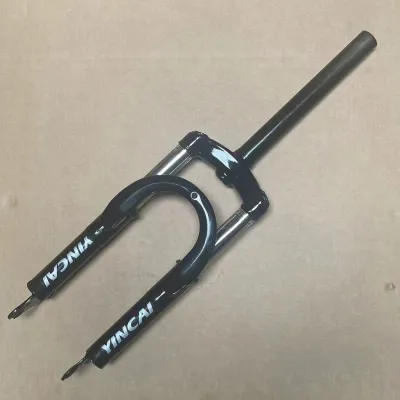
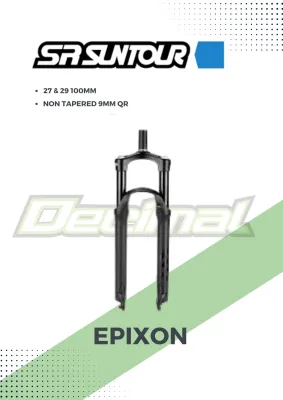
233 Lazada user ratings
I'm now more confident in riding xc trails thanks to this fork. Package arrived in excellent condition and no visible defects or whatsoever.…Read full reviewShow less
I'm now more confident in riding xc trails thanks to this fork. Package arrived in excellent condition and no visible defects or whatsoever. I've been using it for a few days and i'm satisfied with its performance. All features are working including lockout and rebound adjuster. thanks Decimal bikes, Lazada, and J&T!
Excellent warranty coverage, Enhanced control and stability, Versatile for different terrains,
Quality:Great value for money, Sleek design, Appearance: Improved riding experience,
Quality: very good Smooth suspension, Efficient shock absorption, Sleek design,
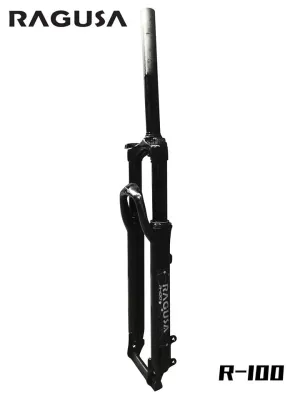
91 Lazada user ratings
Solid build and construction, Lockout feature is convenient, Lockout function works well, Improves ride comfort, Great value for money, Dura…Read full reviewShow less
Solid build and construction, Lockout feature is convenient, Lockout function works well, Improves ride comfort, Great value for money, Durable steel construction,
nice 🔌Compatibility:goods na goods, walang labis walang kulang. 🛠️Ease of Installation:agree, suggestible bili na kayo
Quality:good, malambot ang play Appearance:simple lang sya Performance:have'nt tried yet, sana magtagal
ot bad for the price. steel fork suspension for MTB. good for daily use only. weights around 2kilos
Provides a smooth ride,
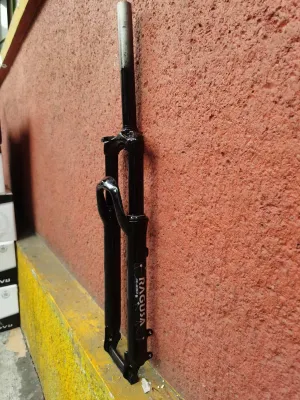
70 Lazada user ratings
hello 🤗😘😘🤗🤗🤗😘😘😘 to skin a good teacher and a good teacher and a good teacher and a good teacher and a good teacher and a good teacher and a good tea…Read full reviewShow less
hello 🤗😘😘🤗🤗🤗😘😘😘 to skin a good teacher and a good teacher and a good teacher and a good teacher and a good teacher and a good teacher and a good teacher and a little bit ☺️ really good 😌 to be a bulking meal foods for work I search 🔍 to be a little late to the meeting today at ikaw talaga yung insta and and why sign ☢️ to be a good teacher and she said and a
Excellent MTB bike, Reliable product warranty, Reliable product warranty, Lock out feature is convenient, Great value for the price, Perfect…Read full reviewShow less
Excellent MTB bike, Reliable product warranty, Reliable product warranty, Lock out feature is convenient, Great value for the price, Perfect for off-road adventures, Durable steel frame, Smooth suspension system, Versatile sizes available,
Versatile sizes available, Enhances biking experience, Perfect for off-road adventures, Great value for the price, High-quality Ragusa brand…Read full reviewShow less
Versatile sizes available, Enhances biking experience, Perfect for off-road adventures, Great value for the price, High-quality Ragusa brand, Reliable product warranty,
Versatile sizes available, Lock out feature is convenient, Enhances biking experience, Great value for the price, Lock out feature is conven…Read full reviewShow less
Versatile sizes available, Lock out feature is convenient, Enhances biking experience, Great value for the price, Lock out feature is convenient,
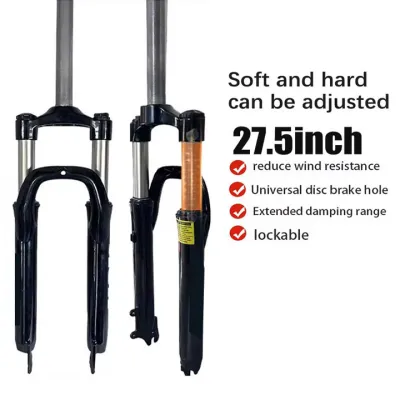
3 Lazada user ratings
Good Quality,fast delivery also it's affordable.Thank you to you sender
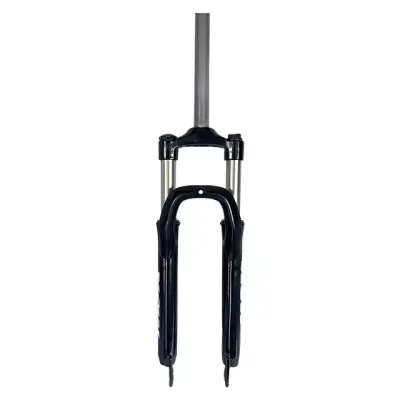
10 Lazada user ratings
ibang klase diniliver nyo bos. hindi gaya ng nasa picture na may shock lock. maging honest po sana kayo kung ano yung nasa picture yun ang b…Read full reviewShow less
ibang klase diniliver nyo bos. hindi gaya ng nasa picture na may shock lock. maging honest po sana kayo kung ano yung nasa picture yun ang bigay nyo sa costumer nyo.😔😔😔
dismayado ako kase walang pa sticker ung shop.... hahahaha... joke lang... maganda boss.. ok naman ung item.... mabilis din nai deliver.. sa…Read full reviewShow less
dismayado ako kase walang pa sticker ung shop.... hahahaha... joke lang... maganda boss.. ok naman ung item.... mabilis din nai deliver.. salamat boss
mali yung binigay nila. nasa na review ako. scam yung nasa picture. paki ban nalang nang seller. masisira yung Lazada at tsaka ibang seller.
🛠️Ease of Installation:Metal construction for strength, Smooth riding experience, Shock absorbing front fork,
Smooth riding experience, Durable alloy material,
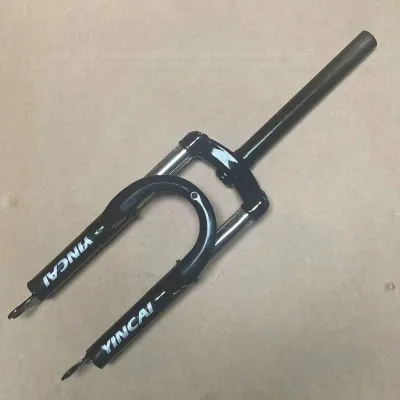
8 Lazada user ratings
perfect,my konting dent sa lower part but carry lang.tnx seller and kuya rider
Prices are valid at publication and may change. Please refer to the product page for the latest price.
When you install a fork that is too long, you alter the entire geometry of the bicycle. A longer fork raises the front end, which slackens the headtube angle and raises the bottom bracket. While a slacker headtube can make descending feel more stable, it also slows down steering response and makes the front wheel prone to wandering during steep climbs. Conversely, a fork that is too short steepens the angles, resulting in twitchy, unstable handling at high speeds.
Beyond handling, geometry changes introduce significant structural risks. A longer fork acts as a longer lever, multiplying the leverage forces exerted on the frame’s headtube during hard impacts. This added stress can cause the headtube to crack or shear off entirely, which is why many manufacturers void their frame warranties if you exceed the maximum recommended axle-to-crown height or travel limit. Always verify these limits before making a purchase.
Which steerer tube diameter and length will fit your headset?
To fit your headset, you must match the steerer tube’s profile—either straight or tapered—to your frame’s headtube and ensure the uncut steerer is long enough to pass through your headset, spacers, and stem. Measuring your existing fork’s steerer tube is the most reliable way to determine the minimum length required for your setup. Getting this measurement wrong means the fork cannot be safely clamped to your bike.

Modern mountain bikes primarily use two steerer tube standards: straight and tapered. A straight steerer tube measures 1-1/8 inches from top to bottom and is commonly found on older or entry-level mountain bikes. Tapered steerer tubes measure 1-1/8 inches at the top and flare out to 1.5 inches at the bottom. Tapered designs offer significantly higher stiffness and steering precision, making them the standard for modern trail and enduro bikes.
To identify your headset standard, look at the shape of your frame’s headtube. A tapered headtube is visibly wider at the bottom than at the top, whereas a straight headtube is a uniform cylinder. While you can sometimes install a straight steerer fork into a tapered headtube using a specialized reducing crown race, you cannot fit a tapered steerer fork into a standard straight headtube because the lower portion of the tube is physically too wide to pass through the frame.
Once you confirm the diameter, you must calculate the required steerer tube length. If you are buying a brand-new fork, it will arrive with an uncut, extra-long steerer tube that you must cut down to size. To calculate the correct length, add together the height of your frame’s headtube, the stack height of your headset cups, the total height of any handlebar spacers you plan to use, and the clamp height of your handlebar stem.
When cutting the steerer tube, safety is paramount. The cut must be made so that the top of the steerer tube sits approximately 2mm to 3mm below the top edge of your stem or your uppermost spacer. This small gap is critical because it allows the top cap to compress the headset bearings properly when tightened, eliminating play in the steering system. Cutting the tube too short prevents the stem from clamping securely, while leaving it too long prevents proper bearing compression.
What axle standard does your front wheel and fork dropout require?
Your new fork’s dropouts must match both the mounting mechanism and the exact hub spacing of your front wheel, which typically uses either a traditional Quick Release (QR) or a modern thru-axle system. To confirm compatibility, you must measure your front hub’s width and axle diameter or consult your wheel manufacturer’s specifications. A mismatch here will prevent your front wheel from mounting to the fork.
Traditional Quick Release systems utilize a thin, 5mm skewer that slides through a hollow hub axle, dropping into open slots at the bottom of the fork. While quick and easy to operate, QR systems offer less structural rigidity and are prone to minor wheel misalignment under heavy braking. Modern mountain bikes have largely transitioned to thru-axle systems, where a thick, threaded axle passes directly through closed loops on the fork dropouts and the hub itself, creating a much stiffer and safer connection.
Thru-axles are categorized by their diameter and spacing width. The most common modern standard is Boost spacing, which measures 15x110mm. This means the axle is 15mm in diameter, and the hub spacing is 110mm wide. The older, non-Boost standard is 15x100mm. Boost spacing pushes the fork legs slightly wider apart, allowing wheel manufacturers to use wider hub flanges, which results in a stiffer, stronger wheel build.
Because these standards are physically different, a 15x100mm non-Boost wheel will not fit securely into a 15x110mm Boost fork without specialized conversion spacers, and a Boost wheel can never fit into a non-Boost fork. Always measure the distance between the inner faces of your front hub’s end caps to confirm whether you have a 100mm or 110mm spacing before purchasing your new fork.
How do you verify offset, brake mount, and tire clearance before buying?
Before finalizing your purchase, you must verify that the fork’s offset aligns with your frame’s handling design, the brake mounts match your rotor size, and the arch provides sufficient clearance for your tires. Checking these final dimensions prevents rubbing, ensures optimal steering stability, and guarantees your brakes can mount securely. Ignoring these details can lead to clearance issues or poor handling on the trail.
Fork offset, also known as rake, is the distance between the steering axis and the center of the front axle. This measurement influences “trail,” which is the mechanical self-centering effect of the steering. A shorter offset increases trail, making the steering feel more stable and planted at high speeds, while a longer offset decreases trail, making the steering feel quicker and more agile. To preserve the handling characteristics intended by your frame’s designer, try to match the replacement fork’s offset to the original fork’s specifications.
Brake compatibility is another critical check. Most modern suspension forks use the Post Mount standard, where the brake caliper bolts directly into threaded posts on the fork leg. Forks are designed with a minimum native rotor size, typically 160mm or 180mm. If you plan to run a larger rotor for increased stopping power, you will need to purchase the correct post-to-post adapter to space the caliper outward to match your rotor’s diameter.
Finally, always verify the fork’s maximum tire clearance. Manufacturers specify the maximum tire width the fork arch can safely accommodate, such as 2.4, 2.6, or 2.8 inches. When checking this spec, remember to factor in mud clearance. If you ride in wet, muddy trail conditions, such as those common during the rainy season in the Philippines, you need ample space between the tire and the fork arch to prevent sticky mud and debris from packing in, slowing you down, or locking up your front wheel entirely.
Community discussion
Share your experience or ask a question. Comments are reviewed before publication.