
Selecting the right combat sports gear is a decision that directly impacts your safety, technique, and overall training performance. While a casual observer might mistake Muay Thai gloves and regular boxing gloves for identical pieces of equipment, they are engineered with distinct structural variations. The choice between them is not a matter of which glove is universally superior, but rather which design aligns with the specific mechanics and rules of your chosen martial art.
If your training focuses heavily on the “Art of Eight Limbs”—incorporating clinching, catching kicks, and blocking strikes with your arms—Muay Thai gloves are the appropriate choice due to their flexible grip, flatter padding distribution, and shorter cuffs. Conversely, if your training is strictly dedicated to Western boxing, traditional sparring, and mastering punch mechanics, regular boxing gloves are recommended. Their elongated, rigid cuffs and rounded knuckle padding provide the specialized wrist stability and impact absorption required for repetitive, high-velocity punching.
Core Design Differences and Feature Comparison
Although both glove types serve the fundamental purpose of protecting your hands and your training partners, their internal compartments and external architectures are tailored to different combat disciplines. Western boxing restricts contact to punches above the belt, requiring a glove optimized solely for fist impact. Muay Thai, however, involves a complex mix of punches, kicks, elbows, knees, and stand-up grappling, which demands a highly versatile glove design.
Products mentioned in this guide
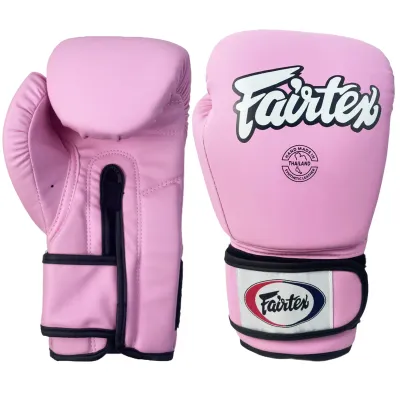
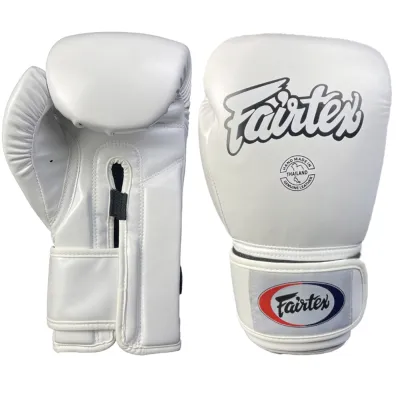
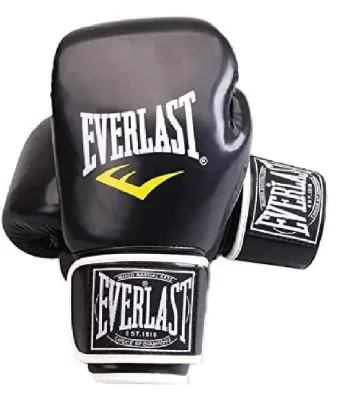
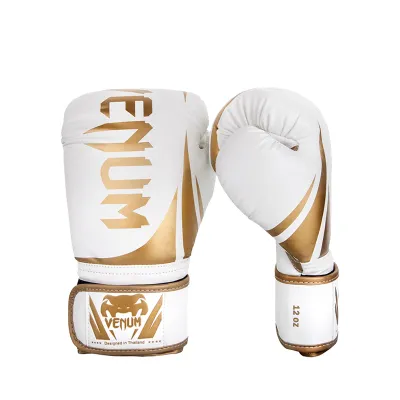
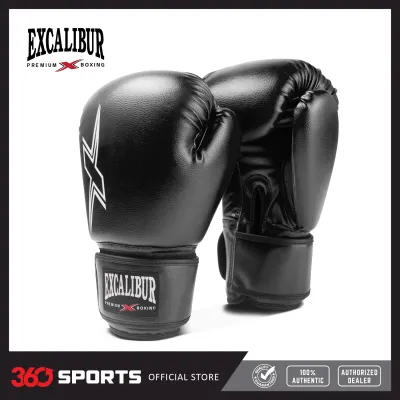
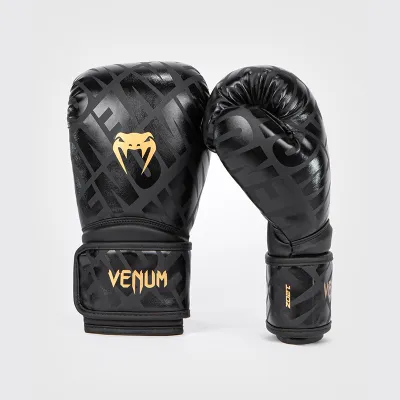
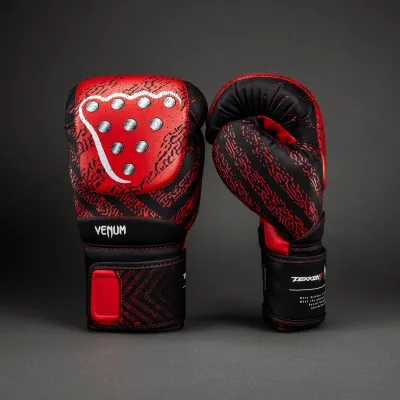
Prices are valid at publication and may change. Please refer to the product page for the latest price.
Shape, Padding, and Knuckle Protection
Regular boxing gloves feature a highly rounded, bulbous profile with a significant concentration of foam directly over the knuckles. This design is engineered to absorb the localized, high-velocity impact of straight punches, hooks, and uppercuts, protecting the delicate metacarpal bones from repetitive stress. The padding is typically layered to maximize shock absorption at the front of the hand, encouraging a natural alignment of the knuckles with the wrist upon impact.
In contrast, Muay Thai gloves present a flatter, more square-shaped profile. The padding is distributed more evenly across the entire glove, extending over the back of the hand and along the outer edge of the pinky side. This distributed foam architecture acts as a shield, allowing practitioners to block incoming roundhouse kicks, knee strikes, and elbows with the back and sides of their hands. Without this protective layer on the back of the glove, blocking a powerful kick could easily result in severe bruising or bone fractures.
Thumb Position and Grip Flexibility
In a standard boxing glove, the thumb is positioned in a tightly tucked, curved alignment that sits close to the index finger. This anatomical positioning forces the hand into a semi-closed shape, making it easy to form a tight, solid fist with minimal muscular effort. Keeping the thumb tucked away also minimizes the risk of accidental hyperextension when landing heavy punches on a dense target.
Muay Thai gloves utilize a more upright, separated, and straight thumb design. This construction allows the hand to open significantly wider, which is a critical functional requirement for catching kicks and securing a dominant grip during a clinch. While this open-hand capability slightly reduces the ease of forming a perfectly sealed fist, it provides the essential dexterity needed to manipulate an opponent’s head, neck, and arms during close-range grappling.
Wrist Support and Cuff Length
Wrist protection in Western boxing gloves is characterized by a long, stiff, and highly supportive cuff. Whether using lace-up or wide hook-and-loop closures, the cuff is designed to act as a splint, locking the wrist joint in a straight line with the forearm. This rigidity is crucial for preventing the wrist from bending or rolling when delivering high-impact punches against heavy bags or opponents.
Muay Thai gloves feature a much shorter, thicker, and more flexible cuff. This shorter design allows the wrist to bend and rotate freely, giving practitioners the range of motion required to pull down on an opponent’s neck in the clinch or to catch and redirect incoming kicks. The cuff is often padded on the interior and exterior to provide additional protection against forearm strikes and kicks, sacrificing absolute rigidity in favor of multi-directional mobility.
| Design Feature | Muay Thai Gloves | Regular Boxing Gloves |
|---|---|---|
| Knuckle Profile | Flatter, square-shaped, even distribution | Rounded, bulbous, concentrated at the front |
| Back-of-Hand Padding | Thick, multi-layered for blocking kicks | Minimal, streamlined for weight reduction |
| Thumb Position | Straight, open, highly flexible | Tucked, curved close to the fist |
| Cuff Length | Short, thick, flexible | Long, rigid, splint-like |
| Grip Capability | High (allows open-hand catching and clinching) | Low (optimized for a permanently closed fist) |
| Wrist Mobility | High rotational flexibility | Low (designed to lock the wrist straight) |
How Design Impacts Training Scenarios
Using a glove that does not match your specific training activity can hinder your technical development and increase your susceptibility to injury. Understanding how these structural differences translate to daily gym activities will help you make a safer, more practical purchase.

Heavy Bag Work and Pad Work
When working on a traditional heavy bag, the primary objective is to develop punching power, speed, and proper alignment. Regular boxing gloves excel in this scenario because their rigid cuffs and pre-curved fist compartments help maintain correct wrist alignment, reducing the risk of wrist strain when hitting a dense, static target. For beginners whose wrist strength and punching mechanics are still developing, the extra support of a boxing glove is highly beneficial.
During Thai pad work, however, the training dynamic changes. A trainer holding Thai pads will frequently throw light kicks, sweeps, and counter-punches to test your defense. Muay Thai gloves are better suited for this environment because they allow you to open your hands to catch a simulated kick, push the pads away to reset your distance, or use the padded backs of your hands to block incoming strikes. The flexibility of the glove matches the multi-faceted flow of a typical Muay Thai combination drill.
Sparring and Clinching
In a sparring environment, safety is the paramount concern. For pure boxing sparring, where only punches are exchanged, standard boxing gloves offer superior protection for both your knuckles and your partner’s face. The concentrated padding softens the impact of direct punches, and the rigid wrist support prevents awkward wrist folding during fast-paced exchanges.
If your sparring sessions include Muay Thai rules, regular boxing gloves can become a liability. Attempting to enter a clinch with stiff, closed-fist boxing gloves makes it incredibly difficult to secure a proper grip on your partner’s neck, often leading to awkward slipping, accidental eye pokes, or strained wrist joints. Muay Thai gloves allow you to grapple safely, slide your hands behind your partner’s head, and control their posture without sacrificing hand protection. For any partner-based sparring, always verify that you are using specialized, heavily padded sparring gloves (typically 16 ounces) to ensure mutual safety.
How to Choose the Right Glove for Your Style
To determine which glove type deserves a place in your gear bag, evaluate your primary training goals, your discipline of choice, and your physical environment. Use the following structured framework to guide your decision:
- Choose Muay Thai gloves if:
- Your primary discipline is Muay Thai, traditional kickboxing, or combat sambo.
- Your training routine regularly includes active clinching, catching kicks, and sweep defense.
- You train in a tropical, high-humidity environment (such as open-air "bakal" gyms in the Philippines) where a shorter, less restrictive cuff allows for better ventilation and easier drying.
- You prefer a versatile glove that can transition from pad work to basic grappling drills.
- Choose regular boxing gloves if:
- Your training is strictly limited to Western boxing (sweet science) and you do not train in kicks or grappling.
- You have a history of wrist instability or previous wrist injuries and require maximum splinting support.
- Your workouts consist primarily of heavy bag training, speed bag work, and traditional boxing sparring.
- You prefer a tight, pre-curved fist compartment that requires minimal hand effort to maintain a closed fist.
- Verify first if:
- You are cross-training in Mixed Martial Arts (MMA). In this case, you may eventually need dedicated MMA sparring gloves (7oz) or competition gloves (4oz), but a pair of Muay Thai gloves is often the preferred utility tool for the striking and stand-up grappling portions of your training.
- You plan to buy a single pair for all activities. If you must use one pair of gloves for both boxing and kickboxing, a Muay Thai glove is generally more adaptable to boxing than a boxing glove is to Muay Thai, though you must accept the trade-off of reduced wrist support during heavy punching.
When purchasing, pay close attention to the closure system. Velcro (hook-and-loop) closures offer excellent convenience for daily training, allowing you to put on and take off your gloves without assistance—a major advantage during fast-paced class rotations. Lace-up closures provide a highly customized, secure fit and superior wrist support, but they require a trainer or training partner to tie them for you before every session.
Sizing, Fit, and Essential Safety Checks
Gloves are sized by weight in ounces (oz) rather than standard hand measurements. Common sizes range from 10oz to 16oz, with heavier gloves containing more protective padding. As a general standard, lighter gloves (10oz to 12oz) are used for pad work and heavy bag training to build speed and accuracy, while heavier gloves (14oz to 16oz) are mandatory for safe sparring to protect your training partners from unnecessary impact. Always consult the manufacturer’s specific sizing chart, as fit profiles can vary significantly between brands.
Regardless of the glove type or cuff length you choose, wearing high-quality hand wraps is non-negotiable. Hand wraps compress the many small bones and joints in your hand, securing them into a single, cohesive unit and providing an essential baseline of wrist stability. Never hit a heavy bag or engage in sparring without properly wrapped hands, as gloves alone cannot prevent joint hyperextension or repetitive strain injuries.
In hot and humid climates like the Philippines, equipment maintenance is a critical safety and hygiene factor. High humidity accelerates sweat retention, which can lead to bacterial growth, severe odors, and rapid deterioration of the glove’s inner lining and foam. To maintain your gear:
- Check care instructions: Always refer to the manufacturer's care label before applying any cleaning agents or conditioners.
- Dry thoroughly: Wipe the interior and exterior of your gloves immediately after training. Use glove deodorizers, cedar chips, or insert dry hand wraps to absorb moisture.
- Ventilate: Never leave wet gloves inside a closed gym bag. Air them out in a well-ventilated, shaded area. Avoid direct, intense sunlight, as extreme heat can crack genuine leather and degrade synthetic materials.
- Inspect regularly: Before every session, check your gloves for signs of foam collapse, torn stitching, or exposed hard edges. If the padding feels flat or bottomed out, replace the gloves immediately to protect your hands.
Remember that protective equipment is designed to support, not replace, proper striking mechanics and physical conditioning. If you experience persistent joint, knuckle, or wrist pain, stop training immediately and consult a qualified medical professional or sports coach to assess your technique and physical condition.
Frequently Asked Questions (FAQ)
Can I use boxing gloves for Muay Thai training?
While you can use boxing gloves for basic heavy bag punching and pad work, they are highly restrictive for comprehensive Muay Thai training. The rigid, elongated cuffs and tucked-thumb design of boxing gloves make it exceptionally difficult to open your hands. This limitation prevents you from safely catching kicks, executing sweeps, or establishing a proper grip during clinch work, which are fundamental components of Muay Thai. Additionally, the lack of padding on the back of boxing gloves leaves your hands vulnerable to injury when blocking kicks.
Do I need different gloves for sparring and bag work?
Yes, it is highly recommended to use separate pairs of gloves for sparring and bag work. Striking a dense heavy bag compresses the internal foam over time, causing the padding to harden and lose its shock-absorbing properties. If you use those same compressed gloves for sparring, you risk injuring your training partners. To ensure safety, keep a heavily padded pair (typically 16oz) exclusively for sparring, and use a separate, lighter pair (10oz to 12oz) for bag and pad work.
Community discussion
Share your experience or ask a question. Comments are reviewed before publication.