
Quick Diagnostic: Is a Multifunction Home Gym Right for You?
Choosing between a multifunction home gym and individual strength equipment comes down to balancing your available space, safety requirements, and training style. A multifunction home gym is highly suitable if you train alone, prefer guided paths of motion, and want a single, self-contained unit that minimizes the risk of dropped weights. Conversely, individual equipment like dumbbells, barbells, and an adjustable bench suits those who prioritize functional, multi-joint movements, have modular storage space, and want the flexibility to expand their setup incrementally.
To determine your ideal path, consider your primary training environment. If you are setting up a workout space in a compact condominium or a shared family room where safety and noise control are paramount, a cable-based machine is often the most practical choice. If you have a dedicated garage space or a ground-floor area where you can safely use heavy iron without disturbing others, free weights offer unmatched versatility.
Assessing Your Space and Layout Constraints
Physical space is the ultimate deciding factor for any home fitness setup. A multifunction home gym requires a dedicated, permanent footprint that typically spans at least 1.5 to 2 meters in width and depth. Because these machines rely on guide rods, weight stacks, and overhead pulley systems, you cannot easily move or store them when they are not in use. You must also account for operational clearance, ensuring you have enough room to fully extend your arms or legs during exercises without hitting nearby walls or furniture.
Products mentioned in this guide
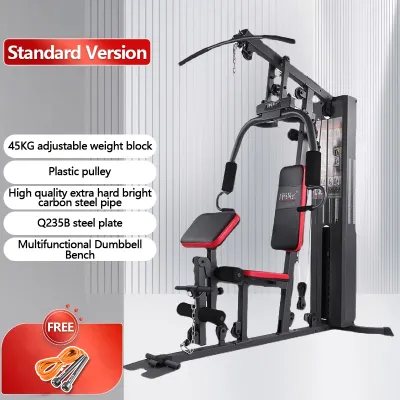
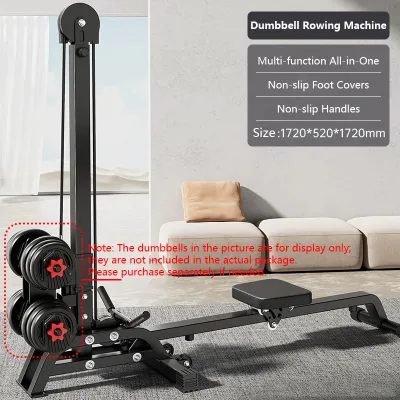
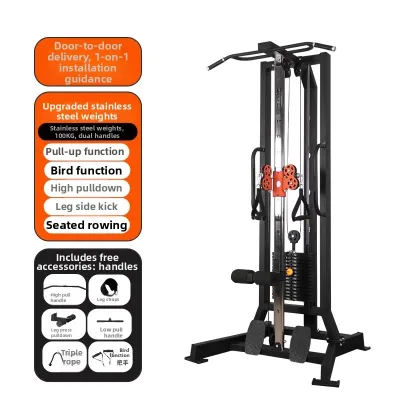
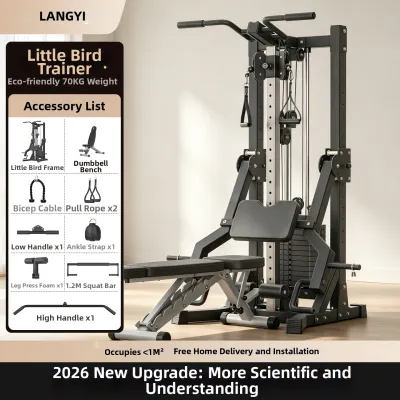
Prices are valid at publication and may change. Please refer to the product page for the latest price.

Ceiling height is another critical dimension to verify before purchasing. Many homes and apartments in the Philippines feature standard or lowered ceilings, especially in rooms equipped with low-hanging ceiling fans or air conditioning units. A multifunction machine often stands over two meters tall, meaning you must measure your vertical clearance carefully to avoid interference with overhead pulleys or your own head during pull-ups. Additionally, ensure there is enough clearance to perform overhead barbell presses or high-cable exercises if you opt for individual equipment.
Flooring and structural load limits require careful evaluation, particularly in multi-story homes or upper-level apartments. A multifunction home gym concentrates hundreds of kilograms of steel and weight plates onto a small, fixed surface area. To protect your floors from cracking or indentation, you will need to install high-density rubber tiles. If you choose individual free weights, the risk of high-impact drops means you must verify the structural integrity of your flooring and invest in thick lifting platforms or drop mats to absorb shock and dampen vibrations.
Matching Equipment to Your Fitness Goals
Your specific fitness objectives should dictate the mechanics of the equipment you choose. Multifunction home gyms primarily utilize cable and pulley systems, which provide constant tension throughout the entire range of motion. This constant resistance is highly effective for muscle isolation, hypertrophy, and targeted rehabilitation exercises. Because the machine guides your movement path, you can focus entirely on contracting the target muscle group without worrying about balancing a heavy bar.
Individual strength equipment, such as dumbbells and barbells, requires you to actively stabilize the load. This stabilization engages smaller supporting muscles and core stabilizers, promoting functional strength that translates directly to daily activities and athletic performance. Free weights allow for natural, unconstrained movement paths that adapt to your unique joint anatomy, which is highly beneficial for building raw power through compound lifts like squats, deadlifts, and overhead presses.
To decide which system aligns with your routine, evaluate your preferred training intensity and style. If your goals revolve around general fitness, body toning, or safe strength maintenance, the controlled environment of a cable machine is highly efficient. If your target is powerlifting, Olympic lifting, or developing explosive athletic power, individual free weights are indispensable.
Evaluating Budget and Long-Term Value in ₱
Setting up a home workout space requires a clear financial strategy, especially when balancing upfront costs against long-term utility. A quality multifunction home gym represents a significant single-time investment, often costing tens of thousands of pesos. While this initial price tag can seem high, it covers a comprehensive array of exercise options—including chest presses, lat pulldowns, and leg extensions—without requiring you to purchase separate stations.
In contrast, individual equipment allows for a highly modular, budget-friendly start. You can begin with a simple set of adjustable dumbbells and a flat bench for a fraction of the cost of a full machine. However, as your strength progresses, the cost of buying heavier weight plates, specialized barbells, power racks, and safety attachments can accumulate. Over time, a fully featured free-weight setup can equal or even exceed the cost of a single multifunction unit.
When calculating your budget, remember to factor in hidden local costs. Shipping heavy iron plates or bulky steel frames to provinces outside Metro Manila can add substantial freight fees. Furthermore, the humid tropical climate in the Philippines makes rust prevention a priority. Budgeting for rubber-coated plates, rust-resistant powder coatings, or regular maintenance lubricants is essential to protect your investment. Finally, consider resale value: individual cast-iron plates and high-quality barbells retain their market value exceptionally well and are easy to sell on local online marketplaces if you ever decide to upgrade or downsize.
Weighing Safety, Convenience, and Daily Usability
Daily usability and safety are crucial for maintaining a consistent home workout habit. One of the greatest advantages of a multifunction home gym is its built-in safety profile. Because the weight stack is secured within a guide-rail system, there is no risk of getting trapped under a heavy bar or dropping a weight on your feet. This makes it an exceptionally safe option for solo lifters who train at home without a spotter.
Transition speed between exercises also impacts your workout flow. With a multifunction machine, changing the resistance is as simple as moving a selector pin, allowing you to perform fast-paced supersets or drop sets with minimal downtime. Free weights, on the other hand, require you to manually slide heavy plates on and off sleeves and secure them with collars, which can slow down your training momentum and add physical fatigue between sets.
Household dynamics and noise levels are also important considerations. Dropping heavy dumbbells or clanking iron plates can cause significant noise and floor vibrations, which may lead to complaints from family members or neighbors in close-quarters townhouses. Cable machines operate much more quietly, provided the guide rods are regularly lubricated to prevent squeaking in humid weather. This makes them highly suitable for early morning or late-night workouts in shared living spaces.
Building Your Final Equipment Strategy
To make your final decision, synthesize your space, goals, and safety needs into a clear action plan. A multifunction home gym is the ideal choice if you have a dedicated, permanent space, prioritize maximum safety during solo workouts, and prefer guided, joint-friendly movements. Individual strength equipment is the superior path if you require a modular setup that can be stored away, want to focus on functional compound lifts, and prefer to build your gym incrementally over time.
For many lifters, a hybrid approach offers the best of both worlds. You can start by investing in a compact, high-quality adjustable bench and a set of adjustable dumbbells, which provide a massive variety of free-weight exercises while taking up minimal space. Later, you can complement this setup with a compact cable pulley system or a half-rack to add constant-tension exercises and extra safety margins as your strength limits increase.
Before making any purchase, always verify the manufacturer’s exact specifications. Check the maximum weight stack capacity, the tensile strength rating of the cables, and the steel gauge of the frame to ensure the equipment can safely support your long-term training progression. Additionally, confirm the warranty terms, particularly regarding frame and cable coverage under local environmental conditions, to ensure your home gym remains a safe and reliable asset for years to come.
Frequently Asked Questions (FAQ)
Can I build significant muscle mass using only a multifunction home gym?
Yes, you can build significant muscle mass using a multifunction home gym. Muscle hypertrophy relies on the principle of progressive overload, which means gradually increasing the tension placed on your muscles over time. Cable-based home gyms are highly effective at providing constant mechanical tension and isolating specific muscle groups, both of which are key drivers of muscle growth. However, you must verify that the machine’s maximum weight stack capacity is high enough to continue challenging your muscles as you grow stronger, as some entry-level home gyms have lower weight limits that advanced lifters might eventually outgrow.
Is it safe to use free weights at home without a spotter?
Training with free weights at home without a spotter can be safe, provided you use the correct safety equipment and exercise selection. If you are performing heavy barbell compound lifts like squats or bench presses, it is highly recommended to use a sturdy power rack or squat stand equipped with adjustable safety spotter arms or safety pins. These attachments are designed to catch the barbell if you experience muscle failure, preventing injury. Alternatively, you can focus on dumbbells, which can be safely dropped to the sides if a lift cannot be completed, or utilize high-quality resistance bands to supplement your strength training safely.
Community discussion
Share your experience or ask a question. Comments are reviewed before publication.