
Selecting the ideal workout mat is not about finding a single, universally perfect product. Instead, the right choice depends entirely on matching the physical properties of the mat to your specific exercise routine, joint support needs, and workout environment. A mat that provides excellent cushioning for floor-based stretching may prove unstable and slippery during a high-intensity cardio session.
In tropical climates like the Philippines, environmental factors such as high humidity and heat play a significant role in how materials behave. Sweat production increases rapidly during physical activity, making moisture resistance and surface grip critical safety considerations. Before purchasing, you must evaluate how different exercises interact with a mat’s thickness and density. High-impact routines require dense, high-grip surfaces to prevent slipping, while floor-based exercises demand thick, impact-absorbing foam to protect sensitive joints. Standing and balance-heavy practices require a firm, low-profile foundation to ensure proper alignment and stability.
By identifying your personal priorities—whether you value joint comfort, maximum slip resistance, lightweight portability, or eco-conscious materials—you can narrow down the choices. Evaluating NBR, TPE, and rubber based on their physical specifications will help you select a durable surface that supports your fitness goals safely.
Products mentioned in this guide
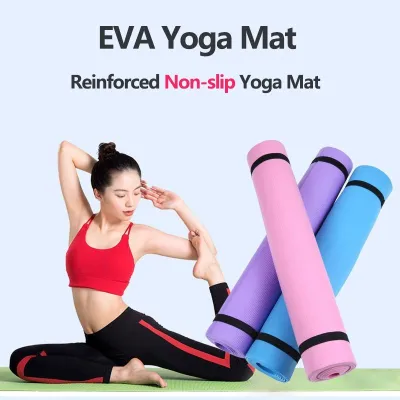
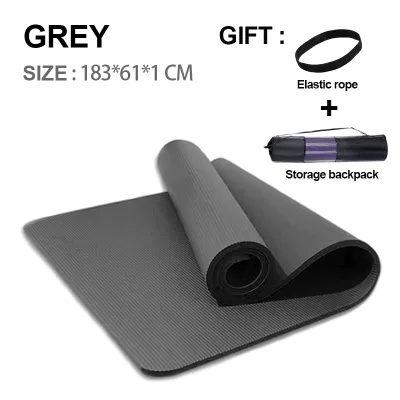
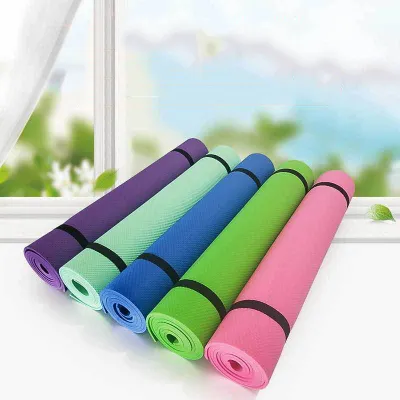
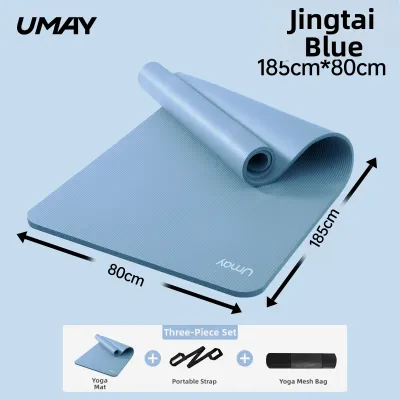
Prices are valid at publication and may change. Please refer to the product page for the latest price.
NBR Mats: Evaluating Cushioning and Comfort
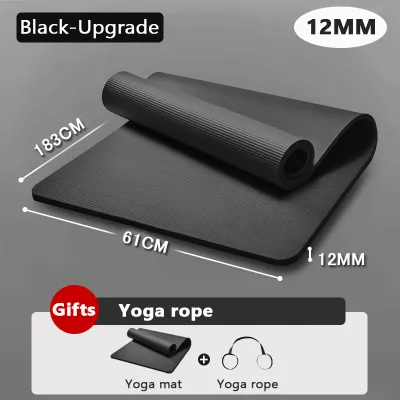
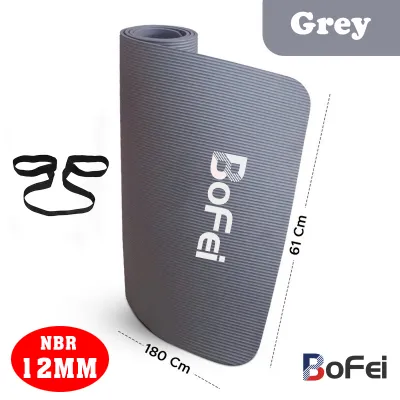
NBR (Nitrile Butadiene Rubber) is a synthetic rubber foam widely recognized for its plush, highly cushioned feel. This material is expanded during manufacturing to create a thick, air-filled structure, typically ranging from 10mm to 15mm in thickness. This substantial barrier makes NBR mats highly suitable for low-impact, floor-based exercises such as Pilates, core conditioning, gentle stretching, and physical therapy routines where your body weight is concentrated on sensitive pressure points like the knees, elbows, and hips.
However, this extreme cushioning comes with a significant trade-off in terms of stability. Because NBR is highly compressible, your feet and hands will sink deep into the foam when you stand on it. This compression compromises your balance and ankle alignment, making NBR a poor choice for standing yoga poses, balance training, or fast-paced transitions. The spongy texture can cause your ankles to wobble, increasing the risk of joint strain during dynamic movements.
When shopping for an NBR mat, do not rely solely on thickness as an indicator of quality. Check the product label or specifications for density ratings. A low-density NBR mat will bottom out easily, allowing your joints to press directly against the hard floor despite the mat’s thickness. Look for high-density NBR options with a ribbed or textured surface pattern, which helps improve traction and prevents the foam from sliding across tile or polished wood floors during use.
TPE Mats: Weighing Balance and Eco-Conscious Features
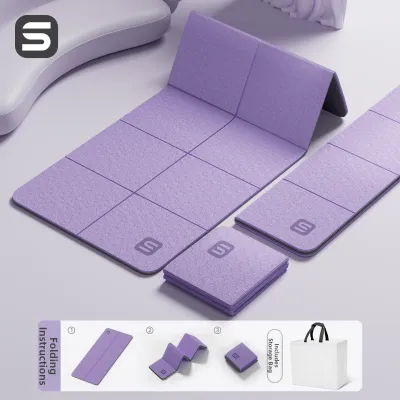
TPE (Thermoplastic Elastomer) is a hybrid material made from a blend of plastic and rubber polymers. It represents a middle ground in the workout mat market, offering a balance of moderate cushioning, firm support, and lightweight portability. Typically manufactured in thicknesses of 4mm to 6mm, TPE mats provide enough density to protect your joints during light fitness routines and standard yoga practices without sacrificing the stability needed for standing poses.

One of the primary advantages of TPE is its lightweight nature. A standard TPE mat is exceptionally easy to roll up, secure with a strap, and carry to local fitness studios, gyms, or outdoor parks. This portability is highly beneficial for active individuals who commute frequently. Additionally, TPE is naturally closed-cell, meaning its surface is non-porous and does not absorb sweat, moisture, or bacteria. In humid conditions, this closed-cell structure makes the mat easier to keep hygienic and odor-free.
While TPE is often marketed as an eco-friendly alternative to traditional PVC mats, you should verify these environmental claims carefully. Check the product packaging or manufacturer specifications for details on recyclability and chemical composition. True high-quality TPE is non-toxic and recyclable, but some budget-friendly options may contain chemical fillers or additives that reduce the material’s lifespan. Inspect the label to ensure the mat is free from heavy metals, phthalates, and PVC before making a purchase.
Rubber Mats: Assessing Grip and Long-Term Durability
Natural and synthetic rubber mats are the heavy-duty workhorses of the fitness world, designed for intense, high-performance training. These mats are highly favored by advanced yoga practitioners and fitness enthusiasts who engage in hot yoga, heavy sweating, or high-intensity interval training (HIIT). The primary strength of rubber lies in its exceptional grip potential; the material naturally provides a high-friction surface that prevents hands and feet from slipping, even when wet.
Unlike TPE, many high-end natural rubber mats feature an open-cell structure. This design allows the mat to absorb moisture and sweat during a workout, maintaining a reliable grip throughout intense sessions. However, this superior performance comes with a trade-off in weight and portability. Rubber mats are dense and heavy, often weighing between 2 and 3.5 kilograms. This makes them less convenient for daily commuting or long-distance travel, serving better as a dedicated home-gym mat or a stationary studio option.
Safety and material origin are crucial checks when selecting a rubber mat. Natural rubber is harvested from rubber trees and contains latex, which can trigger allergic reactions in sensitive individuals. If you have a known latex allergy, you must avoid natural rubber mats and look for synthetic rubber alternatives, such as polyurethane (PU) or latex-free synthetic blends. Always read the product specifications carefully to confirm the material source and allergen warnings before buying.
Comparing Materials: The Decision Matrix
To finalize your selection, it is helpful to compare NBR, TPE, and rubber across key physical characteristics. The table below outlines how these materials perform under typical usage conditions, allowing you to match their specifications to your primary exercise style.
| Material | Typical Thickness | Grip Potential | Portability | Ideal Exercise Types |
|---|---|---|---|---|
| NBR | 10mm – 15mm | Low to Moderate | High (Very Light) | Pilates, floor stretching, physical therapy |
| TPE | 4mm – 6mm | Moderate to High | High (Lightweight) | Standard yoga, light fitness, mixed-modality |
| Rubber | 3mm – 5mm | Excellent (Wet & Dry) | Low (Heavy) | Hot yoga, HIIT, intense daily practices |
Use this simple decision framework to guide your purchase:
- Choose NBR if your routine consists almost entirely of floor-based exercises, you require maximum joint cushioning, and you prefer a budget-friendly option (often priced under ₱1,000).
- Choose TPE if you practice a mix of standing and floor exercises, need a lightweight mat for commuting, and want a hygienic, closed-cell surface that resists sweat absorption.
- Choose Rubber if you engage in sweat-heavy workouts, require maximum slip resistance, prioritize long-term durability, and do not mind a heavier mat.
- Verify first if you have skin sensitivities or latex allergies, in which case you must check the product specifications for certified latex-free or synthetic materials.
Before checking out, always verify the exact dimensions, weight, and density specifications listed on the product page to ensure the mat meets your physical space and carrying preferences.
Material-Specific Care and Maintenance
Proper maintenance is essential to preserve the grip, hygiene, and structural integrity of your workout mat over time. Regardless of the material, the general cleaning rule is to use a mild solution of water and a few drops of gentle dish soap. Avoid using harsh chemical cleaners, bleach, or concentrated essential oils. Essential oils can degrade the surface of TPE and strip the natural grip from rubber mats, leaving them permanently slick and unusable.
After cleaning, drying conditions are critical to prevent material breakdown. Always air-dry your mat in a well-ventilated, shaded indoor area. Never expose TPE or natural rubber mats to direct sunlight. UV rays accelerate the degradation of these materials, causing TPE to lose its elasticity and natural rubber to dry out, discolor, and crumble. Ensure the mat is completely dry on both sides before rolling it up to prevent mold growth.
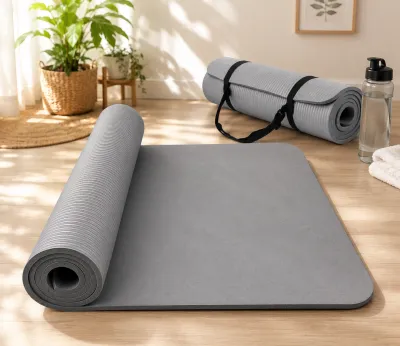
When storing your mat, always roll it with the top, textured side facing outward. Rolling it inside-out helps the mat lay flat on the floor during your next workout and prevents the corners from curling upward. Avoid folding your mat or placing heavy objects on top of it during storage, as this can cause permanent creasing, cracking, and irreversible structural damage to the internal foam or rubber fibers.
Frequently Asked Questions (FAQ)
Can I use a thick NBR mat for standing yoga poses?
Using a thick NBR mat for standing yoga poses is generally not recommended due to its high compressibility. The soft, spongy foam sinks under your body weight, which destabilizes your ankles and makes balancing difficult. For standing poses, a thinner, firmer mat made of TPE or rubber is preferred to provide a stable foundation and protect your joints from twisting.
How do I know if a TPE mat is truly eco-friendly?
To verify if a TPE mat is eco-friendly, look for specific product certifications on the label rather than relying on generic marketing terms. Check if the manufacturer specifies that the mat is biodegradable, recyclable, and free from PVC, phthalates, and heavy metals. Keep in mind that while TPE is technically recyclable, local recycling facilities in your area must support polymer processing to recycle it.
Why does my new rubber mat have a strong smell?
A strong, distinct odor is a natural characteristic of new rubber mats, especially those made from natural tree rubber. This smell is caused by the natural off-gassing of the organic material and is not a safety hazard. To reduce the odor, unroll the mat and let it air out in a well-ventilated, shaded outdoor or indoor area for several days before your first workout.

Community discussion
Share your experience or ask a question. Comments are reviewed before publication.