
To determine if a new set of 10 lbs plates will fit your existing barbell, you must check one critical measurement: the inner diameter of the plate’s center hole compared to the outer diameter of your barbell’s sleeve. Weight plates and barbells are manufactured under two completely different sizing systems—Standard and Olympic. Because a 10 lbs plate can be manufactured in either style, assuming it will fit based on weight alone is a common and costly mistake.
Before purchasing new equipment for your home setup, taking a few seconds to measure your current gear ensures a perfect, safe fit. This guide outlines the exact physical differences between these two systems, provides step-by-step instructions on how to measure your equipment, and highlights what to look for when browsing fitness supply shops.
The Deciding Spec: Standard vs. Olympic Center Holes
The physical compatibility between a barbell and a weight plate is dictated entirely by the manufacturing standard, not the weight of the plate itself. Whether you are buying a light 2.5 lbs plate or a heavier 10 lbs plate, the center hole diameter remains constant within its respective category.
Products mentioned in this guide
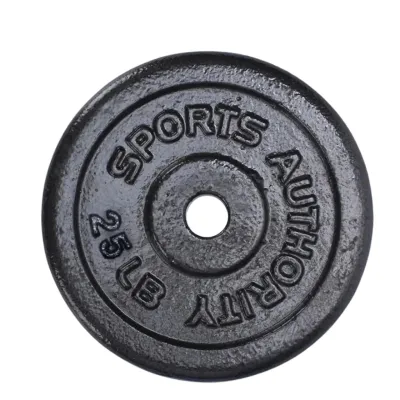
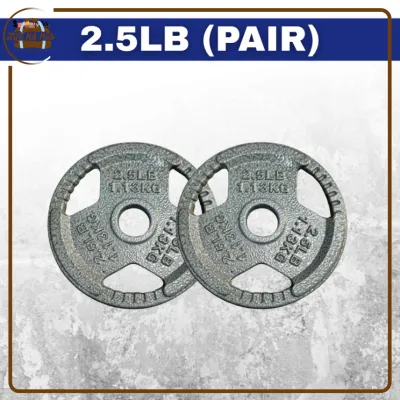
Prices are valid at publication and may change. Please refer to the product page for the latest price.
Standard weight plates are designed with a 1-inch (approximately 25mm) center hole. These plates are engineered for lighter, budget-friendly barbells typically found in home gym starter kits. Because the bar itself is thinner, these standard bars are best suited for moderate resistance training and lack the rotating sleeves found on professional lifting bars.
Olympic weight plates feature a 2-inch (approximately 50mm) center hole. This is the global standard for commercial gyms, competitive powerlifting, and Olympic weightlifting. Olympic barbells are built to handle significantly heavier loads and feature rotating sleeves on each end, which reduce rotational torque on your wrists during dynamic lifts.
Understanding this distinction is crucial because a 10 lbs plate is one of the few weight increments widely produced in both 1-inch and 2-inch configurations. Checking this single specification in the product description is the most reliable way to prevent ordering incompatible equipment.
How to Measure Your Barbell Sleeve and Current Plates
Before purchasing new 10 lbs plates, verifying your existing equipment’s dimensions will save you the hassle of returns. You can easily determine your barbell’s size using basic tools you likely already have at home.

First, ensure your barbell is completely unloaded and resting securely on the floor or a sturdy rack. Never attempt to measure a bar that is unbalanced or propped up precariously, as a rolling barbell can cause painful pinching injuries or damage your flooring.
To measure the barbell sleeve—the smooth outer end where plates are loaded—use a digital caliper for the most precise reading. If you do not own a caliper, wrap a flexible measuring tape around the sleeve to find its circumference. A circumference of approximately 3.14 inches (80mm) indicates a standard 1-inch bar, while a circumference of about 6.28 inches (160mm) confirms a 2-inch Olympic bar.
If you already own plates that fit your barbell perfectly, you can measure them directly instead. Lay one of your existing plates flat on the floor and measure the inner diameter of the center hole from one inside edge to the opposite inside edge.
For a quick visual check, look at the relative thickness of the barbell sleeve. An Olympic barbell sleeve is thick and robust, roughly matching the diameter of a standard beverage can. A Standard barbell sleeve is much thinner, closely resembling the thickness of a typical household broomstick.
What to Expect When Shopping for 10 lbs Plates
When shopping for 10 lbs plates in the Philippines, you will encounter various materials and styles, each catering to specific training environments and barbell standards.
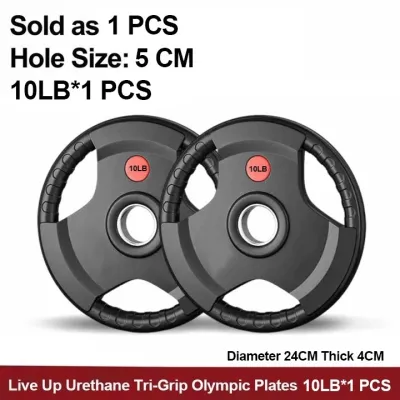
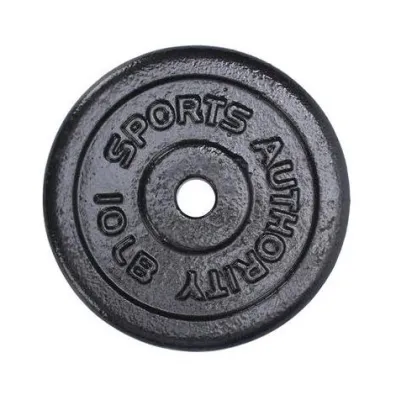
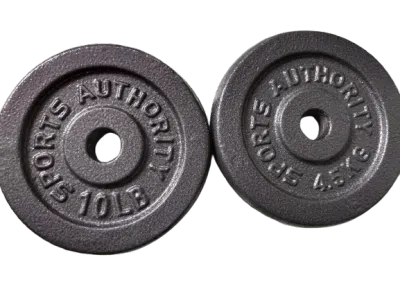
Classic cast iron and rubber-coated plates are highly versatile and widely available in both 1-inch and 2-inch center hole sizes. In highly humid tropical climates, bare cast iron is prone to surface rust over time if kept in a garage or outdoor gym. For these environments, rubber-coated plates offer excellent moisture protection. Prices typically range from budget-friendly options around ₱600 for standard cast iron up to ₱1,500 or more for premium Olympic bumper plates, but you must carefully read the product specifications to ensure you select the correct hole diameter, as they look visually similar in photos.
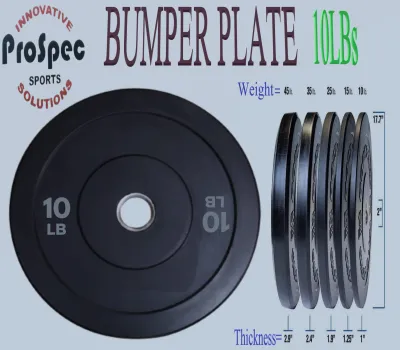
Bumper plates, which are made of dense solid rubber or recycled crumb rubber, are designed to be dropped from overhead. True bumper plates are almost exclusively manufactured with 2-inch Olympic center holes to accommodate standard Olympic lifting bars. If you see a “10 lbs bumper plate” advertised online, it is highly likely an Olympic-sized plate; any 1-inch plate made of rubber is typically a standard rubber-coated iron plate rather than a true drop-safe bumper.
Keep in mind that while a 10 lbs plate has a smaller outer diameter than a standard 45 lbs plate, this smaller size does not change how the center hole fits the barbell sleeve. When shopping, ignore the overall plate diameter and focus entirely on finding “1-inch” or “2-inch (50mm)” in the technical specifications.
What Happens if You Buy the Wrong Hole Size?
Attempting to use mismatched weight plates and barbells is not only frustrating but also presents serious safety hazards during your workouts.
If you accidentally purchase a plate with a hole that is too small—such as a 1-inch Standard plate for a 2-inch Olympic bar—the plate simply will not slide onto the sleeve. There is no safe way to force or modify the plate to fit, meaning you will have to go through the return process.
The opposite scenario is far more dangerous. If you slide a 2-inch Olympic plate onto a 1-inch Standard barbell, the plate will physically fit but will wobble excessively on the thin sleeve. During exercises like squats, overhead presses, or deadlifts, this loose fit causes the weights to shift unevenly. This instability can lead to sudden balance loss, pinched fingers when adjusting the plates, or damage to your home gym floor if a plate slips past the collar.
While plastic or metal sleeve adapters are commercially available to convert a 1-inch barbell sleeve to accept 2-inch plates, they come with trade-offs. These adapters add bulk to your barbell, reducing the total loadable sleeve length and potentially shifting the bar’s overall center of gravity during heavy lifts.
Frequently Asked Questions (FAQ)
Can I use an adapter to fit Olympic plates on a standard barbell?
Yes, you can install specialized plastic or metal sleeve adapters over a 1-inch standard barbell sleeve to increase its outer diameter to 2 inches. However, keep in mind that these adapters occupy valuable space on the sleeve, which reduces the number of plates you can load. They can also alter the balance of the bar, so they are best reserved for light to moderate lifting rather than heavy powerlifting.
Do all 10 lbs bumper plates have a 2-inch hole?
Yes, authentic bumper plates are designed specifically for Olympic-style weightlifting and powerlifting, meaning they are built with a 2-inch (50mm) center hole. If you encounter a 10 lbs plate with a 1-inch hole, it is almost certainly a standard cast-iron, vinyl-filled, or rubber-coated plate rather than a true solid rubber bumper plate meant for dropping.
Community discussion
Share your experience or ask a question. Comments are reviewed before publication.