
Quick Answer: Which Vibration Plate Fits Your Strength Goals?
Choosing between an oscillating and a linear vibrating plate for strength training is not a matter of finding a single winner. Instead, the right choice depends on your specific movement patterns, joint sensitivity, and training focus. Oscillating (pivotal) plates mimic natural walking or running mechanics by rocking side-to-side, making them highly suitable for dynamic movements and users seeking lower joint stress. Linear (vertical) plates move uniformly up and down, providing a rapid, consistent vertical force that is often preferred for static holds and heavy load simulation. Before purchasing any vibrating plate, you must verify the manufacturer’s specifications, safety guidelines, and weight limits to ensure the equipment matches your physical needs and fitness level.
How Oscillating and Linear Vibration Plates Work
To understand how these fitness machines affect your strength training, you must first look at their mechanical designs. An oscillating vibrating plate operates on a pivotal axis, much like a seesaw. When one side of the platform rises, the other side lowers. This design creates a continuous tilting motion that forces your pelvis to tilt alternately left and right. As a result, your body must constantly adjust its center of gravity, engaging stabilizing muscles in a manner that closely resembles the natural physical mechanics of walking, jogging, or climbing stairs.

In contrast, a linear vibrating plate moves the entire platform straight up and down simultaneously. There is no tilting or side-to-side rocking. Instead, the machine delivers a uniform vertical acceleration directly to whatever part of your body is in contact with the plate. This movement creates a rapid, high-frequency buzzing or tapping sensation. Because the force is purely vertical, it pushes directly against gravity, requiring your muscles to contract rapidly to stabilize your body against the upward acceleration.
Products mentioned in this guide
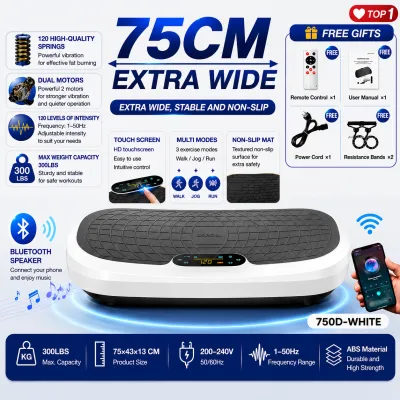
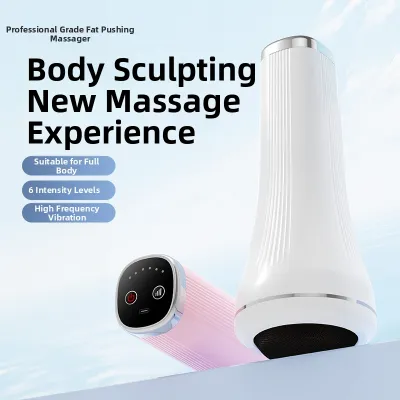
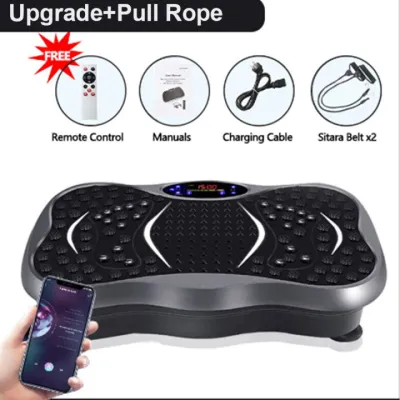
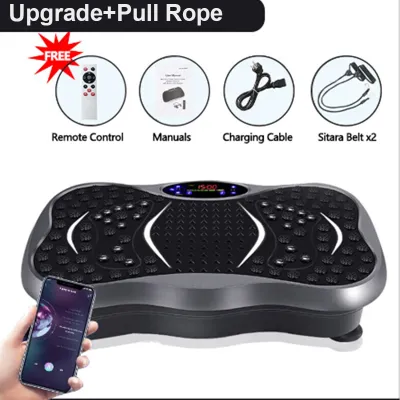
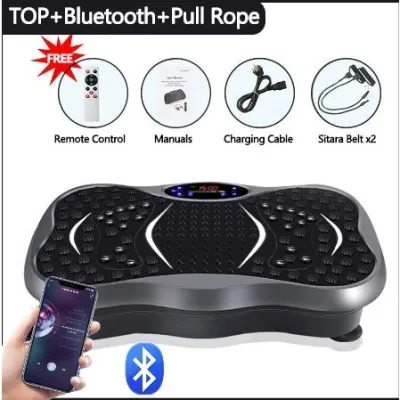
Prices are valid at publication and may change. Please refer to the product page for the latest price.
These mechanical differences change how your body experiences exercises like squats, lunges, or push-ups. On an oscillating plate, you will feel a rolling, wave-like motion that shifts your weight from one foot to the other. On a linear plate, you will feel an intense, uniform vibration throughout your entire lower or upper body. Understanding these sensations is key to selecting a machine that aligns with your physical comfort and training style.
Evaluating Muscle Activation and Movement Patterns
The way each plate moves directly influences how your muscles contract during a workout. Oscillating plates excel at alternating muscle activation. Because the platform rocks, it naturally engages one side of your body and then the other in rapid succession. This alternating pattern is highly effective for dynamic, unilateral exercises such as lunges, step-ups, or single-leg deadlifts. It forces the core, hips, and stabilizing muscles of the active leg to work continuously to maintain balance, closely mimicking real-world athletic movements.
Linear plates, on the other hand, provide consistent bilateral stimulation. Because the entire surface moves upward at the exact same time, both legs or both arms receive the same amount of force simultaneously. This makes linear plates highly effective for static, isometric holds. Exercises like deep isometric squats, planks, or push-ups benefit from this uniform vertical stimulation, as it forces large muscle groups to contract rapidly and synchronously to resist the upward movement.
When planning your routine, you should assess whether your strength goals lean toward dynamic, functional movements or static, high-intensity muscle contractions. It is also highly recommended to test both types of equipment in a local fitness center if possible, or carefully review the manufacturer’s user manual to understand the recommended exercise postures and movement limitations specific to each machine type.
Assessing Joint Impact and Physical Comfort
Safety and joint health must always come first when incorporating vibration training into your fitness routine. Equipment can never replace proper training, physical preparation, and sound judgment. Oscillating plates are generally observed to reduce direct vertical impact on the spine and head. Because the platform pivots side-to-side, the alternating motion is largely absorbed by the hips and pelvis, preventing the vibration from traveling directly up the skeletal column to your neck and head. This makes oscillating plates a more comfortable option for many users, particularly those sensitive to motion sickness or headaches.
Linear plates deliver direct vertical force, which travels straight up through your bones if your posture is incorrect. To use a linear plate safely, you must maintain active posture control. This means never locking your knees or elbows during an exercise. Keeping your joints slightly bent allows your muscles, rather than your bones and joints, to absorb the rapid vertical shock. If you stand on a linear plate with locked knees, the vibration will travel directly to your spine and head, which can cause discomfort, dizziness, or joint strain.
Before starting any vibration training program, you must check the manufacturer’s safety warnings, especially if you have pre-existing joint conditions, spinal issues, or medical implants. Always lead with your physical limits: start at the lowest frequency and amplitude settings, monitor how your body responds, and stop the session immediately if you experience any pain, dizziness, or joint discomfort.
Decision Framework: Matching the Plate to Your Routine
To help you navigate your purchase, use this practical decision framework to match the vibrating plate technology to your specific physical condition and training goals.
Choose an Oscillating Plate if:
- Your strength routine focuses heavily on dynamic, alternating movements like lunges, step-ups, and single-leg balance work.
- You prefer a natural, gait-like physical stimulus that mimics the biomechanics of walking or running.
- You are sensitive to direct vertical spinal compression, or you experience headaches or dizziness from vertical vibrations.
- You want a user-friendly platform for general fitness, active recovery, and balance improvement.
Choose a Linear Plate if:
- Your strength routine emphasizes static, isometric holds such as deep squats, planks, and push-ups.
- You want uniform, simultaneous bilateral muscle stimulation across both sides of your body.
- You are training for specific vertical force adaptation, athletic power, or rapid muscle contraction speed.
- You have excellent joint stability and are comfortable maintaining active, bent-knee postures throughout your workout.
Verify First if:
- You have pre-existing joint issues, are recovering from an injury, or are unsure about the appropriate amplitude and frequency settings. In any of these scenarios, you must consult a qualified healthcare or fitness professional before using a vibrating plate. Never use the equipment as a substitute for professional medical advice or physical therapy.
Essential Specifications to Verify Before Purchasing
When shopping on an online marketplace or visiting a local fitness retailer, you must look past marketing claims and verify specific technical details on the product label or manufacturer’s website.
Frequency (Hz) and Amplitude (mm): The frequency, measured in Hertz (Hz), indicates how many times the plate moves per second, while the amplitude, measured in millimeters (mm), indicates how far the plate travels. For strength training, you need a machine that offers adjustable ranges. Verify that the plate allows you to start at a low frequency (such as 5 to 15 Hz) and gradually progress to higher settings as your strength and comfort improve.
Weight Capacity and Platform Size: You must verify the maximum weight capacity of the machine. This limit must safely support your body weight plus any external weights, such as dumbbells or kettlebells, you plan to use. Additionally, consider your training venue. In the warm, humid climate of the Philippines, home gym equipment is highly susceptible to sweat and moisture. Verify that the platform features a high-quality, rust-resistant frame and a spacious, textured surface to accommodate your stance comfortably.
Safety Features: Look for essential safety mechanisms, including a non-slip rubber surface to prevent slipping when your hands or feet are sweaty. The machine should also feature an easily accessible emergency stop button or a remote control strap. Always check the manufacturer’s guidelines regarding maximum session durations to prevent overexposure.
Warranty and Support: Because strength training puts significant stress on the motor and structural frame, verify the warranty terms before buying. Investing in a high-quality plate, which often ranges from ₱8,000 to ₱25,000 depending on the motor type, requires protecting your purchase. Look for brands that offer clear coverage for the motor and frame, ensuring you have reliable customer support if the machine requires maintenance.
Frequently Asked Questions (FAQ)
Can I use heavy dumbbells or barbells on a vibrating plate?
You must always check the manufacturer’s maximum weight capacity before adding external loads to a vibrating plate. This capacity limit must cover your body weight plus the total weight of your dumbbells or barbells. Never drop heavy weights onto the platform, as the sudden impact can permanently damage the internal motor, drive belt, or electronic sensors. If you are new to vibration training, always start with bodyweight exercises or light resistance bands to adapt to the unstable surface before gradually introducing heavier external loads.
How long should a strength training session on a vibration plate last?
The duration of your session depends heavily on the manufacturer’s specific guidelines, the frequency settings, and your current fitness level. Generally, individual exercise intervals on the plate should be kept short, often ranging from 30 to 60 seconds per set, followed by adequate rest. A total session on a vibrating plate typically does not need to exceed 15 to 20 minutes. Remember that vibration plates are designed to supplement a broader, well-rounded strength training program, not to completely replace traditional resistance exercises.
Community discussion
Share your experience or ask a question. Comments are reviewed before publication.