
Quick Answer: Overgrip or Replacement Grip?
Choosing the right grip for a badminton racket depends entirely on the current condition of your racket’s handle and your personal preference for handle thickness. If your racket’s original factory grip is still intact, clean, and cushioned, but you want to improve sweat absorption, add tackiness, or slightly increase the handle size, you should choose an overgrip. An overgrip is a thin, inexpensive layer designed to wrap over an existing base.
Conversely, you need a replacement grip if the original factory grip is peeling, crumbling, emitting an odor, or completely compressed. A replacement grip is a thick, cushioned layer applied directly to the bare wooden handle of the racket. Wrapping a new overgrip over a degraded, hardened base grip will not restore the necessary shock absorption, which can lead to hand fatigue and joint strain during intense rallies.
Before purchasing any grip for a badminton racket, always inspect the underlying layer. If the base grip is structurally sound, an overgrip is the most cost-effective and customizable choice. If the base is compromised, stripping the handle down to the wood and applying a fresh replacement grip is essential to protect your racket and your arm.
Products mentioned in this guide
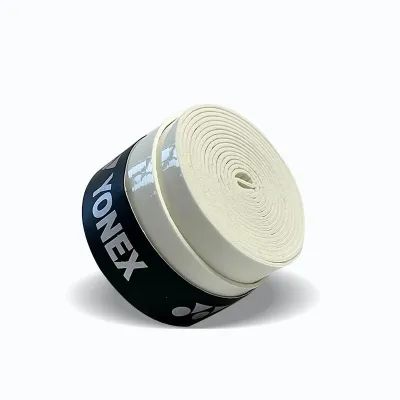
![[ Buy 2 Take 2 ] Yonex AC102EX Overgrip Yonex Thin Grip Belt Pickleball Tennis Badminton Racket Sweat-absorbent Belt Feather Racket Wrapped Belt Hand Rubbe Tennis Badminton Overgrip Grips Tapes](https://img.lazcdn.com/g/p/cf3d0be0e804a079d742737a426c4aee.jpg_400x400q80.jpg_.webp)
Prices are valid at publication and may change. Please refer to the product page for the latest price.
Core Differences: Base Layer vs. Add-On Layer
To maintain your badminton equipment properly, you must understand the structural and functional differences between these two grip categories. A replacement grip serves as the foundational layer of the racket handle. It is manufactured with a thick polyurethane or synthetic foam layer, often measuring between 1.5mm and 2.0mm in thickness, and features a full adhesive backing. This grip wraps directly onto the bare wooden handle (the pallet) to provide the primary cushioning, vibration dampening, and ergonomic shape of the handle.

An overgrip, on the other hand, is a much thinner utility layer, typically ranging from 0.4mm to 0.7mm in thickness. It generally features only a small strip of adhesive at one end to secure the start or finish of the wrap. Overgrips are designed to be wrapped on top of an existing replacement grip or factory grip. Their primary purpose is to offer a customizable surface texture—such as high tackiness or moisture absorption—without significantly altering the handle’s original dimensions.
Using these grips incorrectly can severely impact your playability and comfort. If you wrap an overgrip directly onto the bare wood of a racket handle, the lack of cushioning will cause the hard wooden edges to dig into your palm, transmitting harsh impact vibrations directly to your wrist and elbow. Conversely, wrapping a thick replacement grip on top of another replacement grip will make the handle excessively bulky and round. This extra thickness dampens your ability to feel the handle’s bevels, which are critical for quick grip transitions between forehand and backhand shots.
When to Choose an Overgrip for Your Racket
An overgrip is the ideal choice for players who want to fine-tune their racket feel and maintain a hygienic playing surface. In hot and humid playing environments, such as non-air-conditioned sports centers in the Philippines, sweat accumulation is a constant challenge. Overgrips excel at moisture management, offering specialized polyurethane surfaces that maintain a tacky feel even when wet, or ultra-absorbent properties that prevent the racket from slipping out of your hand during high-speed smashes.
Another major advantage of overgrips is their cost-effectiveness and ease of replacement. While a high-quality replacement grip can be relatively expensive and time-consuming to install, overgrips are highly affordable, often costing between ₱50 and ₱150 per piece. This low cost allows active players to change their overgrip frequently—sometimes after every few sessions—to ensure a fresh, clean, and reliable hold on the racket without stripping the entire handle assembly.
Overgrips also allow for precise, minor adjustments to the handle size. If your racket handle feels slightly too small, adding a single layer of overgrip can increase the circumference just enough to fit your hand comfortably while preserving the distinct octagonal bevels of the wooden handle. This preservation of bevel feel is essential for advanced players who rely on finger control and subtle racket face adjustments during deceptive net shots.
However, you must recognize the physical limitations of an overgrip. It is not designed to provide structural cushioning. If the underlying factory grip has already lost its elasticity, flattened out, or hardened over years of use, wrapping a thin overgrip over it will not restore the shock-absorbing properties. In this scenario, the overgrip merely masks a deeper structural issue that can eventually cause discomfort or injury.
When You Need a Full Replacement Grip
There comes a point in every racket’s lifespan when an overgrip is no longer sufficient, and a full replacement grip is required. The most obvious indicator is the physical degradation of the original factory grip. Over time, the synthetic foam in a base grip breaks down due to pressure, friction, and absorbed sweat. This degradation manifests as visible peeling, cracking, flaking black residue, or a sticky, melted texture that leaves stains on your hands.
Restoring the racket’s shock absorption is the primary health-related reason to install a new replacement grip. When you hit a badminton shuttlecock, especially during powerful smashes, high-frequency vibrations travel down the shaft. A fresh, high-quality replacement grip acts as a dampener, absorbing these forces before they reach your hand. If the base grip is compressed flat, these vibrations travel directly into your arm, increasing the risk of repetitive strain injuries like epicondylitis (tennis elbow).
If you purchase a second-hand racket or retrieve an old racket from long-term storage, the base grip is almost certainly compromised. Polyurethane materials degrade naturally over time when exposed to heat and humidity, even if the racket has not been played with. Replacing the old grip entirely ensures that you start with a clean, hygienic, and structurally sound foundation that meets the racket’s original design specifications.
Applying a new replacement grip essentially resets the handle to its factory-fresh state. It ensures that the grip circumference matches standard sizing conventions (such as G5 or G6) and provides a clean, uniform surface. This clean foundation is critical because any lumps, uneven wear, or hollow spots in the base layer will be magnified once you wrap an overgrip on top, leading to an inconsistent feel during play.
Overgrip vs Replacement Grip: Quick Comparison
To help you quickly evaluate which option suits your current situation, the table below outlines the key structural and functional differences between overgrips and replacement grips.
| Feature | Replacement Grip | Overgrip |
|---|---|---|
| Primary Function | Provides core cushioning and shock absorption | Enhances surface texture, tackiness, and sweat control |
| Application Layer | Wrapped directly onto the bare wooden handle | Wrapped over an existing base or replacement grip |
| Average Thickness | 1.5mm to 2.0mm | 0.4mm to 0.7mm |
| Adhesive Backing | Full-length adhesive strip | Minimal adhesive (usually only at the starting/ending tip) |
| Durability | High (lasts several months to a year) | Low to Moderate (requires frequent replacement) |
| Relative Cost | Moderate to High | Low (highly affordable) |
| Best Used When | Base grip is worn, hard, peeling, or crumbling | Base grip is intact but needs better grip, sweat absorption, or minor thickness adjustment |
How to Inspect Your Racket Handle Before Deciding
Before making a purchase, perform this quick, four-step physical inspection of your racket handle to determine exactly what level of maintenance is required.
Step 1: Remove the Existing Overgrip
If your racket currently has an overgrip installed, carefully peel it off. Take your time during this step to avoid tearing the underlying base grip, especially if the overgrip has become stuck to the base over time due to dried sweat or heat.
Step 2: Visually Inspect the Base Grip
Examine the surface of the base grip under good lighting. Look for signs of dry rot, flaking material, deep cracks, or areas where the synthetic leather has worn away completely to reveal the wooden handle underneath. If you see black foam crumbling off or feel a sticky, melted residue, the base grip must be replaced.
Step 3: Perform the Squeeze Test
Hold the racket handle firmly in your hand and squeeze it. A healthy base grip should feel slightly spongy, offering a noticeable rebound and cushioning against your palm. If the handle feels hard, solid, or completely unresponsive—as if you are squeezing bare wood—the internal foam has collapsed and lost its shock-absorbing properties.
Step 4: Make Your Decision
If the base grip passes both the visual and squeeze tests, it is structurally sound. You can safely proceed with wrapping a fresh overgrip of your choice to customize the feel. If the base grip fails either test, strip it off entirely, clean any adhesive residue off the wooden handle, and apply a new replacement grip.
If you are ever unsure about the specific handle materials or how stripping the grip might affect your racket’s warranty, consult the manufacturer’s care instructions or visit a professional sports shop for assistance.
Frequently Asked Questions (FAQ)
Can I use two overgrips instead of a replacement grip?
While you can physically wrap two overgrips over a bare wooden handle, it is not recommended. Overgrips lack the thickness and specialized foam density required to absorb heavy impact vibrations, which can lead to hand discomfort. Additionally, stacking multiple overgrips tends to round out the handle’s octagonal bevels. This loss of bevel definition makes it difficult to feel the orientation of the racket face, hindering your ability to execute precise, technical shots.
How often should I change my badminton racket grip?
The replacement frequency depends on how often you play, your sweat levels, and the local climate. For overgrips, you should change them as soon as they lose their tackiness, show visible dirt or discoloration, or begin to smell. Active players in humid regions often change their overgrip every 2 to 4 weeks. For replacement grips, you should change them once they lose their cushioning, feel hard, or begin to peel and crumble, which typically occurs every 6 to 12 months for regular players.
Community discussion
Share your experience or ask a question. Comments are reviewed before publication.