
Quick Answer: Is Paidu the Right Yoga Mat for Your Practice?
Selecting the ideal yoga mat in the Philippines requires balancing your personal practice style, budget, and physical joint needs against the challenges of a tropical climate. The market is filled with options ranging from premium international imports to ultra-budget unbranded products. Within this landscape, Paidu has established itself as an accessible, value-oriented brand popular on local e-commerce platforms. It offers entry-level and intermediate practitioners a functional starting point without a heavy financial commitment.
Whether a Paidu mat is right for you depends on your specific workout conditions and physical requirements. If you need a lightweight, budget-friendly mat for general home fitness, Pilates, or beginner-level hatha yoga, Paidu provides a practical balance of cushioning and affordability. The brand’s mats are easy to transport and gentle on the joints during floor exercises.
However, if you practice high-intensity vinyasa or hot yoga daily, sweat heavily, or require absolute slip resistance under wet conditions, you should consider investing in premium natural rubber or polyurethane (PU) mats. Alternatively, if you prefer to physically test a mat’s texture, density, and grip before buying, mid-range sports retail brands found in local malls may serve you better. Always match your equipment to your specific exercise environment and physical limits to ensure a safe and effective practice.
Products mentioned in this guide
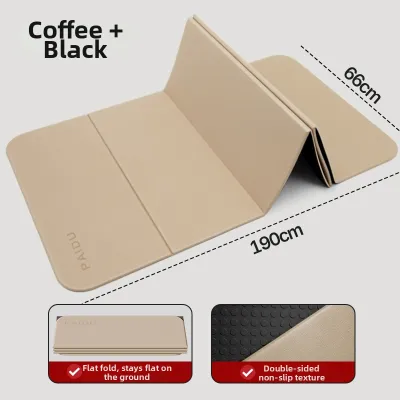
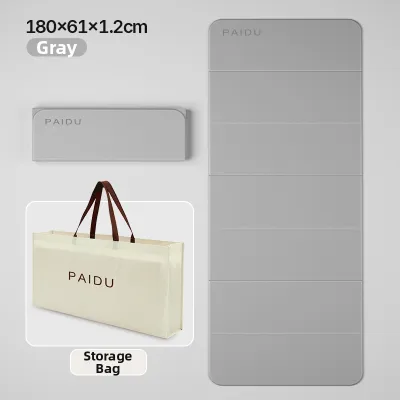
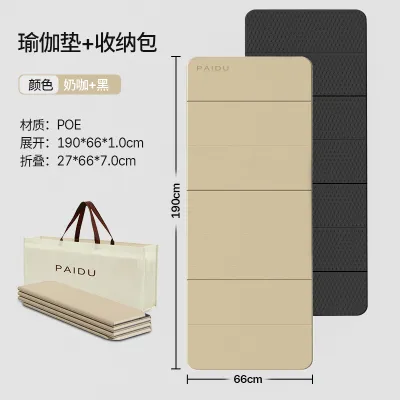
Prices are valid at publication and may change. Please refer to the product page for the latest price.
Evaluating Paidu: Core Specifications and Build Quality
To understand how Paidu performs, you must look closely at its material composition, physical dimensions, and construction. Unlike premium brands that rely on heavy natural rubber, Paidu primarily utilizes synthetic materials such as Thermoplastic Elastomer (TPE) and Nitrile Butadiene Rubber (NBR). Some of their entry-level models are also made of Polyvinyl Chloride (PVC). Each of these materials behaves differently under stress, humidity, and repeated use.

TPE is widely regarded as the middle ground for modern yoga mats. Paidu’s TPE mats are typically closed-cell, meaning they do not absorb sweat or moisture. This is highly beneficial for hygiene in hot and humid Philippine environments, as it prevents bacteria and odors from penetrating the core of the mat. These mats usually feature a dual-layer design with a textured, non-slip pattern on both sides to help keep the mat anchored to your floor and your hands anchored to the mat.
NBR mats from Paidu are characterized by their extreme thickness, often ranging from 10mm to 15mm. This material is highly sponge-like and lightweight, providing excellent impact absorption on hard surfaces like tile or concrete floors. However, this extra cushioning comes with a trade-off in stability. The squishy nature of NBR can compress excessively under pressure, making standing balance poses like Tree Pose (Vrksasana) or Warrior III (Virabhadrasana) significantly more challenging and potentially straining your ankles or wrists.
Before purchasing, always verify the exact specifications on the manufacturer’s label or the official product listing. Dimensions can vary across batches, and what is marketed as a standard size may not suit taller practitioners. A standard Paidu mat typically measures around 183 cm in length and 61 cm in width, which is sufficient for average body sizes but may require upgrading to an extra-wide version if you have a broader frame or prefer more room to move. Additionally, check the weight of the specific model; while TPE and NBR mats are exceptionally light and easy to carry, they lack the heavy, floor-hugging drape of denser materials.
How Paidu Compares to Other Yoga Mat Categories
To determine if Paidu fits your lifestyle, it is helpful to compare it against the three primary categories of yoga mats available in the Philippine market: premium professional brands, mid-range sports retail brands, and ultra-budget e-commerce alternatives.
Paidu vs. Premium Professional Brands
Premium professional mats, such as those made from natural tree rubber or high-density open-cell polyurethane (PU), are designed for rigorous, daily studio use. These mats are engineered to provide maximum grip even when completely wet with perspiration, making them the gold standard for hot yoga and intense vinyasa practices. They also feature superior durability, resisting flaking, stretching, and compression over years of active use.
However, these professional models come with a significant cost. In the Philippines, premium mats can easily range from ₱3,000 to over ₱6,000. They are also heavy, often weighing between 2.5 to 3.5 kilograms, making them cumbersome to carry on daily commutes via public transit or during travel. In contrast, a Paidu mat typically costs between ₱300 and ₱800 and weighs less than a kilogram. While Paidu cannot match the absolute wet-grip performance or lifetime durability of natural rubber, it offers a highly portable and financially accessible alternative for casual practitioners who do not require extreme performance.
Paidu vs. Mid-Range Sports Retail Brands
Mid-range sports retail brands, which are widely available in physical stores across Philippine shopping malls, generally price their mats between ₱800 and ₱1,800. These brands often utilize similar TPE or high-grade PVC materials as Paidu, offering comparable levels of cushioning and traction for general fitness routines.
The primary difference lies in quality control, consumer trust, and the buying experience. Purchasing from an established physical retail store allows you to touch the mat, test its density with your fingers, and inspect the texture before spending any money. Furthermore, retail brands offer straightforward, in-store warranty claims and return policies if you discover a manufacturing defect. With Paidu, which is primarily sold through online marketplaces, you must rely on user reviews, product photos, and third-party shipping, which introduces a small margin of uncertainty regarding the exact texture and color you will receive.
Paidu vs. Budget E-commerce Alternatives
At the lowest end of the market are unbranded, ultra-cheap mats that retail for ₱100 to ₱200 on various online shopping platforms. These products are almost exclusively made of low-grade, highly processed PVC or low-density foam. They frequently suffer from significant quality issues, including a strong, persistent chemical odor that can cause headaches during breathing exercises (pranayama).
Moreover, these ultra-budget mats tend to wear out incredibly fast. Under the friction of hands and feet, the surface can begin to flake, tear, and leave small pieces of debris on your floor within just a few weeks of use. They also offer virtually zero slip resistance, sliding easily on smooth tile floors and creating a safety hazard. Paidu represents a much safer and more reliable “sweet spot.” By spending slightly more, you secure a mat with significantly better quality control, more durable material construction, and a safer, non-toxic composition that will not degrade immediately.
Key Decision Dimensions for Philippine Yogis
When choosing a yoga mat to use in the Philippines, local environmental conditions and lifestyle factors should heavily influence your decision. Below are the key performance metrics you must evaluate.
Grip and Traction
The tropical humidity and warm temperatures in the Philippines mean that even a mild home workout can quickly lead to sweating. Slipping on your mat is not just frustrating; it can lead to joint hyperextension or falls. To verify the slip resistance of a mat, examine its surface texture. Paidu’s TPE mats feature a textured, laser-engraved pattern designed to channel away minimal moisture and provide dry traction. However, if you sweat heavily, a closed-cell TPE mat will cause sweat to pool on the surface, reducing traction. If you experience slipping, you must use a microfiber yoga towel over the mat to absorb moisture and maintain a secure grip.
Cushioning and Joint Support
Many homes in the Philippines feature hard tile, polished concrete, or terrazzo flooring, which can be unforgiving on your knees, elbows, and spine during floor poses. You must balance thickness with density. A 6mm TPE mat from Paidu offers a stable foundation that protects your joints while keeping you close enough to the floor to maintain balance. If you require therapeutic joint support due to chronic pain or injury, a thicker 10mm or 15mm NBR mat may feel more comfortable, but you must accept the reduction in stability during standing poses. Always test your stability on one foot before attempting advanced balance sequences on thick foam.
Portability and Storage
If you plan to attend classes at a local community center, gym, or yoga studio, how you transport your mat is a major consideration. Commuting in urban areas like Metro Manila or Cebu requires gear that is lightweight and compact. Paidu mats excel in this category. Because TPE and NBR are low-density synthetic materials, even their thicker models roll up easily and weigh very little. Most listings include a carrying strap or mesh bag, making it simple to sling the mat over your shoulder. Additionally, check the mat’s “roll memory”—lower-quality mats may resist lying flat when unrolled, curling up at the edges and creating a tripping hazard during your practice.
Care and Maintenance in Humid Climates
High humidity levels accelerate the growth of mold, mildew, and bacteria on damp surfaces. Because Paidu’s TPE mats are closed-cell, they do not absorb moisture, making them much easier to keep sanitary than open-cell natural rubber mats. However, sweat dried on the surface can still create a breeding ground for bacteria and cause unpleasant odors. You must clean your mat regularly using safe, non-abrasive methods. Avoid using harsh chemical bleach or submerging the mat entirely in water, as this can degrade the synthetic binders and ruin the textured surface.
Decision Framework: Which Yoga Mat Should You Buy?
To help you finalize your choice, use this structured decision framework to match your profile with the correct yoga mat category.
- Choose Paidu if: You are a beginner or intermediate practitioner looking for a lightweight, highly affordable mat for home workouts, Pilates, or gentle yoga. It is an excellent choice if you prioritize portability, have a budget under ₱1,000, and want a hygienic, easy-to-clean material like TPE.
- Choose a Premium Brand if: You are a dedicated yogi practicing advanced vinyasa, power, or hot yoga daily. If you sweat heavily, require absolute wet-grip security to prevent injury, and view your mat as a long-term investment that should last for years, saving up for a high-density natural rubber or PU mat is highly recommended.
- Choose a Mid-Range Retail Brand if: You prefer a hands-on shopping experience where you can physically test the mat's thickness, texture, and density before buying. This option is also ideal if you value a physical store warranty and want to avoid waiting for online shipping.
- Verify first if: You have specific material sensitivities, such as a latex allergy (which rules out natural rubber mats), or if you require specialized alignment markers printed on the surface to guide your foot placement. Always check the manufacturer's care instructions and material safety data sheet if you have sensitive skin or allergies.
Frequently Asked Questions (FAQ)
How do I clean and maintain a Paidu yoga mat in a humid climate?
To clean your Paidu mat, wipe it down after every session with a soft cloth dampened with water and a few drops of mild, diluted dish soap. Do not use harsh chemical cleaners, alcohol, or abrasive scrubbing pads, as these can strip the textured non-slip surface. After wiping, it is critical to air dry the mat completely in a well-ventilated, shaded indoor area before rolling it up. Never expose TPE or NBR mats to direct, intense tropical sunlight, as extreme heat will cause the synthetic materials to dry out, crack, and decompose prematurely.
Is a thicker yoga mat always better for beginners?
No, a thicker mat is not always better. While extra thickness (such as 10mm to 15mm NBR) provides excellent cushioning for sensitive knees and hips on hard floors, it compromises your balance. The soft, squishy foam compresses under your weight, making it difficult to find a stable connection with the ground during standing or balancing poses. This instability can lead to joint strain in your ankles and wrists. For most beginners, a medium-thickness mat of 6mm made from a denser material like TPE offers the ideal balance of joint protection and physical stability.
Community discussion
Share your experience or ask a question. Comments are reviewed before publication.