
When selecting a coach whistle for football training, there is no single option that fits every environment. The ideal choice depends on your specific training location, the local climate, and how you structure your drills.
A traditional pea whistle delivers a classic, high-pitched trill with excellent sound projection, making it highly effective for large, open-air football pitches where the sound must travel long distances. However, a pealess whistle offers a consistent, reliable tone that is completely free from the risk of mechanical failure. Because it lacks moving parts, the pealess design is the superior choice for wet, highly humid climates, high-intensity training sessions, and close-quarter drills where quick, repetitive signals are necessary.
Understanding these practical trade-offs will help you select a tool that ensures your instructions are heard clearly across the pitch, regardless of weather conditions or ambient noise.
Products mentioned in this guide
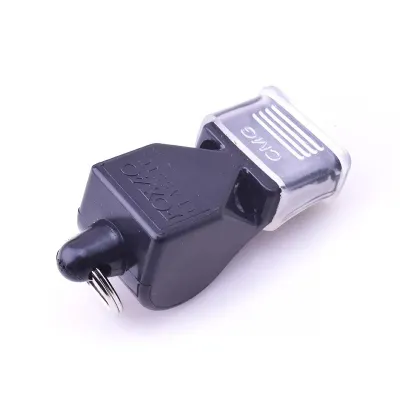
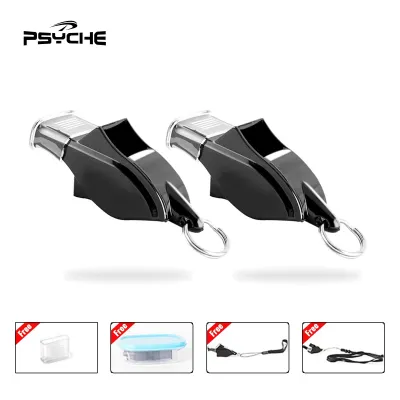
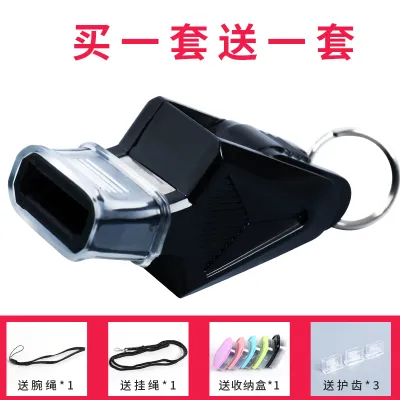
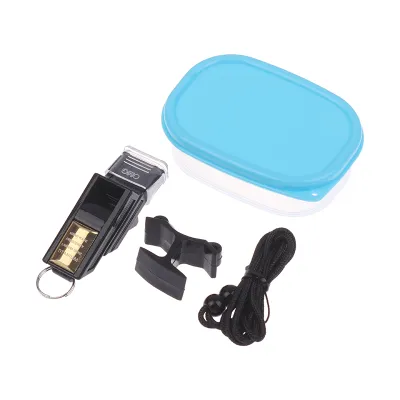
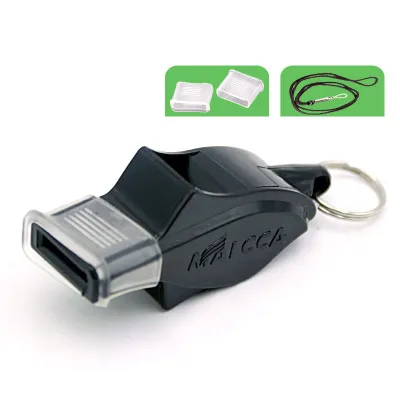
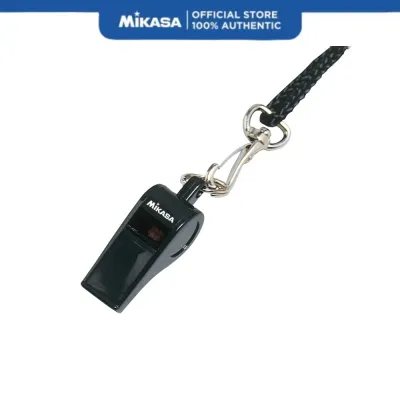
Prices are valid at publication and may change. Please refer to the product page for the latest price.
How Pea and Pealess Whistles Actually Work
To choose the right whistle, it helps to understand the mechanical differences that govern how they produce sound. These differences directly impact how the instruments perform during demanding training sessions.
A traditional pea whistle features a small, spherical “pea” made of cork, wood, or synthetic material housed inside a single hollow chamber. When you blow air into the mouthpiece, it splits across the sound hole, causing the air inside the chamber to vibrate. As this happens, the air pressure forces the pea to bounce rapidly around the chamber, temporarily blocking and unblocking the sound hole. This rapid interruption creates the classic, fluttering vibrato or “trill” associated with traditional coaching and refereeing.
In contrast, a pealess whistle relies entirely on advanced fluid dynamics and acoustic chamber design. Instead of using a moving object to interrupt the airflow, a pealess whistle features multiple, precisely tuned internal chambers. When air enters the mouthpiece, it is split into separate streams that collide at high speeds within these chambers. This collision creates a steady, high-frequency sound wave that projects outward as a piercing, uniform tone. Because there are no moving parts, the sound production is entirely dependent on the force of your breath and the physical geometry of the whistle itself.
Key Comparison Dimensions for Football Coaches
Evaluating how these mechanical differences translate to the football pitch requires looking at specific performance factors. Coaches must consider sound propagation, environmental resilience, and daily maintenance requirements to find the best tool for their sessions.

Sound Projection and Pitch
On a sprawling football field, a whistle must compete with ambient noises such as wind, passing traffic, distant conversations, and the thud of footballs. The acoustic profile of your whistle determines how easily players can hear your commands from the opposite end of the pitch.
Pea whistles are renowned for their distinct, undulating trill. This alternating frequency is highly noticeable to the human ear because it is not a static tone. The rapid pitch variation cuts through low-frequency background noises, making it exceptionally clear across large, open-air fields. When coaching on a full-sized 11-a-side pitch, a pea whistle allows you to project a commanding signal that immediately alerts players at the far touchline.
Pealess whistles, on the other hand, generate a sharp, steady, and highly focused tone. Because they do not rely on a moving pea, the pitch remains completely uniform. This steady frequency is incredibly piercing and is often perceived as sharper at close to medium distances. It is highly effective for high-intensity, small-sided games, indoor futsal facilities, or tight training grids where multiple coaches are running drills simultaneously. The distinct, non-trilling tone of a pealess whistle helps players identify their specific coach’s signals without getting confused by whistles blown on adjacent pitches.
Reliability in Humid and Wet Conditions
Football training does not stop for weather, and coaches frequently find themselves working in high humidity, heavy rain, or intense heat. The environmental conditions of your training ground play a massive role in whistle reliability.
The primary vulnerability of a pea whistle is its susceptibility to moisture. When coaching in highly humid tropical environments, or during heavy downpours, water vapor and saliva inevitably accumulate inside the whistle’s chamber. This moisture can cause a natural cork or synthetic pea to stick to the inner walls of the chamber. When the pea is immobilized, the whistle fails to trill, resulting in a muffled, airy hiss instead of a sharp command. Sweat from intense physical activity can also find its way into the chamber, compounding this issue during long training sessions.
Pealess whistles are virtually immune to these moisture-related failures. Because there are no moving parts inside the chambers, there is nothing that can get stuck or jammed. If water or saliva enters a pealess whistle, blowing forcefully through the mouthpiece instantly expels the liquid through the open chambers, restoring full volume and clarity immediately. This makes the pealess design incredibly reliable for rainy seasons, highly humid coastal regions, and intense, fast-paced training sessions where you must blow the whistle repeatedly without interruption.
Hygiene and Maintenance
A coach’s whistle is a daily-use tool that is constantly exposed to saliva, dust, mud, and sweat. Keeping this equipment clean is essential for both performance and personal health.
The internal design of a pea whistle makes cleaning relatively complex. The small chamber that houses the pea can easily trap saliva, dirt, and organic matter. Over time, this dark, damp environment becomes a breeding ground for bacteria and mold, particularly if the pea is made of natural cork, which can absorb moisture and degrade. Cleaning a pea whistle thoroughly often requires soaking it in warm water, shaking it to dislodge debris, and allowing it to dry completely—a process that can take a significant amount of time due to the enclosed chamber.
Pealess whistles offer a much simpler maintenance routine. Their open-chamber design allows water to flow straight through the whistle, making it easy to rinse out dirt, saliva, and sweat under a tap. Because there is no internal pea to protect or dry out, you can shake the water out and use the whistle immediately. The absence of hidden crevices reduces the risk of mold accumulation, making it a far more hygienic option for coaches who use their equipment daily. Regardless of the type you choose, using a dedicated lanyard and avoiding sharing your whistle with other coaches or players are fundamental practices for maintaining proper hygiene on the pitch.
Pea vs Pealess Whistle: Feature Comparison Table
To help you quickly evaluate the differences between these two whistle types, the table below summarizes their key characteristics across essential coaching dimensions.
| Comparison Dimension | Pea Whistle | Pealess Whistle |
|---|---|---|
| Sound Profile | Classic, high-pitched trill (vibrato) | Sharp, steady, uniform tone |
| Internal Moving Parts | Yes (cork or synthetic pea) | None |
| Moisture Reliability | Moderate to low; pea can stick when wet | High; unaffected by moisture or saliva |
| Best Training Environment | Large, open outdoor pitches | Wet climates, indoor courts, small grids |
| Maintenance Effort | High; requires thorough drying and cleaning | Low; easily rinsed and dried quickly |
| Acoustic Clarity | Cuts through wind and open-air noise | Pierces through localized, high-decibel noise |
How to Choose the Right Coach Whistle for Your Sessions
Selecting the best whistle requires matching its strengths to your daily coaching environment and professional requirements. Use the following decision framework to guide your choice.
Choose a Pea Whistle if:
- You primarily coach on large, expansive outdoor pitches where the sound must travel over 100 meters.
- You prefer the traditional, recognizable trilling sound to signal specific tactical transitions, starts, and stops.
- You train in dry, moderate climates where moisture buildup inside the chamber is minimal.
- You are diligent about post-session maintenance, including rinsing and thoroughly air-drying your equipment.
Choose a Pealess Whistle if:
- You regularly conduct training sessions in high-humidity regions or during heavy rainy seasons.
- You run fast-paced, high-intensity drills that require rapid, consecutive whistle blasts without risk of failure.
- You coach indoors, on futsal courts, or within compact training grids where a sharp, directional tone is preferred.
- You want a low-maintenance, highly hygienic tool that can be quickly rinsed and thrown back into your gear bag.
Before making a final purchase, always verify if: Your local football association, school athletic department, or referee certification program mandates a specific whistle standard or brand for official matches and organized training sessions. Some leagues require specific acoustic profiles to ensure consistency across all matches, so checking these guidelines beforehand can save you from having to purchase a replacement later.
Proper Care and Maintenance for Longevity
To ensure your whistle remains reliable and hygienic throughout the competitive season, establish a consistent care routine. Simple, low-risk maintenance steps will extend the lifespan of your gear and keep it performing at its peak.
After every training session, rinse your whistle thoroughly under clean, warm water. If the whistle has accumulated significant grime or saliva, you can use a small amount of mild dish soap to clean the mouthpiece and chambers. Gently agitate the water to help clear any debris from the interior of a pea whistle, or run water directly through the open ports of a pealess model.
Once rinsed, shake out any excess water and place the whistle in a well-ventilated area to air-dry completely before storing it. Avoid placing the whistle in direct sunlight on extremely hot surfaces, and never use harsh chemical disinfectants, bleach, or boiling water. These extreme temperatures and chemicals can warp plastic bodies, degrade acrylic materials, or damage the internal pea, rendering the whistle useless.
Finally, do not forget to inspect your accessories. Regularly check your lanyard, wrist strap, and the attachment ring for signs of wear, fraying, or rust. A secure attachment prevents the whistle from accidentally falling onto muddy pitches or hard turf, protecting it from physical damage and keeping it clean during active training sessions.
Frequently Asked Questions (FAQ)
Can a pealess whistle be as loud as a pea whistle?
Yes, high-quality pealess whistles are engineered to match or even exceed the volume of traditional pea whistles. Instead of relying on a physical pea to create sound variation, pealess whistles use advanced multi-chamber designs that focus and amplify air pressure. The primary difference is the sound profile—a steady, piercing tone versus a vibrating trill—rather than the actual volume capability.
Why does my pea whistle sometimes fail to make a sound?
The most common reason a pea whistle fails or produces a weak, airy sound is that the internal pea has become stuck to the chamber walls. This is typically caused by moisture from saliva, sweat, or rain, which creates surface tension inside the chamber. To resolve this, gently tap the whistle against your hand to free the pea, rinse it with clean water to remove any sticky residue, and allow it to dry completely before your next session.
Community discussion
Share your experience or ask a question. Comments are reviewed before publication.