
Quick Answer: Which Yoga Ball Shape Fits Your Routine?
Choosing between a peanut yoga ball and a traditional round yoga ball depends on your balance goals, fitness level, and specific exercise routine. The fundamental difference lies in how they move: a peanut yoga ball features a unique contoured center that restricts movement to a single forward-and-backward plane, offering high stability. In contrast, a classic spherical yoga ball rolls freely in every direction, demanding constant active balance.
If you are recovering from an injury, practicing prenatal exercises, or looking for targeted spinal support, the peanut shape provides a secure, predictable base. If your goal is to challenge your core, improve full-body coordination, or perform dynamic, multi-directional movements, the traditional round ball remains the standard choice. Neither shape is universally superior; instead, they serve different roles in your home gym setup.
How Shape Affects Stability and Muscle Engagement
The physical design of each ball dictates how your body interacts with gravity and maintains equilibrium. A traditional round yoga ball has a single point of contact with the floor, creating a highly unstable base. Because the sphere can roll 360 degrees, your center of gravity must constantly adjust to stay centered. This instability forces your deep core muscles, including the transverse abdominis and multifidus, to fire continuously to keep you upright. Every minor shift in your posture requires a micro-adjustment, making the round ball an excellent tool for active stabilization.
Products mentioned in this guide
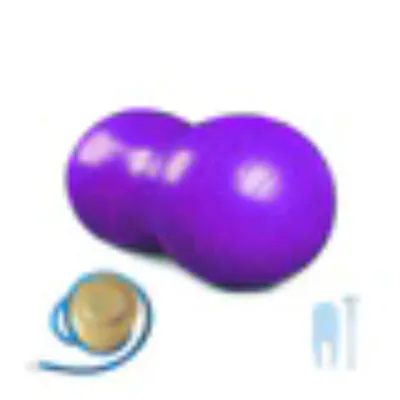
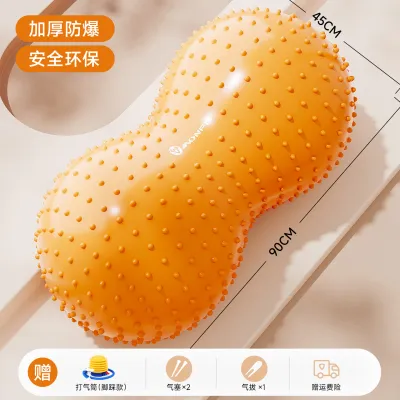
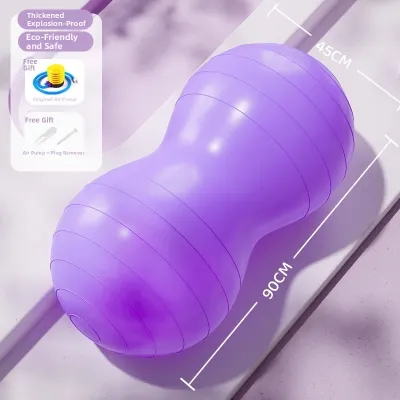
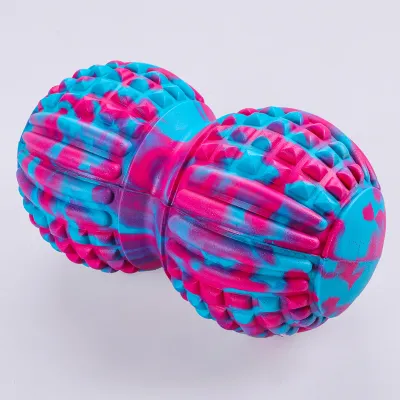
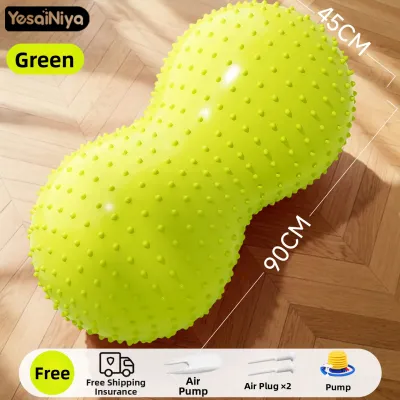
Prices are valid at publication and may change. Please refer to the product page for the latest price.

The peanut yoga ball, shaped like two merged spheres with a narrower middle saddle, fundamentally alters this dynamic. It contacts the floor along a wider, elongated surface area. This design limits rolling to a single axis—forward and backward—while virtually eliminating side-to-side movement. Because the ball cannot slide out from under you laterally, your base of support is significantly larger and more predictable.
This restricted movement reduces the demand on your lateral stabilizer muscles. Instead of fighting to stay balanced in all directions, you can focus your effort on specific muscle groups or controlled movements. For individuals with compromised balance, joint sensitivity, or those performing high-load exercises, this predictable track provides a safer environment to build strength without the risk of sudden lateral slips.
Matching the Ball Shape to Your Workout Goals
Selecting the right fitness tool requires aligning its physical properties with your personal training objectives. Whether you prioritize controlled, therapeutic support or dynamic, high-instability challenges will determine which shape deserves a spot in your workout space.
When a Peanut Yoga Ball Is the Better Choice
The peanut yoga ball excels in scenarios where controlled movement and targeted support are paramount. Its contoured middle acts as a natural cradle for the body, making it highly effective for spinal alignment exercises and targeted lower back support. When lying draped over the center saddle, the wider outer bulbs support your hips and shoulders, allowing for a gentle, passive stretch of the thoracic and lumbar spine without the fear of rolling sideways.
For prenatal workouts and pelvic floor exercises, the peanut shape offers a reassuringly stable seat. Expectant mothers can perform pelvic tilts and gentle bouncing movements with a significantly reduced risk of losing balance. This stability is equally valuable in physical therapy and rehabilitation settings, where patients recovering from neurological or orthopedic conditions need to rebuild motor patterns without overloading their stabilizer muscles.
In Pilates and targeted stretching routines, the peanut ball serves as an excellent stationary prop. You can rest your legs, hips, or arms in the center dip to isolate specific muscle groups, such as the hamstrings or hip flexors, ensuring your body remains aligned throughout the stretch.
When a Regular Round Yoga Ball Is the Better Choice
The traditional round yoga ball is the ideal choice for those seeking to maximize dynamic instability and full-body coordination. Because it rolls freely in any direction, it forces your entire muscular system to work in unison to maintain control. This makes it a staple for advanced core training, where exercises like ball pass-overs, elevated planks, and hamstring curls require constant, multi-directional control.
During a hamstring curl, for example, keeping a round ball traveling in a straight line requires intense activation of the glutes, hamstrings, and deep core stabilizers to prevent the ball from veering off-course. This level of engagement is difficult to replicate with a more stable prop.
Furthermore, the round ball is highly versatile for dynamic stretching routines that require fluid, sweeping movements across multiple planes. It is also the preferred option for general active sitting. Sitting on a round ball forces continuous, subtle postural corrections, which can help prevent the static muscle tightness often associated with prolonged desk work.
Essential Specs to Check on the Product Label
When shopping for either ball on an online marketplace or at a local sporting goods store, you must carefully evaluate the specifications printed on the product label. Because fitness equipment must withstand your full body weight under dynamic pressure, relying on generic descriptions is not enough.
First, inspect the manufacturer’s stated weight capacity and burst-resistance rating. High-quality balls are typically labeled as “anti-burst” or “burst-resistant,” meaning that if the material is punctured, it will deflate slowly and safely rather than popping suddenly. Look for a clear weight rating on the packaging that comfortably exceeds your body weight plus any additional weights you plan to hold during your workouts, ensuring you get the best value for your ₱ without sacrificing safety.
Second, verify the recommended user height range provided by the brand. Proper sizing is critical for maintaining correct joint angles. When sitting on the ball, your hips and knees should ideally form a 90-degree angle, with your feet flat on the floor. Because peanut balls are measured differently than round balls—often by their height at the narrowest center point rather than the outer diameter—always consult the manufacturer’s specific sizing chart before purchasing.
Third, pay close attention to the material quality and environmental suitability. In warm, humid tropical climates like the Philippines, sweat and moisture can make fitness equipment slippery and prone to degradation. Look for non-slip, textured surfaces and heavy-duty, non-toxic PVC materials that resist moisture buildup. Finally, check the included accessories: a reliable dual-action hand pump, spare valve plugs, and a plug removal tool should be clearly listed on the package to ensure hassle-free setup and maintenance.
Final Decision: Which Yoga Ball Should You Choose?
To make your final decision, assess your current physical needs, fitness level, and space constraints.
Choose the peanut ball if:
- Your primary goals are rehabilitation, prenatal exercise, or gentle stretching.
- You experience balance challenges or feel anxious about falling off a traditional round ball.
- You want targeted support for your spine, neck, or legs during controlled movements.
- You are introducing children or older adults to balance training in a safe, restricted manner.
Choose the regular round ball if:
- You want to maximize core engagement and challenge your overall balance.
- Your routine includes dynamic, multi-directional exercises like hamstring curls or ball passes.
- You plan to use the ball as an active sitting chair to improve your daily posture.
- You prefer a highly versatile, classic fitness tool that fits a wide variety of standard workout guides.
Verify first if:
- You have a history of severe back pain, herniated discs, or joint instability. In these cases, always consult a physical therapist or qualified medical professional before introducing any inflatable balance equipment into your routine. They can recommend the exact inflation level, size, and movement patterns suited to your recovery.
Frequently Asked Questions (FAQ)
Can I use a peanut yoga ball as an office chair?
While you can sit on a peanut yoga ball, it offers a different ergonomic experience than a round ball. The contoured center saddle provides a stable, comfortable seat that supports pelvic alignment, but its restricted rolling limits the active, multi-directional micro-movements that make active sitting beneficial. If you choose to use it at your desk, verify that the height of the center saddle allows your knees to rest at a comfortable 90-degree angle relative to your workspace. Always check if the manufacturer approves the ball for prolonged sitting, and limit your sitting time initially to avoid muscle fatigue.
How do I know if my yoga ball is properly inflated?
Proper inflation ensures both safety and optimal performance. Rather than relying on exact pressure gauges, you can perform simple visual and physical checks. When fully inflated according to the manufacturer’s instructions, the ball should feel firm to the touch but still have a slight, springy give when you press your weight into it. It should not sink excessively or sag when you sit on it. To achieve the correct size, follow the manufacturer’s recommended inflation process, which often involves inflating the ball to about 80% capacity, letting the material stretch overnight in a cool room, and then completing the inflation to its final dimensions the following day.
Community discussion
Share your experience or ask a question. Comments are reviewed before publication.