
Choosing between a pedal exerciser and a full stationary bike for a compact condo in the Philippines comes down to balancing your available floor space, budget, and fitness goals. If your priority is gentle, low-impact movement that fits under a desk or slips into a closet, a compact pedal exerciser is your ideal match. However, if you want high-intensity cardio, serious calorie-burning workouts, and have a dedicated corner to spare, a full stationary bike is the better investment.
Quick Diagnostic: Is a Pedal Exerciser or Stationary Bike Right for You?
Setting up a home gym in a compact condo environment presents unique challenges. High real estate prices per square meter in cities like Metro Manila mean that every centimeter of floor space is valuable. Before diving into the details, use this quick diagnostic matrix to identify which machine aligns with your primary constraints.
| Dimension | Pedal Exerciser | Stationary Bike |
|---|---|---|
| Floor Space | Under 0.25 sq meters; highly portable | 1 to 1.5 sq meters; permanent or semi-permanent |
| Workout Intensity | Low to moderate; active recovery | Moderate to high; HIIT and endurance training |
| Budget Flexibility | Entry-level friendly (typically ₱1,500 to ₱5,000) | Moderate to high investment (typically ₱6,000 to ₱25,000+) |
| Noise & Vibration | Extremely quiet; minimal floor vibration | Low to moderate; depends heavily on flywheel type |
Choose a pedal exerciser if:
Products mentioned in this guide
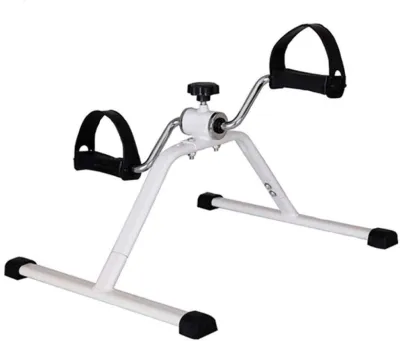
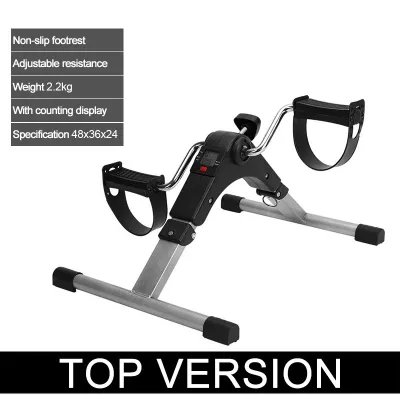
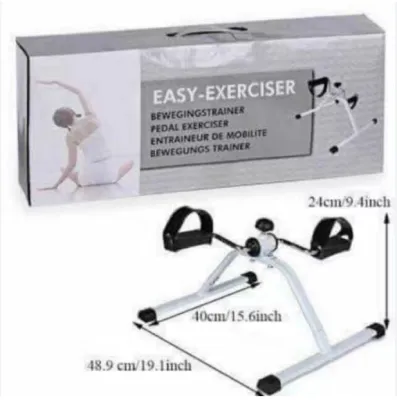
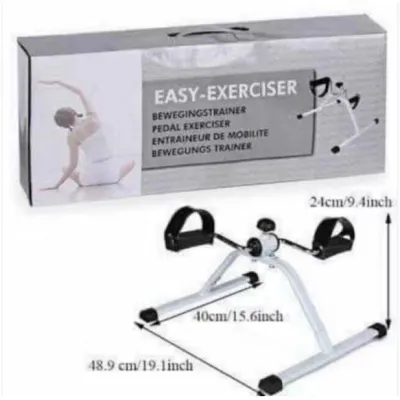
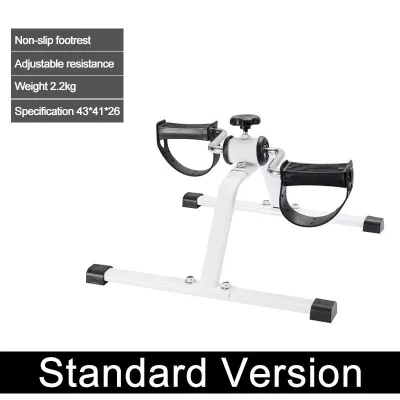
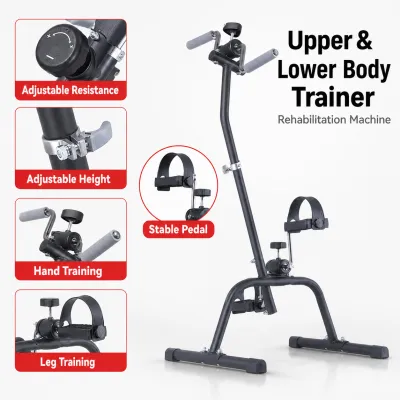
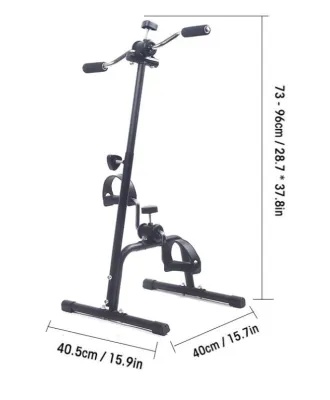
Prices are valid at publication and may change. Please refer to the product page for the latest price.
- You work from home in a studio unit and need to keep your floors completely clear.
- You prioritize low-impact joint mobility and active recovery while multi-tasking.
- You are working with a limited budget and need a highly portable option.
Opt for a stationary bike if:
- You want to engage in high-intensity cardiovascular training and stand up during sprints.
- You have a dedicated, permanent corner of your living room or balcony to spare.
- You want advanced metrics tracking and a more realistic road-cycling experience.
Space and Storage: Navigating Condo Realities
Space is the ultimate currency in modern Philippine condo living. With average studio and one-bedroom units ranging from 22 to 45 square meters, every piece of fitness equipment must earn its place. Before buying, you must evaluate how your choice will impact your daily movement paths and living area.

Daily Footprint and Dedicated Zones
A pedal exerciser occupies a tiny footprint, usually measuring no more than 40 by 50 centimeters. You can place it directly under your dining table, office desk, or in front of your sofa, allowing you to exercise without rearranging your living area.
Conversely, a full-sized stationary bike requires a dedicated zone of at least 120 centimeters in length and 60 centimeters in width. Beyond the physical frame, you must measure additional clearance for handlebar adjustments, your knees during high pedal rotations, and safe dismounting. Ensure you have at least 50 centimeters of clear space around the entire perimeter of the bike to prevent your limbs from hitting nearby walls, TV consoles, or glass sliding doors.
Closet Storage and Portability
Pedal exercisers are highly portable, typically weighing between 3 to 8 kilograms. This lightweight design allows you to pick up the unit with one hand and slide it into a wardrobe, under a bed frame, or behind a sofa when guests visit.
Full stationary bikes are much heavier, often weighing upwards of 20 to 45 kilograms due to their steel frames and flywheels. While many modern models feature built-in transport wheels on the front stabilizer, moving them across thick rugs or high door thresholds can be challenging. Some space-saving stationary bikes offer folding frames, but these still require a vertical storage height of around 130 to 150 centimeters. Always measure your closet depth and height before purchasing a folding model to confirm it will actually fit out of sight.
Noise, Vibration, and Neighbor Etiquette
In multi-story condo buildings, sound and vibration travel easily through concrete floors and shared walls. A high-quality magnetic pedal exerciser operates almost silently, generating virtually zero floor vibration because your body weight remains supported by your office chair or sofa.
A stationary bike, especially one with a heavy flywheel or friction resistance, can transmit low-frequency hums and vibrations directly into the floor structure. During high-speed pedaling or out-of-the-saddle sprints, this mechanical vibration can disturb neighbors living directly below you. To mitigate this, check the manufacturer’s specifications for magnetic resistance systems, which run quieter than felt-pad friction brakes. Additionally, investing in a high-density, anti-vibration rubber equipment mat is a highly recommended step to absorb sound and protect your floors.
Fitness Goals: Matching Equipment to Your Workout Intensity
Your physical space is only half of the equation; the equipment must also align with your health and fitness objectives. Investing in a compact device that fails to raise your heart rate sufficiently can lead to frustration, while buying a massive bike for gentle movement is an unnecessary waste of resources.
Low-Impact Movement and Active Recovery
Pedal exercisers are specifically designed for low-impact, continuous movement. They are highly effective at promoting lower-limb blood circulation, maintaining joint range of motion, and aiding active recovery on rest days.
If you are recovering from a minor knee or ankle injury, or if you experience joint stiffness from sitting long hours at a desk, a pedal exerciser provides a gentle way to keep your joints lubricated without bearing your full body weight. It is also an excellent option for older family members who need safe, accessible cardiovascular stimulation without the fall risks associated with outdoor walking or larger fitness machines.
High-Intensity Cardio and Serious Endurance
If your fitness goals include burning high calories, improving athletic endurance, or performing High-Intensity Interval Training (HIIT), a full stationary bike is essential. These machines feature heavy flywheels—often ranging from 8 to 20 kilograms—that create realistic road resistance and smooth momentum.
The robust steel frame of a stationary bike allows you to stand up on the pedals for heavy climbing simulations and explosive sprints. A pedal exerciser cannot safely support your full body weight; attempting to stand on one will damage the internal axle and poses a severe tipping and injury risk. For sustained cardiovascular conditioning that pushes your heart rate into target aerobic zones, the structural stability of a stationary bike is non-negotiable.
Upper-Body Engagement and Multi-Tasking
One unique advantage of a pedal exerciser is its versatility as a dual-purpose machine. By placing the unit on a sturdy dining table or desk, you can grip the pedals with your hands to execute an upper-body workout that targets your shoulders, chest, biceps, and triceps.
Additionally, pedal exercisers are the ultimate multi-tasking tool. Because they require low cognitive focus and minimal upper-body movement, you can easily pedal while typing out emails, attending virtual meetings, or reading. A stationary bike, even one with a built-in desk attachment, demands a more active riding posture and dedicated focus, making it harder to complete precise manual tasks while exercising.
Budget and Value: Weighing the Financial Commitment
Pedal exercisers are generally much more affordable. Entry-level friction models can be found on online marketplaces for around ₱1,500 to ₱3,000, while premium magnetic models with digital displays range from ₱4,000 to ₱8,000.
Stationary bikes represent a larger financial commitment. Entry-level folding bikes or basic friction upright models start around ₱5,000 to ₱9,000. Mid-range magnetic spin bikes with robust frames cost between ₱10,000 and ₱20,000, while premium, smart-connected bikes with integrated screens and interactive training apps can easily exceed ₱30,000 to ₱50,000.
When evaluating these price points, consider the value of the internal mechanisms. Magnetic resistance systems are more expensive than friction felt pads, but they offer smoother transitions, quieter operation, and require virtually zero maintenance over time. Digital tracking consoles, Bluetooth connectivity, and heavy-duty steel frames also justify higher price tags by offering better long-term durability.
Before finalizing your purchase, verify the manufacturer’s warranty terms and check if the brand has local service centers or accessible replacement parts in the Philippines. High humidity levels in tropical climates can accelerate wear on cheaper components, making a solid warranty crucial.
Finally, remember to budget for hidden costs. A stationary bike will almost certainly require a protective floor mat (₱800 to ₱2,000) to protect your condo floors. You may also want to purchase a wearable heart rate monitor or subscribe to virtual cycling apps to maximize your training, which adds recurring monthly costs to your initial investment.
Honest Alternatives: When to Skip Both Machines
There are scenarios where neither a pedal exerciser nor a stationary bike is the right choice for your condo. If you struggle to maintain a consistent home workout routine, or if your studio unit is already so crowded that adding any new device causes mental stress, it is wiser to skip both.
Instead, consider zero-footprint or highly compact fitness alternatives. A set of high-quality resistance bands, a speed jump rope, or a single adjustable kettlebell can provide a full-body workout and slide easily into a small drawer. These tools cost a fraction of the price of cardio machines and require absolutely no floor space when stored.
Alternatively, take advantage of your surroundings. Many residential condominium complexes in the Philippines feature shared amenities, including fully equipped building gyms and swimming pools. If your building lacks these facilities, look to local outdoor spaces. Jogging around your neighborhood park, utilizing public active zones, or joining a local commercial gym can provide high-intensity workouts without cluttering your personal living space.
Frequently Asked Questions (FAQ)
Can I use a pedal exerciser while working at my desk?
Yes, but successful integration depends on your specific desk setup. You must measure your under-desk clearance to ensure your knees do not strike the underside of the table during the top of the pedal rotation; this typically requires a desk height of at least 75 to 80 centimeters, depending on your height.
To prevent the device from sliding forward on smooth tile or laminate condo flooring, place it on a non-slip rubber mat or secure it to your chair with a tether strap. Keep in mind that while pedaling is excellent for low-focus tasks like reading or watching webinars, it can cause your upper body to sway slightly, which might make precise typing or active participation in video calls challenging at first.
Will a stationary bike damage my condo flooring?
Yes, a heavy stationary bike can easily damage delicate condo flooring if left unprotected. The concentrated weight of the heavy steel frame and flywheel, combined with your body weight, can cause permanent indentations, scratches, or cracks in laminate, vinyl, or engineered wood floors.
Furthermore, high-intensity workouts generate significant sweat, which can drip onto the floor and cause laminate boards to warp or discolor over time in the humid Philippine climate. To prevent this damage, always place a thick, water-resistant PVC or rubber equipment mat under your stationary bike. Wipe down the frame and the mat after every session to prevent sweat corrosion, and occasionally move the bike slightly to distribute the weight pressure on your floor.
Community discussion
Share your experience or ask a question. Comments are reviewed before publication.